Basic Life Support Training for Ambulance Drivers in Dohuk
Veröffentlicht am 7. February 2023
von CADUS-PR
Target country/region: Kurdish region of Iraq, Dohuk
Period: June – October 2022
Brief Description: In order to expand their scope of action, we train the drivers of the Dohuk region in Basic Life Support measures in cooperation with local authorities.
Drivers of ambulances in the Kurdish part of Iraq usually do not receive any medical training and often cannot provide first aid.
Detailed description:
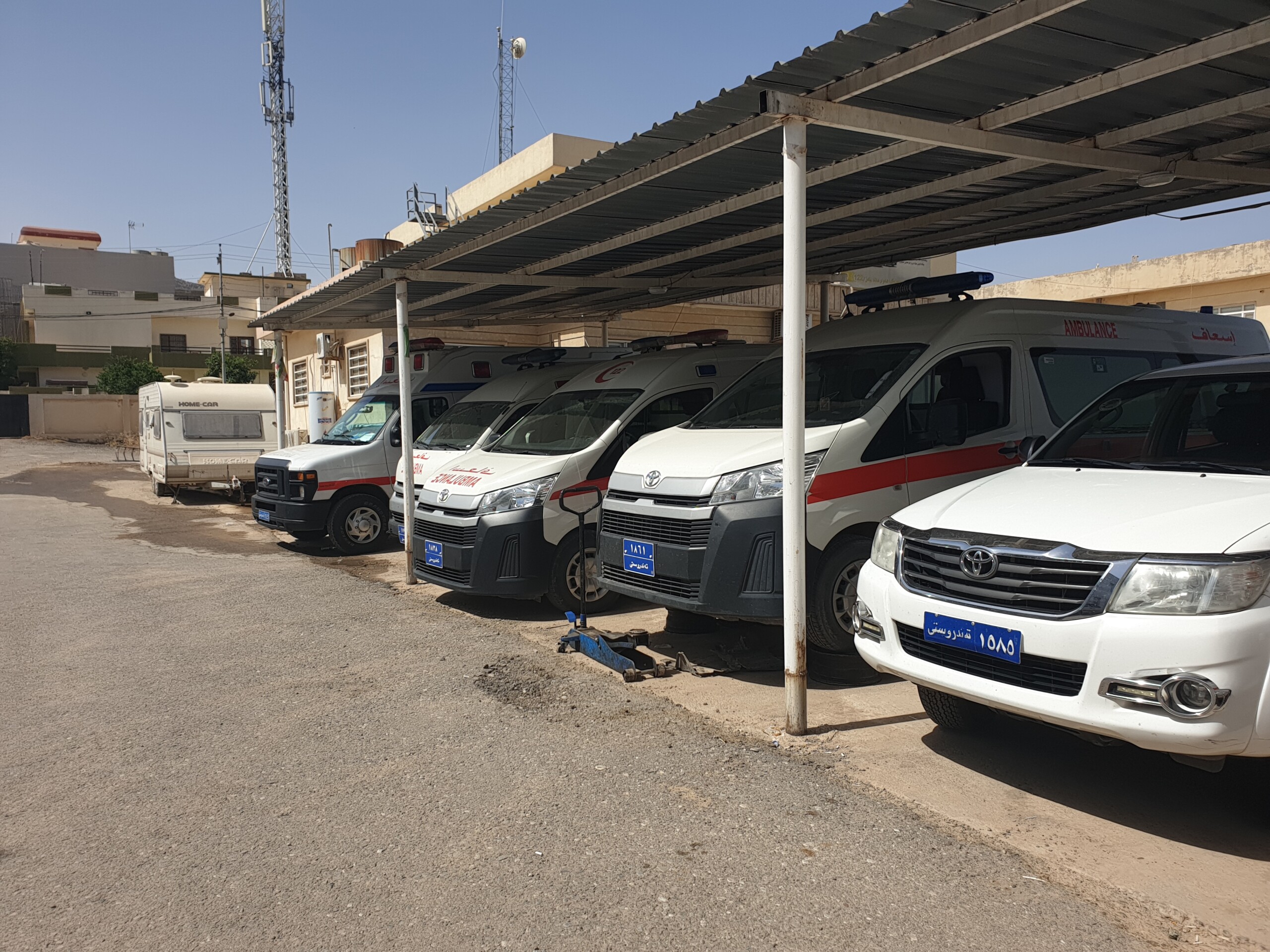
Ambulance drivers in Dohuk, a city in northern Iraq, mostly work solely as drivers. They receive no or very basic medical training, and are are hardly in a position to help the patients they drive. For this reason, they are often dependent on the support of medical professionals during their journeys.
To fill this gap in patient care, we want to train 90 ambulance drivers in the region in Basic Life Support measures.
The project covers a total period of two months and is being carried out in cooperation with the local Directorate of Health. The drivers of the 122 Department, the emergency care department of Dohuk’s Directorate of Health, will receive basic medical training that will enable them to provide first aid to patients. The training includes, in addition to classic first aid measures, the handling of injuries and illnesses typical of the region, the basic use of medical tools and the correct care of wounds. Topics such as hygiene measures and self-protection are also part of the training.

Die Zukunft humanitärer Hilfe
Einen Text schreiben über die Zukunft der humanitären Hilfe. Mein erster Impuls: Das wird aber ein düsterer Text. Die Gegenwart der humanitären Hilfe lässt wenig Raum für Zuversicht. Kriege reißen nicht ab, im Sudan sterben Menschen unbeachtet von der Weltöffentlichkeit,

How AI Is Changing Humanitarian Aid: Risks and Opportunities
I’ve spent enough nights under mosquito nets and sat through long, often circular UN coordination meetings to know this: if we want to reach people in crisis faster, with less waste, and without burning out the sector, we can’t
Wie KI die humanitäre Hilfe verändert: Risiken und Chancen
Ich habe genug Nächte unter Moskitonetzen verbracht und lange, oft im Kreis drehende UN-Koordinationssitzungen durchgestanden, um eines zu wissen: Wenn wir Menschen in Krisen schneller erreichen wollen, mit weniger Verschwendung und ohne den gesamten Sektor zu überlasten, können wir