Severe earthquake in northern Syria and Turkey: CADUS supports the Kurdish Red Crescent Emergency Response.
Veröffentlicht am 8. February 2023
von CADUS-PR
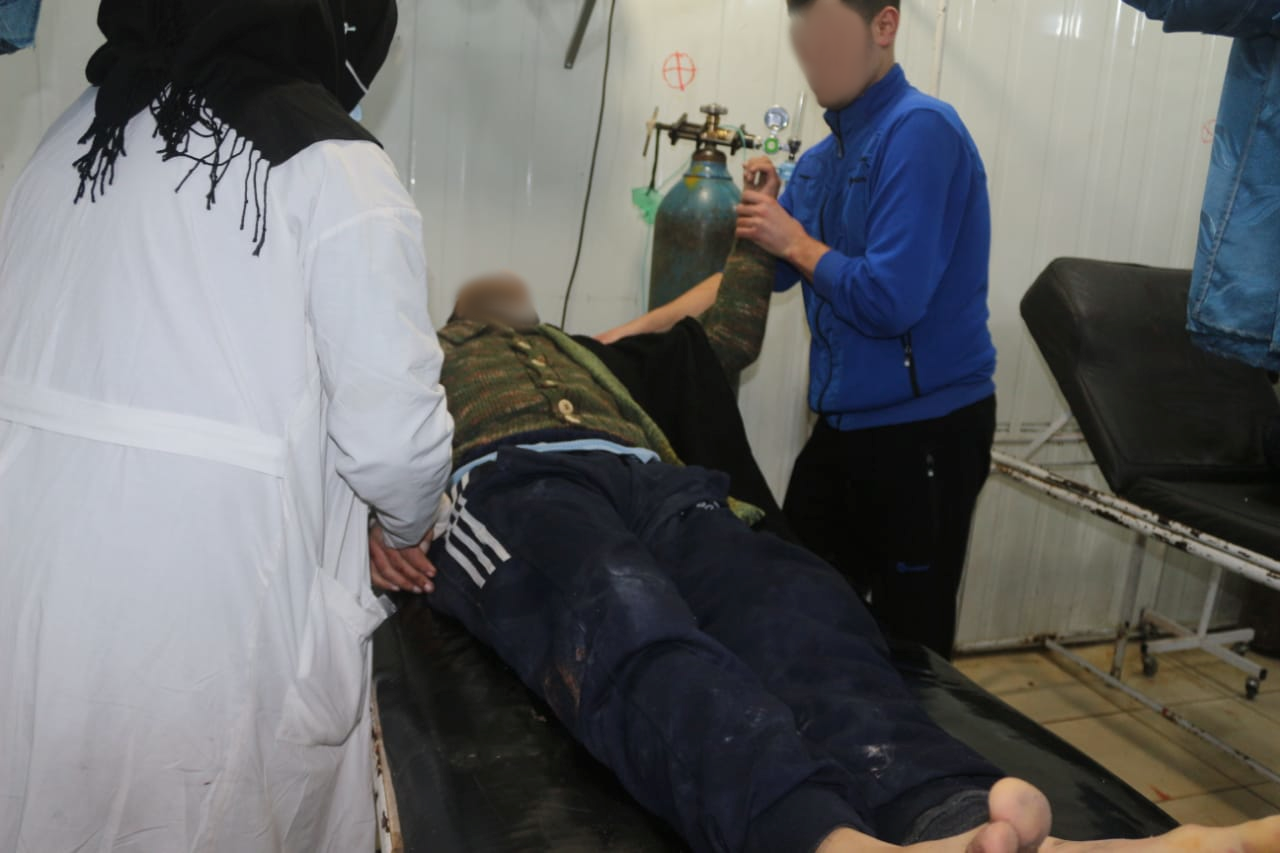
The Volunteers from KRC are doing their best to support the affected people in the region. Photo: KRC
Early on Monday morning, a severe earthquake with a magnitude of 7.8 shook the region on the border between Syria and Turkey. Further strong quakes followed in the course of the day. By the afternoon, more than 2,000 people had already been counted dead, and tens of thousands more are directly affected by the disaster. CADUS supports the Kurdish Red Crescent Emergency Response with medicines and essential non-food items.
The employees of CADUS in the eastern part of north-eastern Syria were woken from their sleep by the earthquake, and the shock is still deep-seated. Fortunately, apart from a minor injury, nothing happened to them.
But in the northwest of the country, the extent of the destruction is huge. The earthquake has affected people there who have been suffering from the conflicts in the region for years and who now have to deal with destroyed houses and infrastructure and many injured people during the coldest time of the year. Our partner organization, the Kurdish Red Crescent (KRC), immediately started providing emergency aid on the ground in northern Syria. Since the early morning, KRC aid workers have been caring for those affected by the earthquake in Aleppo, Kobane, Tal Rifaat and Manbij.
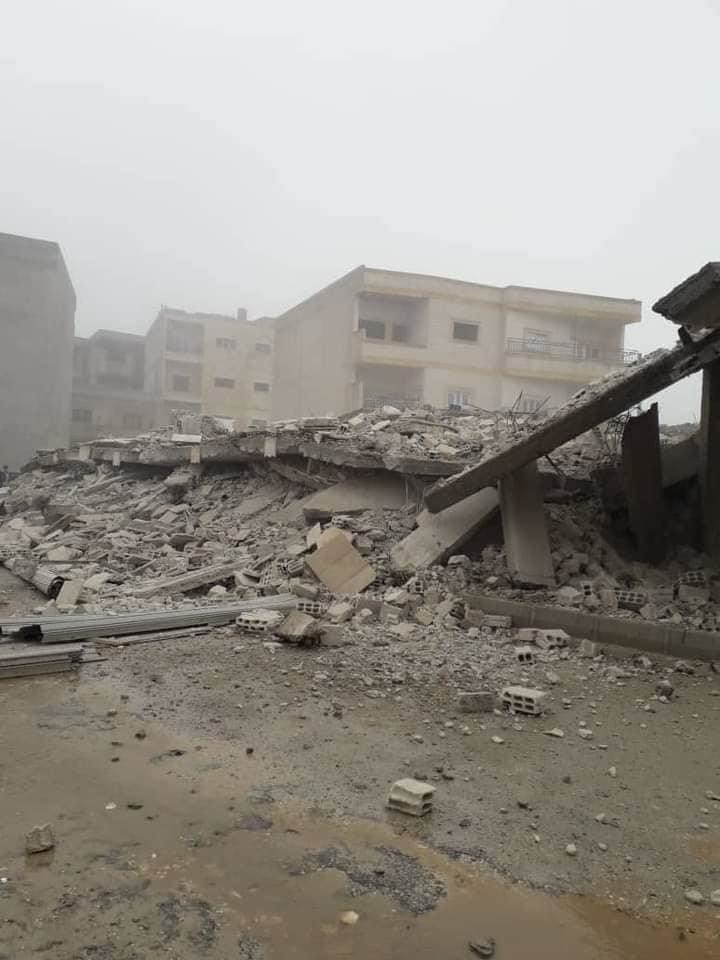
The earthquake caused thousands of deaths and injuries in the affected region and caused extensive damage, as here in Kobane. Photo: KRC
The area is extremely difficult to access for aid organizations due to the complicated political situation: It is located in the area controlled by Turkey, and is separated from Kurdish-controlled north-eastern Syria by an area controlled by the Syrian regime. The fact that KRC operates on the ground there is anything but a matter of course, and involves considerable risk for the organization.
We support KRC in this. Your donations arrive directly on site!
Published:
Author: by Corinna Schäfer
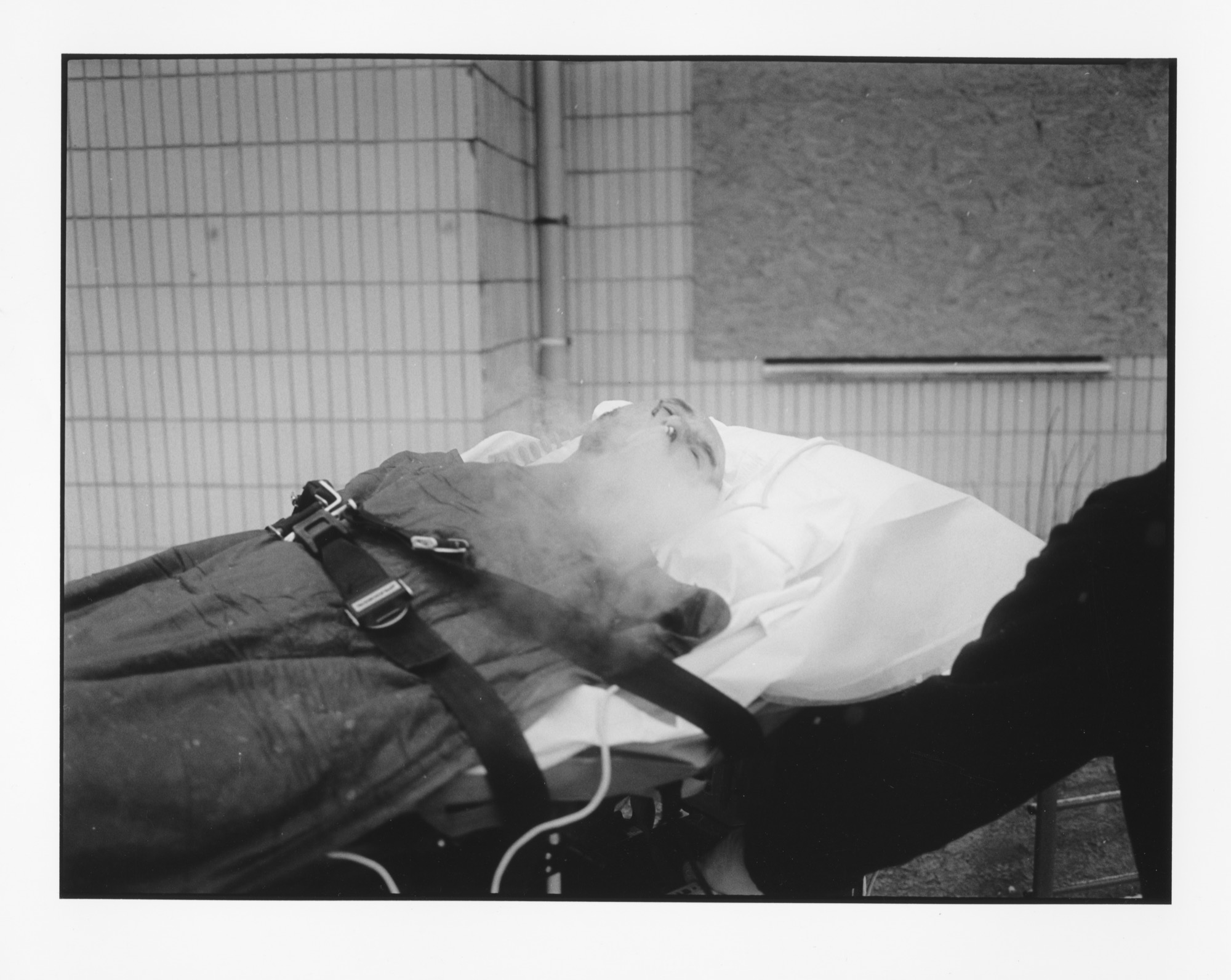
It’s hard to stop the bleeding once it started
Photographer Julius Bauer visited our Medevac team in Dnipro, Ukraine, in February. In this guest article, he gives us a brief insight into the everyday life of our colleagues on site, takes us along on the transport of a wounded patient and shares his thoughts on the recurring war trauma in Ukraine and his impressions of life in the war zone. All photos in this article were taken by him.
It’s hard to stop the bleeding once it started
Der Fotograf Julius Bauer hat im Februar unser Medevac-Team in Dnipro in der Ukraine besucht. In diesem Gastbeitrag gewährt er uns einen kurzen Einblick in den Alltag unserer Kolleg*innen vor Ort, nimmt uns mit auf den Transport eines verwundeten Patienten und teilt seine Gedanken zum wiederkehrendem Kriegstrauma der Ukraine und seine Eindrücke vom Leben im Kriegsgebiet. Alle Fotos in diesem Beitrag stammen von ihm.
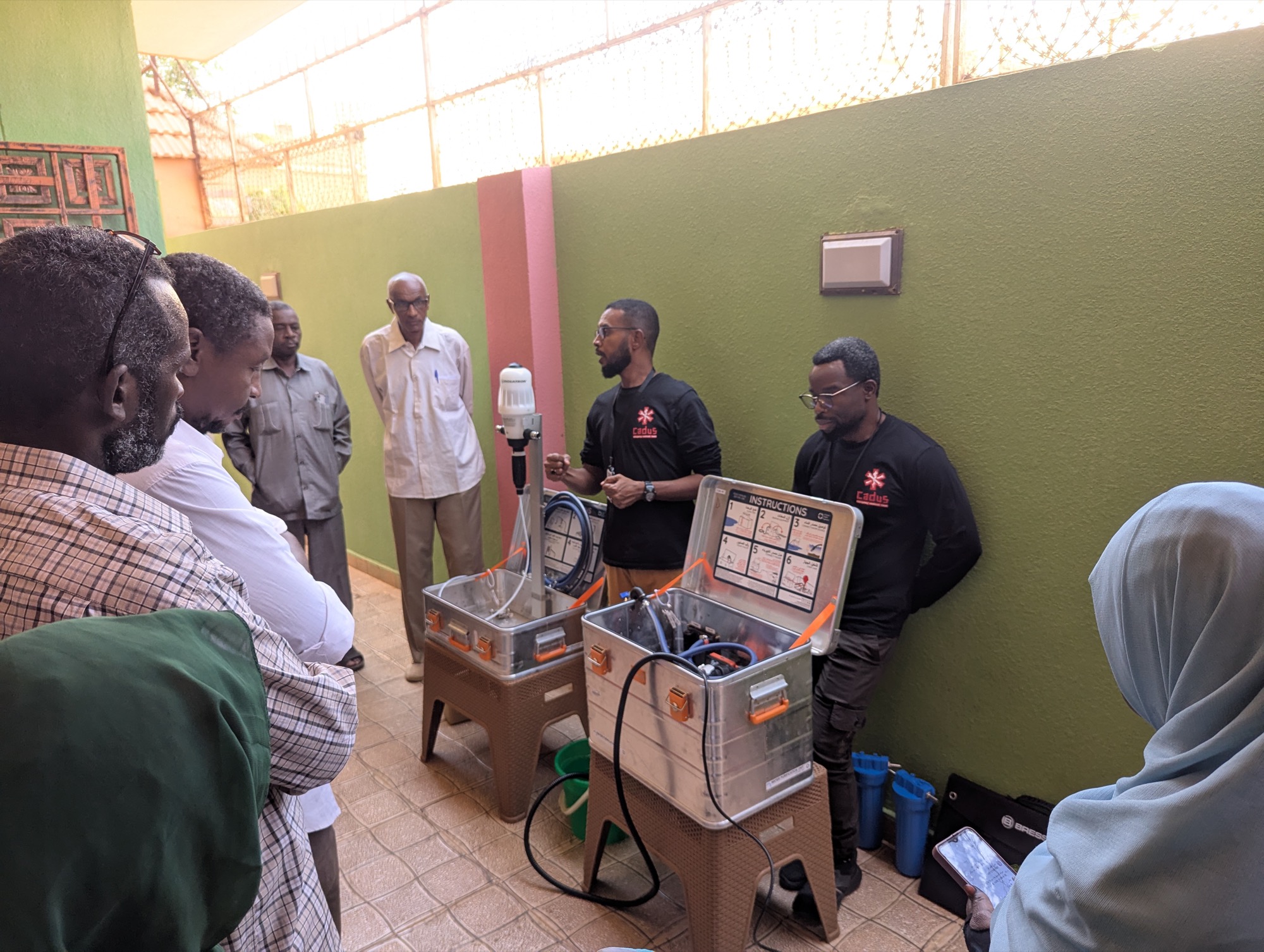
Cholera prevention in Sudan
We are helping to prevent future cholera outbreaks by providing training and equipment for drinking water treatment in Sudan.