Encounter at IDF checkpoint on MEDEVAC 12/10/2024
Veröffentlicht am 16. October 2024
von Jonas Gruenwald
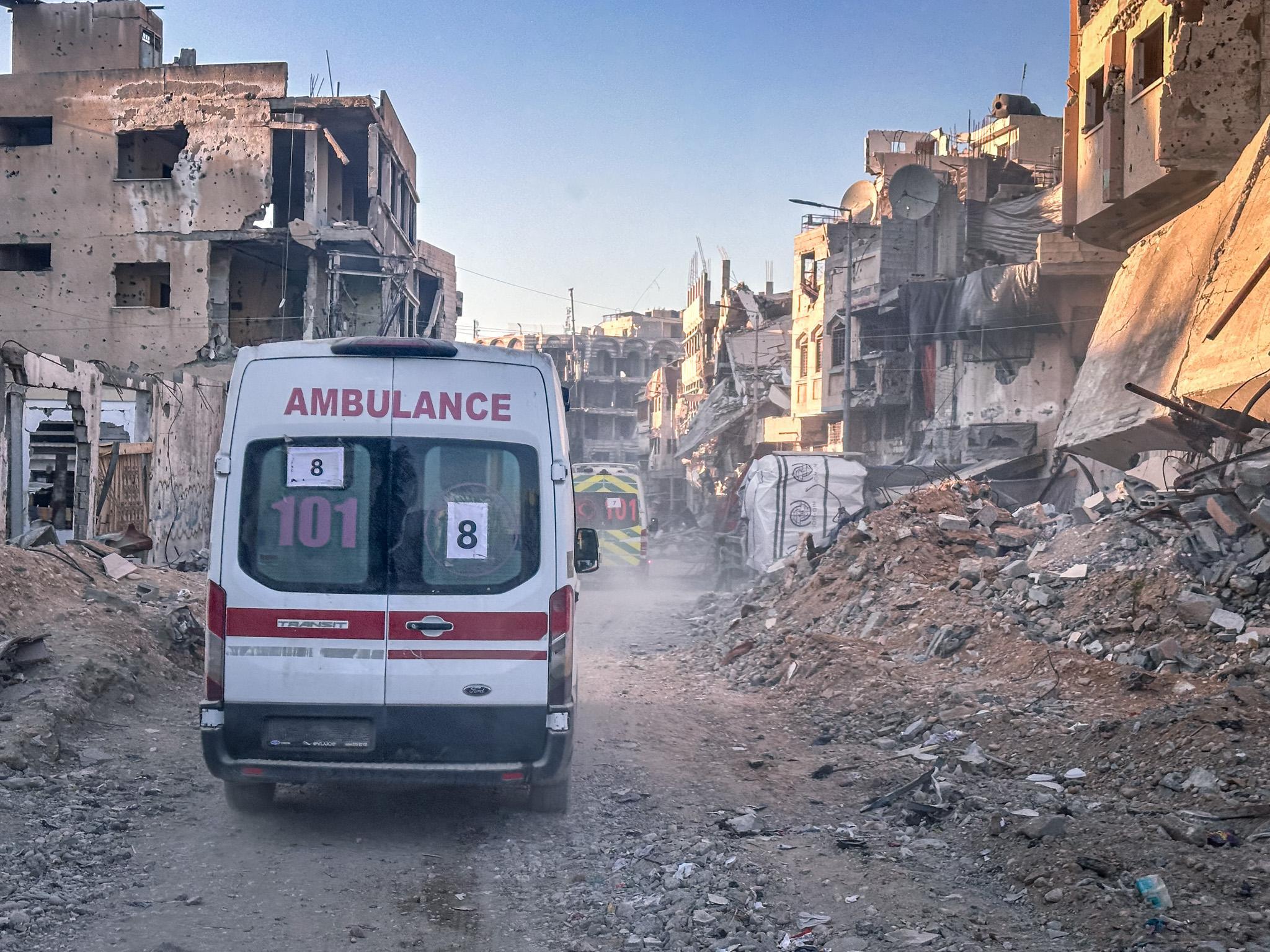
Crossing Israeli Defense Forces (IDF) checkpoints in Gaza is a frequent occurrence. However, despite its regularity, it is far from routine.
Each crossing involves significant risks, particularly in zones designated as active combat areas. Movements through these checkpoints require meticulous coordination, with every detail—from timing, vehicles, and personnel to the purpose of the mission—being communicated well in advance. Despite these efforts, incidents remain alarmingly frequent.
These incidents range from extended delays to the harassment and intimidation of national staff, as well as intentional damage to United Nations (UN) and International Non-Governmental Organization (INGO) vehicles. We already faced situations like this in the past. Dehumanizing treatment, arbitrary detention, and physical harm have also been documented. The list of such occurrences is extensive, and the recent medical evacuation (MEDEVAC) from Kamal Adwan to Al Shifa with participation of CADUS is yet another concerning addition to this growing record.
The procedures that ambulance crews and critically ill patients are forced to endure, and the risks faced by our colleagues from the Palestinian Red Crescent Society (PRCS) during life-saving missions, are unacceptable. It is imperative that unimpeded access, respect for International Humanitarian Law, accountability, and the protection of basic human rights are upheld under all circumstances.
The continued obstruction of humanitarian missions by Israeli authorities, particularly those aimed at saving lives, is a grave violation of IHL. We must collectively reaffirm our commitment to ensuring that IHL is respected, and that the rights and dignity of all individuals, including those providing and receiving humanitarian aid, are preserved.

Die Zukunft humanitärer Hilfe
Einen Text schreiben über die Zukunft der humanitären Hilfe. Mein erster Impuls: Das wird aber ein düsterer Text. Die Gegenwart der humanitären Hilfe lässt wenig Raum für Zuversicht. Kriege reißen nicht ab, im Sudan sterben Menschen unbeachtet von der Weltöffentlichkeit,
How AI Is Changing Humanitarian Aid: Risks and Opportunities
I’ve spent enough nights under mosquito nets and sat through long, often circular UN coordination meetings to know this: if we want to reach people in crisis faster, with less waste, and without burning out the sector, we can’t
Wie KI die humanitäre Hilfe verändert: Risiken und Chancen
Ich habe genug Nächte unter Moskitonetzen verbracht und lange, oft im Kreis drehende UN-Koordinationssitzungen durchgestanden, um eines zu wissen: Wenn wir Menschen in Krisen schneller erreichen wollen, mit weniger Verschwendung und ohne den gesamten Sektor zu überlasten, können wir