COVID-19 Response: Face Visors
Veröffentlicht am 19. August 2020
von CADUS-PR
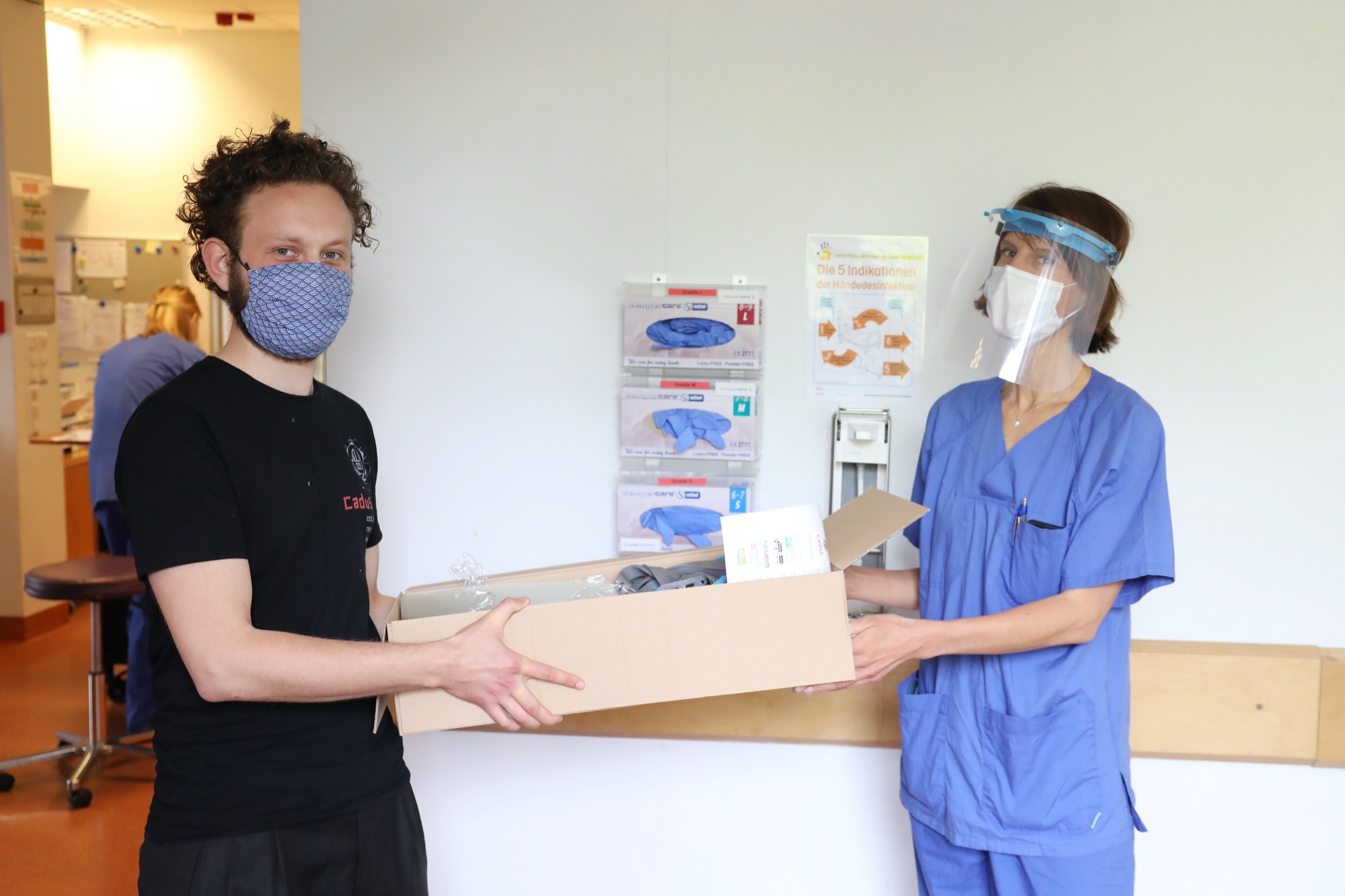
Foto: Sebastian Gabsch
Right at the beginning of the Corona pandemic, we joined forces with various open workshops in Brandenburg and Berlin and set up a logistics center at the CADUS Crisis Response Makerspace to coordinate the regional distribution of face visors.
Successful cooperation with the Makerspace network
In March 2020 CADUS was confronted with the unusual situation of receiving numerous requests for help for a crisis situation in which we ourselves were in the middle of and for which there were hardly any recommendations for action in the world of humanitarian aid. The necessary spirit of innovation, flexibility and suitable production capacities were abundantly available in the network of Makerspaces in Brandenburg and Berlin. In a decentralized production process, which was continuously optimized through constant exchange among each other, 25.000 face visors could be produced.
Logistics center at the CADUS Makerspace
At CADUS, the requests from facilities for healthcare, for refugees, and from other central service providers converged. We prioritized the distribution of visors, established a courier system and distributed them together with the provisional masks from masken.berlin in Berlin and Brandenburg.
Visors for Brazil
Through our cooperation with Makerspaces on a global level through the GIG network, we came into contact with indigenous organizations in Brazil, who also reported to us about their need for face visors. The planned shipment could not be realized because COVID-19 has complicated international logistics tremendously. But with our initiative we at least gave the impulse for the establishment of a local production by GIG, and supported it with a small financial donation.

Die Zukunft humanitärer Hilfe
Einen Text schreiben über die Zukunft der humanitären Hilfe. Mein erster Impuls: Das wird aber ein düsterer Text. Die Gegenwart der humanitären Hilfe lässt wenig Raum für Zuversicht. Kriege reißen nicht ab, im Sudan sterben Menschen unbeachtet von der Weltöffentlichkeit,

How AI Is Changing Humanitarian Aid: Risks and Opportunities
I’ve spent enough nights under mosquito nets and sat through long, often circular UN coordination meetings to know this: if we want to reach people in crisis faster, with less waste, and without burning out the sector, we can’t
Wie KI die humanitäre Hilfe verändert: Risiken und Chancen
Ich habe genug Nächte unter Moskitonetzen verbracht und lange, oft im Kreis drehende UN-Koordinationssitzungen durchgestanden, um eines zu wissen: Wenn wir Menschen in Krisen schneller erreichen wollen, mit weniger Verschwendung und ohne den gesamten Sektor zu überlasten, können wir