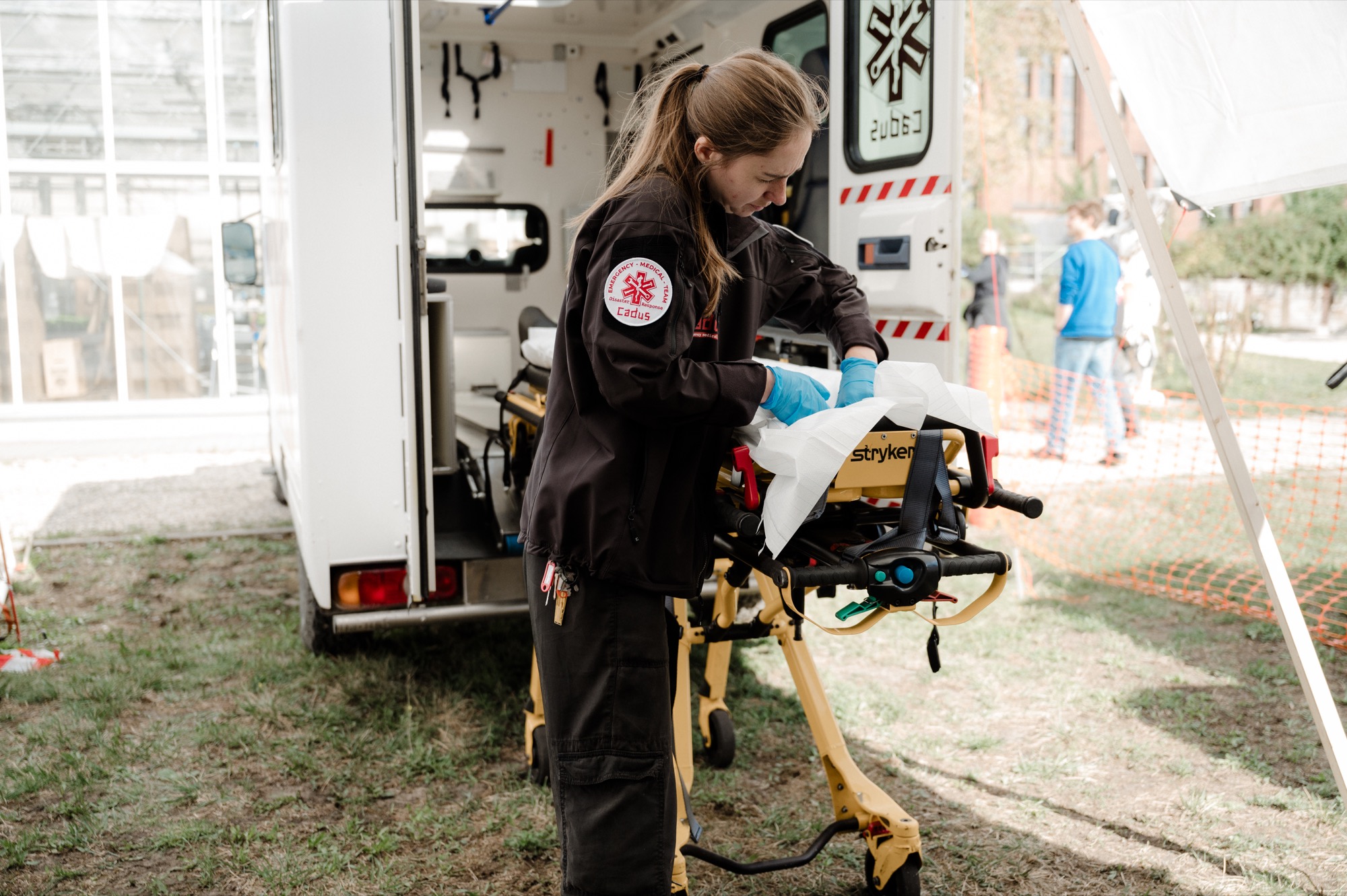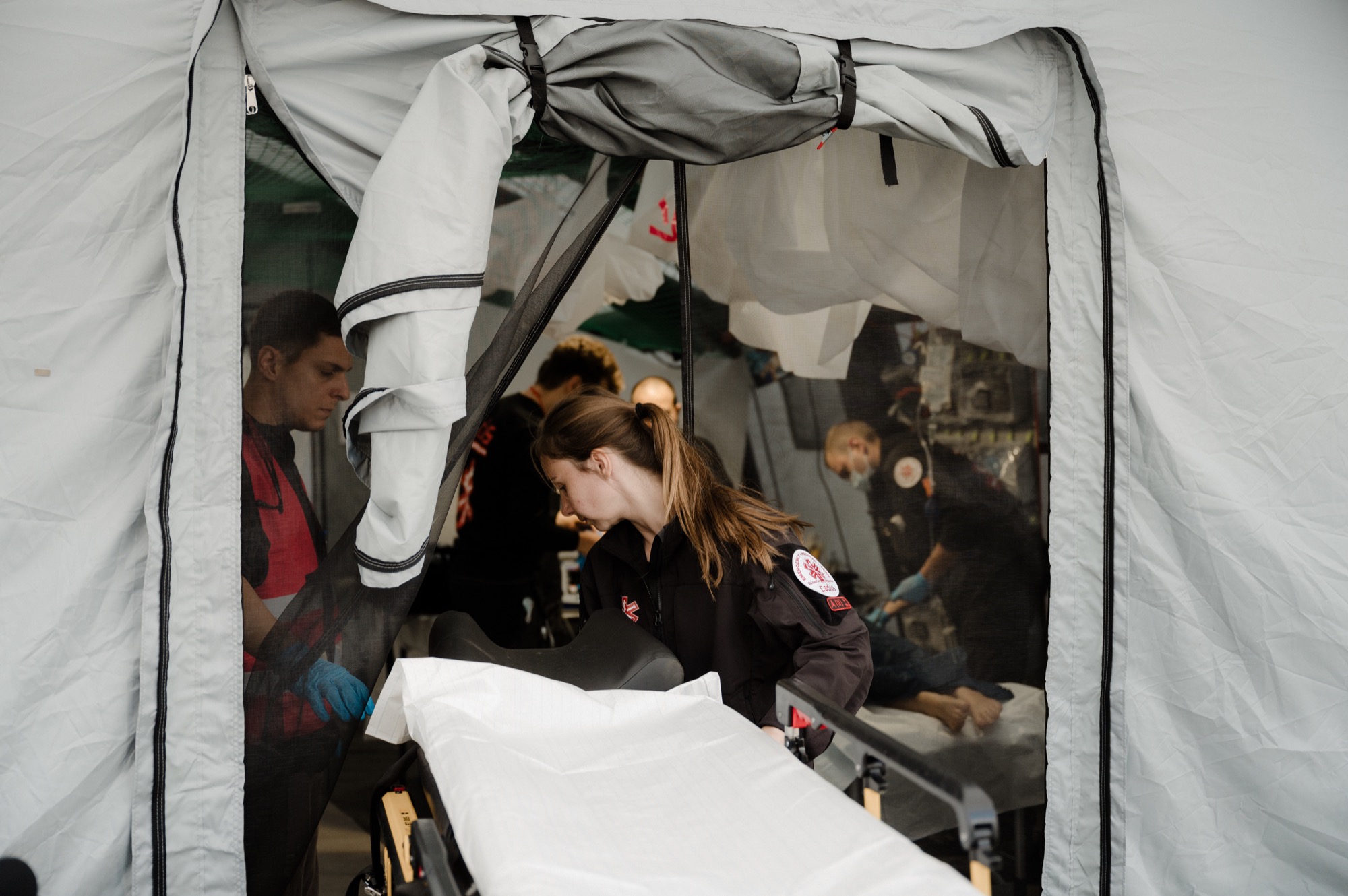
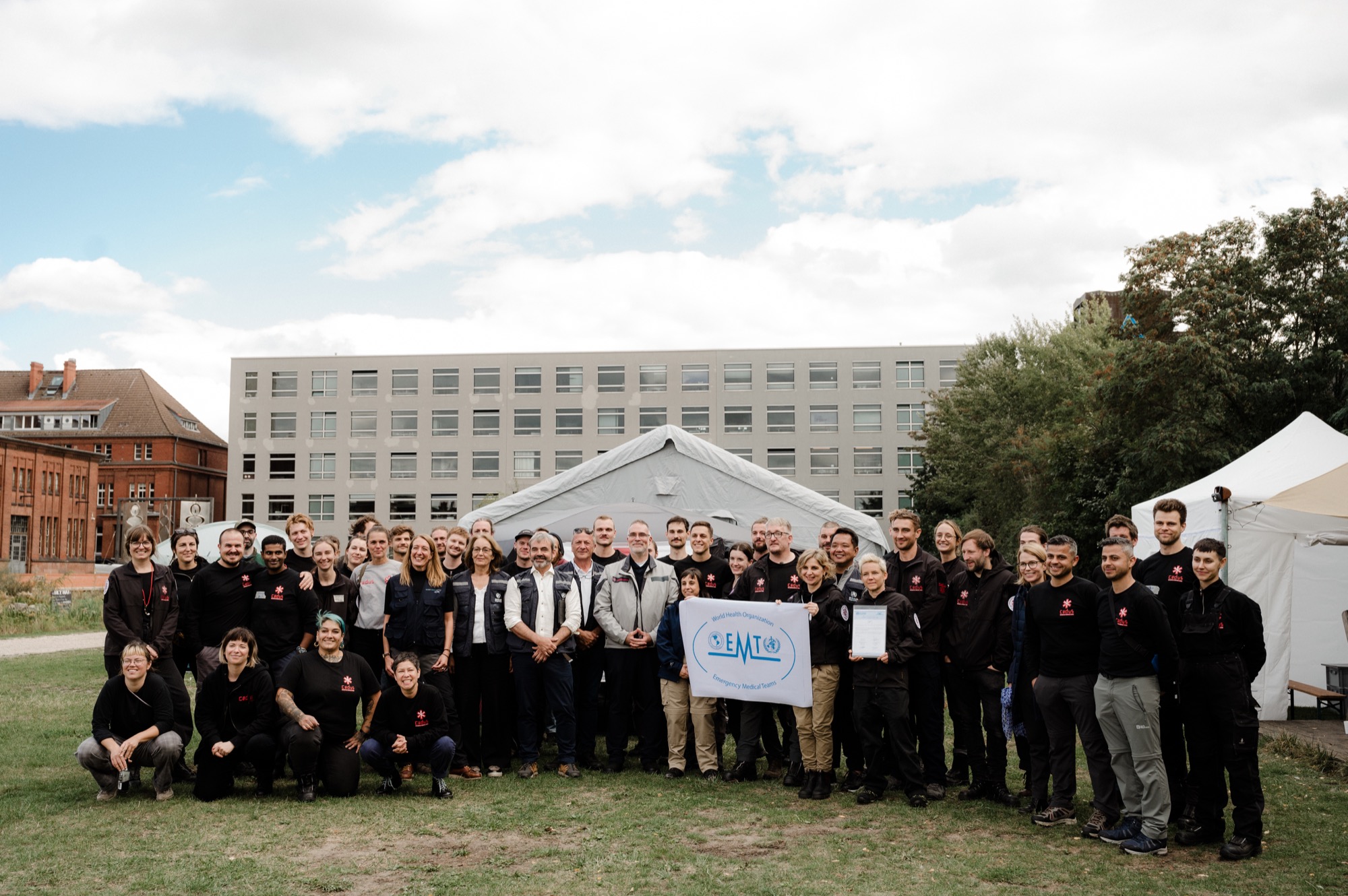
Just over a month ago, we were successfully classified as an Emergency Medical Team (EMT) by the World Health Organization (WHO). But what is actually behind this and what does it mean for us to be an EMT?

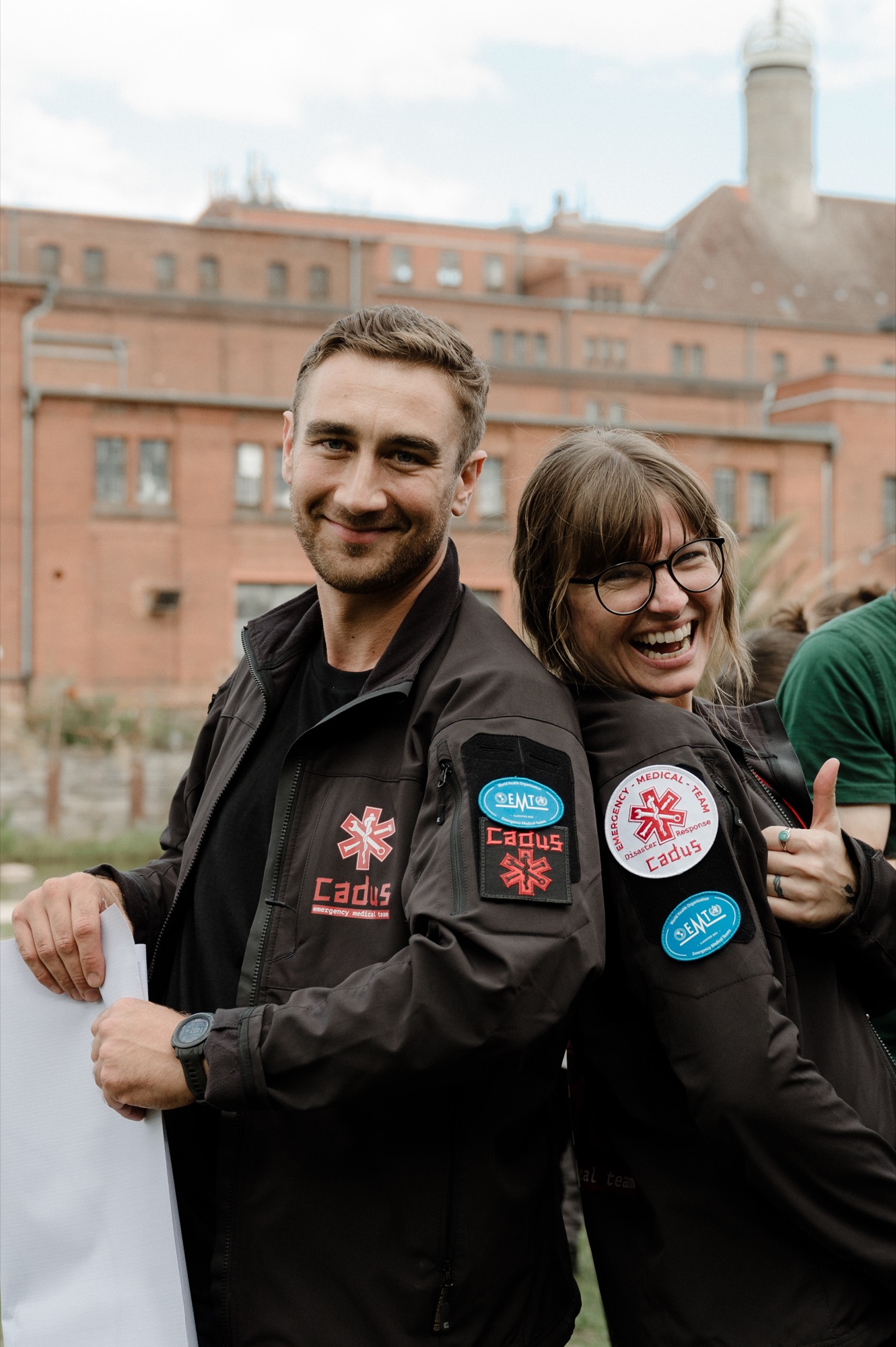
Cheers, whistles and the popping of champagne corks echo across the lawn of the Malzfabrik in Berlin. A good 50 people in CADUS clothing celebrate the completion and culmination of years of work and sweaty months – we are officially an EMT 1 fixed and mobile! In the company of representatives of the WHO and other EMTs, the Federal Foreign Office and the Robert Koch Institute, a toast is raised. Thanks again to everyone who has supported us in so many different ways along the way!
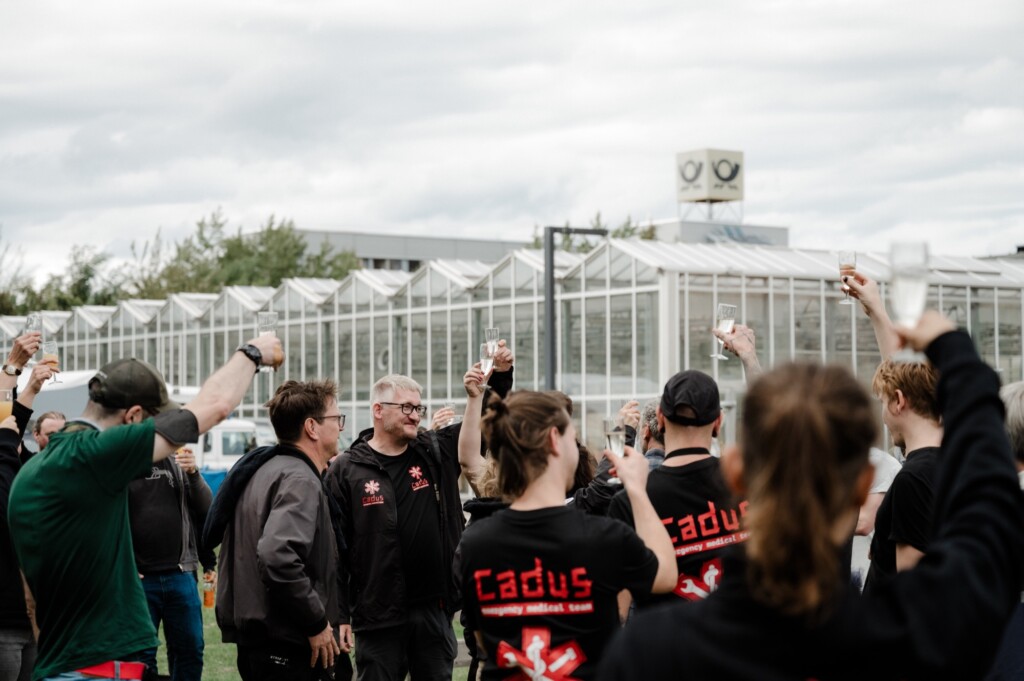

Raise your glasses to success! Photo: CADUS

Around six years have passed since we at CADUS made the decision to start the classification process. Interrupted time and again by our deployments to various crisis regions around the world, we have worked continuously to fulfill the requirements. Not only in writing, but also with our equipment and personnel, we have to prove that we are ready to act quickly and professionally in an emergency.

From “worst case” to “best practice”

This is precisely why the EMT system was created by the WHO after the sometimes catastrophic experiences following the 2010 earthquake in Haiti. At that time, so many aid workers flooded the island that it was impossible to distribute the aid sensibly and monitor its quality. As a result, a lot of aid money trickled away, some regions were over-supplied, while people in other areas received no support for a long time and patients were treated inadequately or incorrectly. Well meant is not always well done.
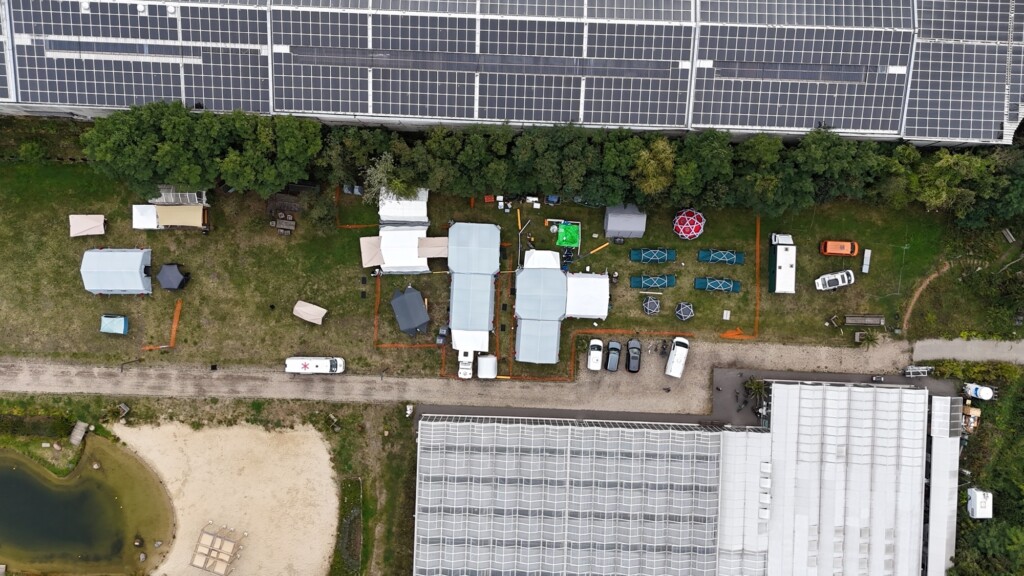

A bird’s eye view of the camp: the mobile part of the EMT on the left, the stationary part on the right, fenced in orange. The middle corridor marks the boundary between the patient section (left) and the section reserved for the team, including technical equipment, accommodation and storage (right).

EMT as a seal of quality

The aim of the WHO’s EMT initiative is to guarantee the quality of aid provided by the various organizations with minimum standards – to protect the people affected in the crisis regions. To this end, the organizations are divided into EMTs of types 1 to 3, which have to meet different requirements in terms of treatment and care capacities. The focus is on the self-sufficiency of the teams so that international organizations do not strain the scarce resources in the crisis region. Countries affected by crises can request support from the WHO, which forwards the request to all EMTs and then coordinates their deployment.
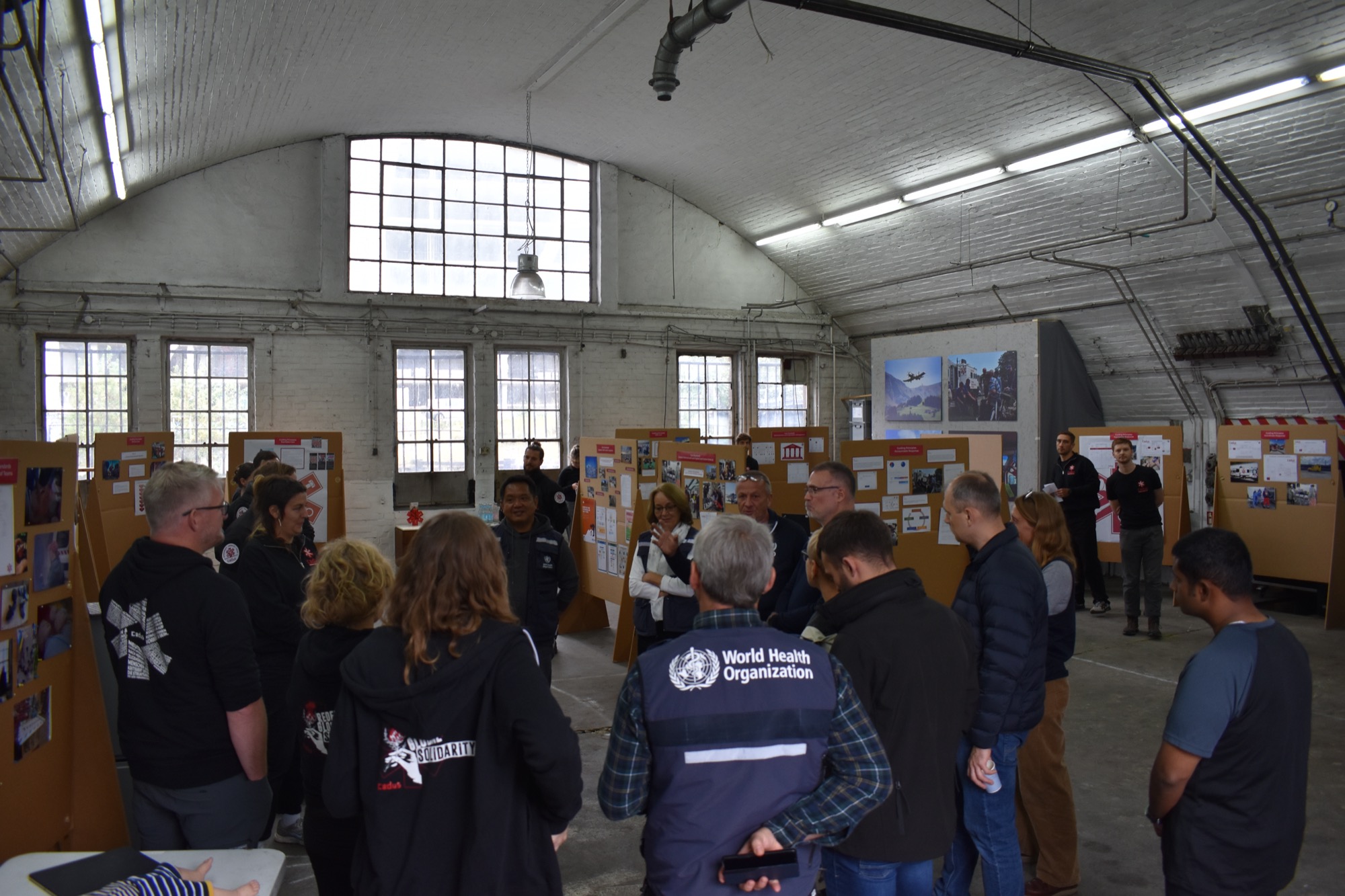
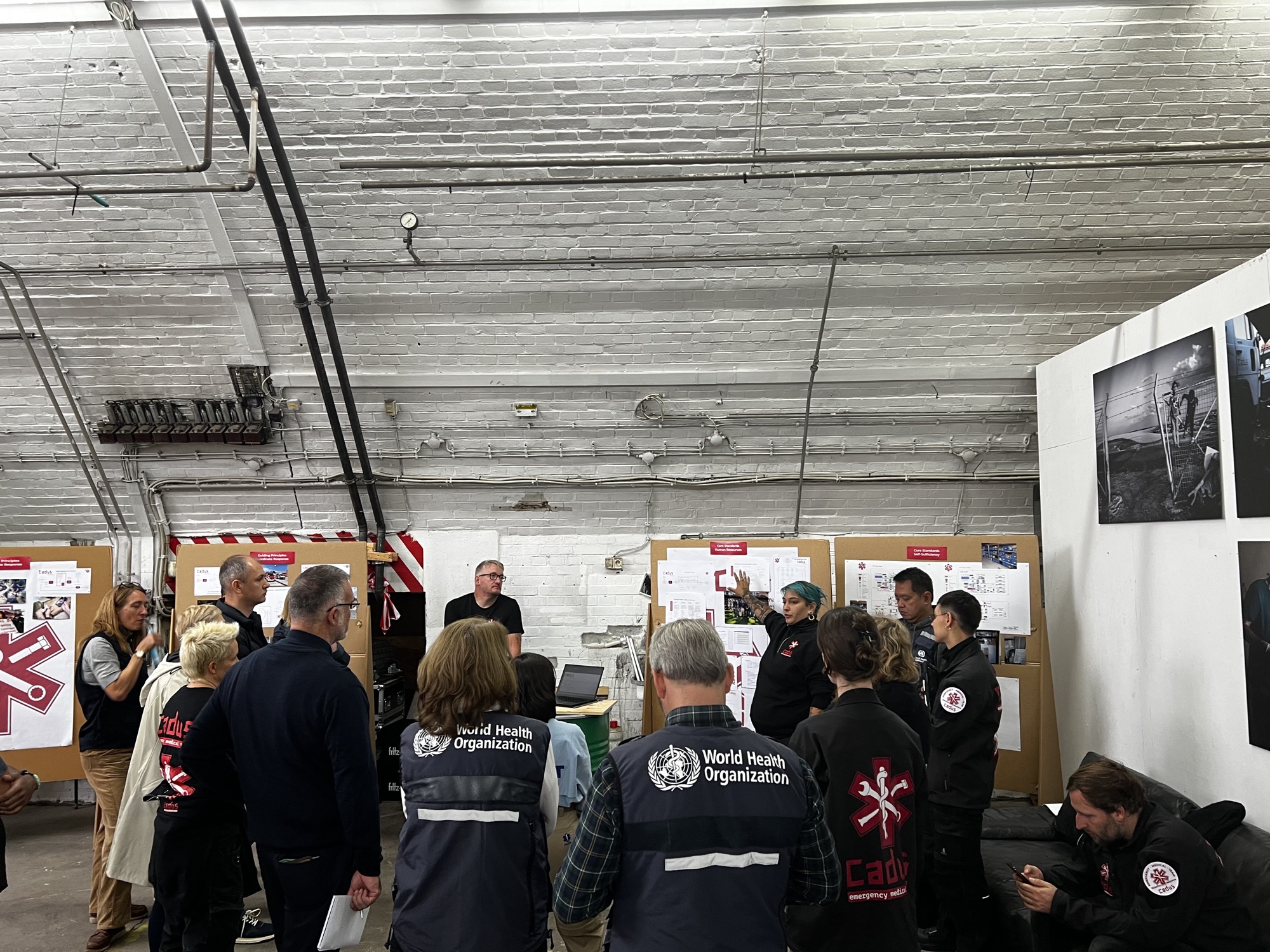
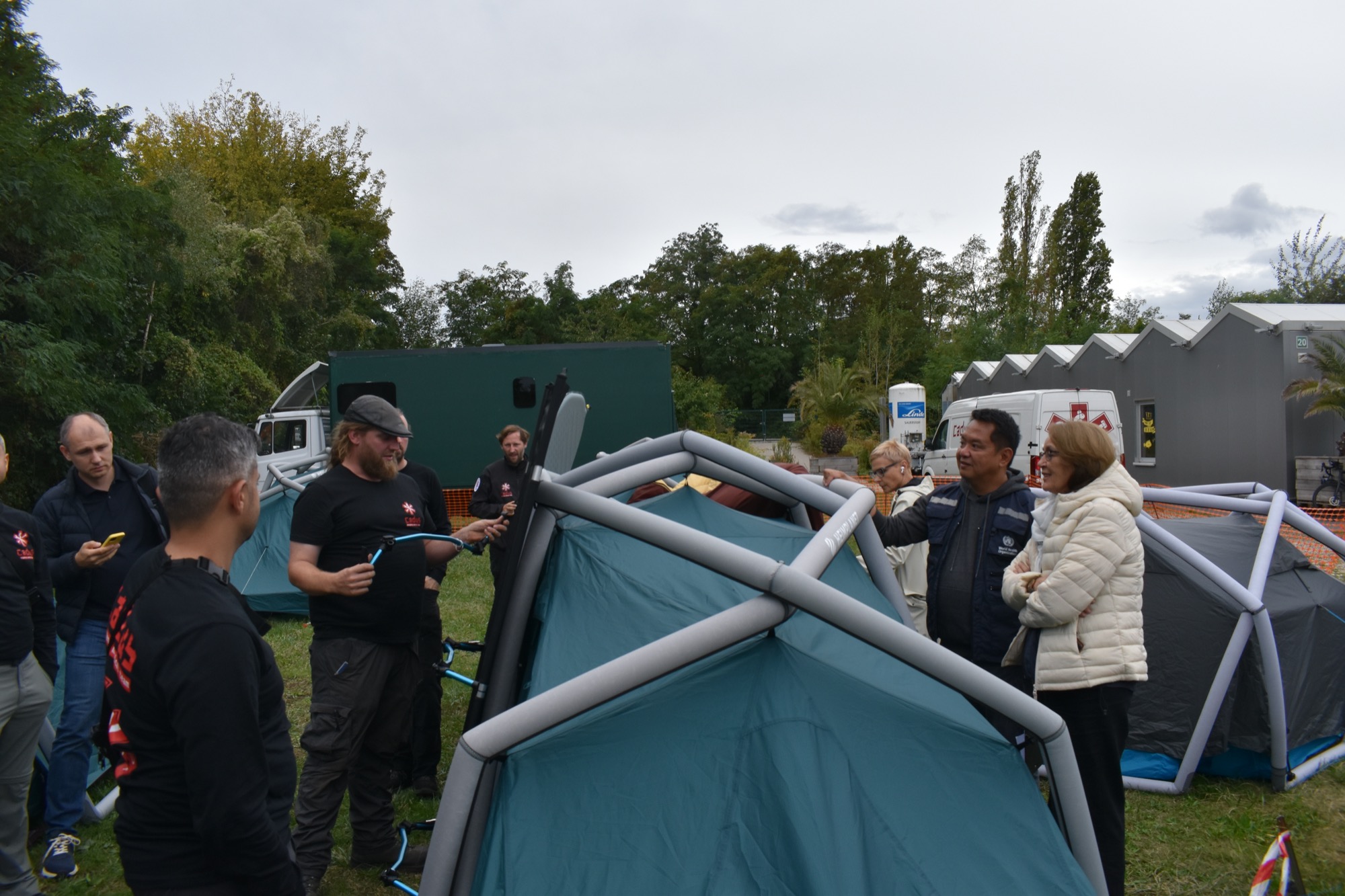
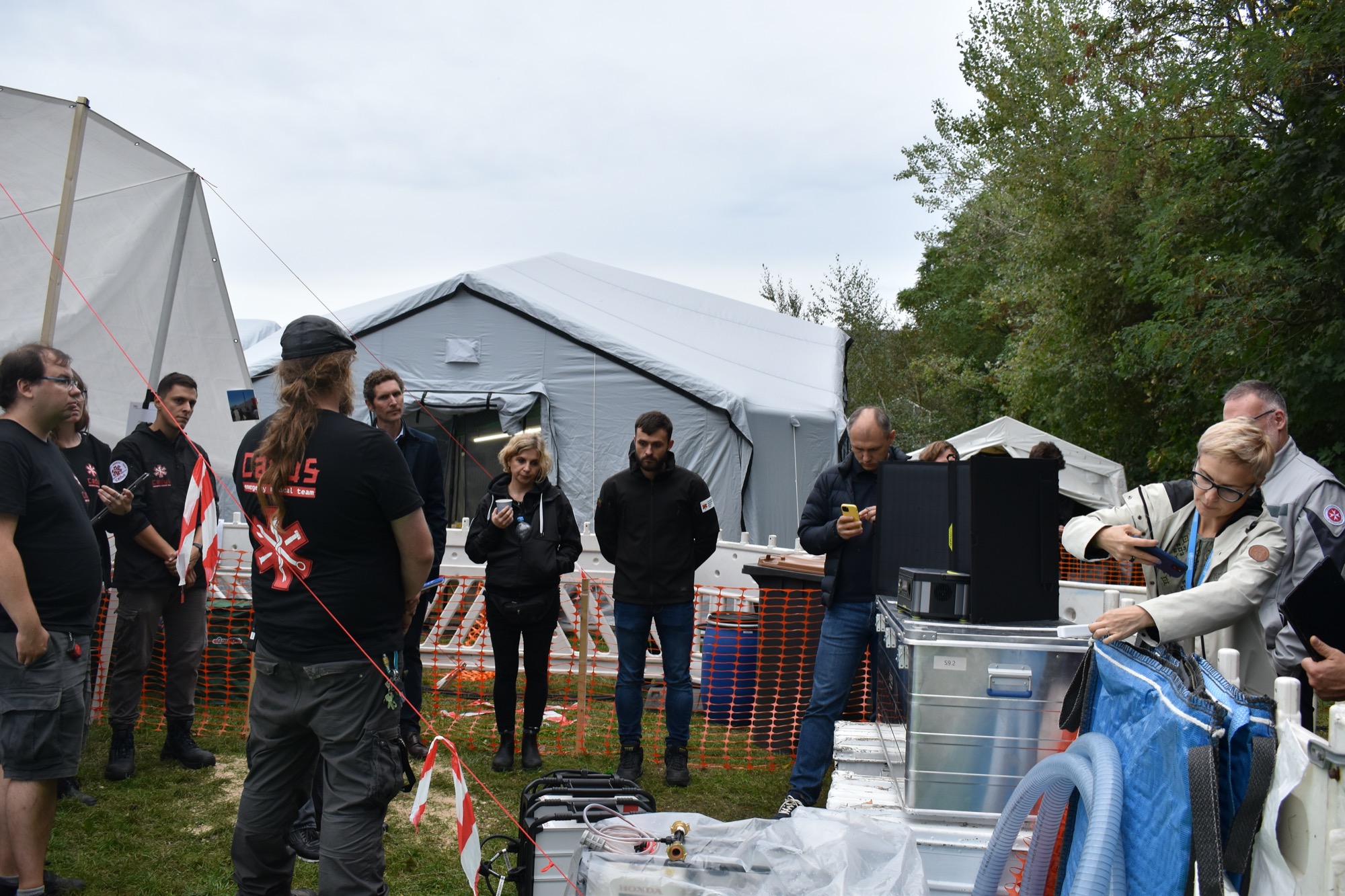
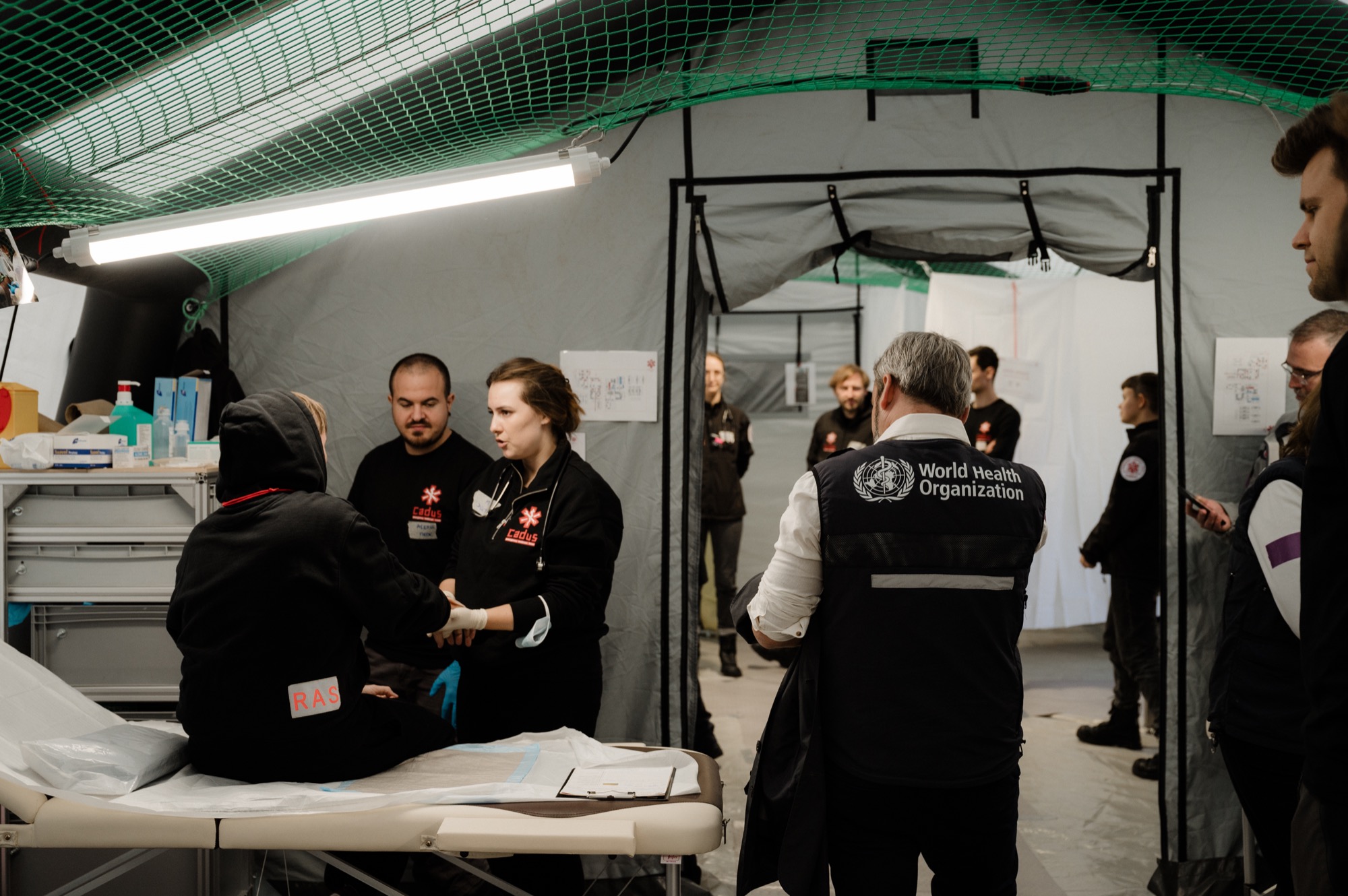
We not only had to demonstrate our practical skills, but also explain how crewing, finance and our logistics are structured. Photo: CADUS

The Blue Book, which lists the minimum requirements for EMT types, serves as a guideline for classification. In addition, each organization is provided with mentors from the WHO who accompany and support the entire process.
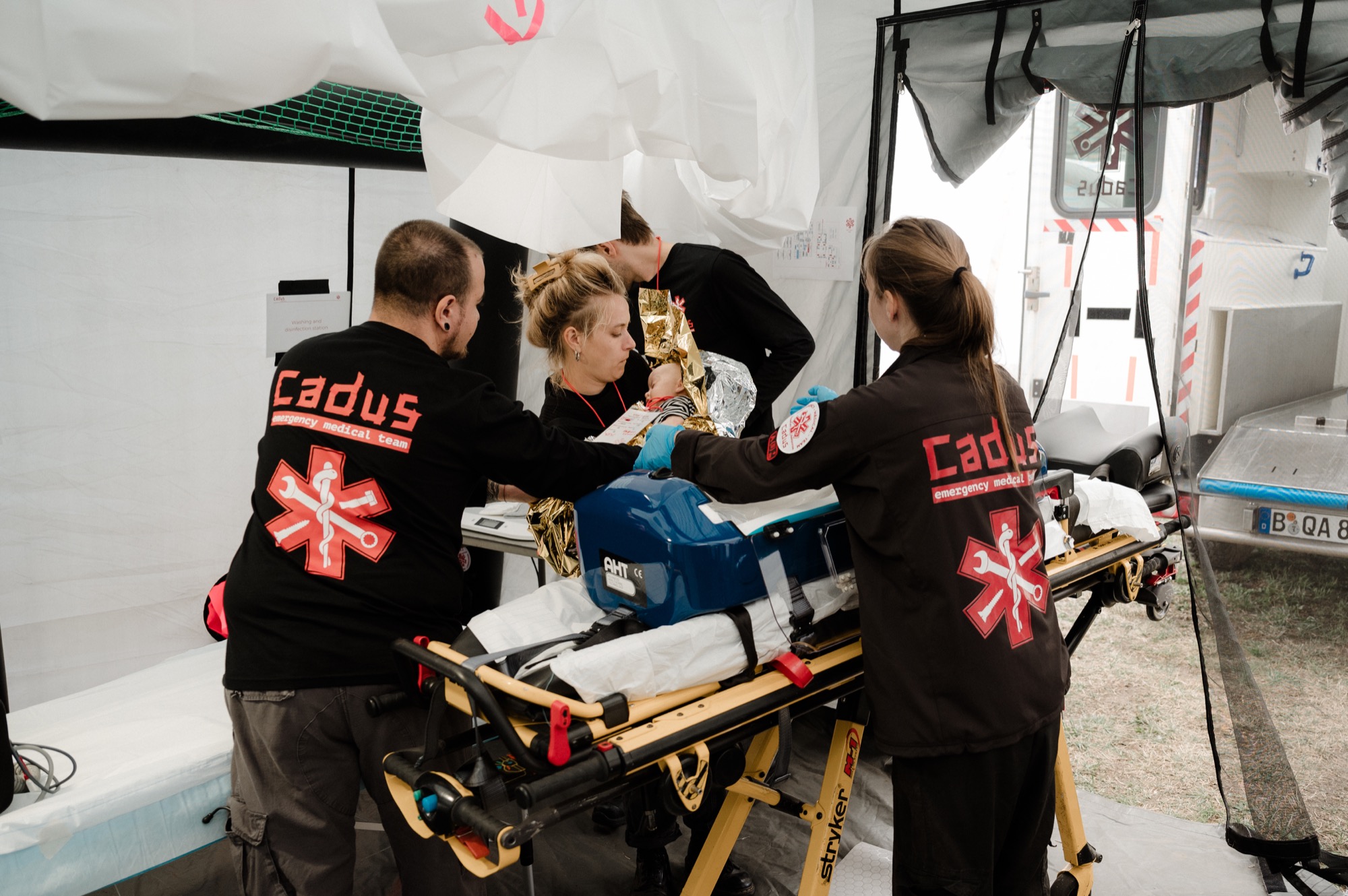
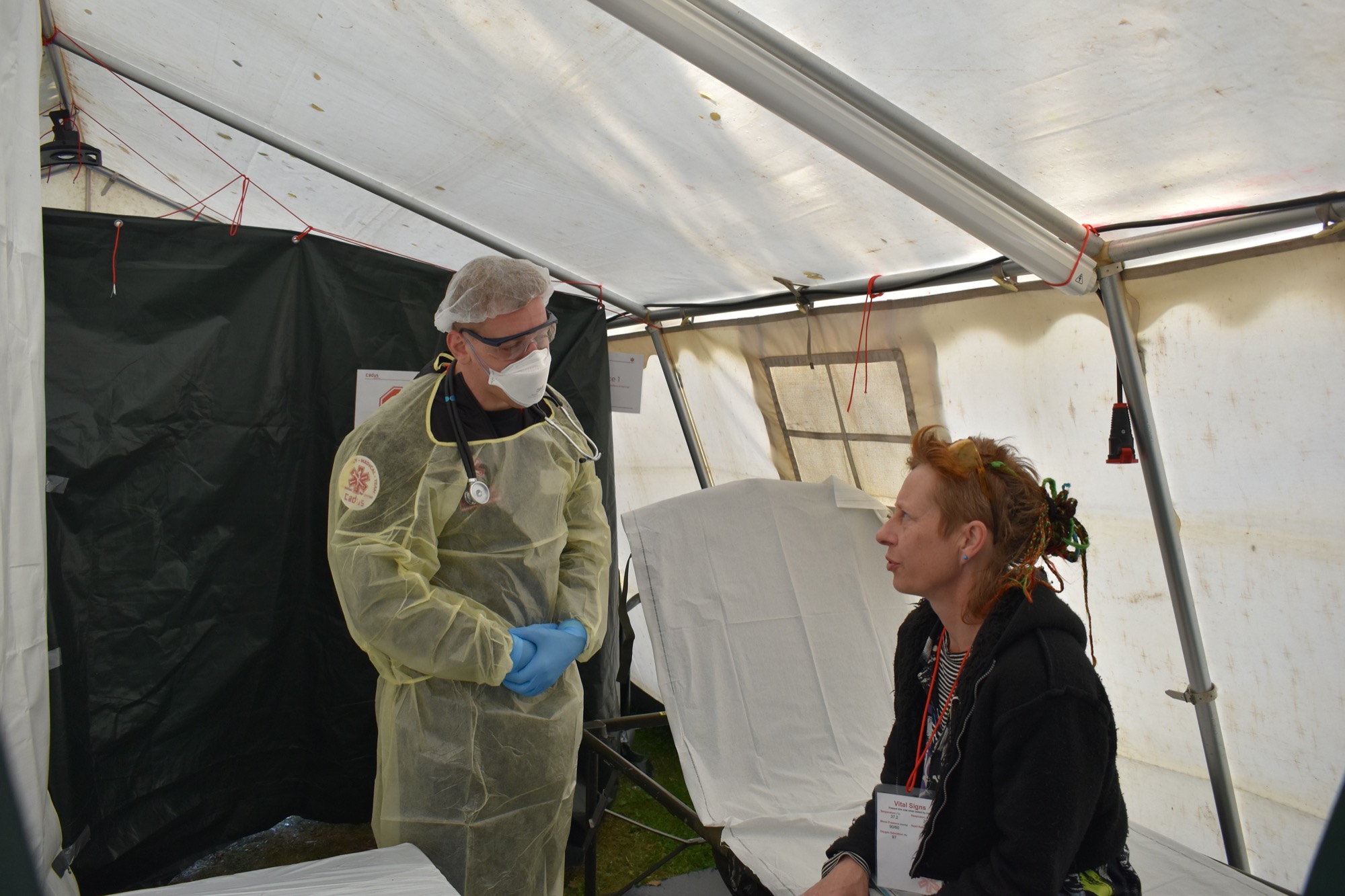
We also practiced special cases with mannequins and extras: on the left the treatment of an infant and on the right an infectious patient in the isolation area. Photo: CADUS

Prepared for an emergency

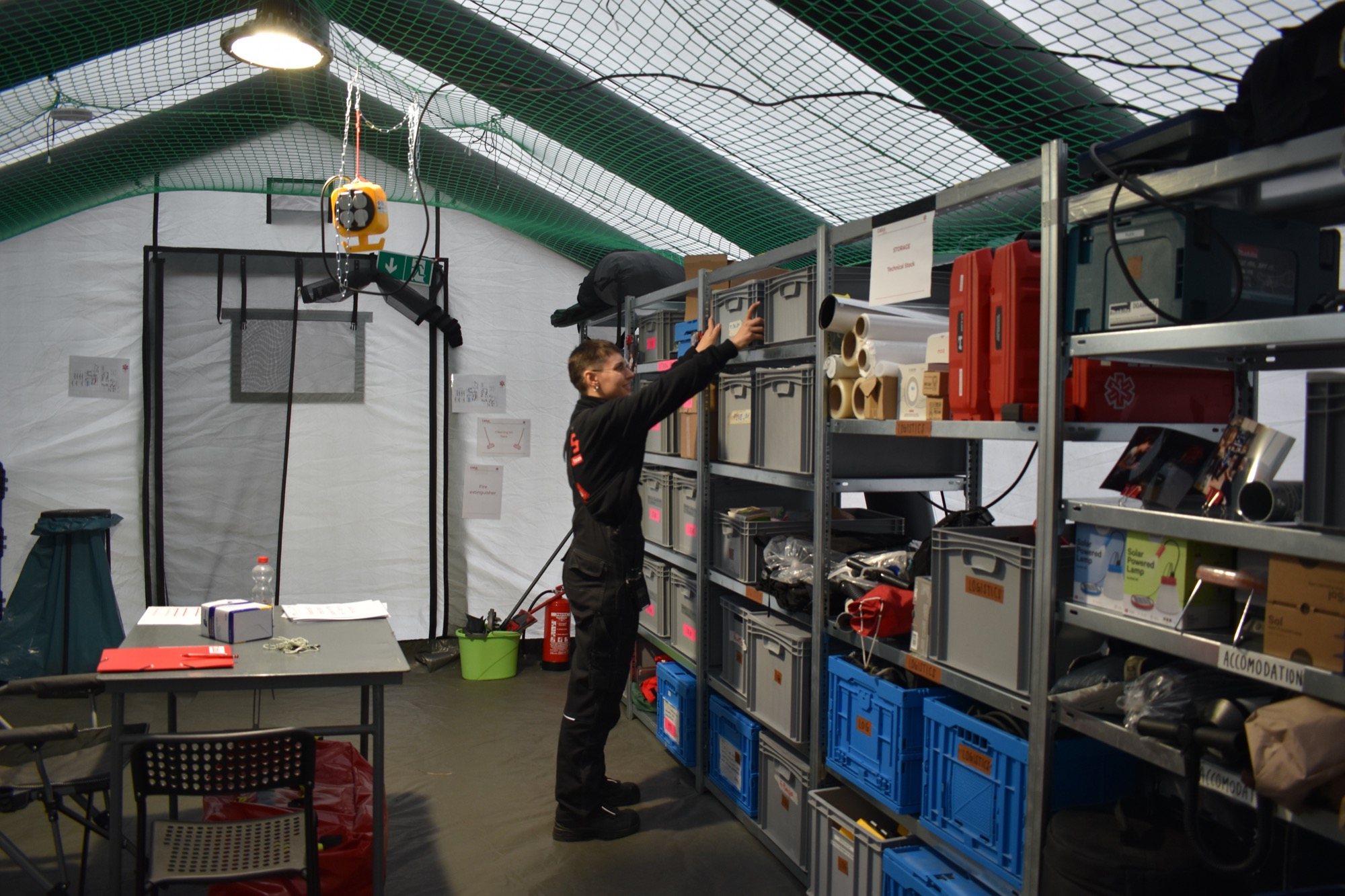
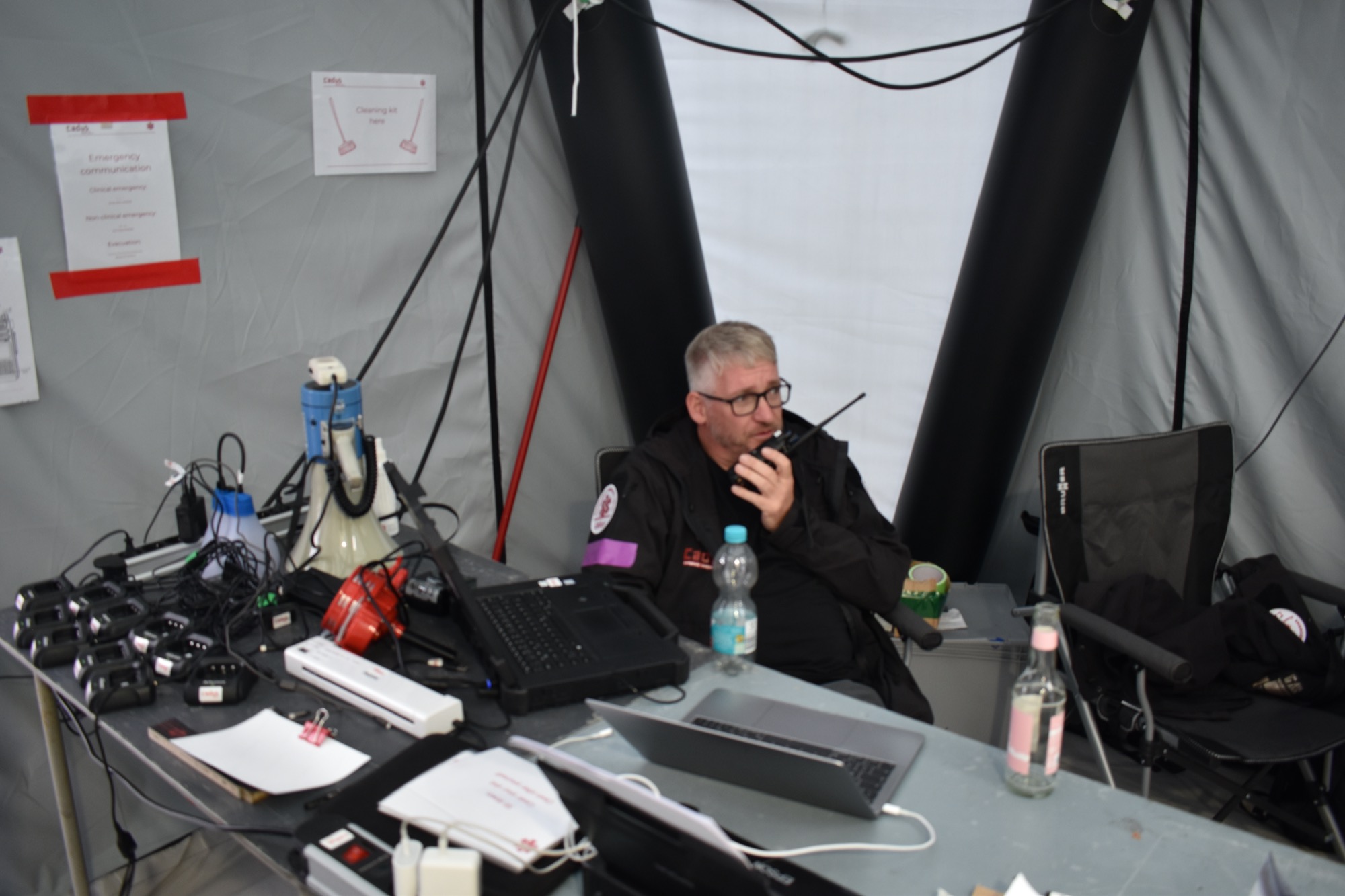
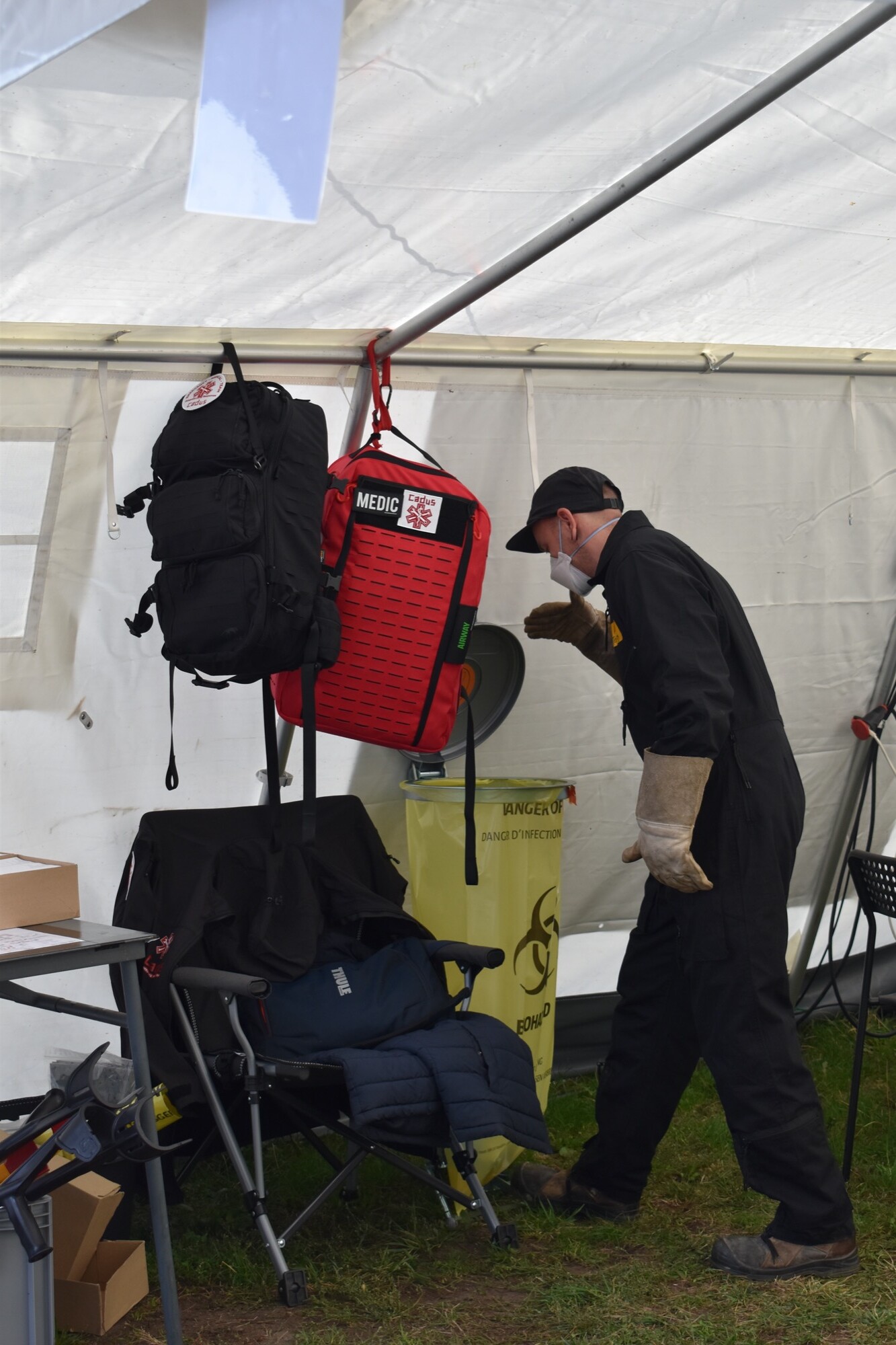
And this can quickly become confusing. Not only do we have to show the WHO inspectors that we can adequately treat patients and provide them with medication, but we also have to ensure that they have access to water and sanitation. Our teams also need accommodation, food, communication technology, lighting, electricity, waste and wastewater disposal and security measures for the entire camp.

In order to be able to treat patients in an EMT setting at all, many different trades need to work together smoothly to provide water, electricity and accommodation for the team, for example. Photo: CADUS

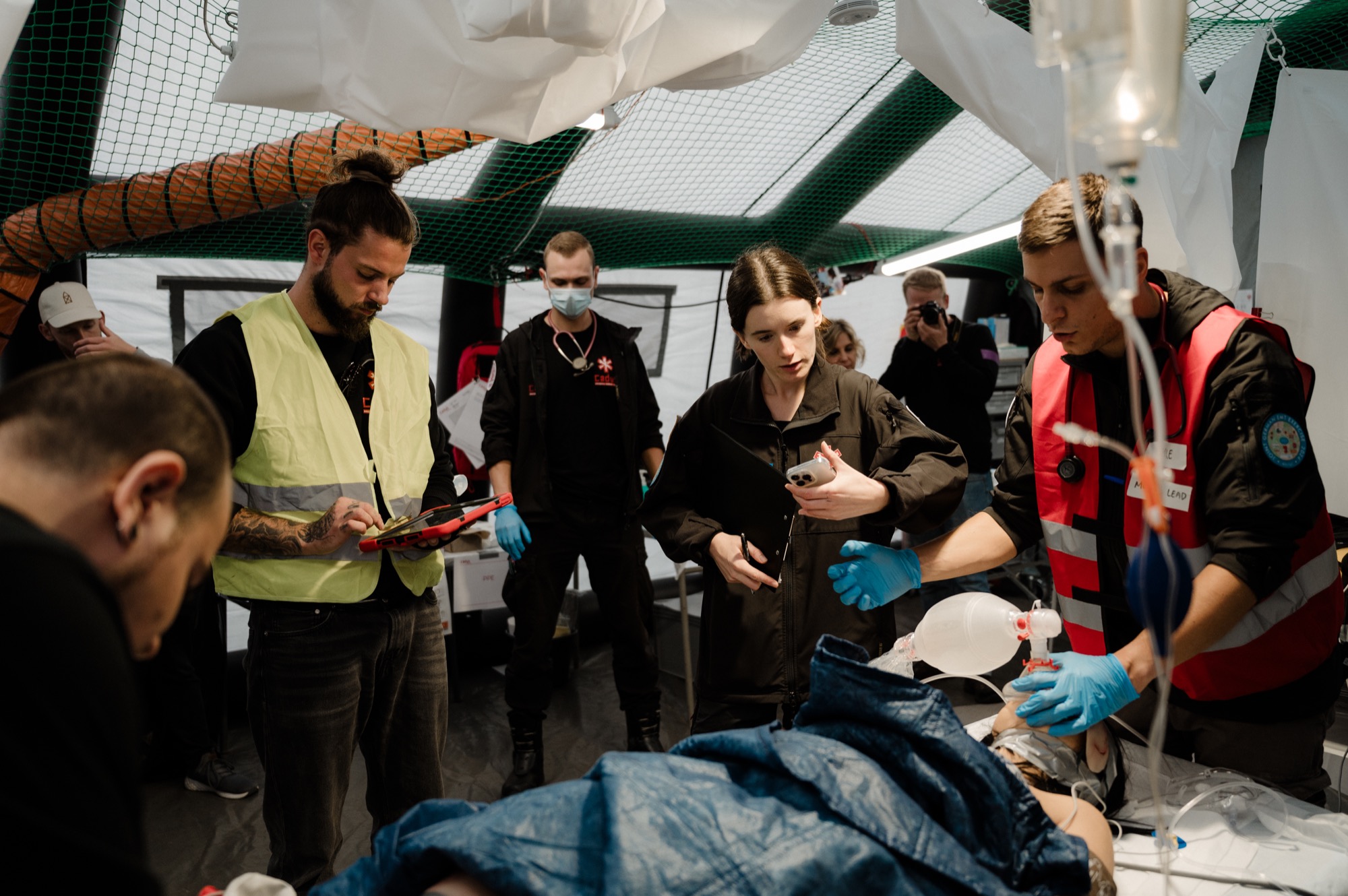
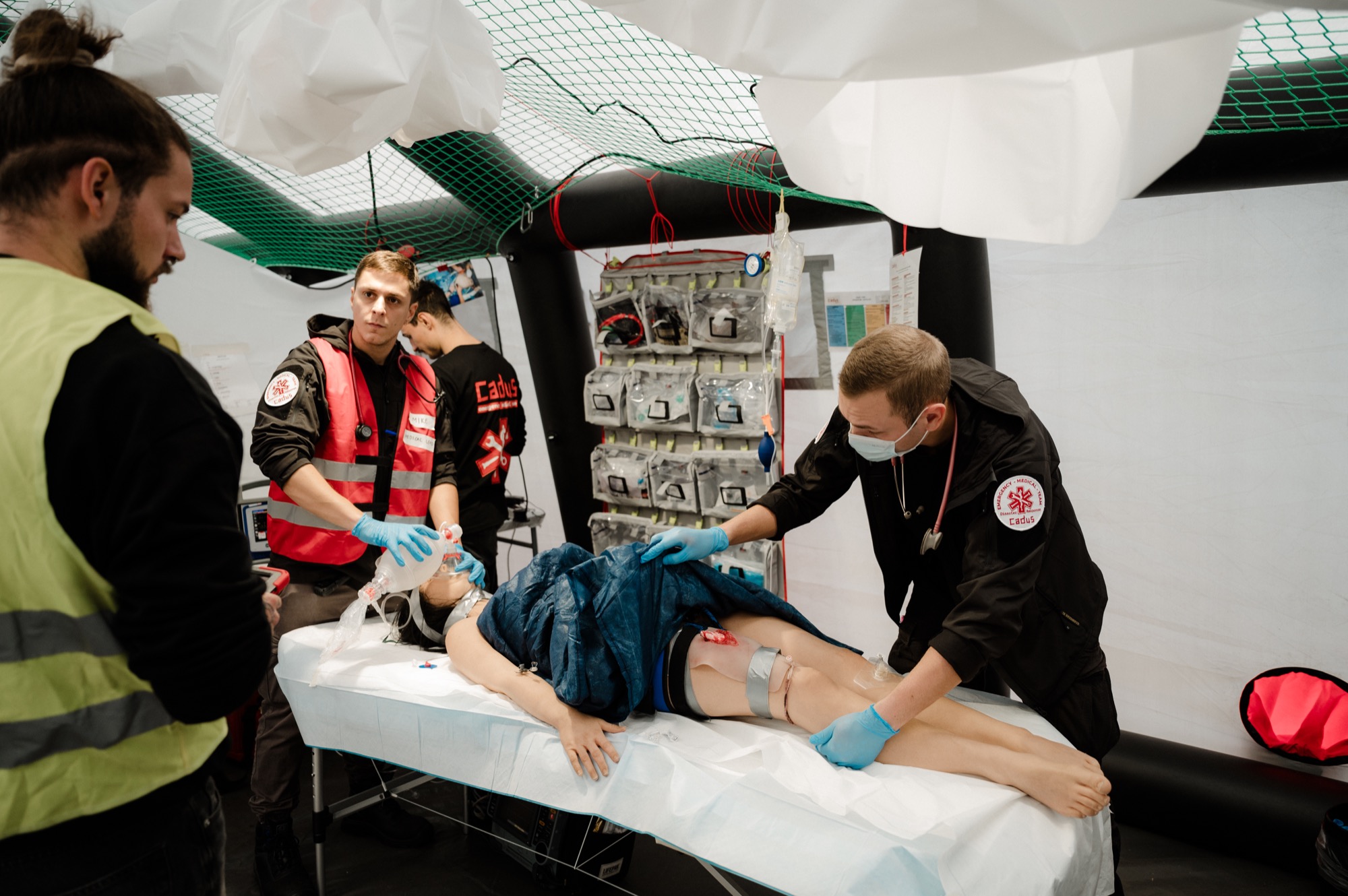
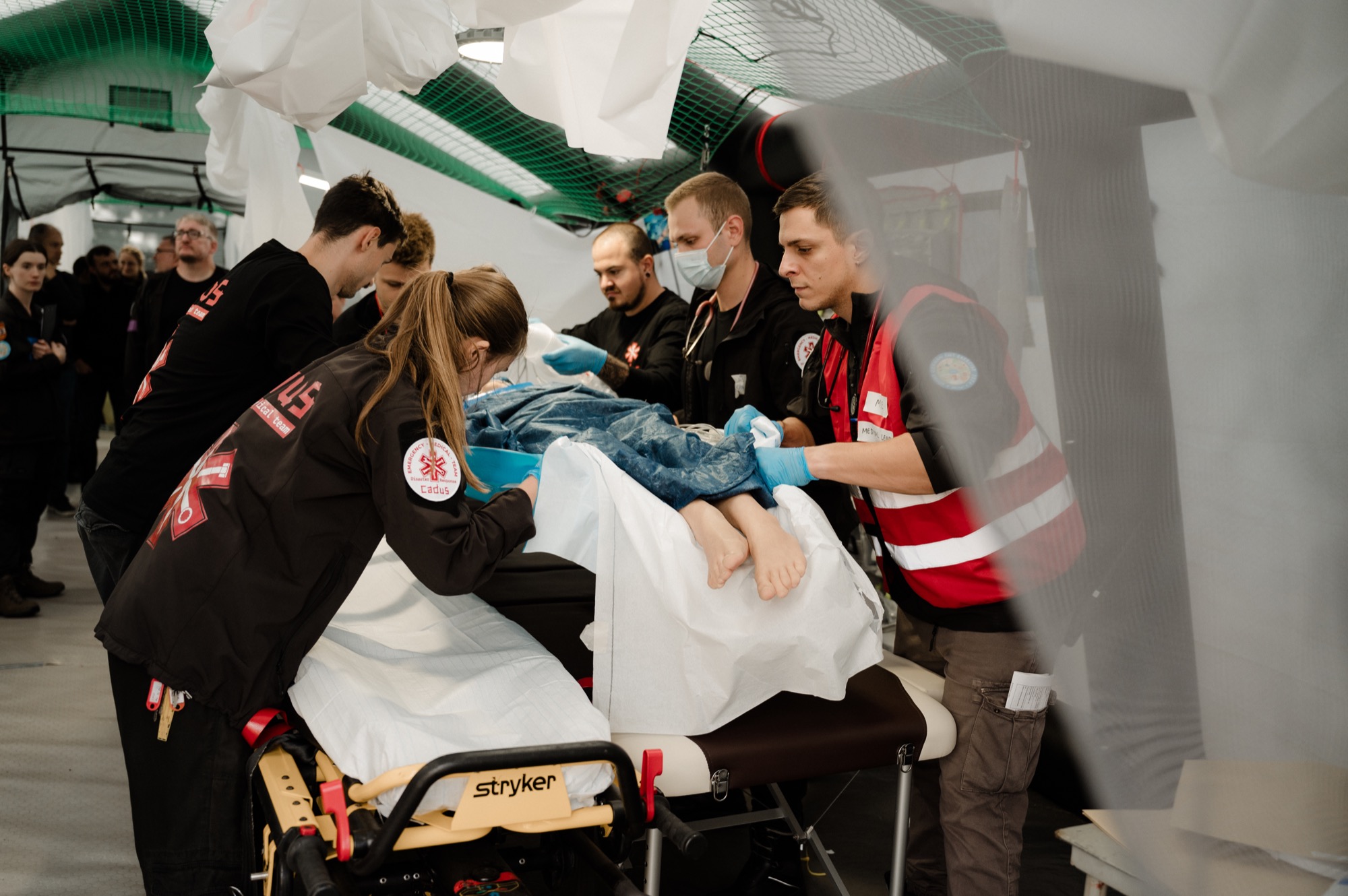
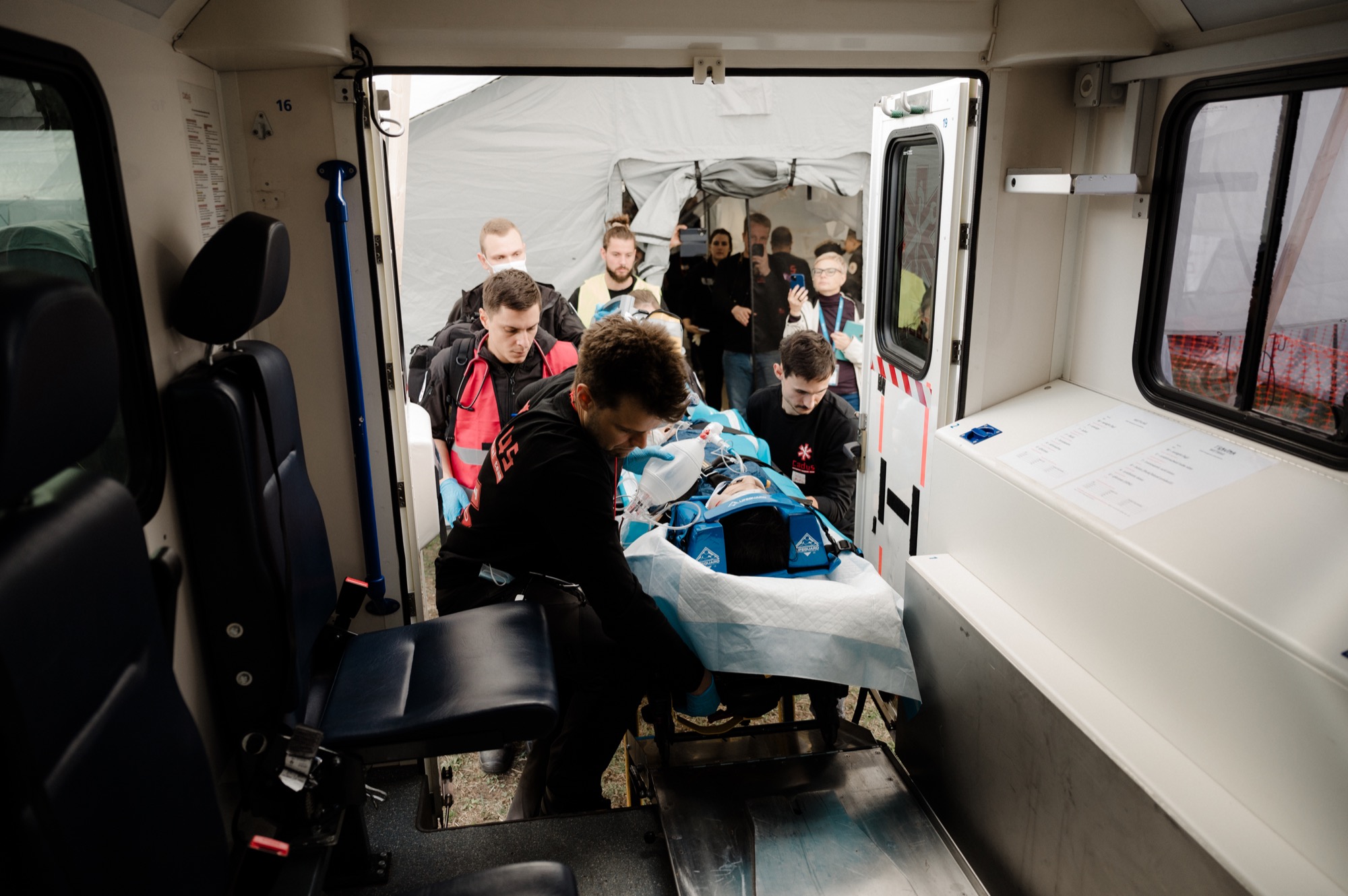
Where do we put the bloody bandages from patients with hepatitis? Where do we get water to drink, clean and cook when everything in the crisis region has been destroyed? How do we get the team and equipment to the scene as quickly as possible? For all this and more, plans have to be developed, processes described, material procured and teams trained. Operational exercises such as those in the Ahr valley or the EMT rehearsal set-up enabled us to check what is going well and where we need to make improvements. We also used our EMT classification as an opportunity to stress test the medical part of “Emergency Medical Team” with the help of many extras.
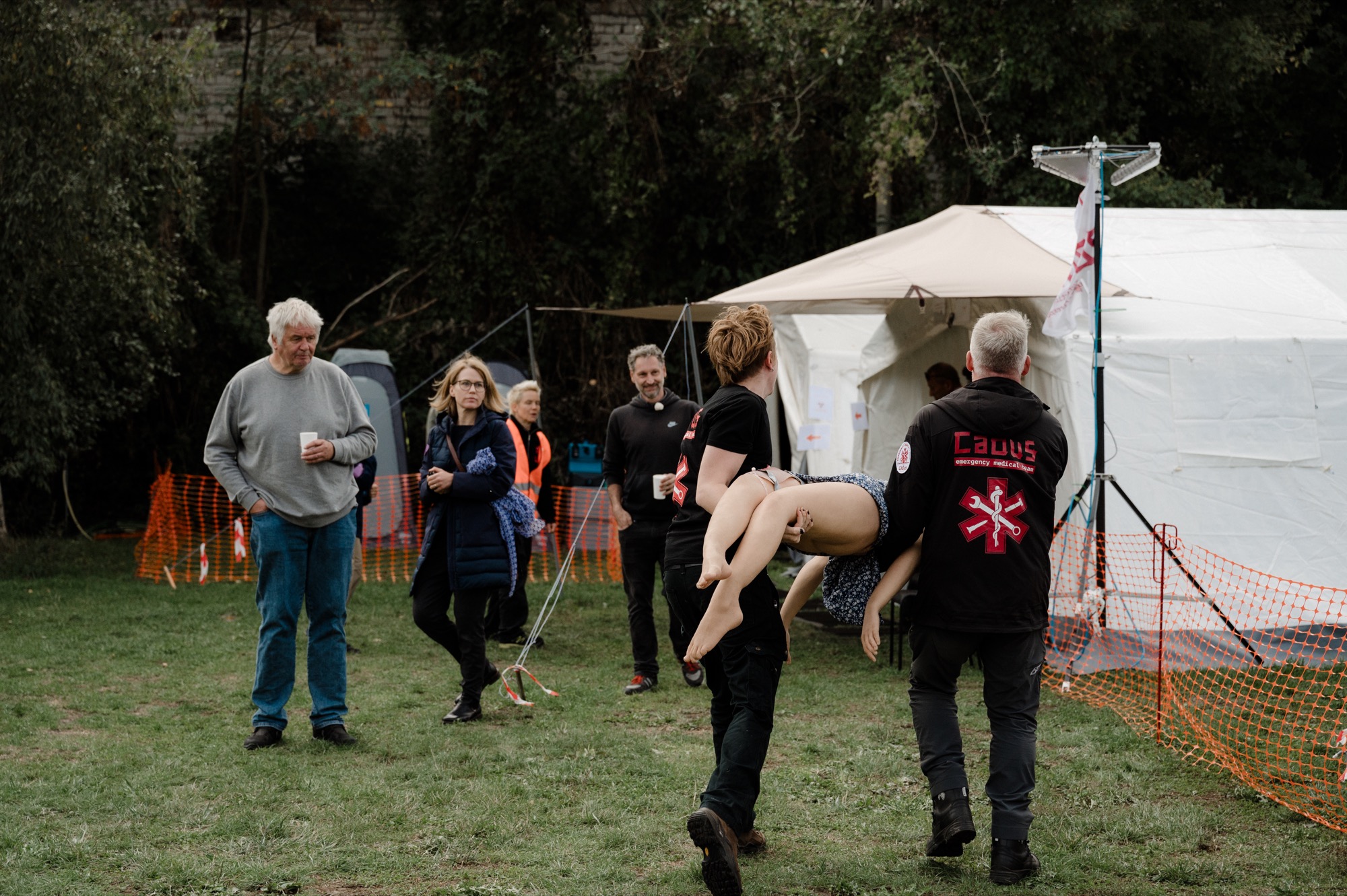
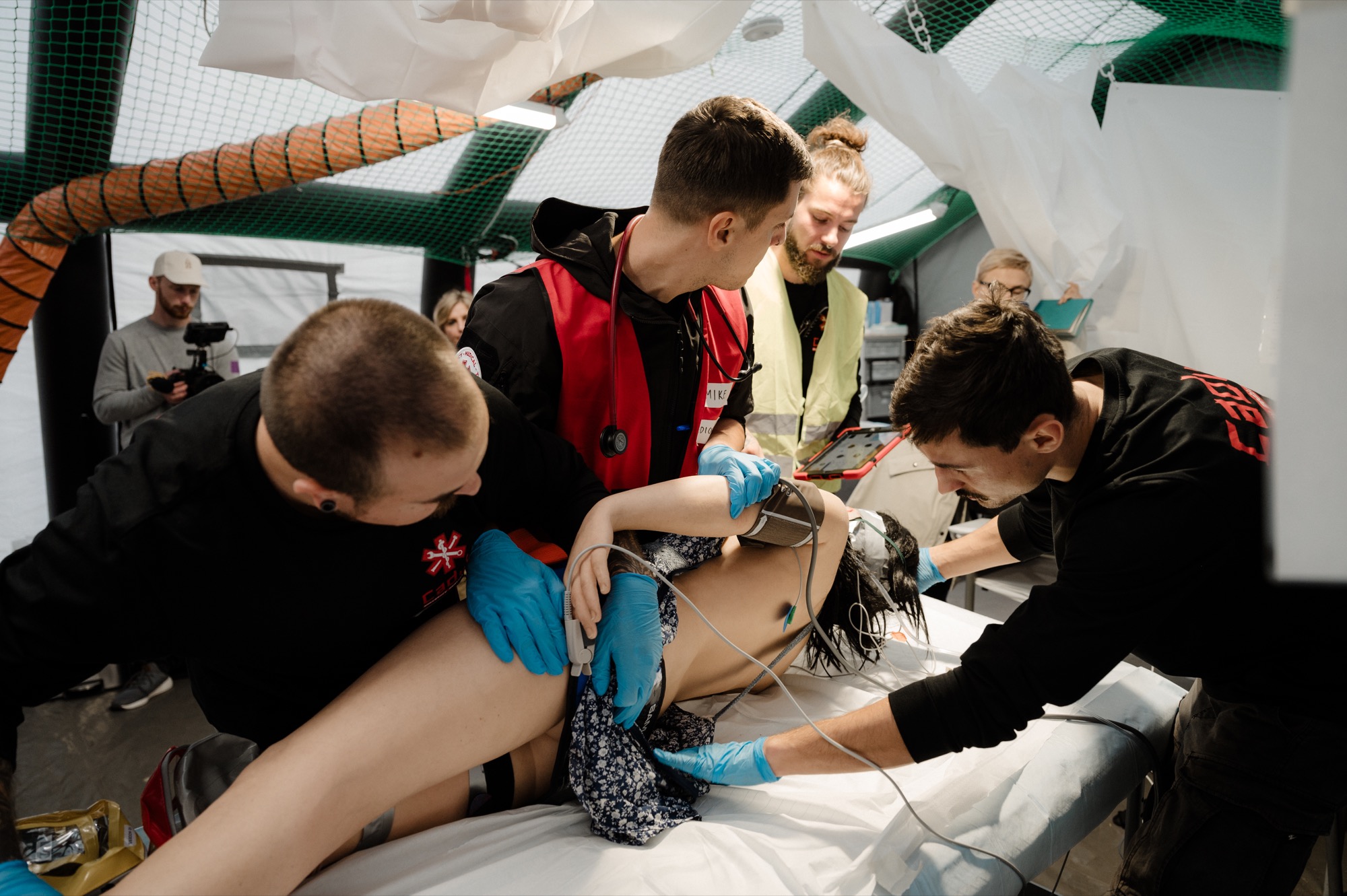
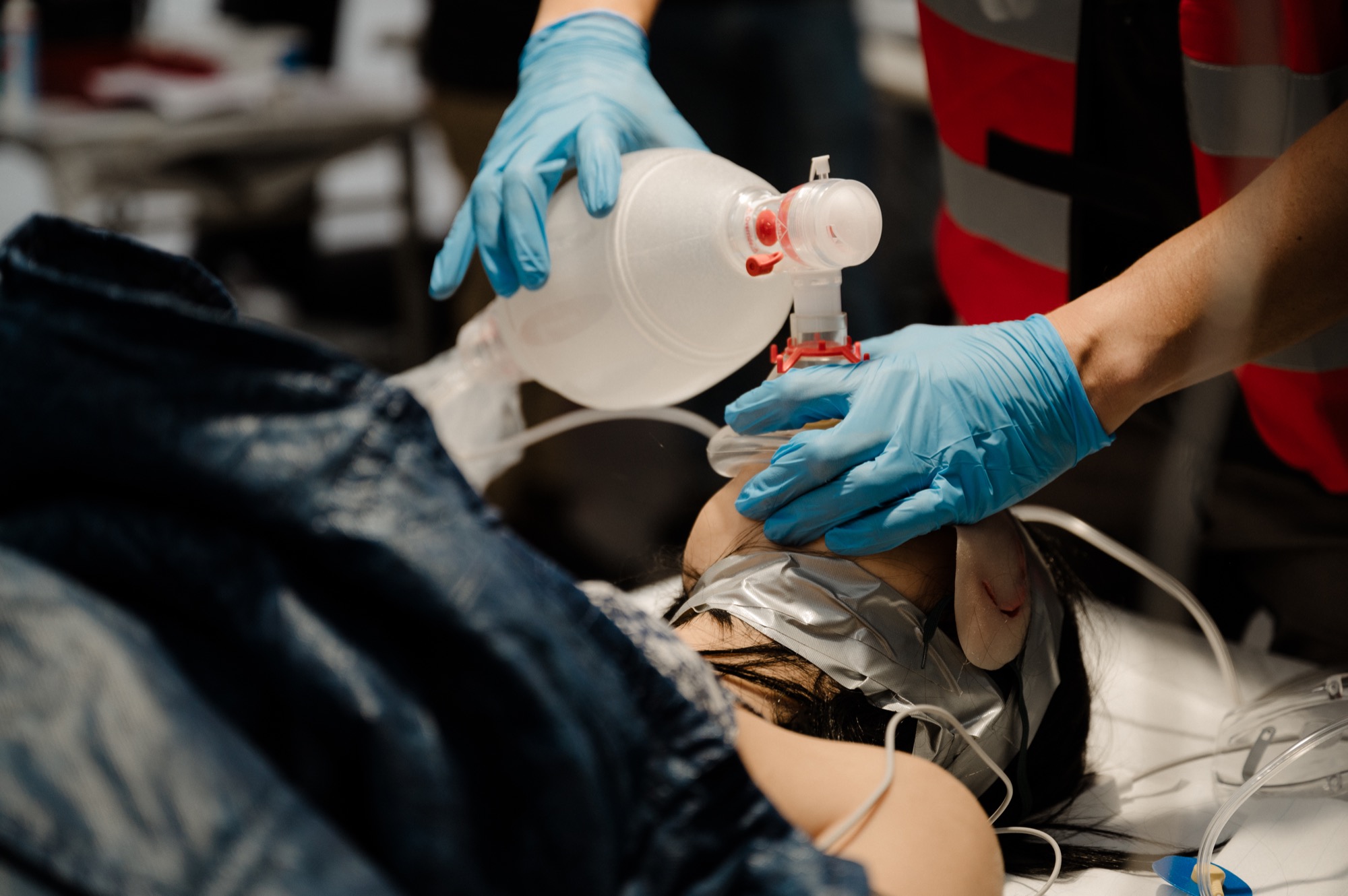
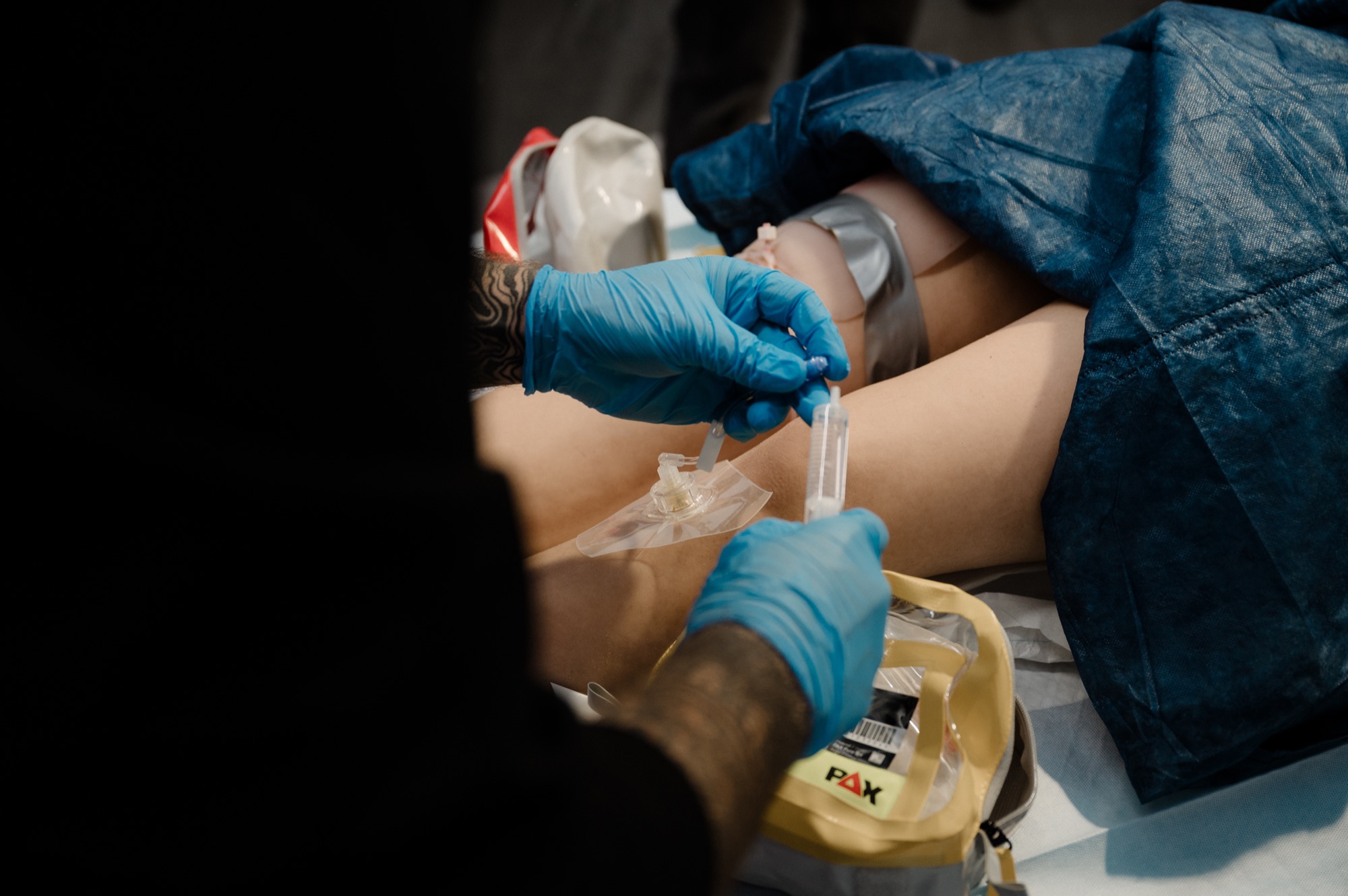
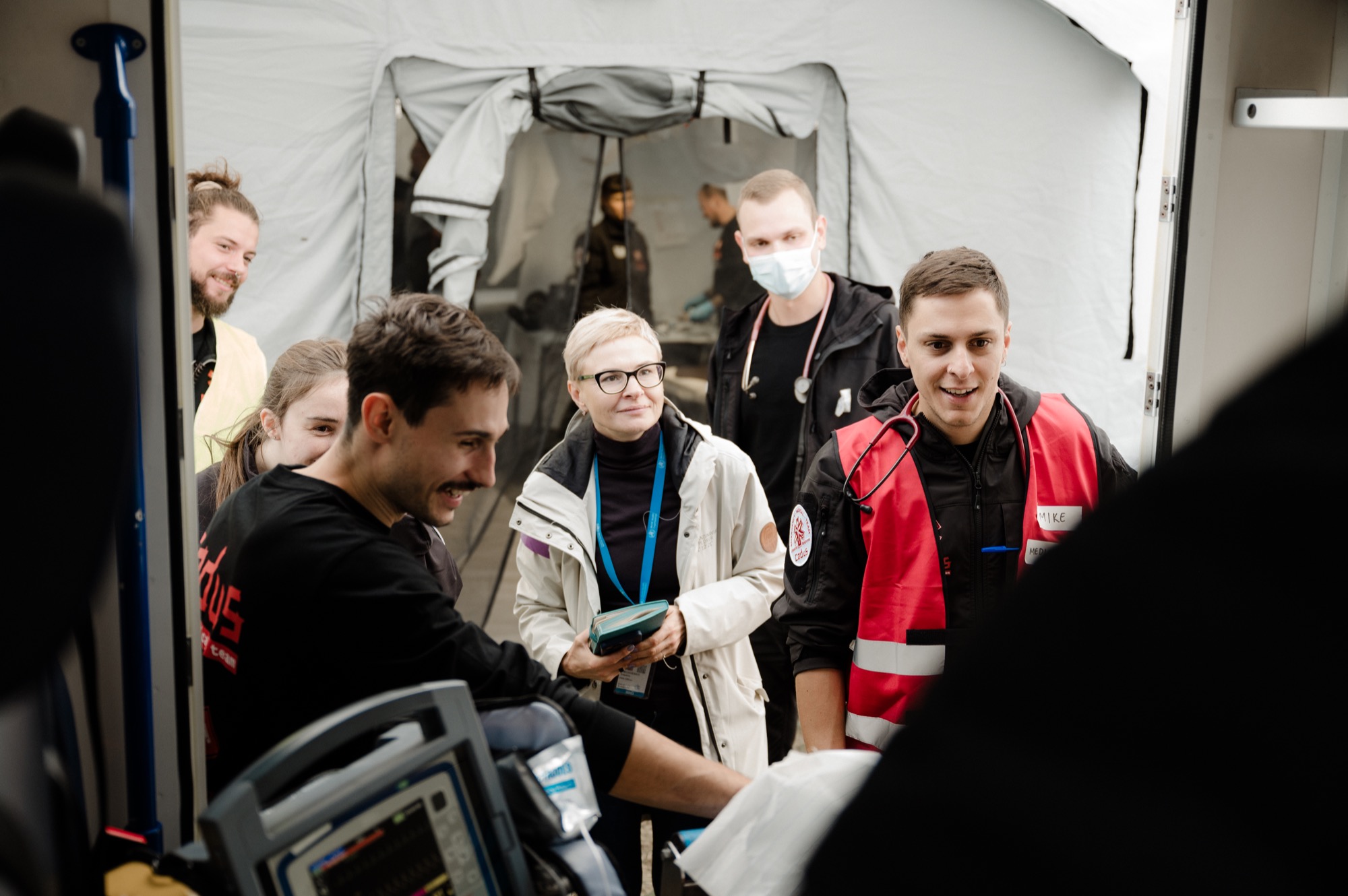
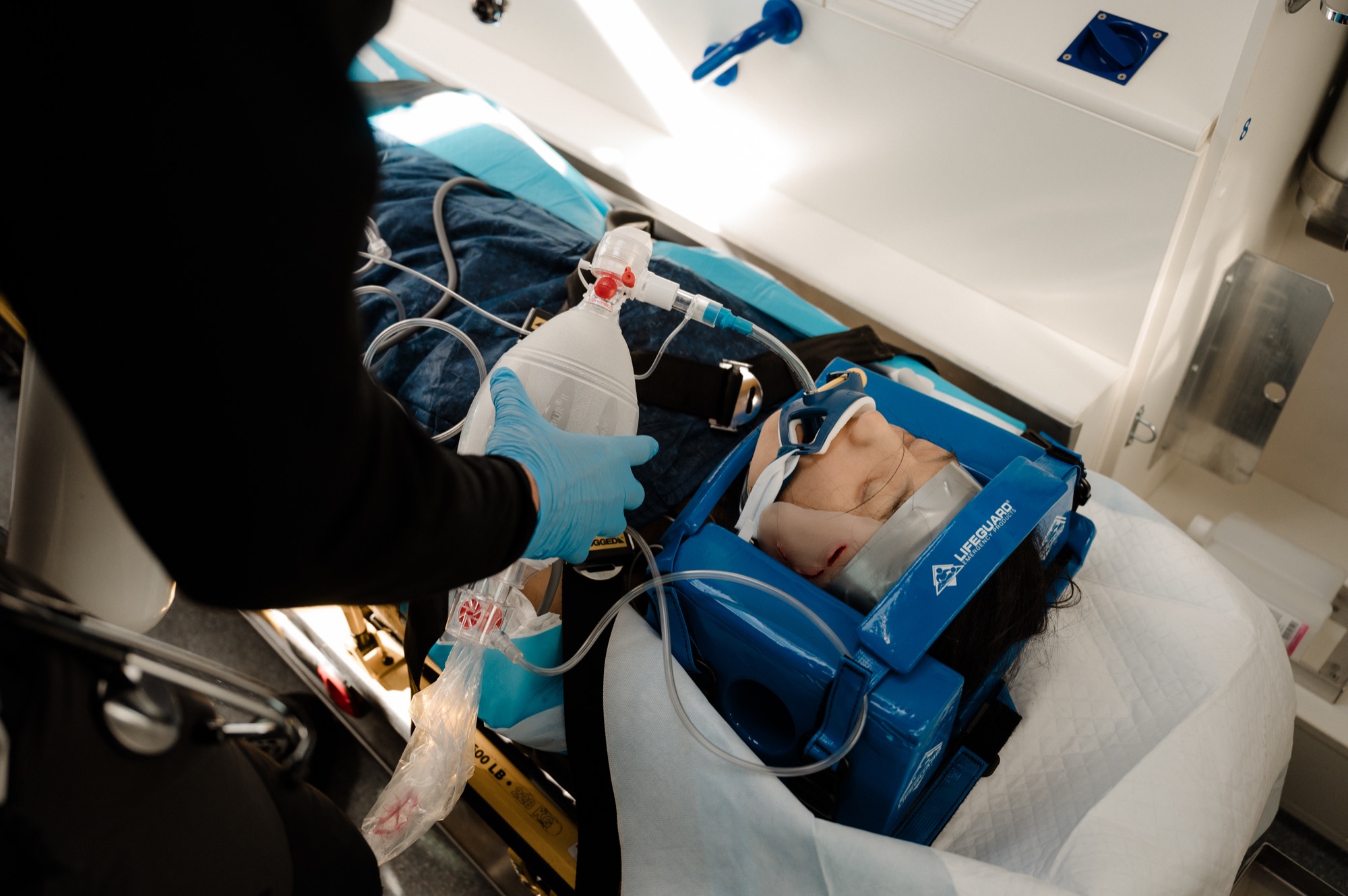
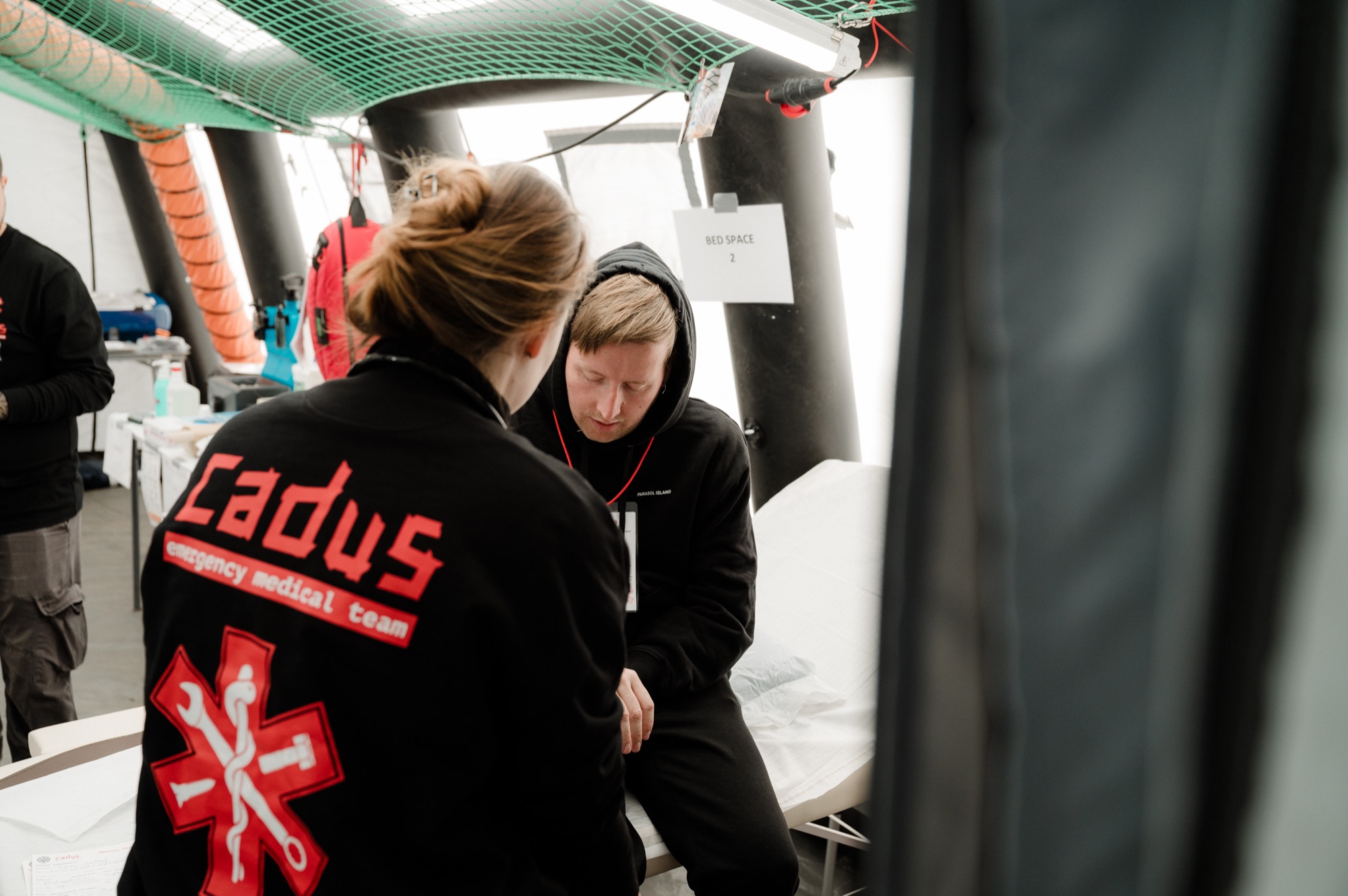
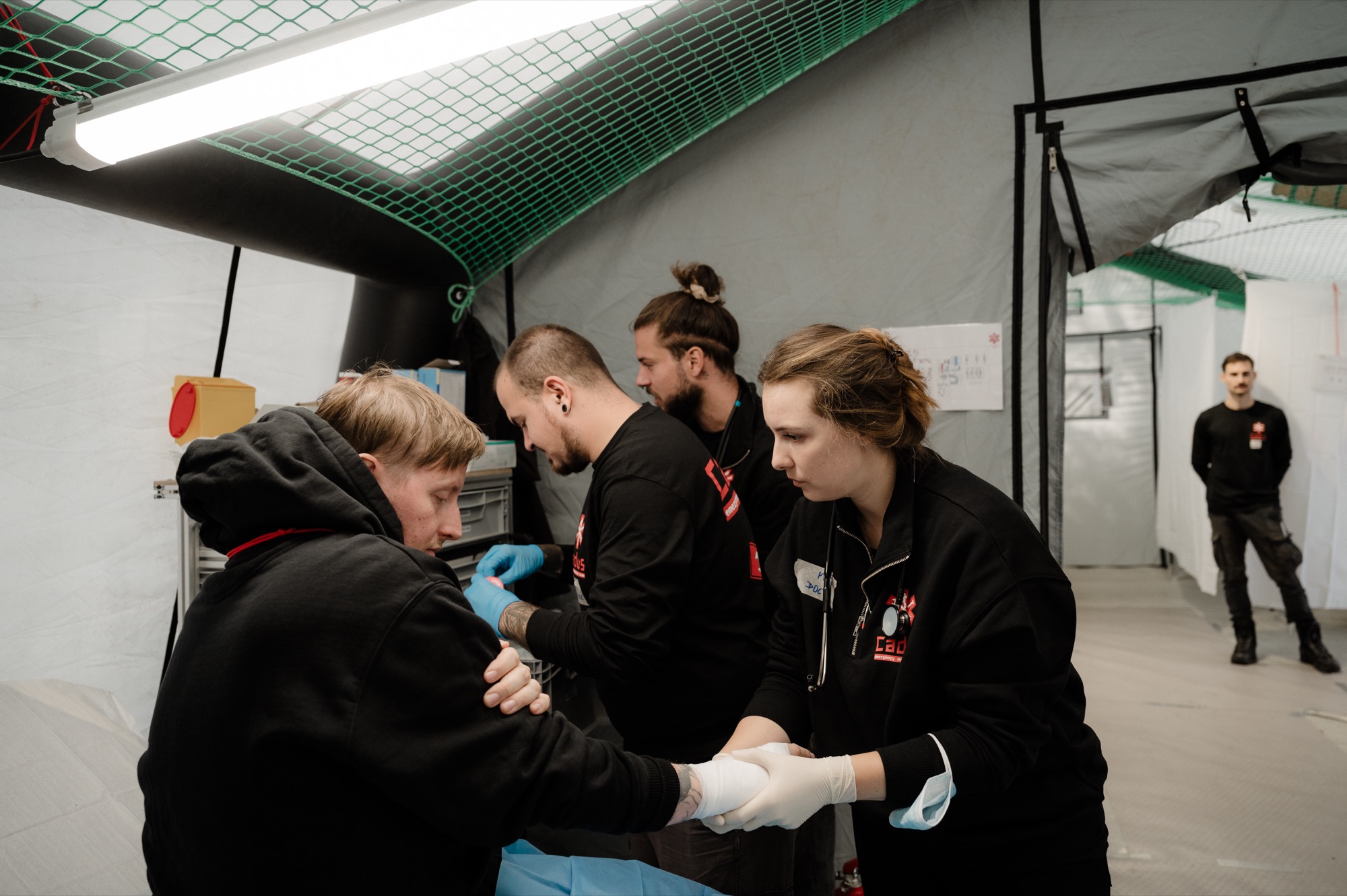
Our medical team had their hands full during the simulation. The training dummy was hit particularly hard. She required intensive medical care and had to be transferred to hospital. Photo: CADUS

Focus on emergency aid

For us, however, this is not an end in itself in order to be able to pin an official title on our jacket. Rather, we have taken the classification process as an impetus to professionalize ourselves, to take a close look at our processes so that we can ultimately provide high-quality humanitarian emergency aid more efficiently. Because that is ultimately what the international EMT network is all about – promoting cooperation, exchange and quality through common standards and thus being able to provide the best possible help to the people affected in an emergency.
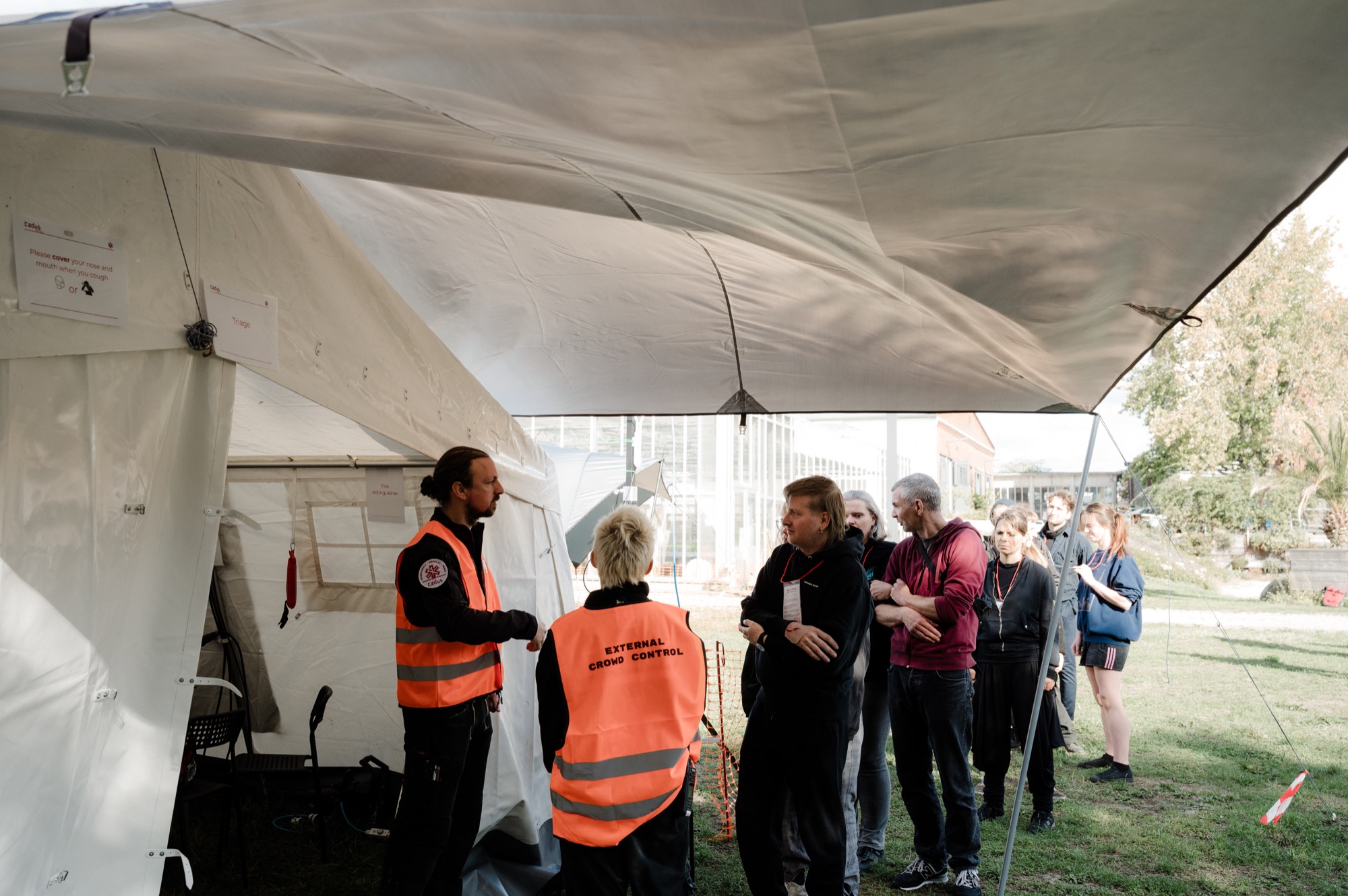
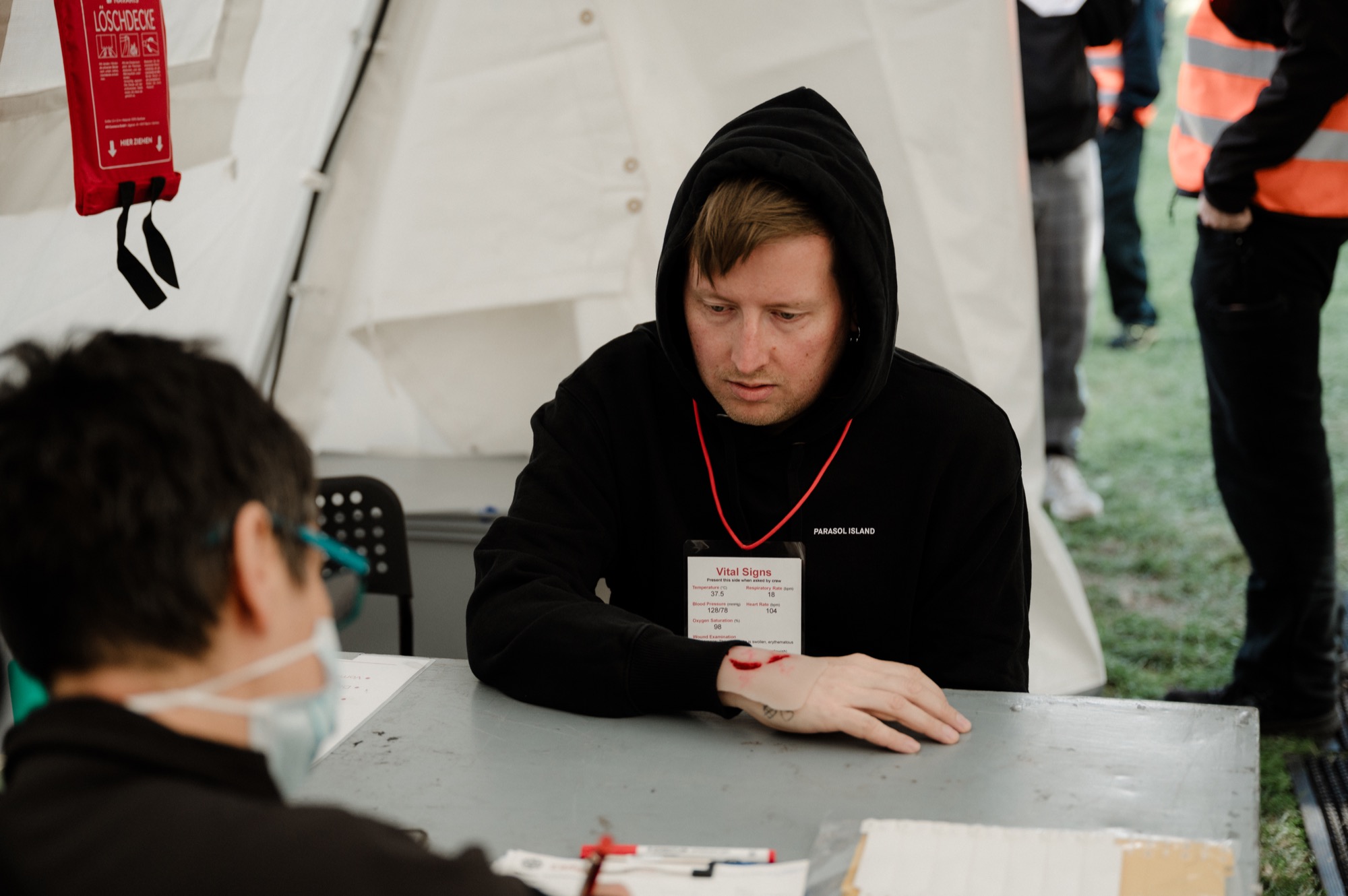
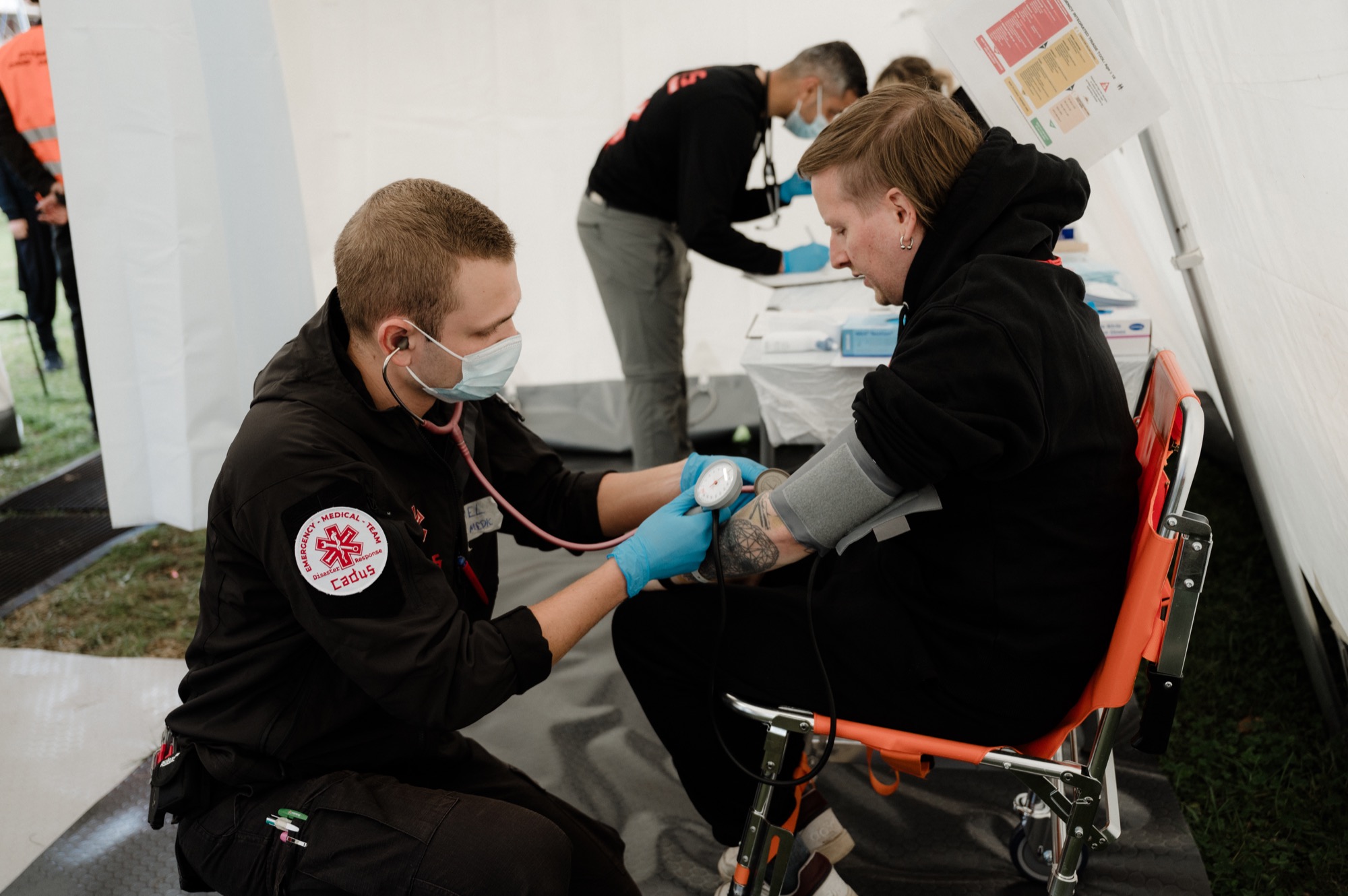
The EMT team was put to the test not only with puppets, but above all with actors. Photo: CADUS

As the newly crowned sixth German EMT, we are honestly thinking less about these lofty goals on the meadow of the Malzfabrik. For us, the result means being able to tick off a lot of work. With a glass of champagne in hand, it’s easy to shake off the stresses and strains of the last week – “ABBAU!”

Part of the dismantling process documented as a time lapse. Video: CADUS

* CADUS 2024, probably.

By |2026-03-30T10:53:40+00:00November 11th, 2024|

About the Author:

Vor etwas mehr als einem Monat haben wir uns erfolgreich als Emergency Medical Team (EMT) durch die Weltgesundheitsorganisation (WHO) klassifizieren lassen. Aber was steckt eigentlich dahinter und was bedeutet es für uns, ein EMT zu sein?

Jubel, Pfiffe und das Knallen von Sektkorken schallen über die Wiese der Malzfabrik in Berlin. Gut 50 Leute in CADUS-Kleidung feiern Abschluss und Höhepunkt jahrelanger Arbeit und schweißtreibender Monate – wir sind offiziell ein EMT 1 fixed und mobile! Im Kreise von Vertretern der WHO und weiterer EMTs, des Auswärtigen Amtes und des Robert-Koch Instituts wird erstmal angestoßen. Nochmals Danke an alle, die uns auf so unterschiedliche Weise auf diesem Weg unterstützt haben!


Die Gläser hoch auf den Erfolg! Foto: CADUS

Um die sechs Jahre sind vergangen, seit wir bei CADUS den Entschluss gefasst haben die Klassifizierung zu beginnen. Immer wieder unterbrochen durch unsere Einsätze in verschiedenen Krisenregionen der Welt, haben wir kontinuierlich daran gearbeitet die Bedingungen zu erfüllen. Nicht nur schriftlich, sondern auch mit unserer Ausrüstung und unserem Personal müssen wir belegen, im Notfall schnell einsatzbereit zu sein und professionell handeln zu können.

Von „worst case“ zu „best practice“

Genau dafür wurde das EMT-System nach den teils katastrophalen Erfahrungen nach dem Erdbeben 2010 in Haiti durch die WHO geschaffen. Damals fluteten so viele Hilfeleistende die Insel, dass eine sinnvolle Verteilung der Hilfe und eine Übersicht über deren Qualität unmöglich war. In der Folge versickerten viele Hilfsgelder, einige Regionen waren überversorgt, während Menschen in anderen Gegenden lange keine Unterstützung erhielten und Patienten unzureichend oder falsch behandelt wurden. Gut gemeint ist eben nicht auch gut gemacht.


Das Camp aus der Vogelperspektive: links der mobile Teil des EMT, rechts und orange eingezäunt der stationäre Teil. Der mittlere Gang markiert die Grenze zwischen dem Patiententeil (links) und dem Teil, der dem Team vorbehalten ist mit u.a. technischem Material, Unterkunft und Lager (rechts).

EMT als Qualitätssiegel

Ziel der EMT-Initiative der WHO ist es mit Mindeststandards die Qualität der Hilfe durch die verschiedenen Organisationen zu garantieren – zum Schutz der betroffenen Menschen in den Krisenregionen. Dazu werden die Organisationen in EMTs Typ 1 bis 3 eingeteilt, die unterschiedliche Ansprüche an Behandlungs- und Versorgungskapazitäten erfüllen müssen. Im Mittelpunkt steht die Selbstversorgung der Teams, um die knappen Ressourcen im Krisengebiet durch internationale Organisationen nicht zu strapazieren. Von Krisen betroffene Staaten können die WHO um Unterstützung bitten, die die Anfrage an alle EMTs weiterleitet und deren Einsatz im Anschluss koordiniert.

Nicht nur praktisch mussten wir unser Können unter Beweis stellen, sondern auch darlegen wie z.B. Crewing, Finanzen und unsere Logistik aufgebaut sind. Foto: CADUS

Als Richtschnur für die Klassifizierung dient das sogenannte Blue Book in dem die Mindestanforderungen für die EMT-Typen gelistet sind. Außerdem werden jeder Organisation Mentor*innen der WHO zur Seite gestellt, die den gesamten Prozess begleiten und unterstützen.

Auch Sonderfälle haben wir mit Puppen und Statist*innen trainiert: links die Behandlung eines Kleinkindes und rechts einer infektiösen Patientin im Isolationsbereich. Foto: CADUS

Vorbereitet für den Ernstfall

Und der kann schnell unübersichtlich werden. Nicht nur müssen wir den Prüfer*innen der WHO zeigen, dass wir Patient*innen adäquat behandeln und mit Medikamenten versorgen, sondern auch deren Wasser- und Sanitärversorgung sicherstellen können. Dazu kommt für unsere Teams Unterkunft, Verpflegung, Kommunikationstechnik, Beleuchtung, Strom sowie Müll- und Abwasserentsorgung und Sicherheitsmaßnahmen für das gesamte Camp.

Um überhaupt Patient*innen in einem EMT-Setting behandeln zu können braucht es viele verschiedene Gewerke, die reibungslos ineinander greifen müssen um z.B. Wasser, Strom und Unterkünfte fürs Team bereitzustellen. Foto: CADUS

Wohin mit den blutigen Verbänden vom Patienten mit Hepatitis? Woher bekommen wir Wasser zum trinken, putzen, kochen, wenn in der Krisenregion alles zerstört ist? Wie bekommen wir überhaupt Team und Ausrüstung schnellstmöglich zum Einsatzort? Für all das und noch mehr müssen Pläne entwickelt, Prozesse beschrieben, Material besorgt und Teams trainiert werden. Durch Einsatzübungen wie im Ahrtal oder dem EMT-Probeaufbau konnten wir überprüfen, was gut läuft und wo wir nachbessern müssen. Unsere EMT-Klassifikation haben wir dann auch als Anlass genutzt um mit der Hilfe vieler Kompars*innen den medizinischen Teil in “Emergency Medical Team” einem Stresstest zu unterziehen.

Unser medizinsches Team hatte während der Simulation alle Hände voll zu tun. Hier hat es die Trainingspuppe besonders schwer getroffen. Sie musste intensivmedizinisch versorgt und in ein Krankenhaus verlegt werden. Foto: CADUS

Nothilfe im Mittelpunkt

Für uns ist das alles aber kein Selbstzweck um uns einen offiziellen Titel an die Jacke heften zu dürfen. Viel eher haben wir den Klassifizierungsprozess als Anstoß genommen uns selbst zu professionalisieren, unsere Abläufe genau unter die Lupe zu nehmen um schlussendlich effizienter qualitativ hochwertige humanitäre Nothilfe leisten zu können. Denn das ist es, worum es letztlich geht im internationalen EMT-Netzwerk – durch gemeinsame Standards Zusammenarbeit, Austausch und Qualität zu fördern und so im Notfall den betroffenen Menschen bestmöglich helfen zu können.

Nicht nur mit Puppen, sondern vor allem auch mit Darstellern wurde das EMT-Team auf die Probe gestellt. Foto: CADUS

Auf der Wiese der Malzfabrik denken wir als frischgebackenes sechstes deutsches EMT ehrlich gesagt weniger an diese hehren Ziele. Für uns heißt das Ergebnis erstmal eine Menge Arbeit abhaken zu können. Mit dem Sektglas in der Hand lassen sich die Strapazen der letzten Woche doch ganz gut abschütt – „ABBAU!“

Ein Teil des Abbaus dokumentiert als Zeitraffer. Video: CADUS

* CADUS 2024, probably.
By |2026-03-30T10:52:53+00:00November 11th, 2024|

About the Author:

Go to Top