Water as a weapon
Published on 7. June 2023
from CADUS-PR
wasser-als-waffe-feature-staudamm-kachowka-95214bc7-1
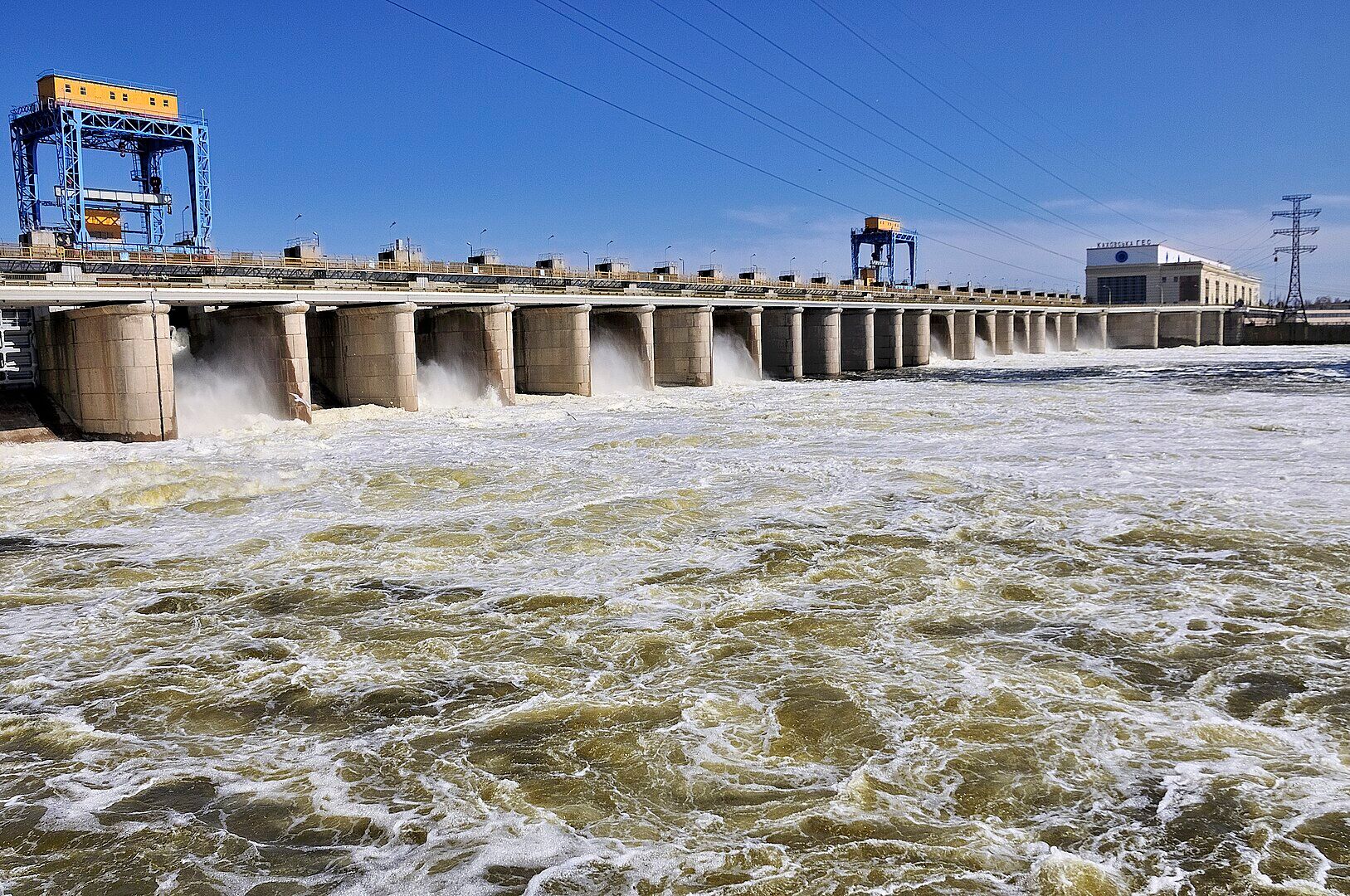
In addition to the ongoing shelling by rockets and artillery, thousands of people in Ukraine have been facing the threat of flooding since the morning of 06 June. The presumed blowing up of the Kakhovka dam is currently flooding large areas of the country around the city of Kherson.
The consequences of the blast
An estimated 16,000 people in 80 localities are at acute risk from the waters of Ukraine’s largest reservoir. In addition, the power supply is in danger due to the approximately 18 million cubic meters of water for about three million people, as well as the drinking water supply. The latter could also apply to the inhabitants of Crimea, as an important part of the peninsula’s water supply comes directly from the reservoir via a canal. Equally dependent on the water body is the Zaporizhzhya nuclear power plant located above the dam, which requires huge amounts of cooling water. Fortunately, the International Atomic Energy Agency (IAEA) currently sees no acute danger of a nuclear incident. Luck of the draw.
Particularly affected are the people on the left bank of the dammed Dnipro River, an area that is under Russian occupation and from which only sparse information can be obtained, even due to an Internet blockade. Evacuations of affected areas, however, are already said to be taking place on both sides of the river.
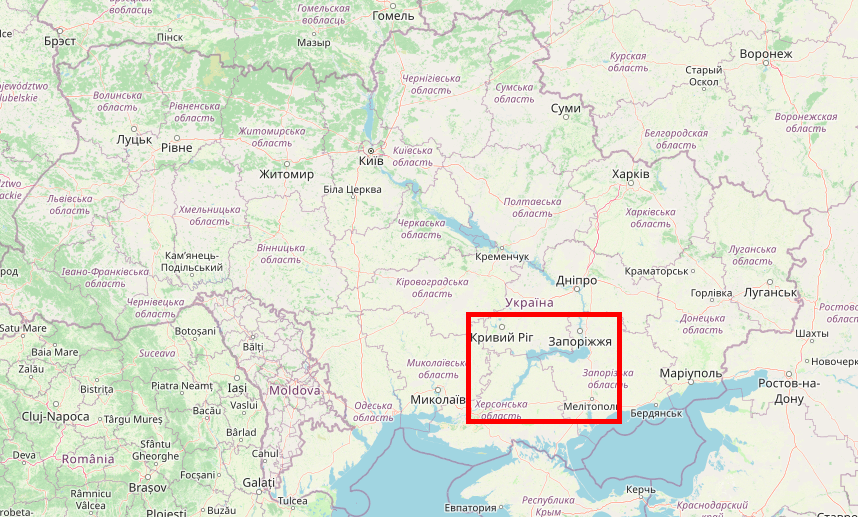
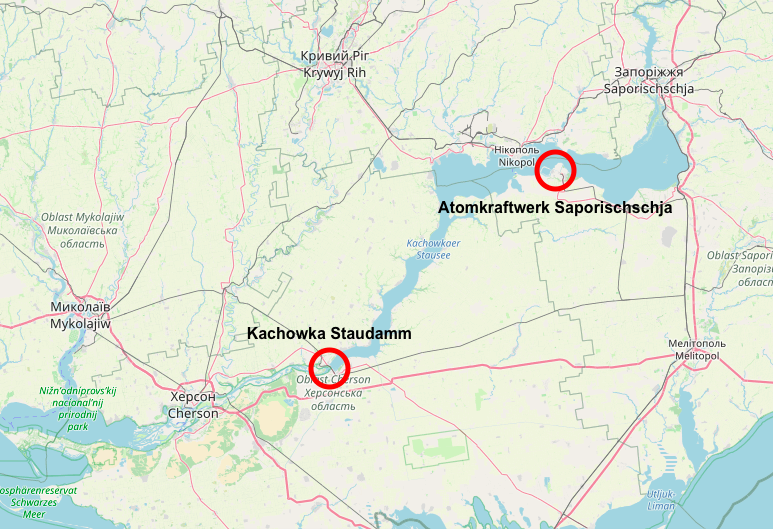
In the southeast of Ukraine is located Kherson oblast with the city of the same name. The areas below the reservoir are currently occupied by Russia. Maps: Open Street Map
Question of guilt and long-term consequences
As with similar incidents, such as the blowing up of the gas pipeline in the Baltic Sea, Ukraine and Russia are blaming each other for the incident. Destruction of the dam and its possible consequences were discussed as early as the fall of 2022, when both warring parties repeatedly accused each other of shelling or mining the dam.
Despite all the wrangling over who is to blame, the most important thing now is that the people affected receive help as quickly as possible and in the long term. It remains to be feared that the construction of the infrastructure will proceed only slowly and that numerous localities will remain uninhabitable at least in the medium term.
Because beyond the immediate damage, the consequences of the flooding are not yet foreseeable. It could take decades until the dam is built and the lake is dammed to its former size, which could lead to bottlenecks in electricity and water supply. In addition, long-term agricultural and ecological damage is to be feared due to contamination of the soil and (drinking) water and the destruction of forests in the region.
This is exemplified by the blowing up of a dam near Kiev in December 2022 by Ukrainian forces to stop Russian troops. The inhabitants of the village of Demydow were severely affected by the consequences: https://www.n-tv.de/mediathek/videos/politik/Ukraine-Krieg-vergiftet-Wasser-und-verseucht-Natur-article23805120.html
However the situation will develop further: our team in Dnipro has offered its support and is in exchange with the authorities and the WHO (World Health Organization). At the moment, the main needs are drinking water, shelter and evacuation vehicles for the thousands of people acutely affected.
We will continue to monitor developments on the ground and prepare for possible scenarios, such as cholera outbreaks. Together with our Ukrainian partners, we are also evaluating a deployment of our technical team.
Breach of international law
Destroying a dam is a clear violation of international law, which prohibits the wanton destruction of “installations and facilities containing hazardous forces.” Unfortunately, the use of water as a weapon in disputes has a long, inglorious tradition. In Syria, for example, water is often used as a bargaining chip.
We demand extensive humanitarian aid for those affected by the floods and a thorough investigation of the incident.
No alleged military advantage should justify recklessly threatening the lives of thousands of people by flooding and turning numerous localities into areas more hostile to life. Water must not be a weapon!
* Photo: Wikipedia, no changes made, CC BY-SA 4.0
Published:
Author: by Jonas Grünwald
„Mit so einem kleinen Stück Papier ändert sich dein ganzes Leben.”
Tarek Khello (geboren 1985, Studium in Damaskus) ist Journalist und Geflüchteter. Weil er in Syrien kritisch über das Assad-Regime berichtet hat, wurde Tarek mehrfach eingesperrt. Er entschied sich für die Flucht und wurde in das spezielle Flüchtlingshilfsprogramm „Resettlement" aufgenommen. 2013 kam er nach …
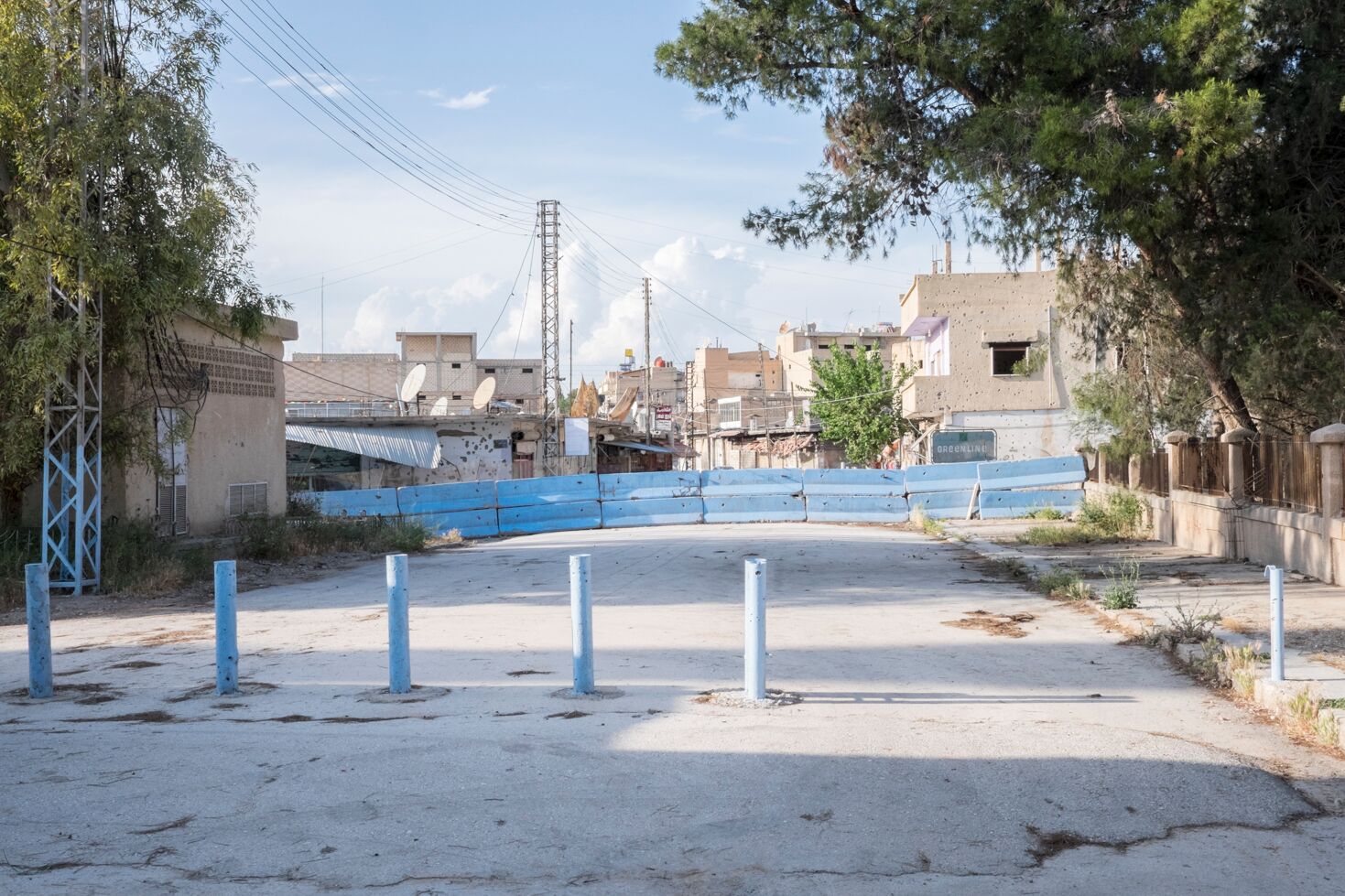
Inhalte überwinden – zur türkischen Invasion in Nordsyrien
Letzte Woche war auf tagesschau.de zu lesen, dass die Bundesregierung neben ihrer „Sorge“ über die türkische Militäraggression auch von „legitimen Sicherheitsinteressen“ spreche. Die Türkei sei ja mehrfach das Ziel von Aggressionen des IS von syrischem Boden aus gewesen. Die neunte Runde der syrischen Friedensgespräche …
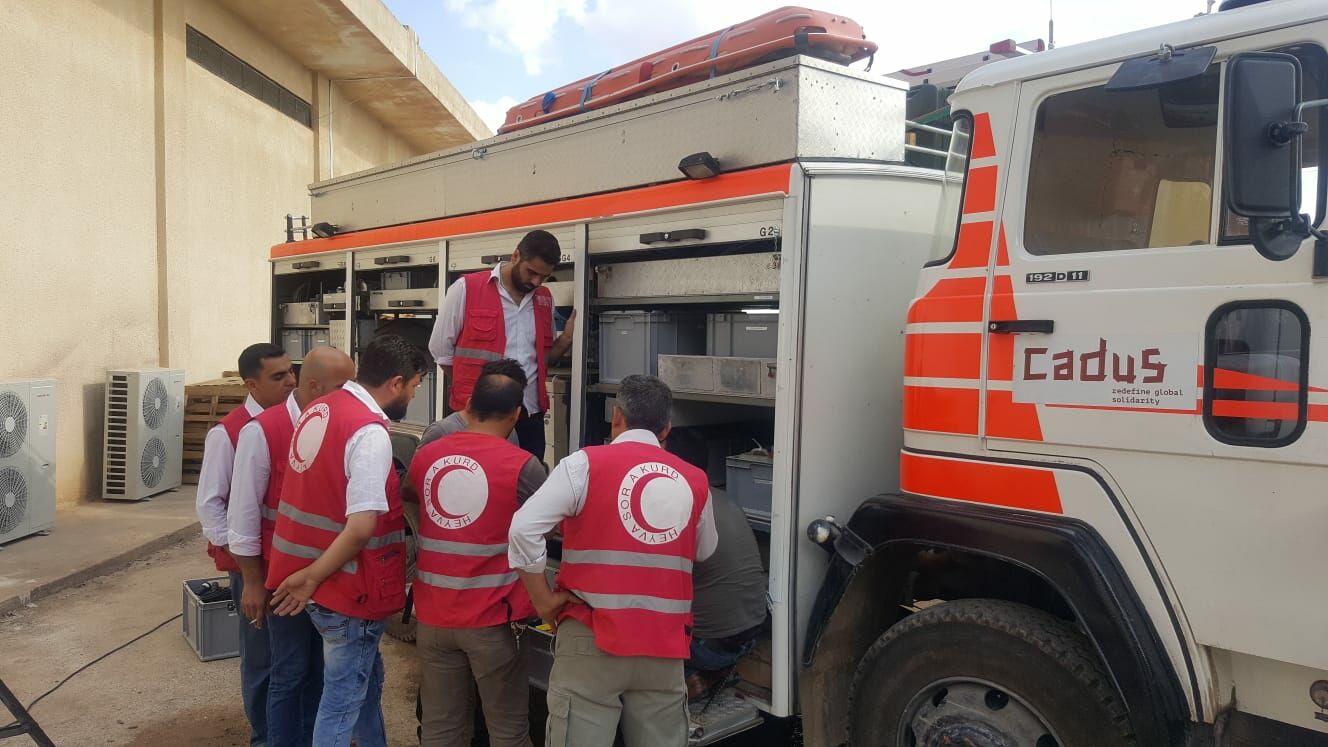
First training of the Mobile Hospital for the new owners
On Thursday, May 24th, CADUS and the Kurdish Red Crescent joined together for the first training of the mobile hospital. About 15 Kurdish Red Crescent crew members joined the CADUS project coordinators, infield head of mission, and technician to learn about the operation of the mobile hospital which will soon be …