Cholera mission in Angola – Part 2
Published on 18. June 2025
from Tankred Beume und Korbinian Nida-Rümelin
In response to a request for assistance from the Angolan government due to an ongoing cholera outbreak, CADUS deployed a technical assistance team as part of a joint EMT mission with Arbeiter-Samariter-Bund, Malteser International and the Robert Koch Institute. Click here for the first part!
After the successful commissioning of the newly installed water filtration system in Muhaningo, a few more days remained in the deployment period. The Graça Health Center with its attached CTC became our second deployment site. It is the contact point for all medical matters. In addition to the CTC, the Graça Health Center focuses on children’s health. Many families come here every day for treatment.
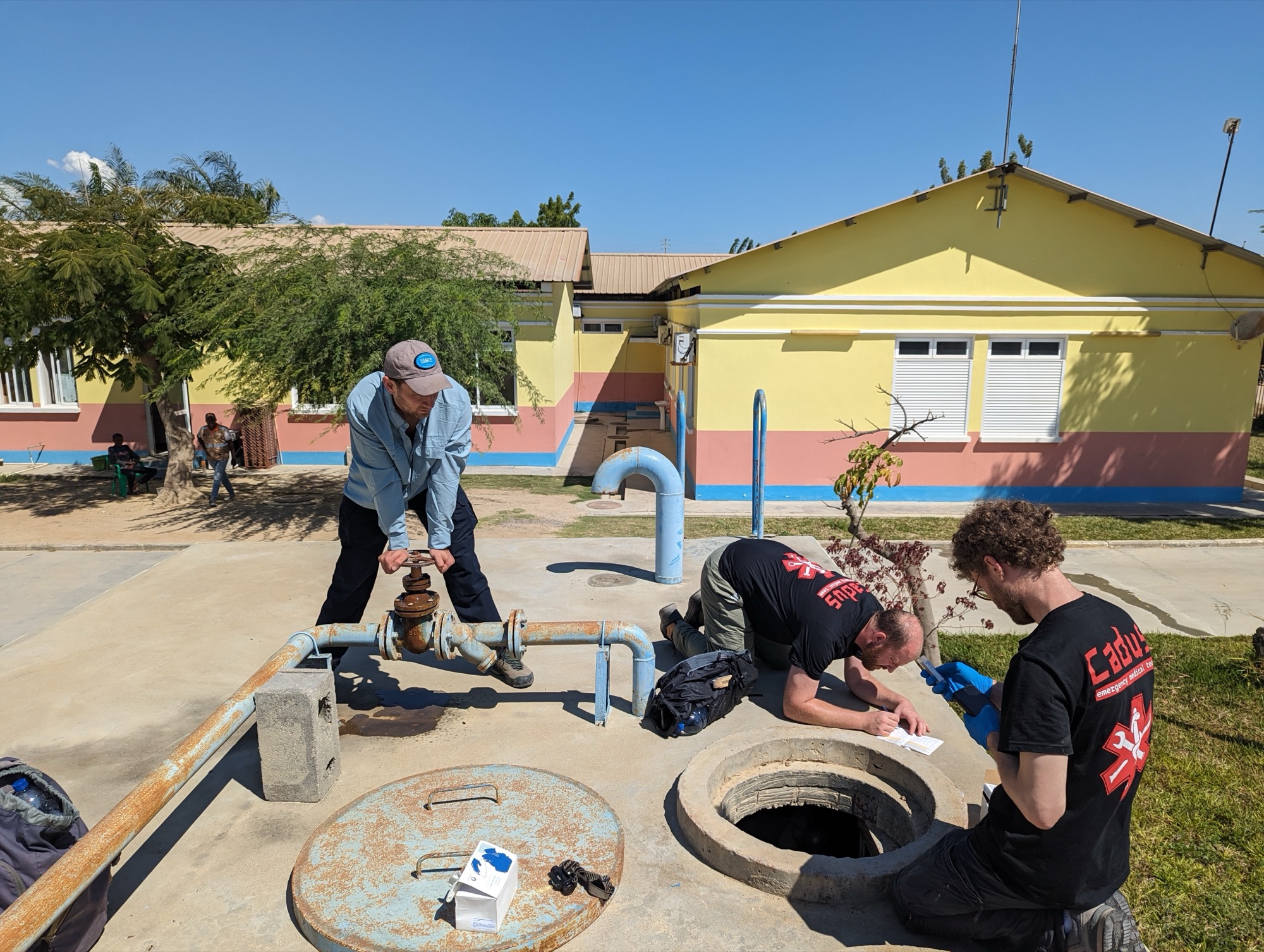
Our initial water analyses very quickly revealed a high level of contamination in the water used at the center – the existing filter unit appeared to be defective. No one was able to give us any precise information about the existing system – neither about the structure of the supply nor whether anyone was looking after the system.
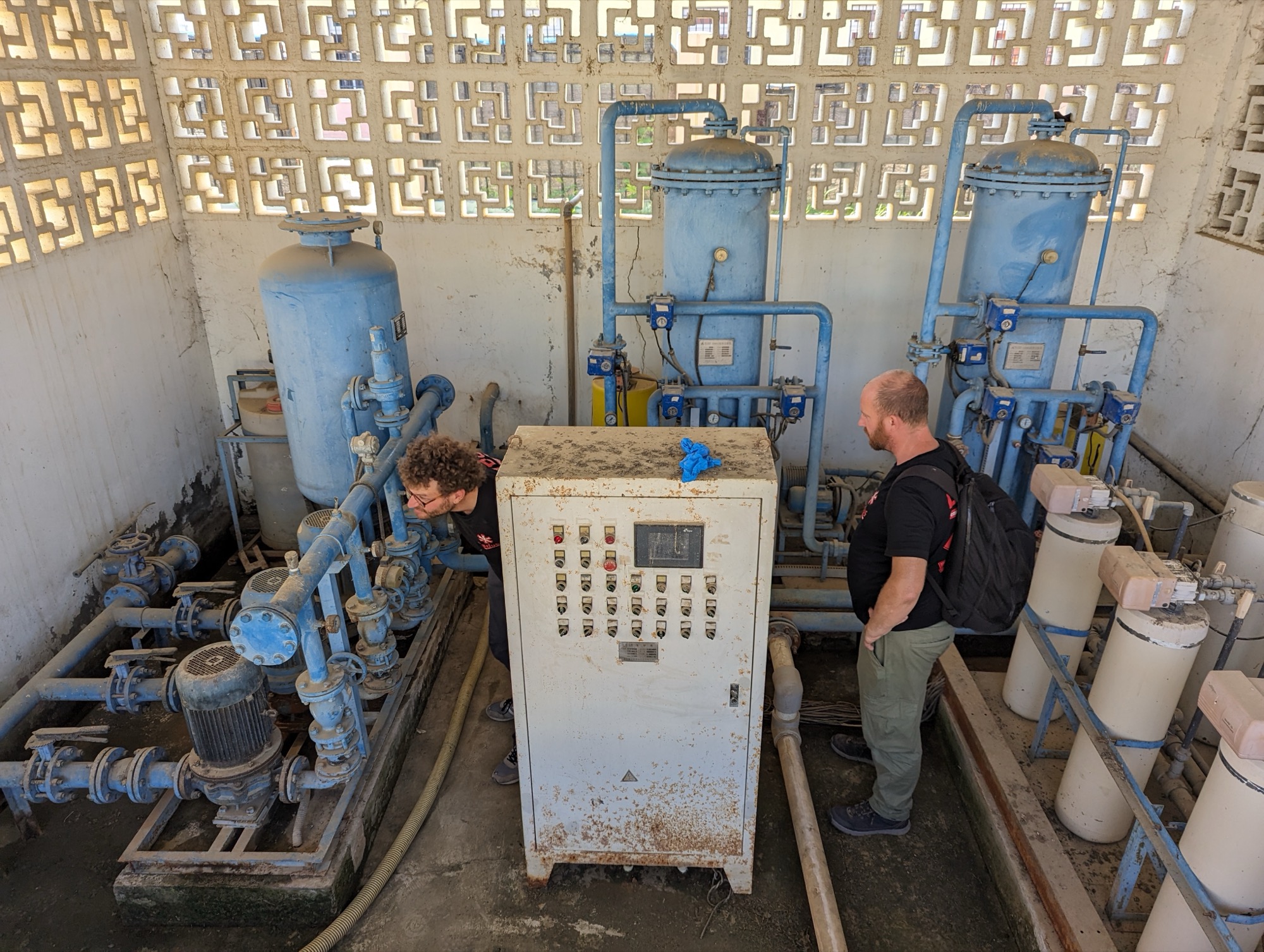 First familiarization with the water system in Graça. Photo: CADUS
Despite the limited time available, the team decided to search for the main water supply connection. This involved digging, uncovering hidden shafts, pumping out waste water and tracing various pipe routes. However, this search was unsuccessful: too many unknown factors, too little time available.
After careful consideration, the decision was made: a central dispensing point was set up within the clinic. The water filter system was connected to an existing sink in the laboratory wing and then connected to a separate dispensing point in the public waiting area. This ensured that patients and staff had access to safe drinking water.
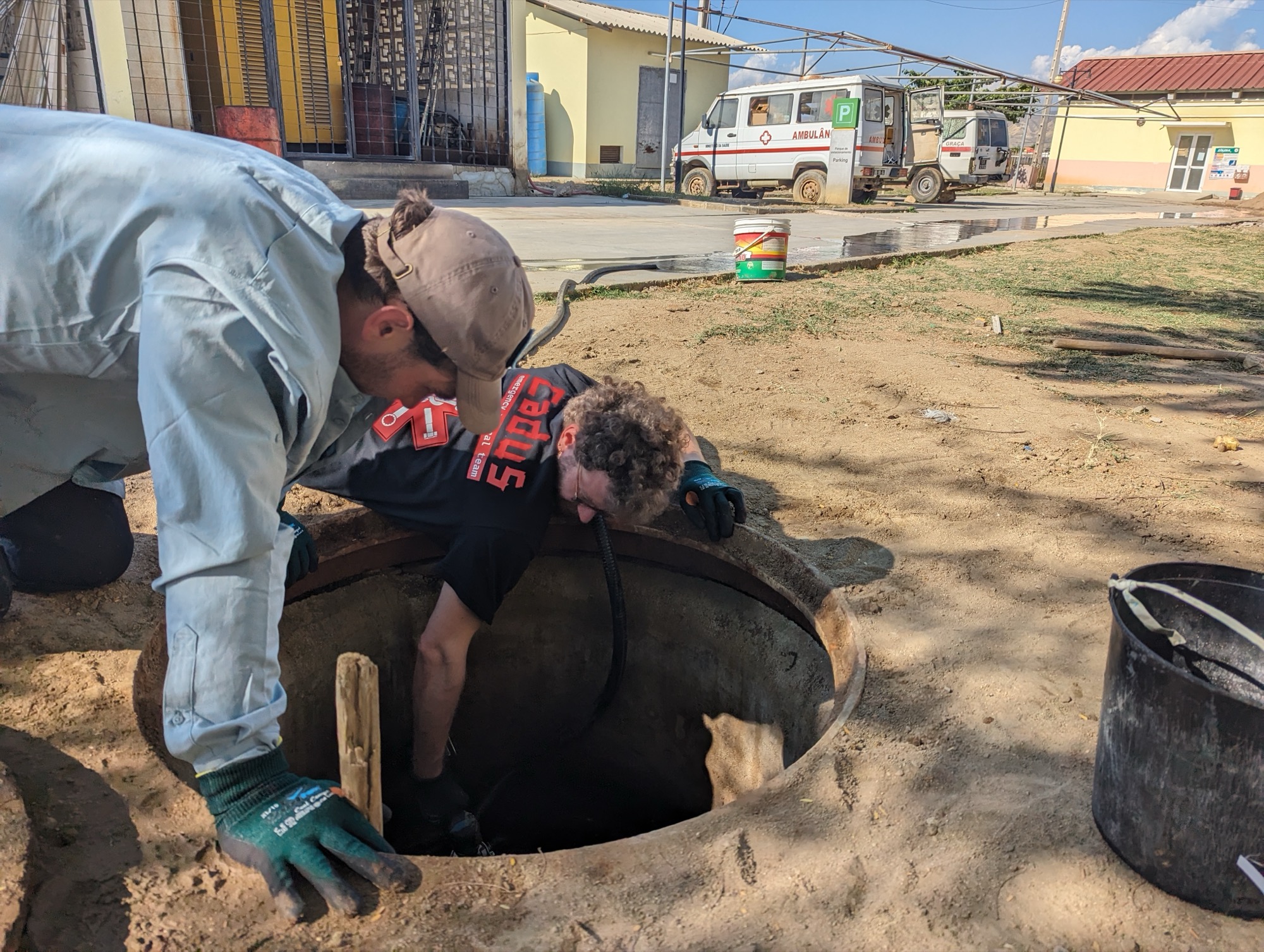 Searching for traces underground. Without plans, it is difficult to trace the course of the pipelines. Photo: CADUS
As a result, this solution met the original objective of the technical mission: a selective but effective improvement in hygiene care in conjunction with the medical component. While the CADUS team worked on the technology, colleagues from Malteser International (MI), Arbeiter-Samariter-Bund (ASB) and the Robert Koch Institute (RKI) conducted training sessions on infection control, procedures and personal protective equipment at the same location.
On May 13, three of the four CADUS team members left Benguela. One team member stayed a few days longer and supported the medical team with further water analyses. They also installed a third water filter – this time at Catumbela Children’s Hospital, including UV filtering for the operating theater.
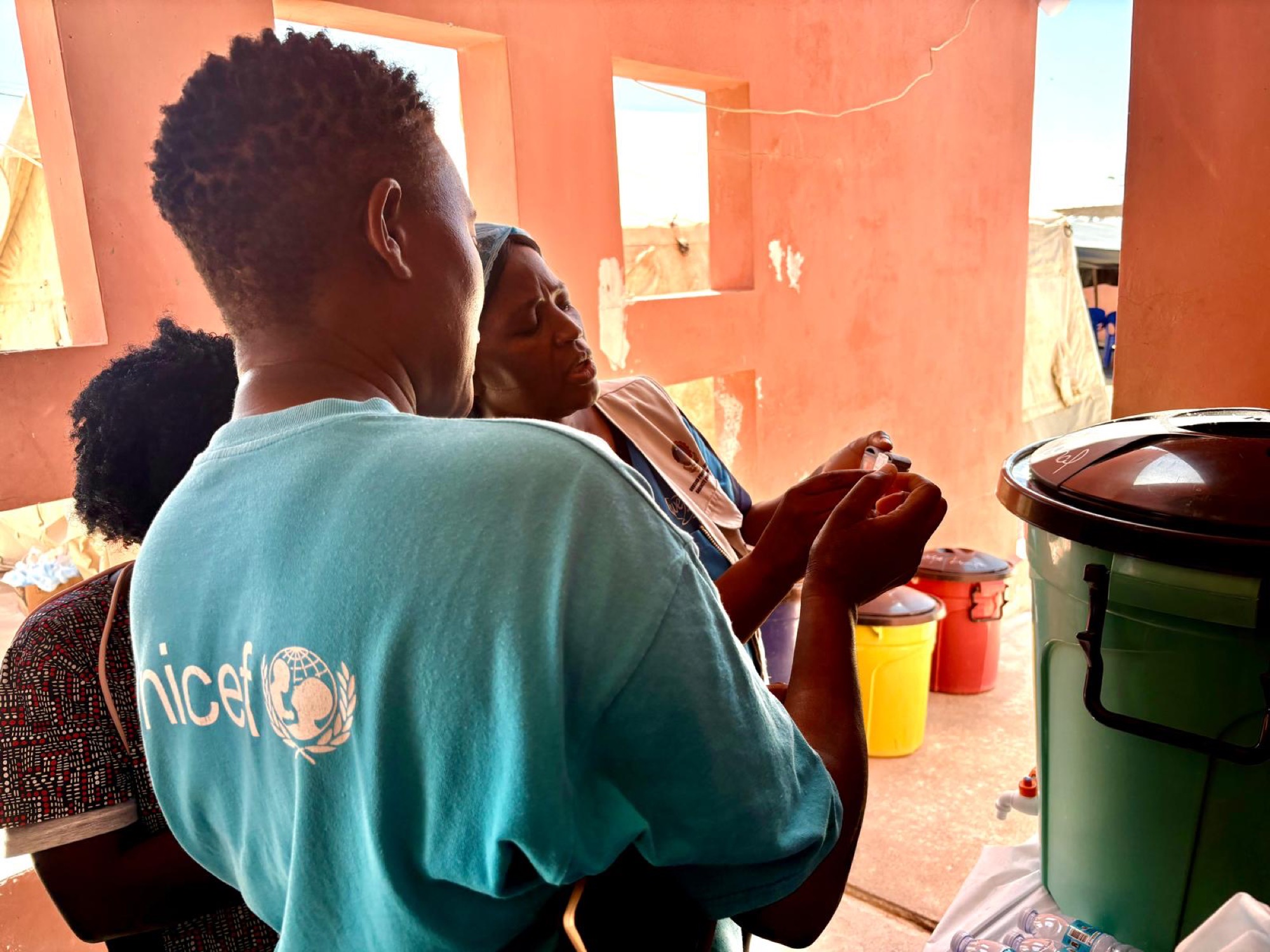 Employees of healthcare facilities learn how to carry out the necessary water tests. Photo: CADUS
The joint mission in Angola has shown what is possible when technical and medical expertise work together in a targeted manner. Two central water access points were restored in a short space of time, helping to contain the cholera outbreak. However, the structural challenges remain: Recurring outbreaks, fragile supply systems and climate change are placing an increasing burden on the region. Sustainable investments in local infrastructure, training, spare parts supply and decentralized technology are crucial to prevent future crises – or to overcome them more quickly.
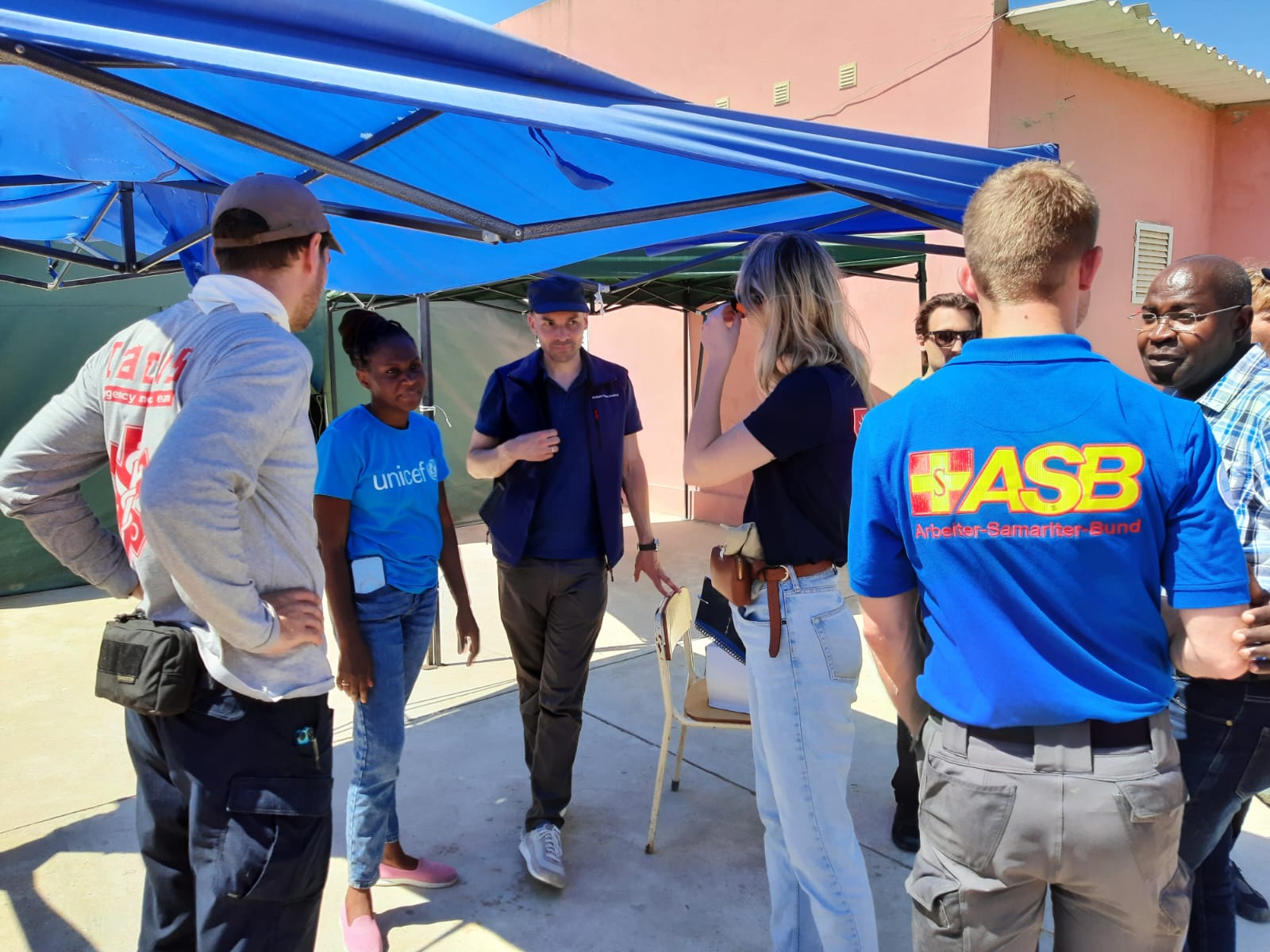 Joint evaluation of the results, exchange of knowledge and experience are important components of such assignments. Photo: CADUS
Our special thanks go to the local authorities, health actors, WASH coordinators and helpers on the ground who work tirelessly every day under difficult conditions – often with limited resources, but with great commitment and expertise. We would also like to thank all the partner organizations involved – Arbeiter-Samariter-Bund, Malteser International, UNICEF Angola, the World Health Organization (WHO) and the Robert Koch Institute – who made this mission possible.
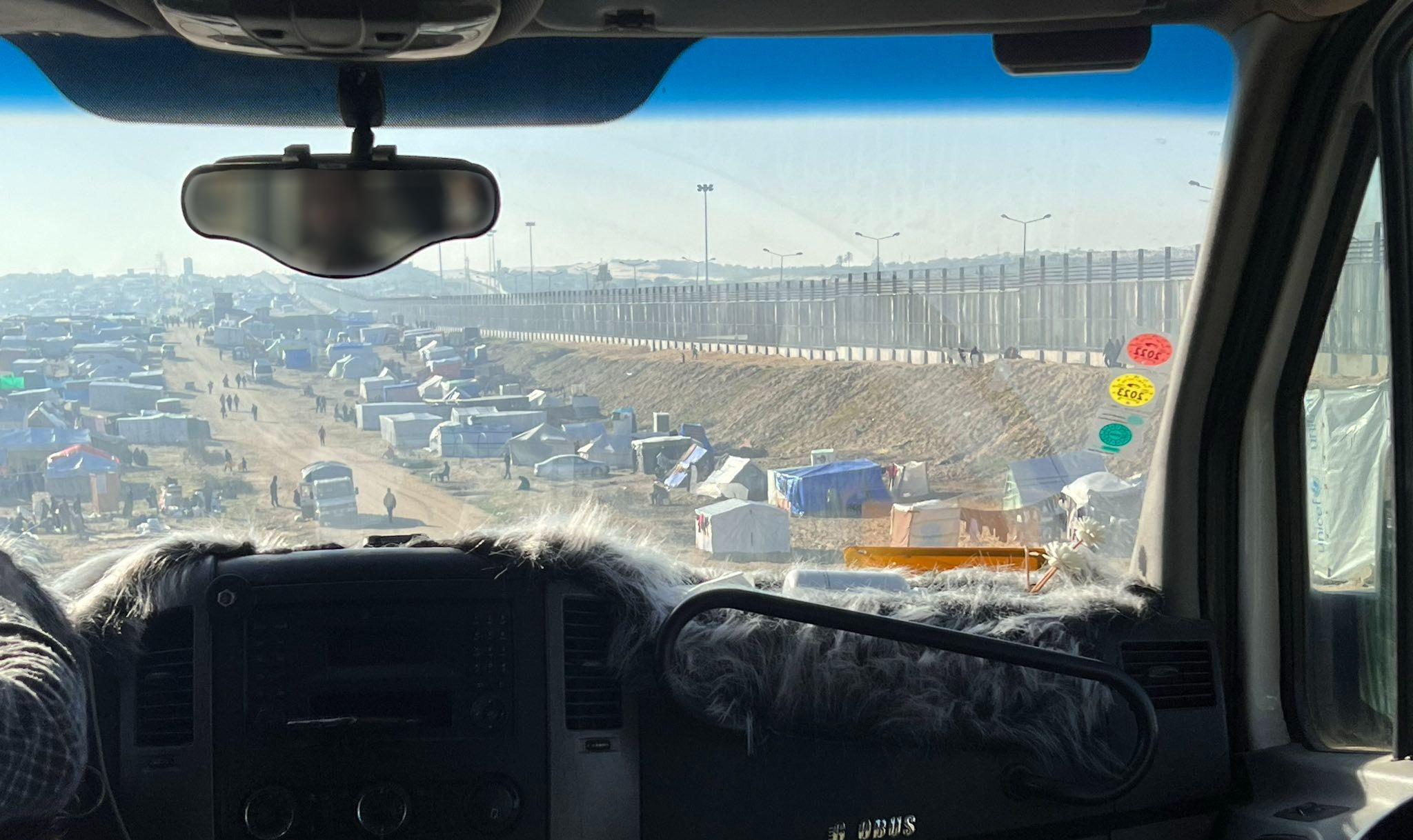
Gaza – Contradictory developments
A ceasefire has been officially in place in Gaza since October 2025. More than three months later, however, there are no clear signs of progress towards peace. Uncertainty and deprivation continue to dominate everyday life in Gaza.
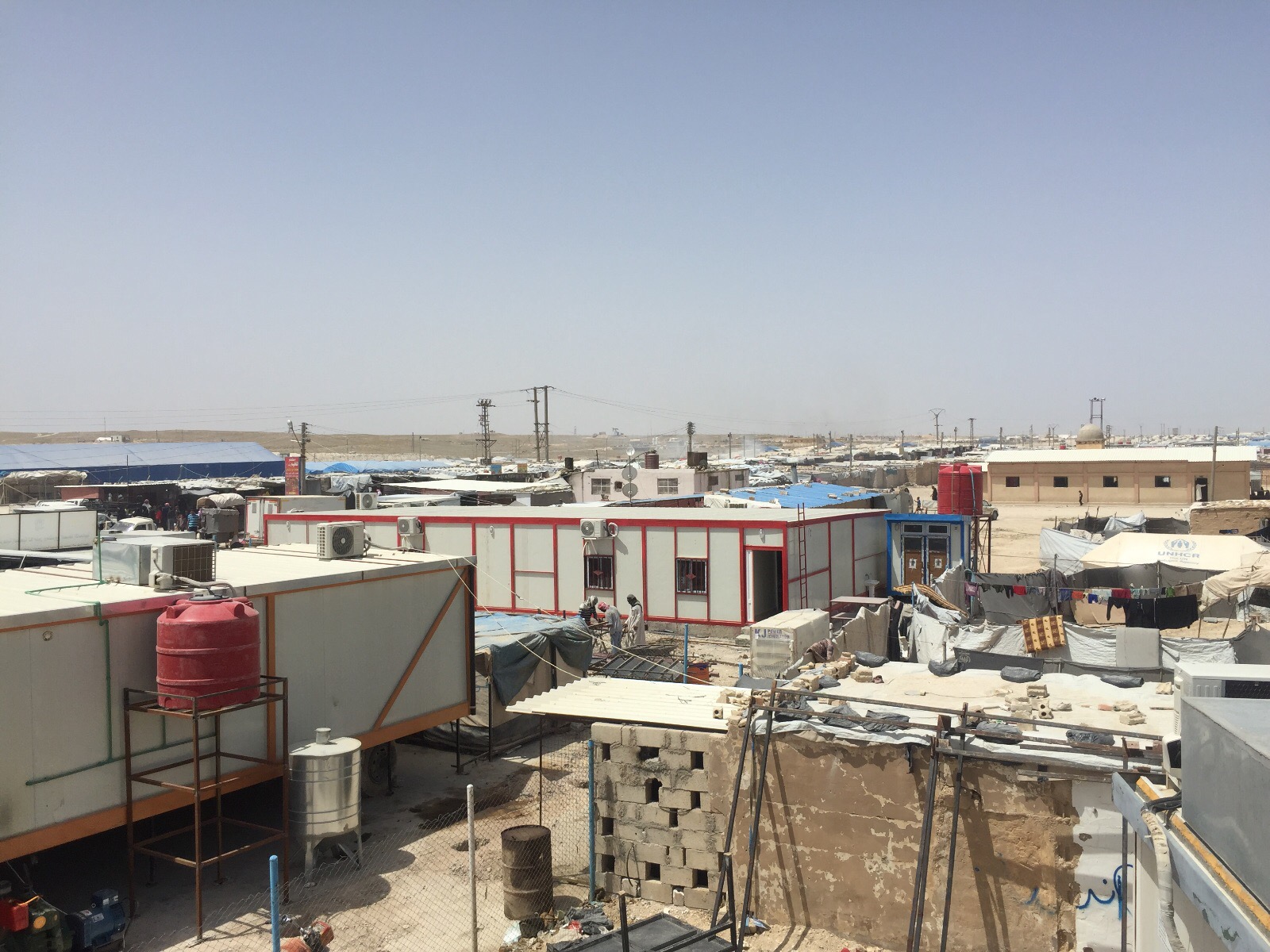
Syria: Former CADUS field hospital in al-Hol burnt down
After the Kurdish security forces withdrew from the al-Hol camp due to battles with Syrian government troops, violent unrest broke out inside the camp. An interview about the situation on the ground with Adrian, an employee of the organization Sîler.
The climate catastrophe as the greatest challenge for humanitarian aid
What impact does the climate catastrophe have on humanitarian aid? What can and must humanitarian actors prepare for and how must they adapt in order to counter the consequences of the climate catastrophe?