Final spurt EMT
Published on 30. July 2024
from Jonas Gruenwald
EMT 1 Malzfabrik 04
With the successful completion of our dress rehearsal, we have reached an important milestone for our classification as a WHO Emergency Medical Team. And we have also set our sights a little higher.
What was once a simple meadow on the grounds of the Malzfabrik in Berlin Tempelhof is now a fully functional operations camp and medical treatment center 24 hours later. In line with the specifications for EMTs, the camp has everything needed for power generation, water treatment, cooking and sanitation in order to be self-sufficient in a crisis region for two weeks without outside support. None of the international aid teams should put an additional strain on the resources of the country requesting support.
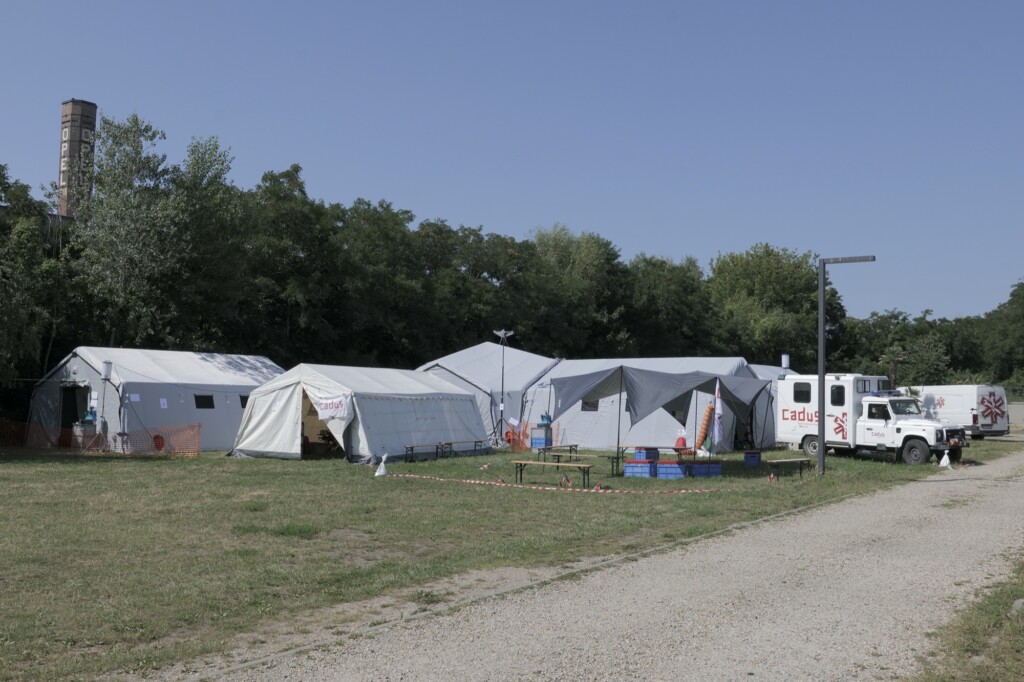
From green meadow to white tent camp. In an emergency, the entire EMT camp must be ready for action in the shortest possible time. Photo: CADUS
EMT – the E stands for quality
The EMT structure was created by the WHO in order to be able to send and coordinate qualitative and effective aid on request in an emergency. To this end, organizations worldwide are checked against minimum standards, which differ in their requirements for medical and technical care depending on the type of EMT. These range from small, mobile emergency teams to fully-fledged field hospitals with X-ray and operating theaters.
Overview of our EMT camp by drone flight. Video: CADUS
In addition to providing the best possible care for those affected by crises, wars and disasters, the focus is on improving cooperation between EMTs through a common standard. In order to achieve this standard, we have spent the last few months describing procedures and processes, training them and procuring the necessary materials for implementation. We are benefiting from the wealth of experience we have gained from our missions in recent years. We are also supported by mentors from the WHO, who provide us with valuable feedback.
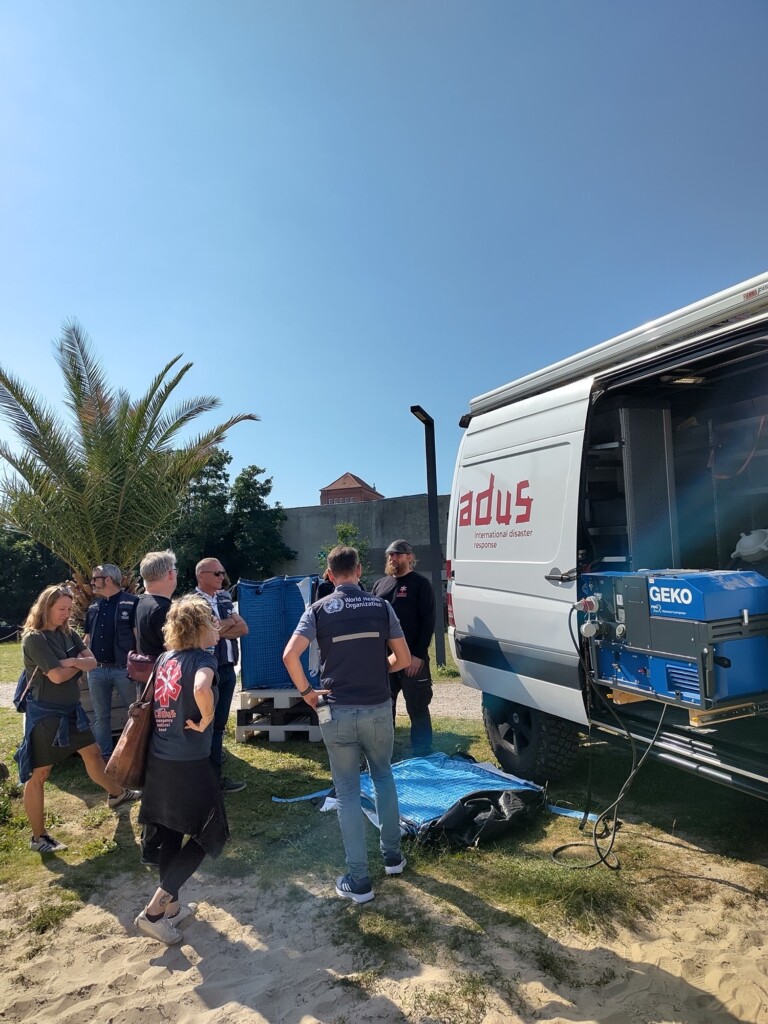
One of our options for treating drinking water is assessed by the WHO mentors. Photo: CADUS
Trial passed, target extended
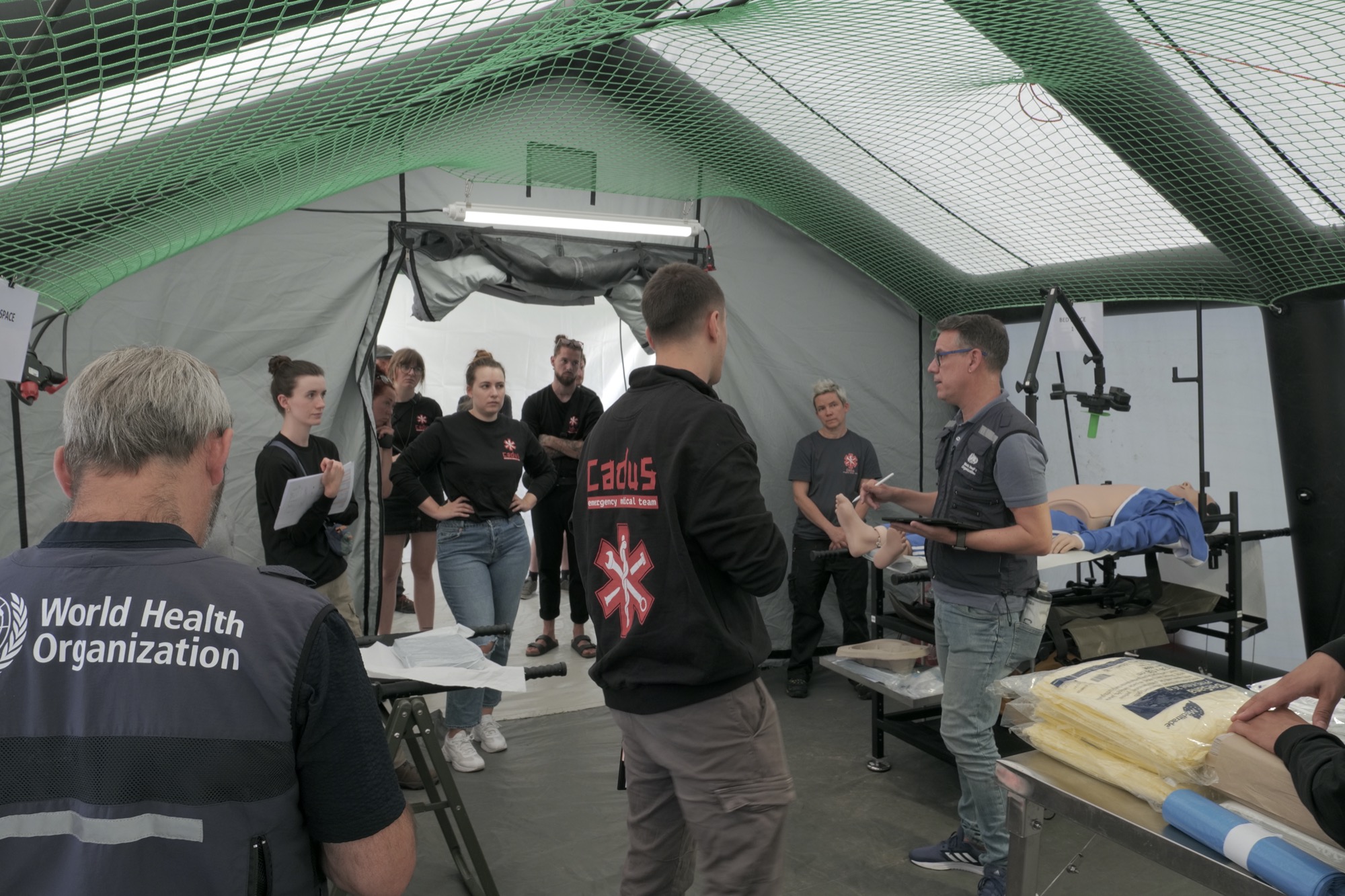
We also had our dress rehearsal, the so-called pre-visit, with exactly these mentors. In an inspection lasting several hours, we presented our small tent city, from toilets to storage and sleeping tents for the team to the pharmacy and isolation tent.
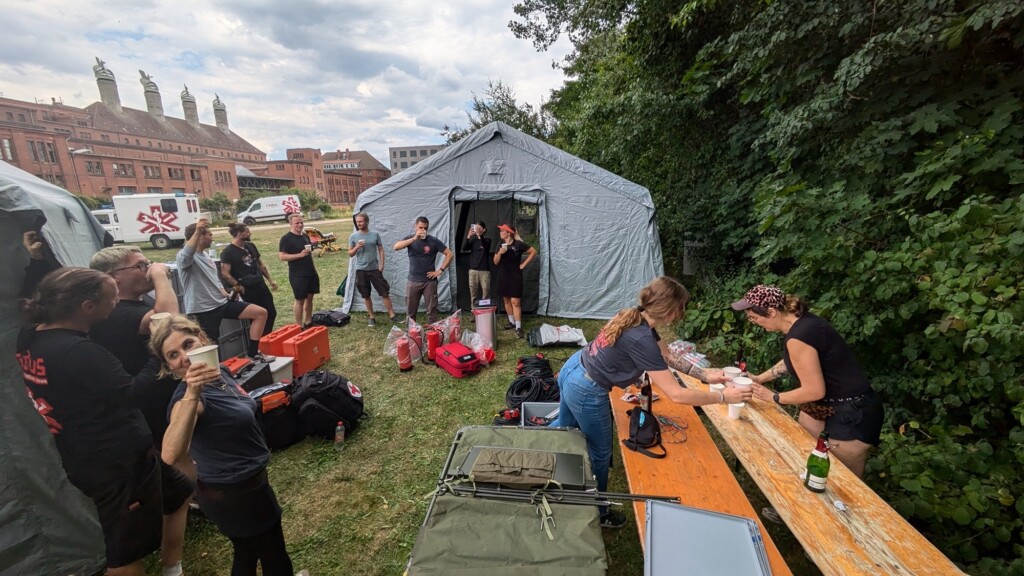
A joint toast with sparkling wine after the successful rehearsal set-up and as a motivational boost for the dismantling. Photo: CADUS
The feedback from our mentors is good, but we need to rethink some things and make adjustments here and there – the patient toilet seems a bit rickety, for example. But there is still time for improvements. Overall, however, we seem to be slightly overshooting the EMT type 1 mobile target. The recommendation of our mentors: Double classification as type 1 mobile and fixed! So the new goal is clear. Even if that means a bit more work – we’re up for it!
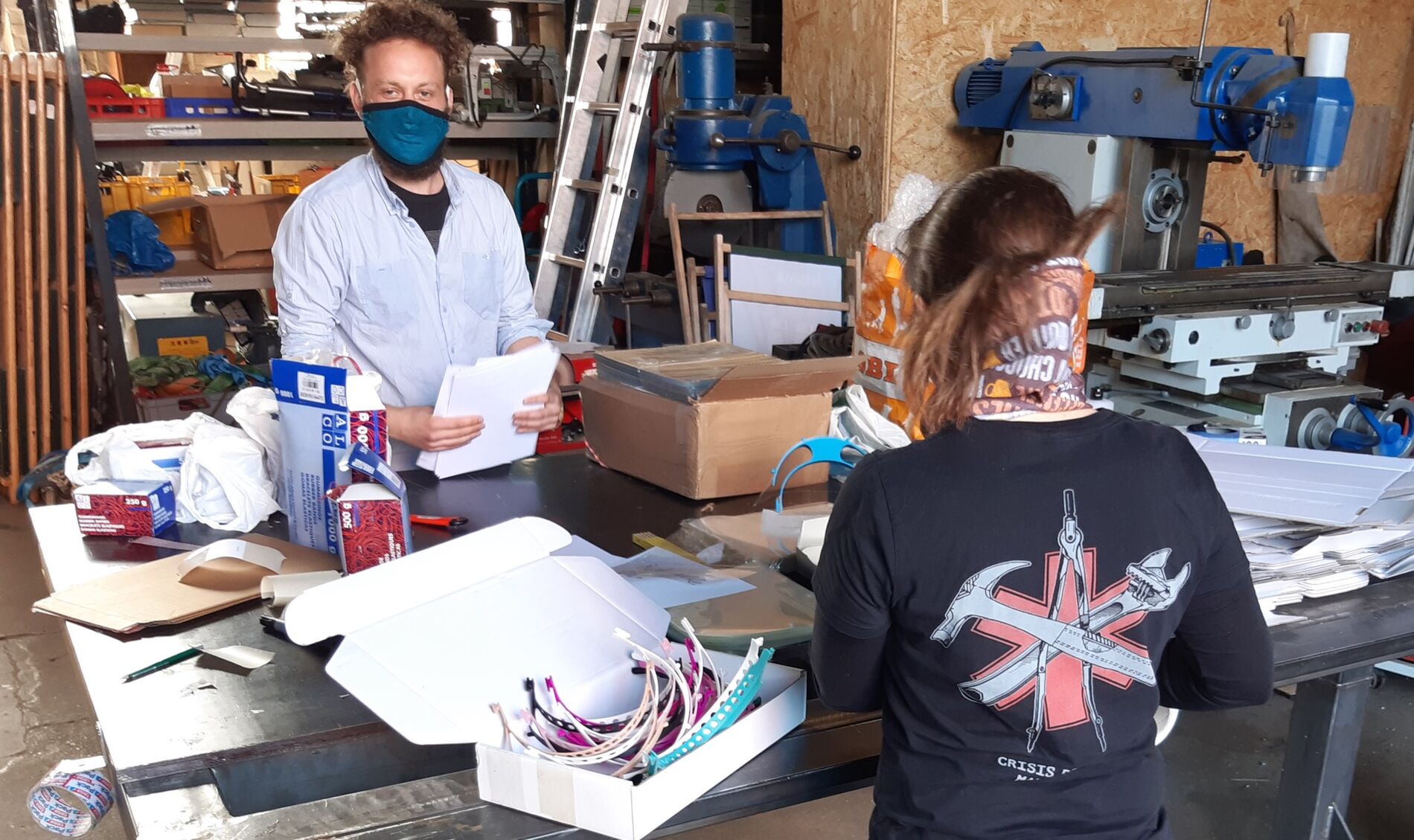
Together with face shields against COVID19
At the CADUS Crisis Response Makerspace, where normally sawdust flies and welders flash, since two days there are many boxes and cartons with plastic head bands and foils. These parts are parts of face shields that are distributed from here to medical facilities with respective needs since 10th of April.
Arbeiten im Zeichen der Krise(n)
Seit nunmehr zwei Wochen kennt das Tagesgeschehen neben der Gesundheitskrise, ausgelöst durch die Krankheit COVID-19, und die sich dramatisch verschlechternde Weltwirtschaftslage, gleicher Auslöser, andere Ursache, kaum noch andere Nachrichten. Clubsterben, Einzelhandel, Rettungsschirme, Reise- und …
Projekt CAROLA – Gesichtsmasken in Eigenproduktion
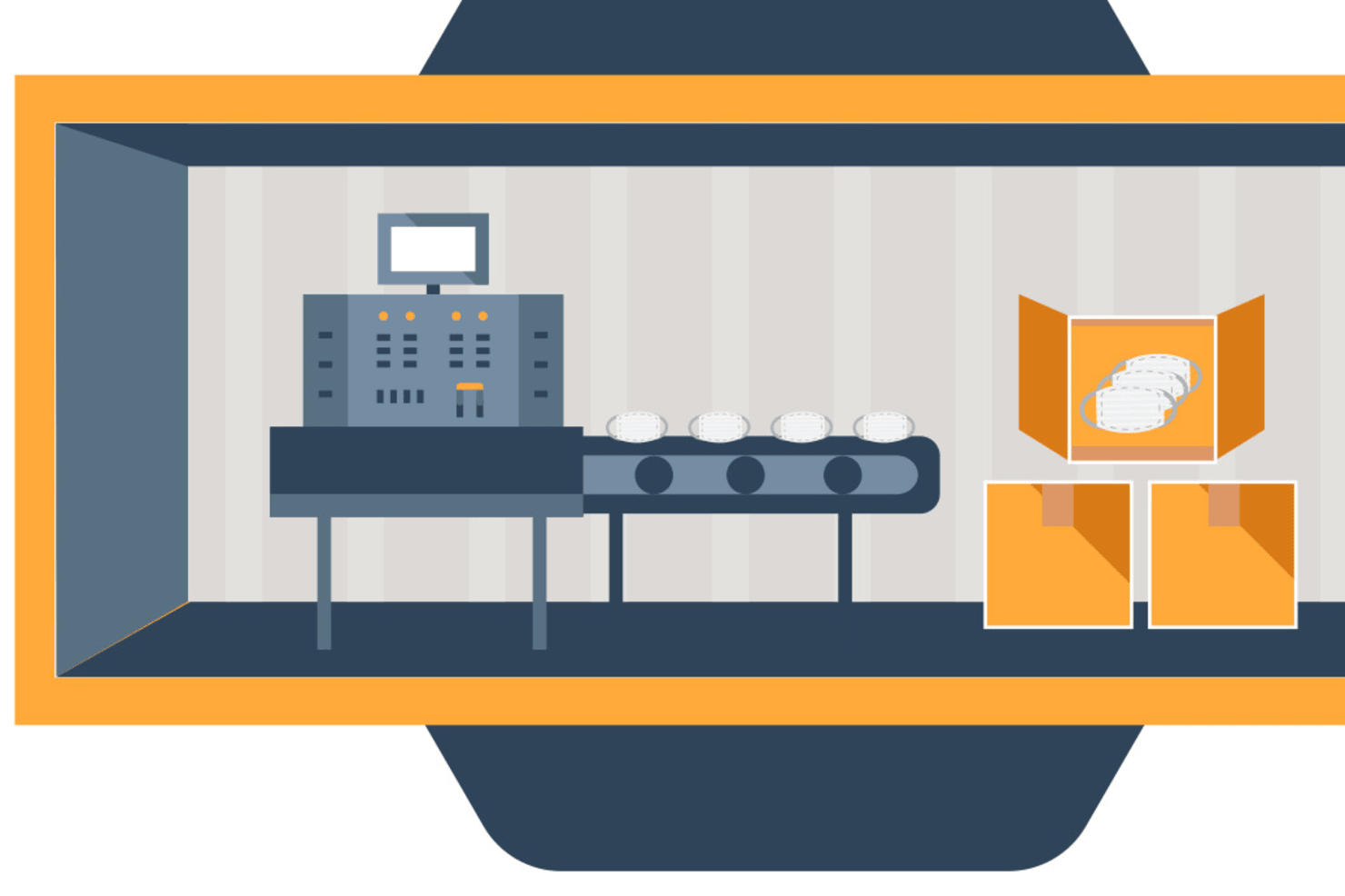
Mit dem Projekt CAROLA beteiligt sich CADUS an einer Initiative, die dem akuten Mangel an Gesichtszmasken in der COVID19-Pandemie mit einer flexiblen und langfristigen Lösung begegnet.