Two years of emergency response in Gaza
Published on 25. February 2026
from Jonas Gruenwald
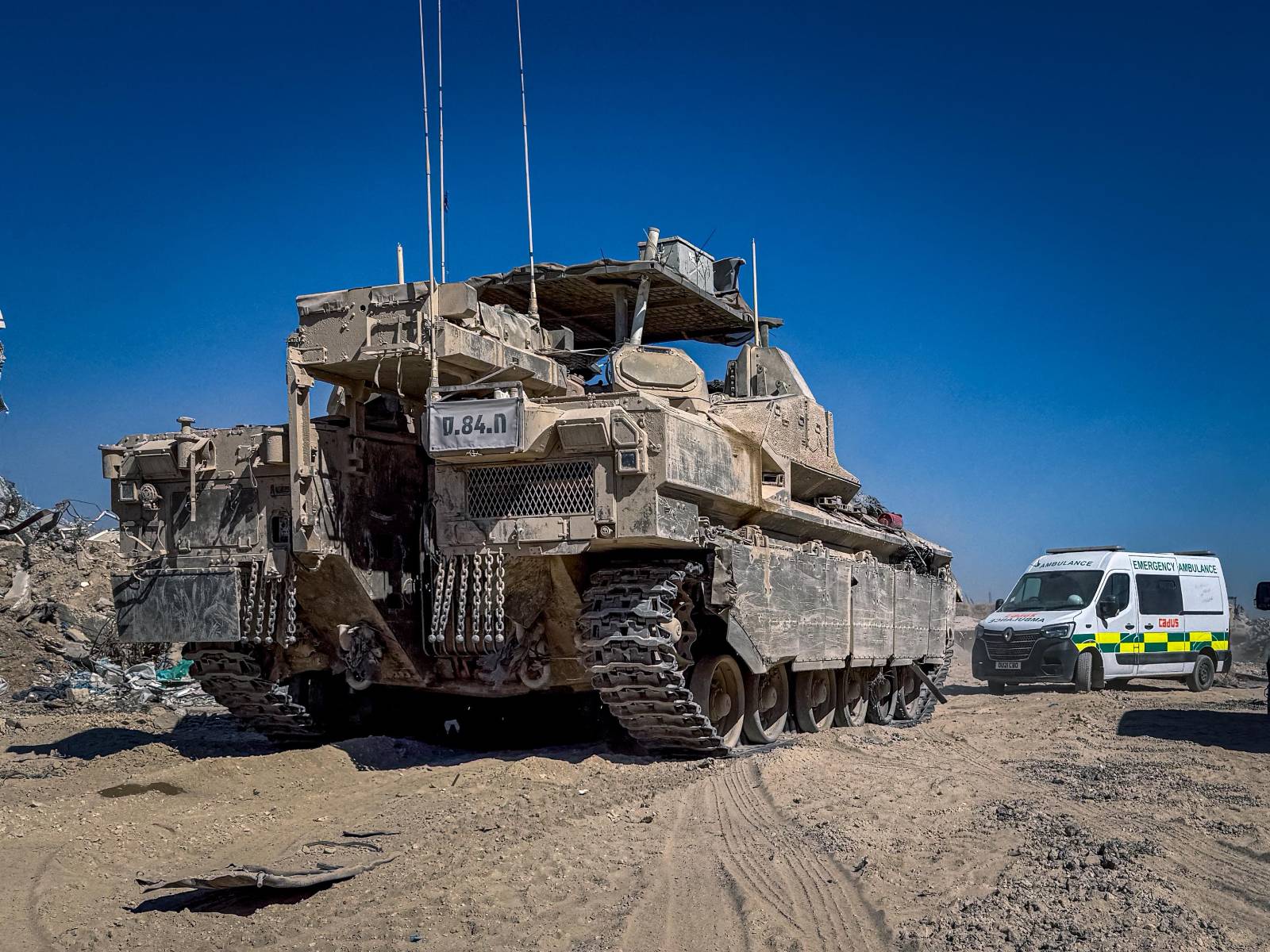
In February 2024, we began our most challenging mission to date: For two years now, we have been supporting the people of Gaza with a medical team. Despite all the adversity.
After the Hamas attack on Israel on October 7, 2023 and the subsequent large-scale attack by the Israeli military, we sent our first team to Gaza in February 2024. The challenges for logistics were enormous due to the strict import regulations, and the use of a large part of our standard equipment was not even possible due to dual-use regulations*. Added to this was the extremely tense security situation, which we are still addressing today with close monitoring and very precise coordination with the UN and other organizations.
Medical support
In mid-February, our medical team began supporting the emergency room at the European Gaza Hospital. This was followed shortly afterwards by cooperation with the Palestinian Red Crescent Society (PRCS) at its Trauma Stabilization Point (TSP). Due to the attacks, the hospitals were regularly flooded with dozens of seriously injured patients – an overwhelming task for any hospital worldwide and especially for one in a war zone with limited resources.
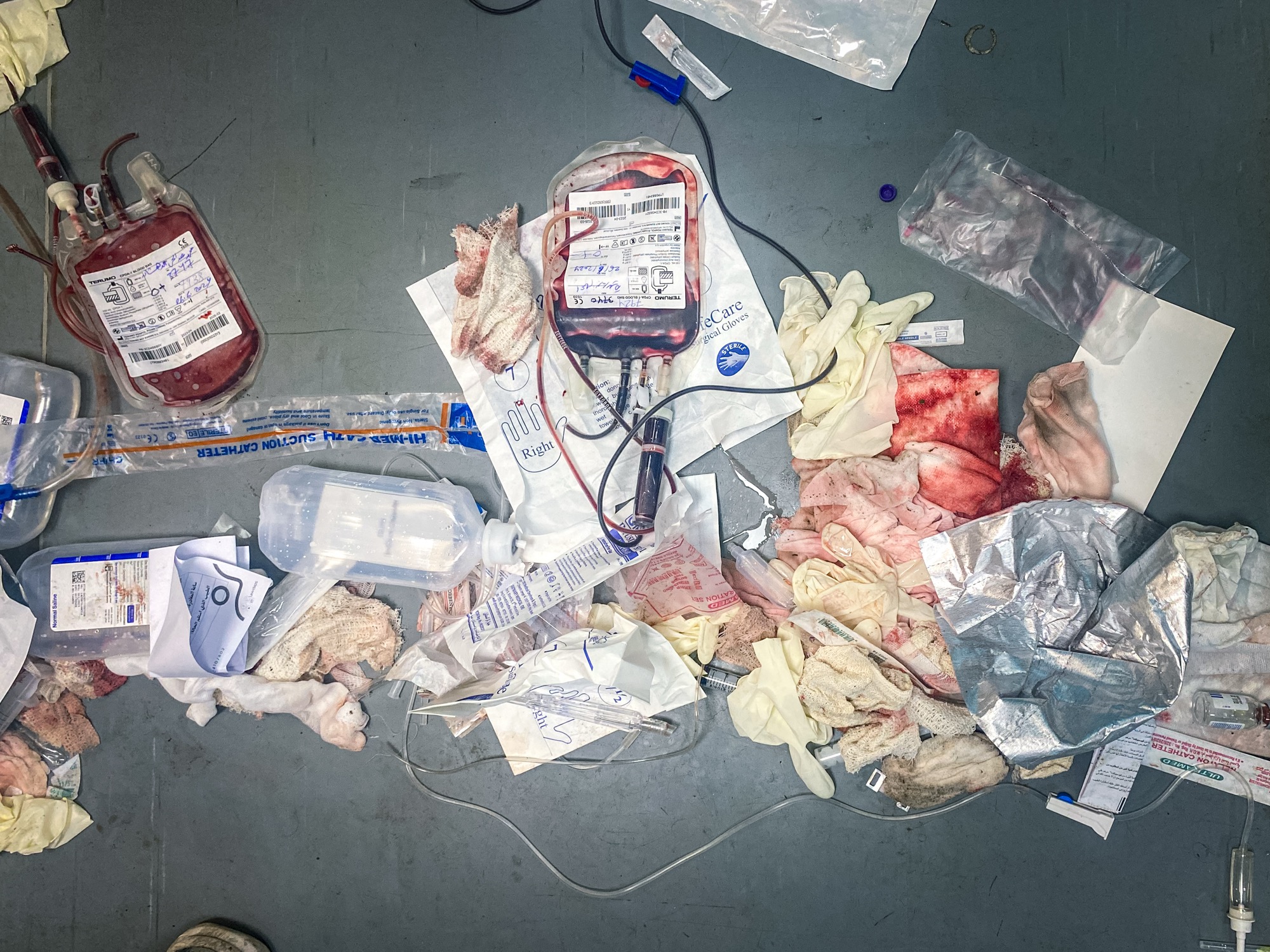
Empty blood packs, infusions and latex gloves bear witness to the dramatic situation in the hospitals in Gaza where the injured seek help after attacks by the Israeli army. Photo: Mattia Bidoli
We were shocked by the sheer number of injured and dead, including many children and young people. From the beginning, the Palestinians were in a hopeless situation. It was not possible to flee across the closed borders, people were repeatedly displaced within Gaza by orders from the Israeli army and bombing was possible anywhere and at any time.
Rescue workers in danger
In March 2024, we took over the MedEvacs, i.e. the transportation of seriously ill and injured patients, within Gaza from PRCS, as the safety of our Palestinian colleagues could no longer be guaranteed.
Despite close consultation with the Israeli authorities via the WHO, our teams were also repeatedly blocked, threatened and shot at by the Israeli army during authorized MedEvacs.
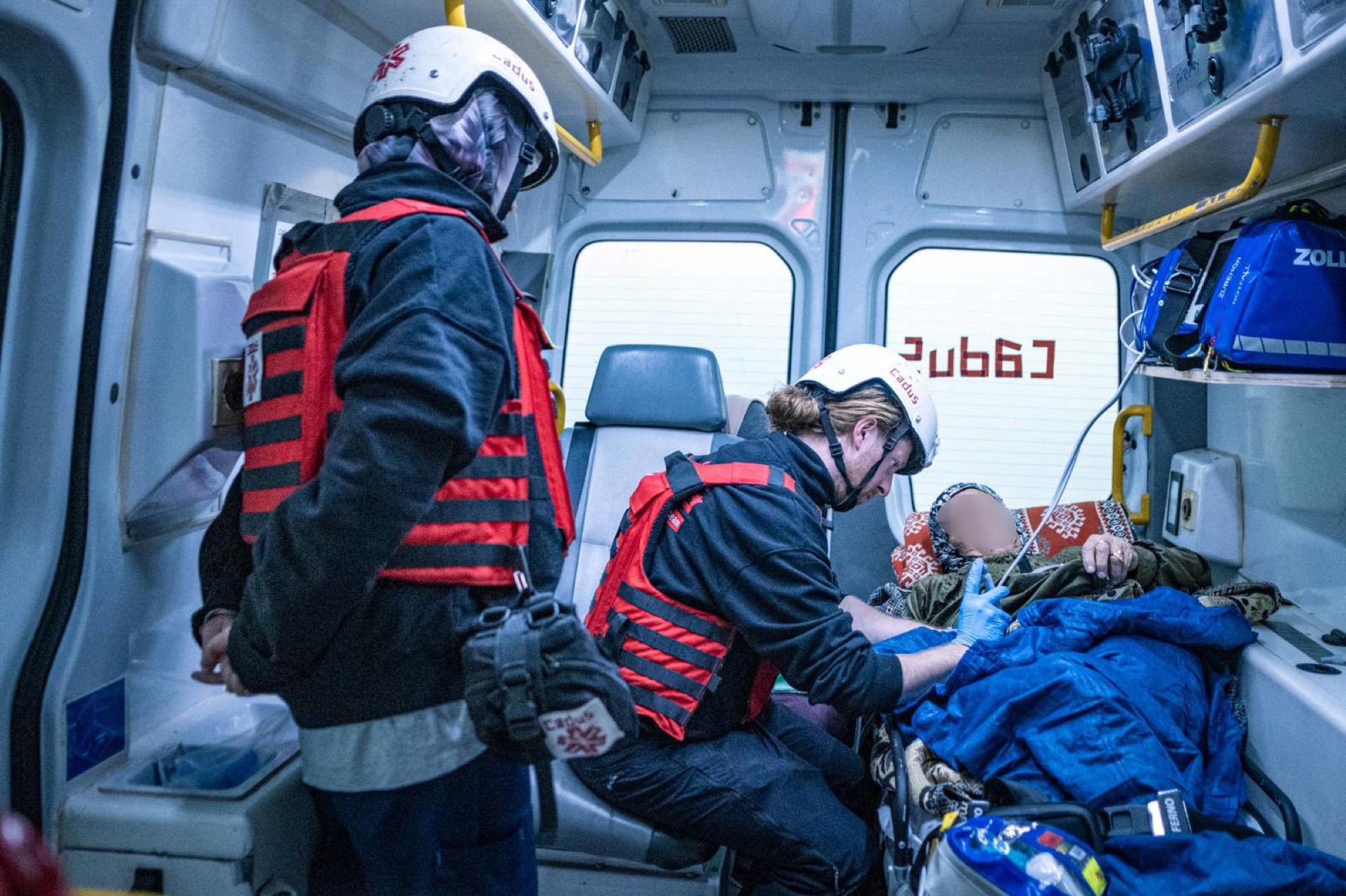
Our employees can only work with helmets and protective vests – there is a risk of shelling and shrapnel everywhere in Gaza. Photo: CADUS
Unfortunately, these were not isolated cases: Gaza is the deadliest conflict in recent history for humanitarian aid workers. Even though international aid workers have been killed time and again, it is mainly Palestinian rescue workers who are being shot and bombed in violation of international law.
MedEvacs
In May 2024, the Israeli army began its offensive in Rafah and the border crossing to Gaza was finally closed. Meanwhile, more and more hospitals were evacuated or destroyed, meaning that fewer and fewer patients could be treated inside Gaza. In August, we started the international MedEvacs in cooperation with the WHO and PRCS. Even then, thousands of patients needed treatment abroad due to a lack of facilities within Gaza. Since then, the number has risen to around 18,500.
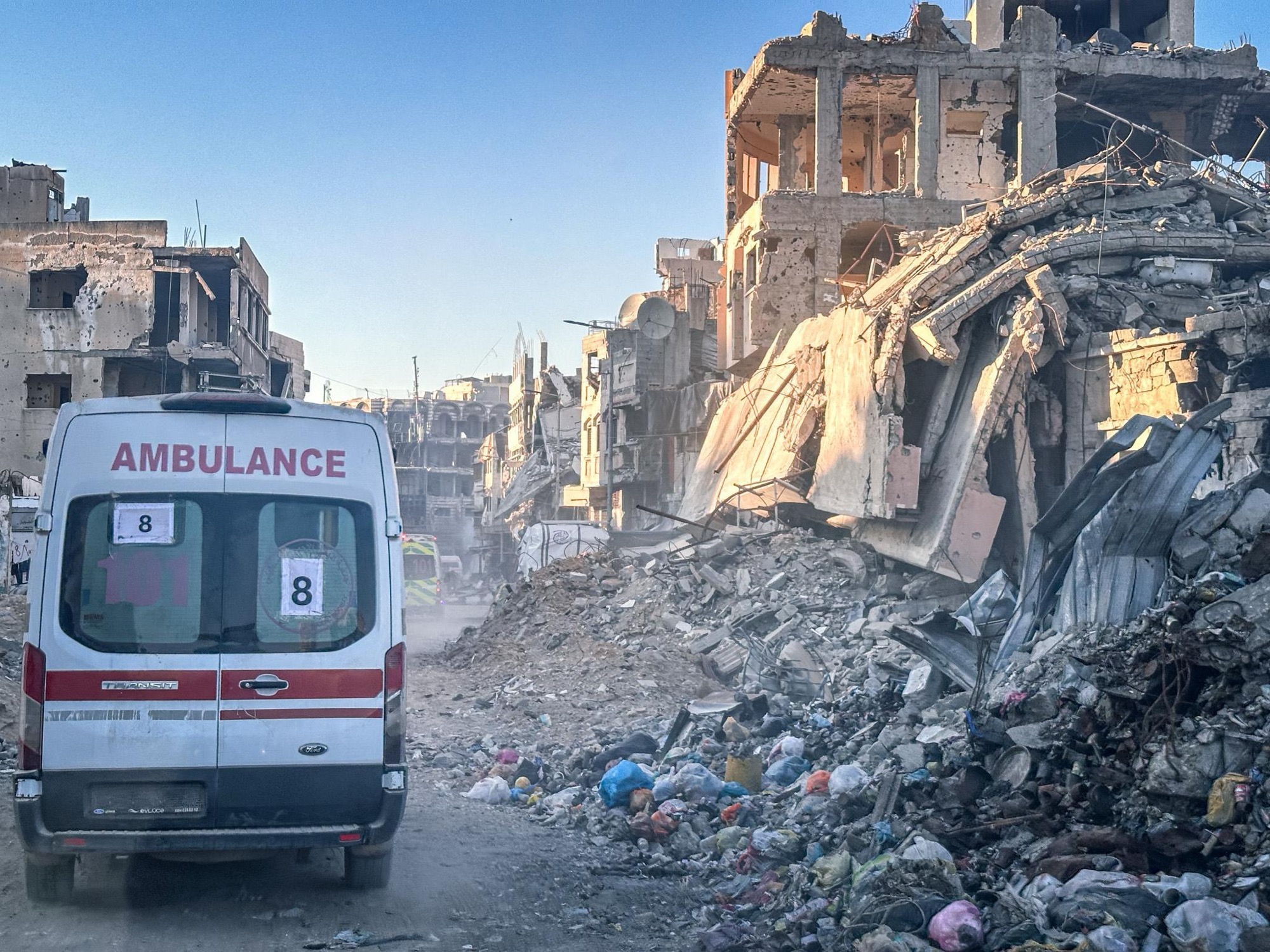 The MedEvacs often take place in long convoys through the destroyed cities of Gaza. Photo: CADUS
We were happy about every successful MedEvac, especially for the patients we transported to the borders of Gaza: they had received permission to leave the country and receive treatment abroad. At the same time, we were aware that with all the effort and risk involved, we could only be a drop in the ocean. Vital for the individual, hardly any difference for the masses.
Suffering and lack
In the meantime, we began to provide medical training for local colleagues and to provide medical support for the missions of UN and other organizations. The extent of the destruction and suffering that we encountered during our work over the past two years was unprecedented and difficult to bear, even for colleagues with war experience.
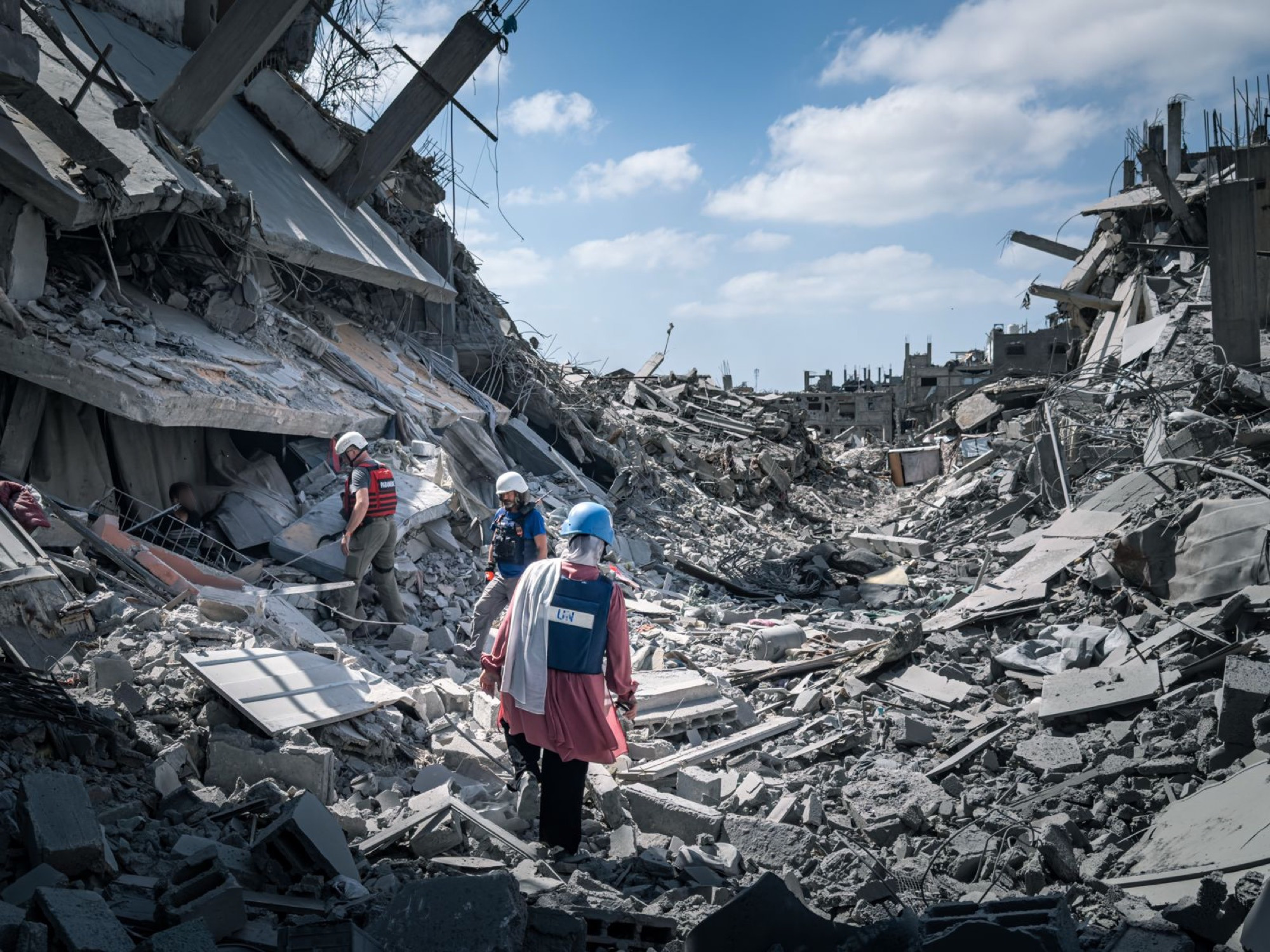 While accompanying a UN mission, a man draws attention to himself. He has no legs, has been stuck for days in the ruins of his destroyed house and is severely dehydrated. Our team is able to take him to the nearest hospital, where he receives treatment. Photo: Mattia Bidoli
The general shortage was then and still is omnipresent. Prices for food, fuel and baby food skyrocketed, medicines ran out. With the ceasefire from January to March 2025, there was a slight improvement, hundreds of trucks reached Gaza every day and there was a slight hope that the war would end. We carried out MedEvacs almost daily during this time.
Ceasefire?
With the end of the ceasefire in mid-March 2025, hopes were dashed and the Israeli army bombarded northern Gaza more heavily than ever before. It also became more dangerous for our teams, as previously established routes to share our teams’ movements and locations with the Israeli army were suddenly no longer available.
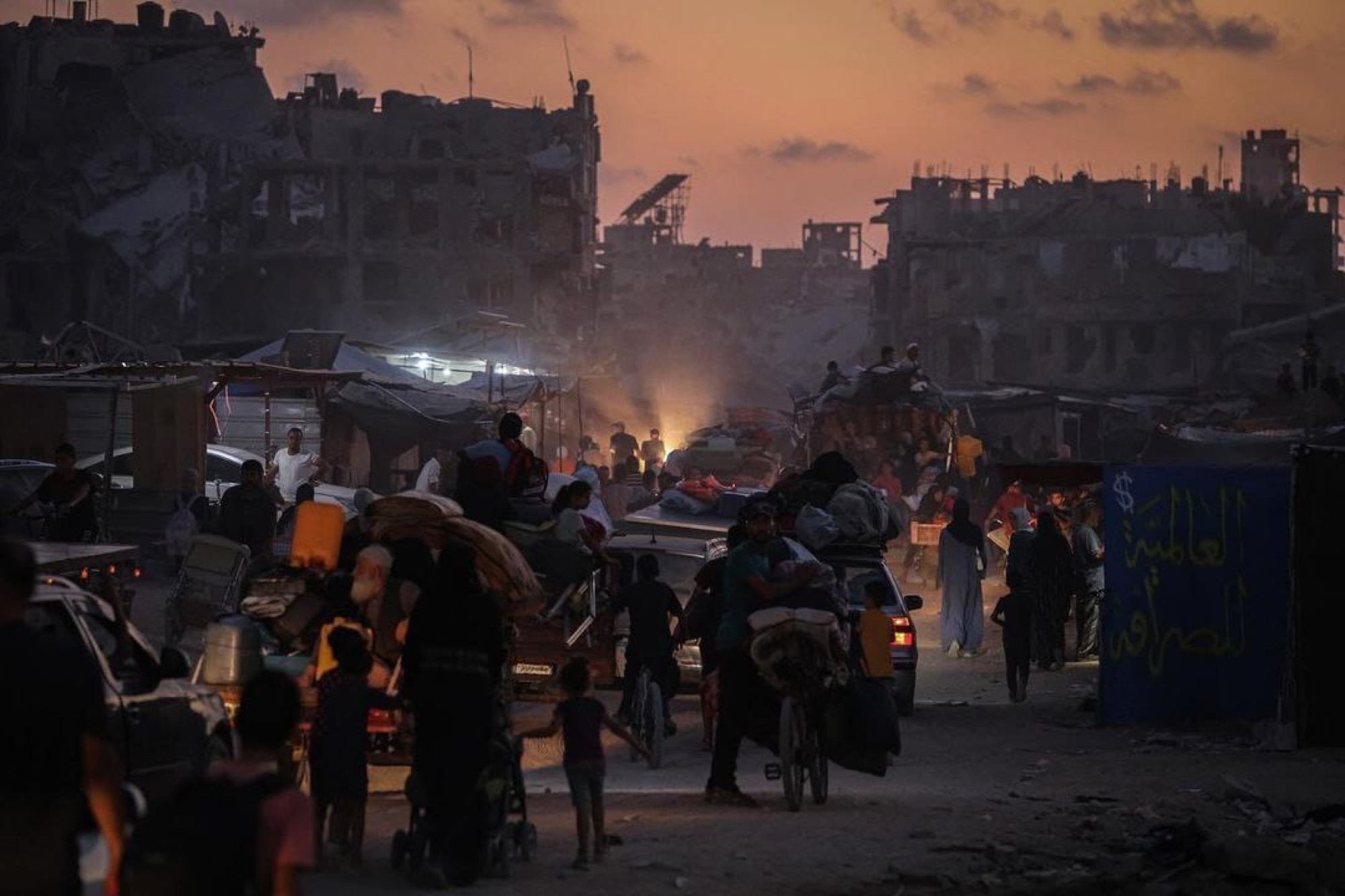 There is no safe place for the people of Gaza. Tens of thousands have been displaced several times within the coastal strip and there is a lack of accommodation, sanitary facilities and food. Many will probably never be able to return to their homes – all that remains of them are piles of rubble. Photo: Mattia Bidoli
In the months that followed, a famine was declared for parts of Gaza and the Gaza Humanitarian Foundation (GHF), set up by the Israeli and American governments, failed to distribute aid, with deaths and injuries caused by the GHF. Hamas and the Israeli government resumed their negotiations, as a result of which a further (fragile) ceasefire was agreed, all hostages and bodies were handed over to Israel and the Rafah border crossing was opened. Since then, the implementation of the so-called peace plan has stalled.
Emergency aid despite headwinds
Meanwhile, the room for manoeuvre for vital humanitarian aid is becoming ever narrower, as the Israeli government’s obligation to register organizations working in Gaza shows. Despite all efforts, support for the people in Gaza, which is barely sufficient in any case, is in danger of collapsing completely.
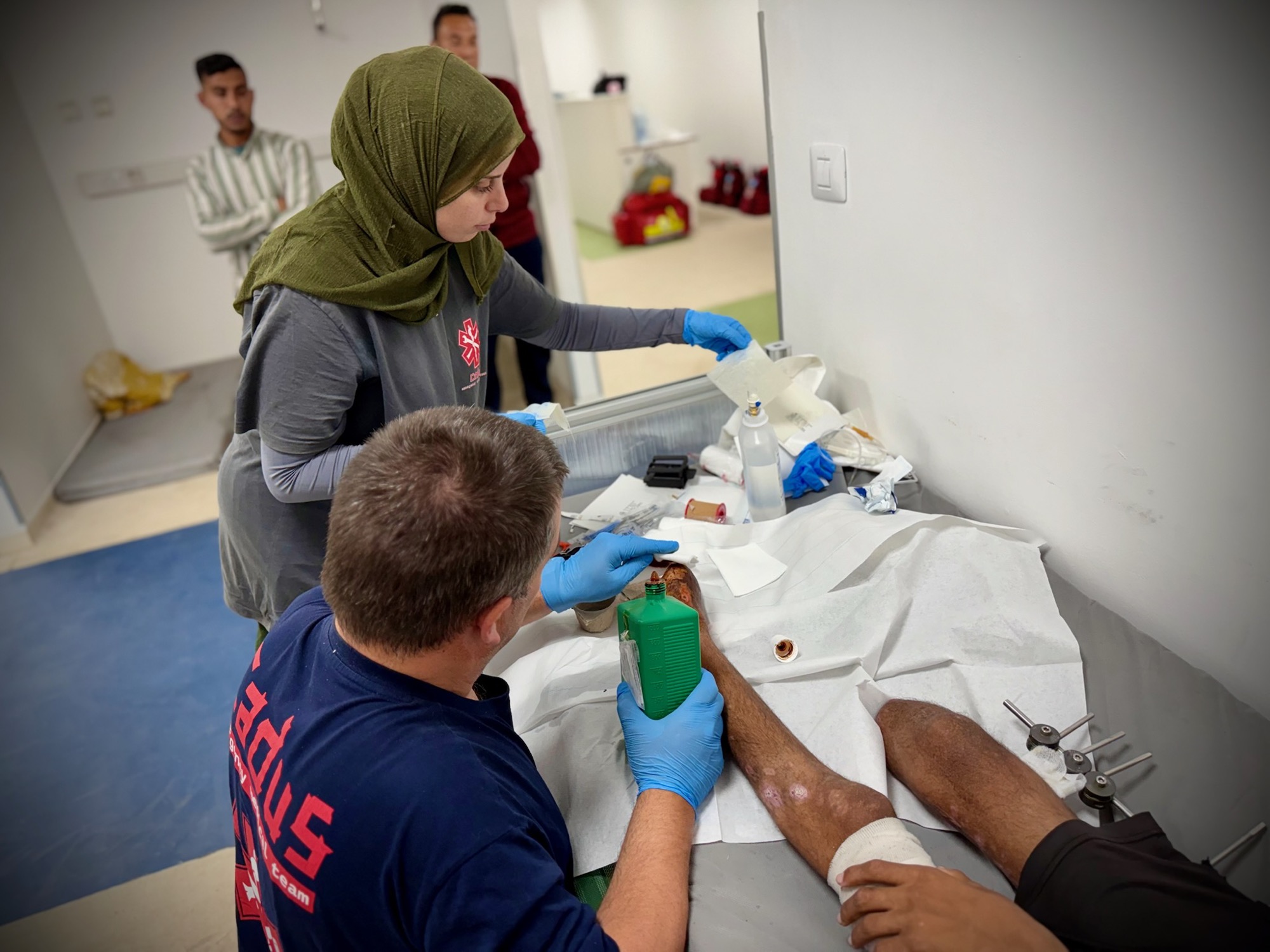
We are determined to continue supporting the people of Gaza in the future – with solidarity, dedication and the hope of a just peace in the near future. Photo: Ruben Neugebauer/CADUS
The plans of the so-called Board of Peace under the leadership of Donald Trump and without the participation of Palestinian representatives also leave the people of Gaza uncertain about the future. After two years of war, even the partial opening of the border in Rafah has not yet brought about any significant change in the situation on the ground.
Despite all the resistance and uncertainties, we are continuing our humanitarian emergency aid for as long as possible and are working to expand it even further. Let’s hope that it will soon no longer be necessary.
*Dual-use: Material that could be used for military purposes, in this case by Hamas, in addition to civilian applications (e.g. generators, solar modules, tools, etc.).
Ukraine: Four years between war and emergency response
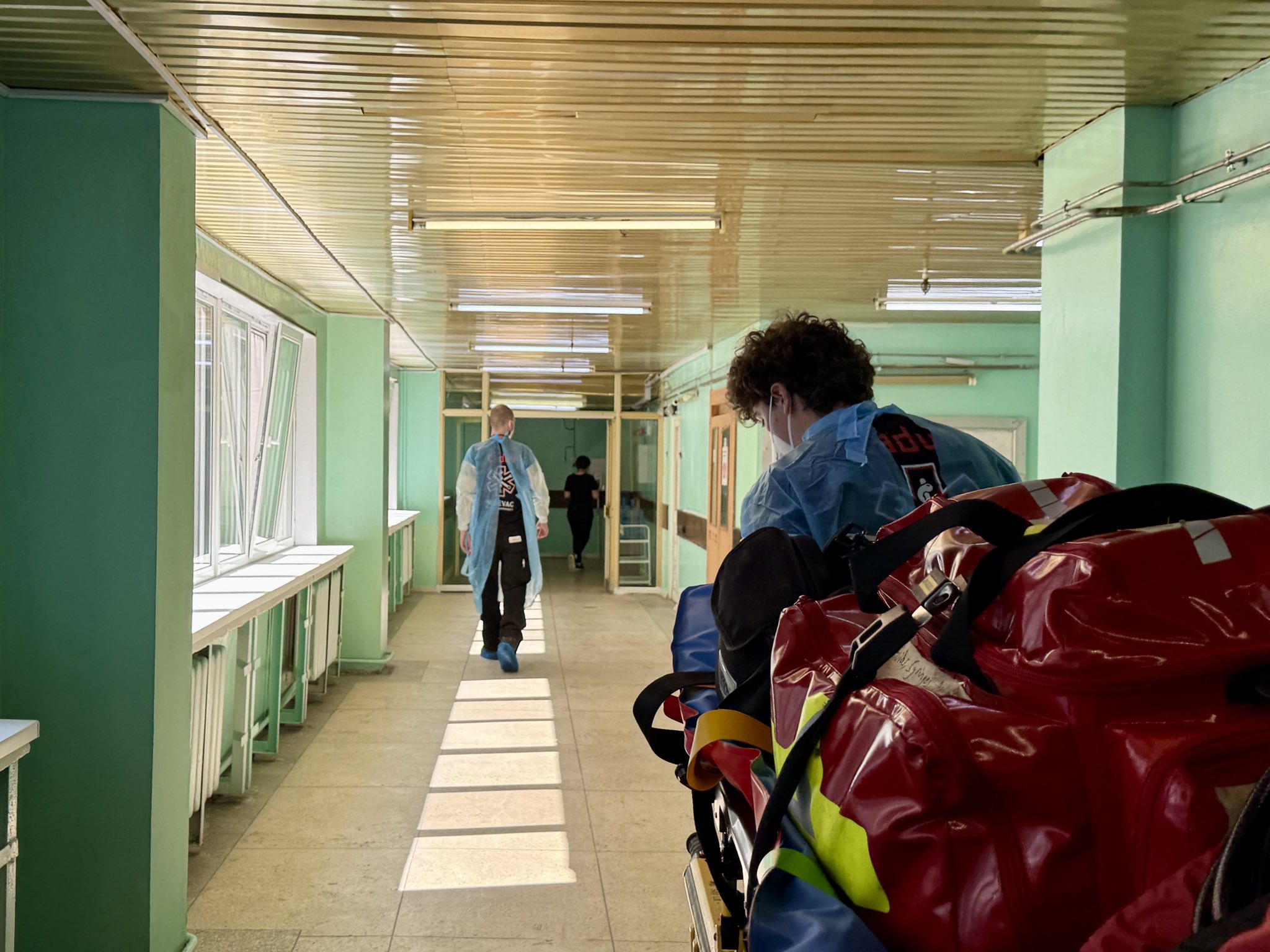
Russia launched its full-scale invasion of Ukraine in February 2022. The fighting has been going on for four years now, and with it our humanitarian aid on the ground.
Gaza – Contradictory developments
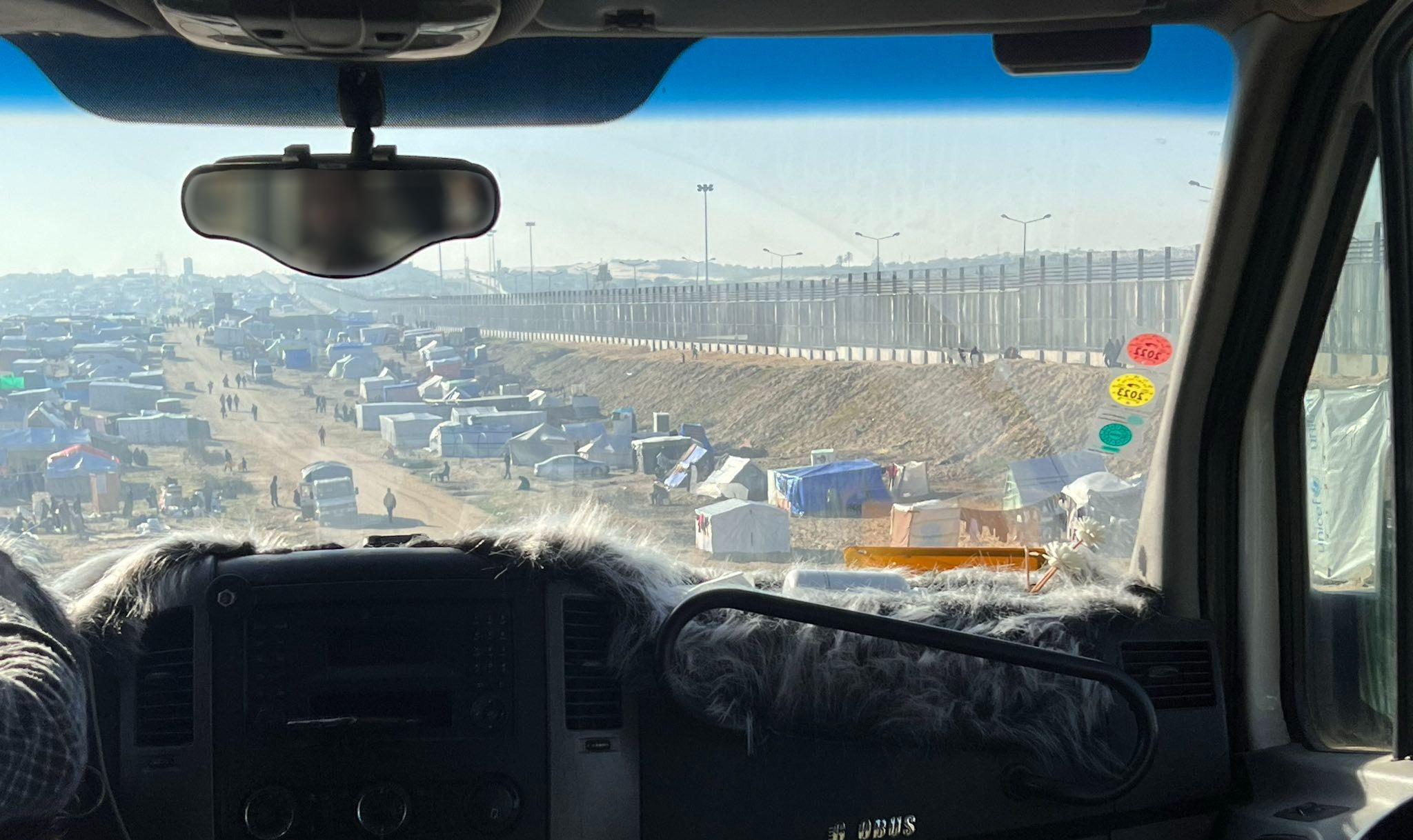
A ceasefire has been officially in place in Gaza since October 2025. More than three months later, however, there are no clear signs of progress towards peace. Uncertainty and deprivation continue to dominate everyday life in Gaza.
Syria: Former CADUS field hospital in al-Hol burnt down
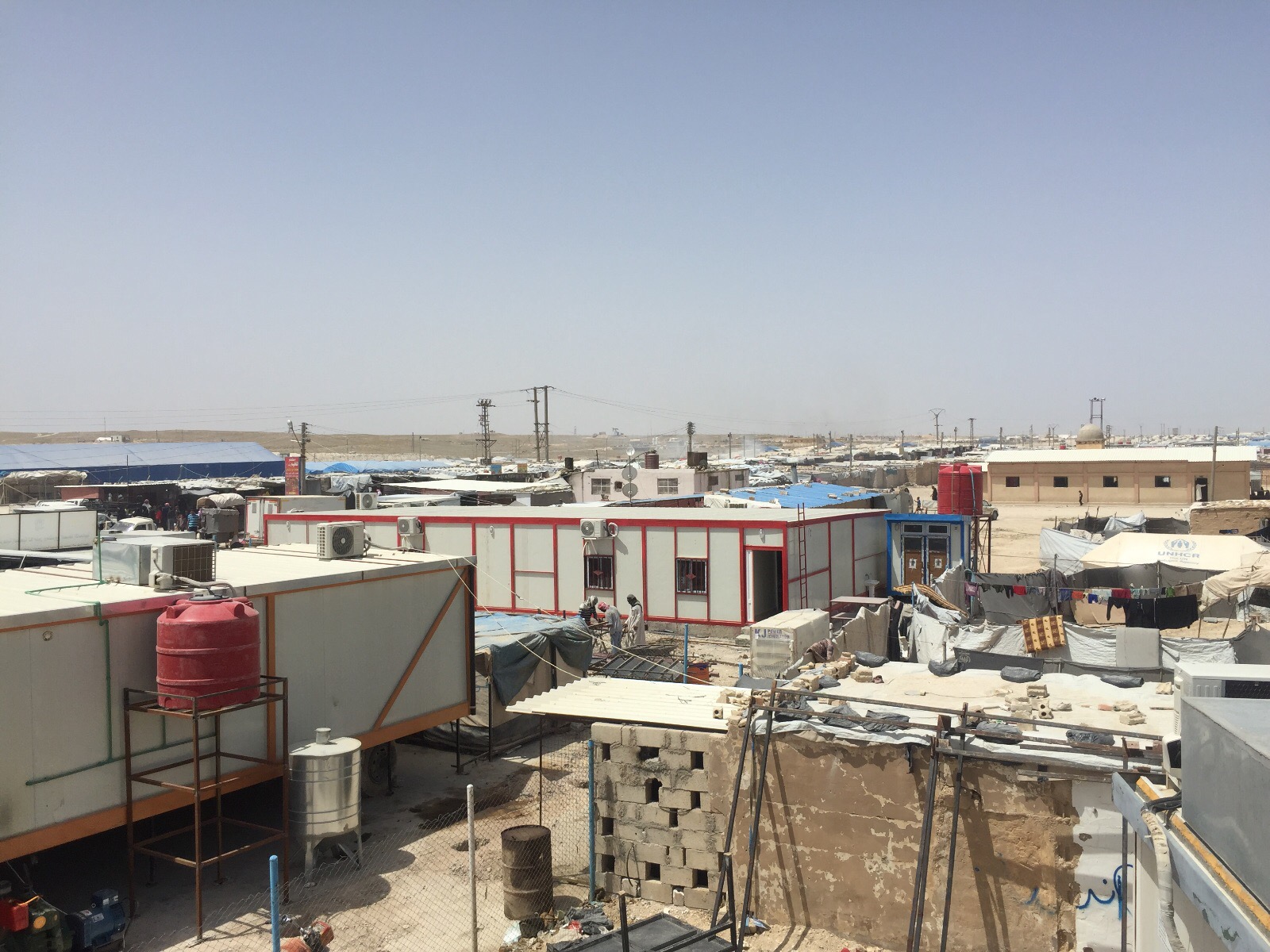
After the Kurdish security forces withdrew from the al-Hol camp due to battles with Syrian government troops, violent unrest broke out inside the camp. An interview about the situation on the ground with Adrian, an employee of the organization Sîler.