From box to a patient treatment place – developments in our makerspace
Published on 9. March 2021
from CADUS-PR
from-a-box-to-a-patient-treatment-place-developments-in-our-makerspace-feature-CADUS20Maker20Space20Nov202020-7-ef3cb9ac
The requirements for equipment used in crisis areas are often quite different from those for normal medical equipment. In our Makerspace, we are currently developing various projects needed for missions. Two of our latest builds are a mobile washbasin and a modular treatment stations for patients.
When we are not on a mission abroad, we are busy working on projects with volunteer supporters in our Crisis Response Makerspace (CRM). During missions, we often encounter unforeseen problems, for which we then find a solution in the workshop. Last spring, the Makerspace briefly became a logistics center for Faceshields when we participated in an initiative of open workshops. In the meantime, however, all the face shields have left the Makerspace again and there is plenty of room to work.
Requirements for humanitarian work
Humanitarian work in crisis and war zones often comes with special requirements that have to be taken into account when designing and developing equipment. After natural disasters, such as an earthquake, the existing infrastructure is often destroyed and no longer usable. That’s why all solutions developed in CRM must be able to function independently. They either have to manage without electricity or need their own power supply; the same applies to water or gas. Not relying on local infrastructure is challenging, but one of the most important principles for development.
Mobile Washbasin
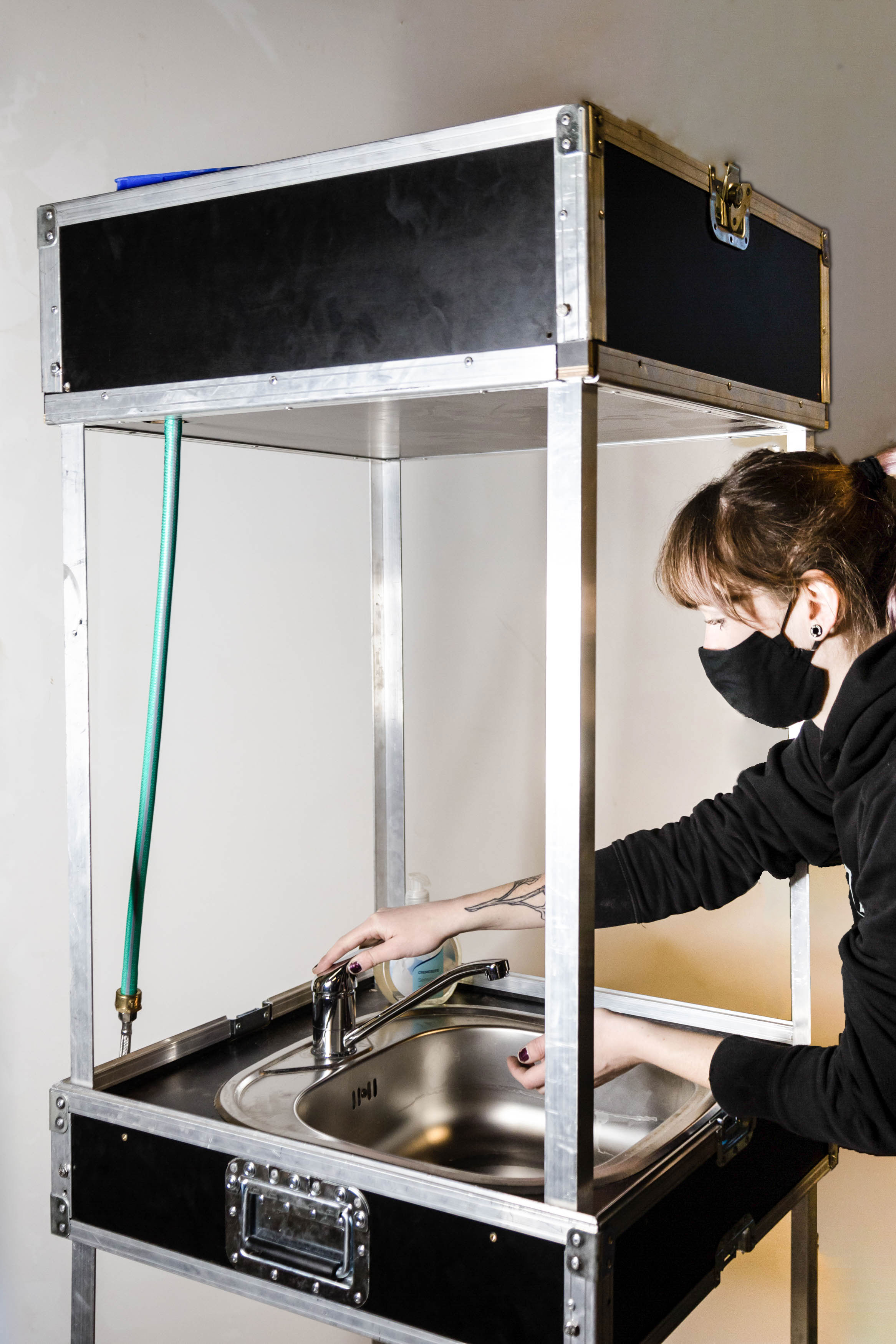 This self-sufficient design is particularly obvious in the mobile washbasin, one of our current projects. Access to clean water is not always available during our missions, but washing hands is essential for medical work, not only in times of pandemic. That is why we have developed a washbasin that is adapted to all eventualities in missions.
If a functioning water network is available, the washbasin can simply be connected to it. Otherwise, it is equipped with a 40-liter tank and an electric pump that generate running water. If no electricity is availabe, we make use of something that is always there: Gravity. The height of the tank creates enough water pressure for easy hand washing.
The mobile washbasin consists of three parts: a tank (top), the actual washbasin (middle) and the canisters for the wastewater (bottom). Photo: (c) Till Rimmele
For missions in cold areas, there is the option to connect an instantaneous water heater or a boiler. The whole sink can be compactly packed for transport to the size of a travel suitcase.
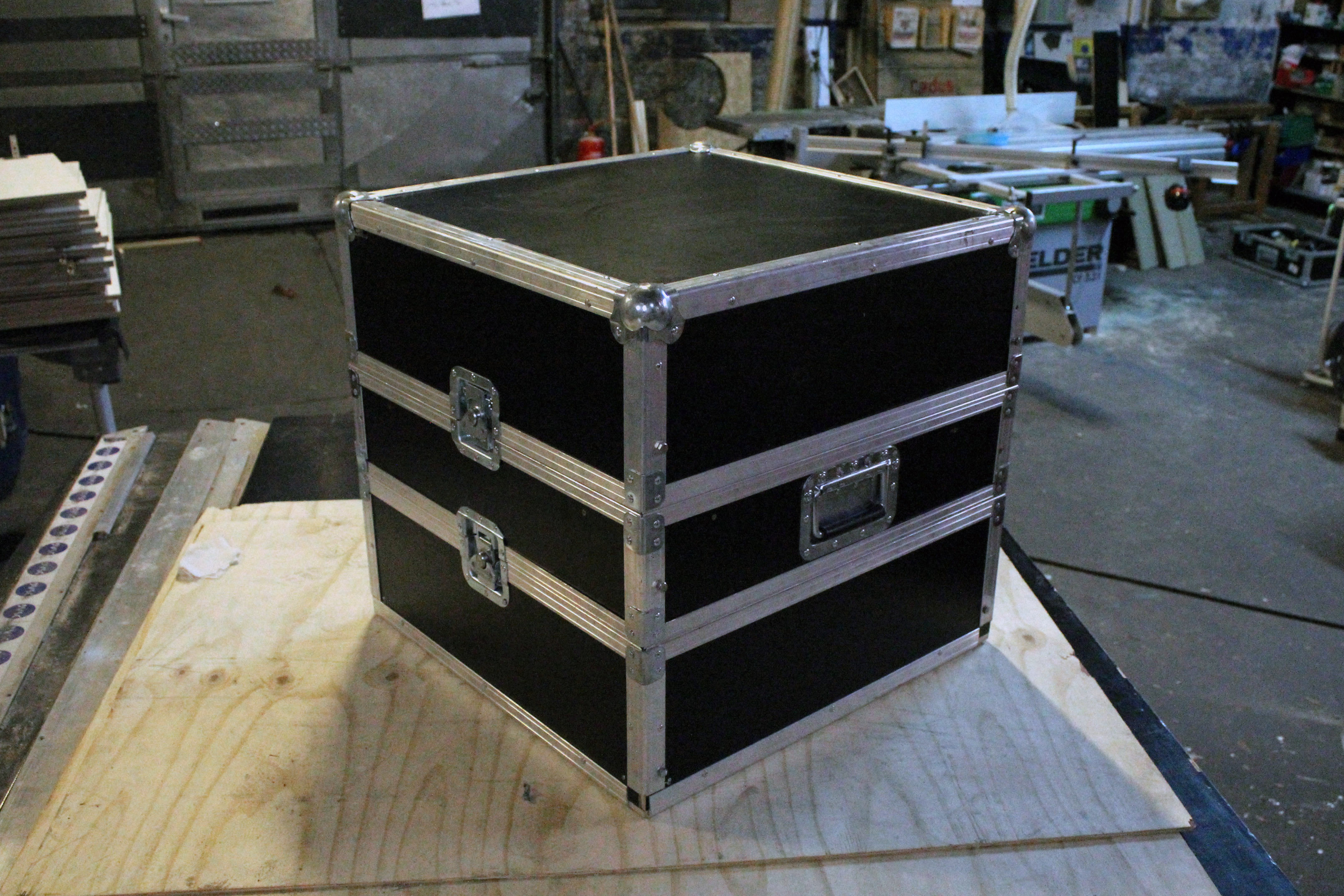 The sink packed together. Photo: (c) Till Rimmele
This mobility is a second important requirement in humanitarian aid. In areas where long-term planning is often not possible, easily movable equipment is needed. In the event of a sudden flood, for example, there is rarely time to move equipment to a specific location by ship for weeks. Projects like a mobile hospital can often help more people if it is able to quickly change its position and move to hot spots.
Patient Treatment Places
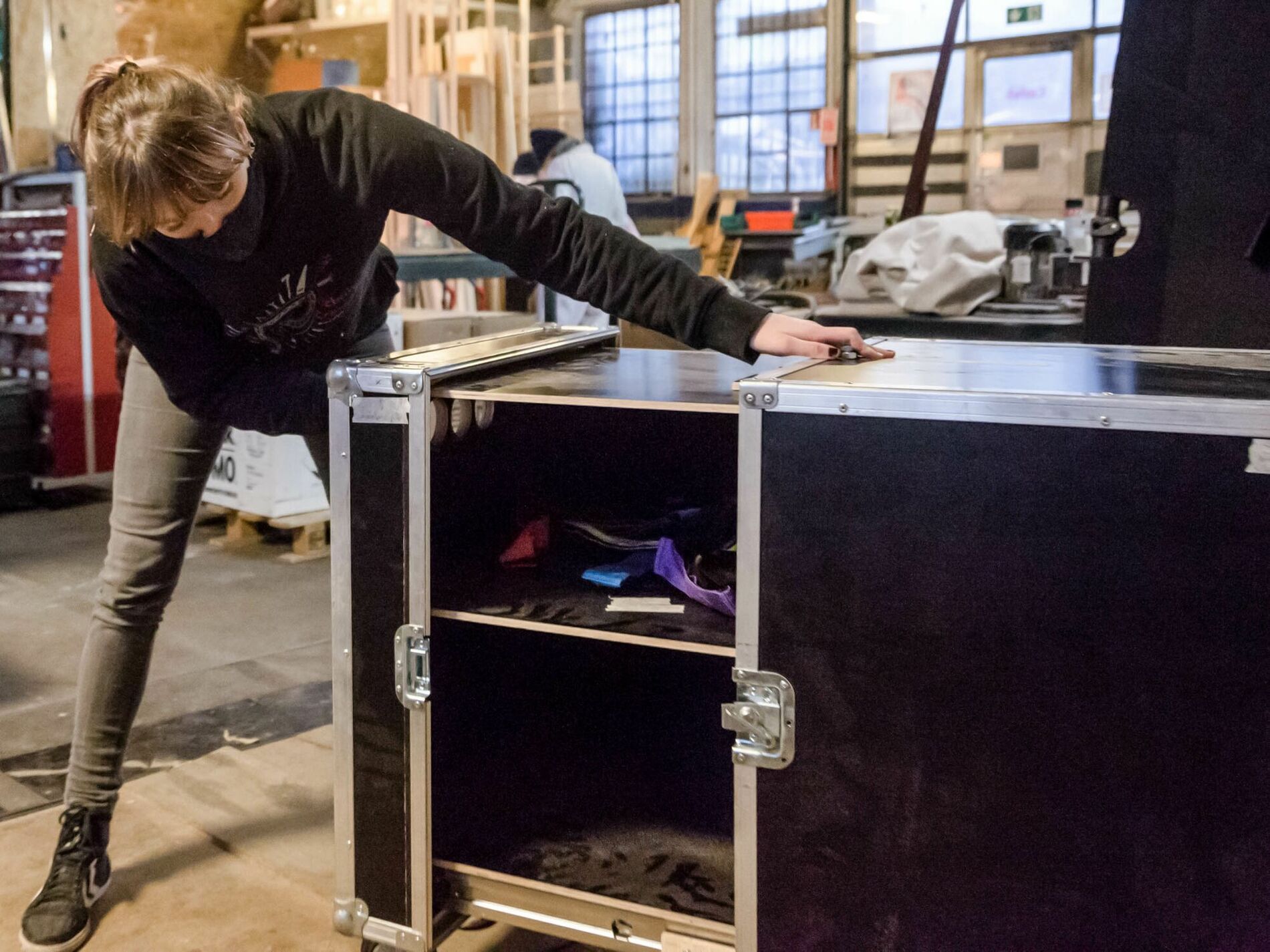
An integral part of such a mobile hospital are the treatment stations: Like almost everything in a mobile hospital, these treatment stations must be integrated into a transport box system. Since resources and space on site are limited, they must be quick and self-explanatory to set up and dismantle.
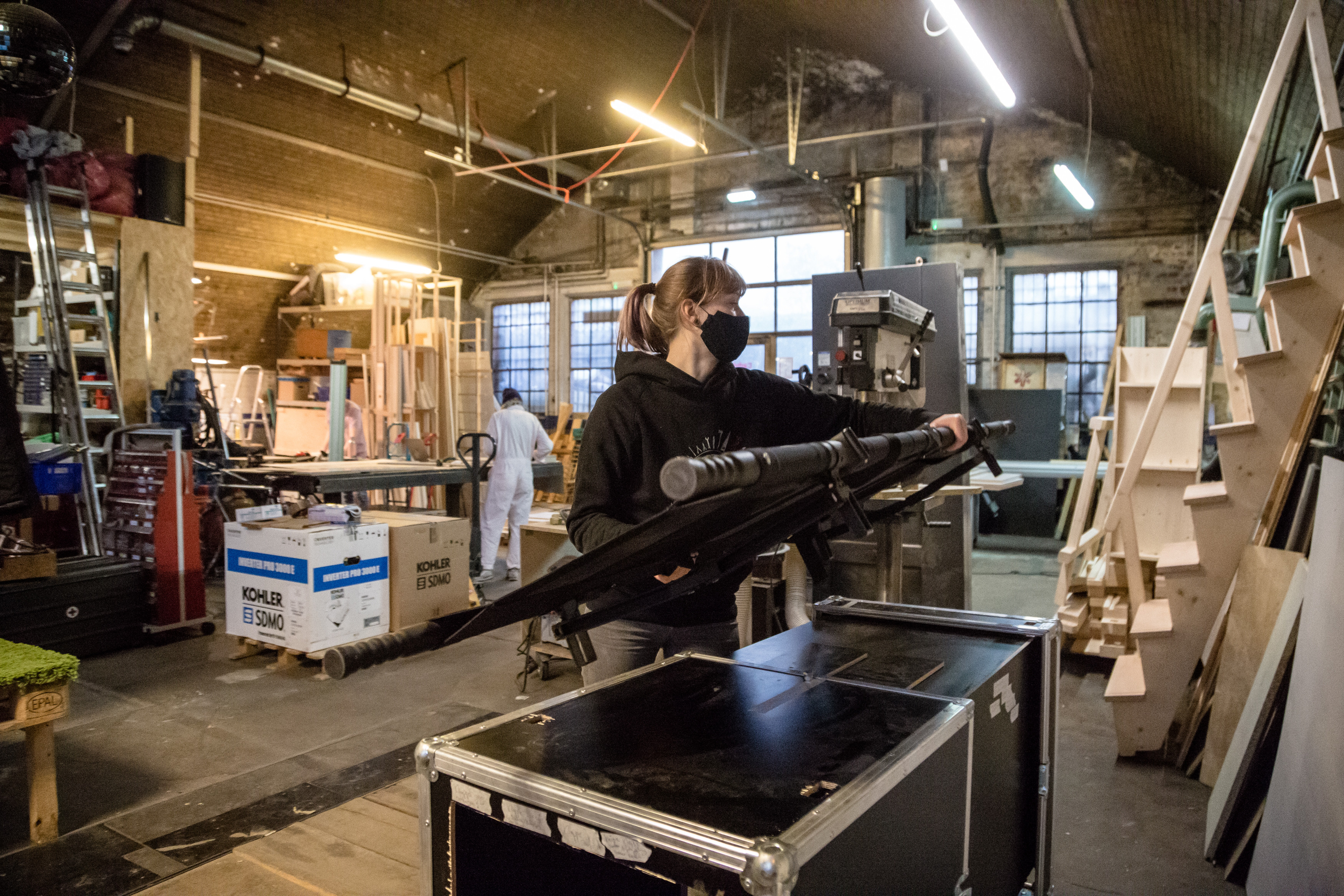 The Patient Treatment Place can be assembled in just a few simple steps. Photo: (c) Till Rimmele
The material has to meet certain requirements as well: it must not only be easy and hygienic to clean, but it should also be tough and available in crisis areas. The treatment places that we have developed in the Makerspace are made of a stable plywood material with a melamine resin coating. This material meets all the necessary requirements and is not only weather resistant, waterproof and easy to clean, but also scratch resistant and flame retardant. The wood was processed into an extendable box and a foldable lounger. In addition, there is a special snap-in system developed by us to securely connect the box and lounger together.
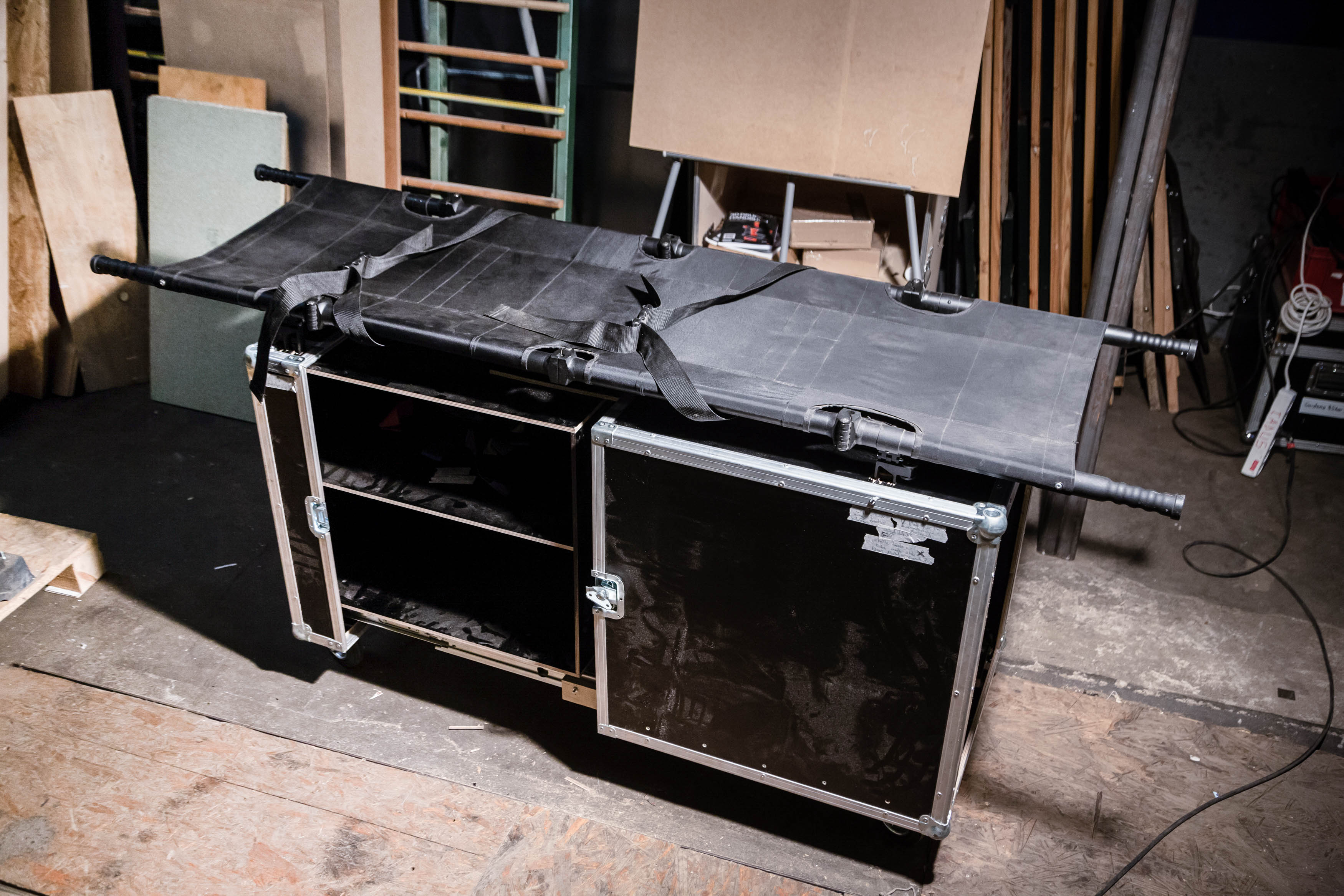 A prototype of the patient treatment places. Photo: (c) Till Rimmele
You’re in Berlin, like to tinker yourself and feel like being in the workshop again? We are currently looking for support to build new projects, for example we are planning a mobile and modular emergency ambulance for war and crisis areas. We would be happy if you write us! Especially we are looking for people with these skills:
- CNC and CAD: Create technical drawings and milling files
- Wood and metal working
- Product Design/ Industrial Design, User Experience
- Documentation of open source projects
If you found yourself in this list, or would like to support us in any other way, feel free to send us an eMail to makerspace@cadus.org.
Published
Author: by Cadus PR
„Mit so einem kleinen Stück Papier ändert sich dein ganzes Leben.”
Tarek Khello (geboren 1985, Studium in Damaskus) ist Journalist und Geflüchteter. Weil er in Syrien kritisch über das Assad-Regime berichtet hat, wurde Tarek mehrfach eingesperrt. Er entschied sich für die Flucht und wurde in das spezielle Flüchtlingshilfsprogramm „Resettlement" aufgenommen. 2013 kam er nach …
Inhalte überwinden – zur türkischen Invasion in Nordsyrien
Letzte Woche war auf tagesschau.de zu lesen, dass die Bundesregierung neben ihrer „Sorge“ über die türkische Militäraggression auch von „legitimen Sicherheitsinteressen“ spreche. Die Türkei sei ja mehrfach das Ziel von Aggressionen des IS von syrischem Boden aus gewesen. Die neunte Runde der syrischen Friedensgespräche …
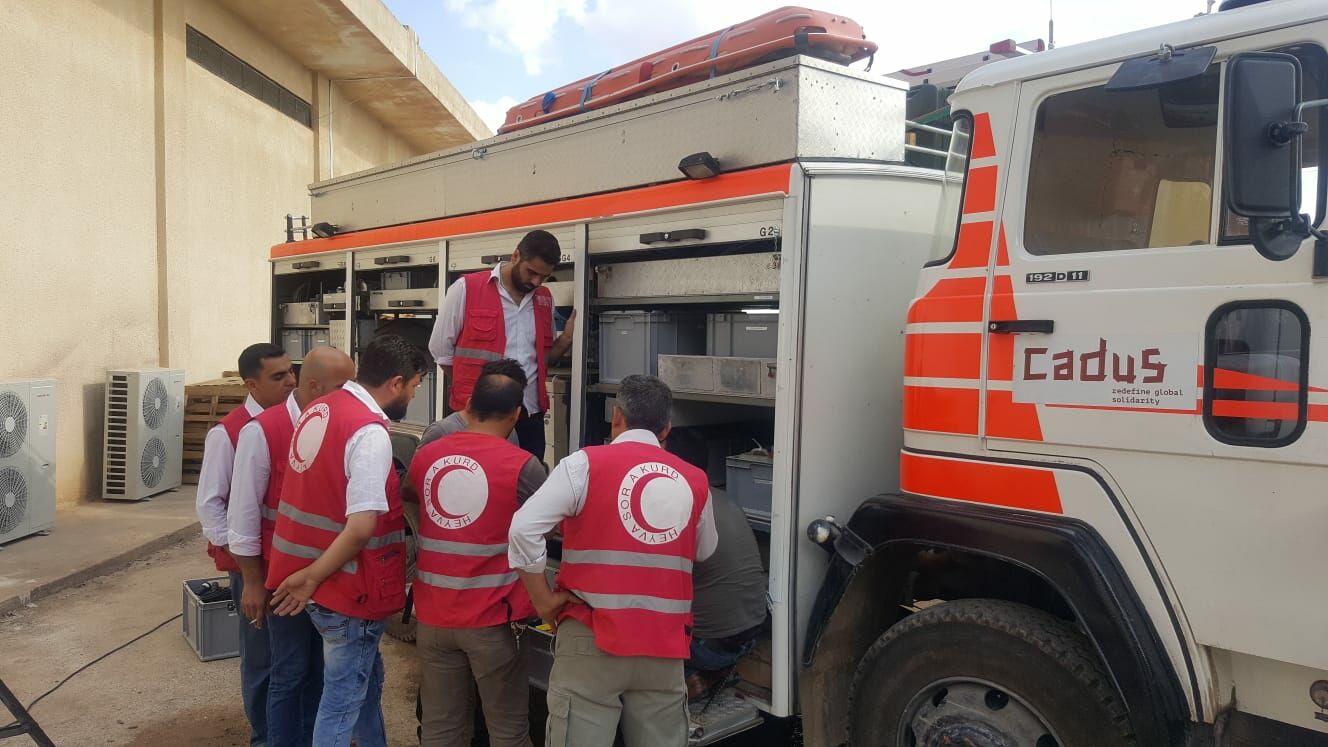
First training of the Mobile Hospital for the new owners
On Thursday, May 24th, CADUS and the Kurdish Red Crescent joined together for the first training of the mobile hospital. About 15 Kurdish Red Crescent crew members joined the CADUS project coordinators, infield head of mission, and technician to learn about the operation of the mobile hospital which will soon be …