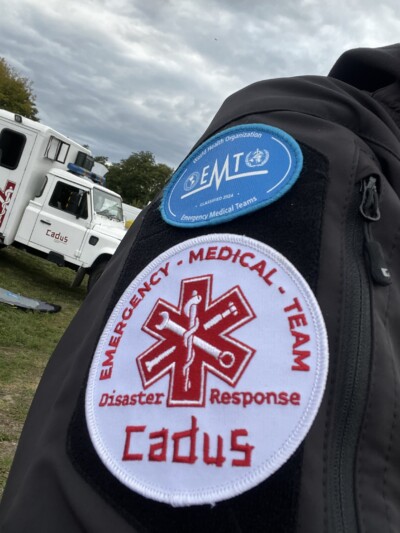
Erdogan´s war or how to destroy progress
Published on 10. October 2019
from CADUS-PR
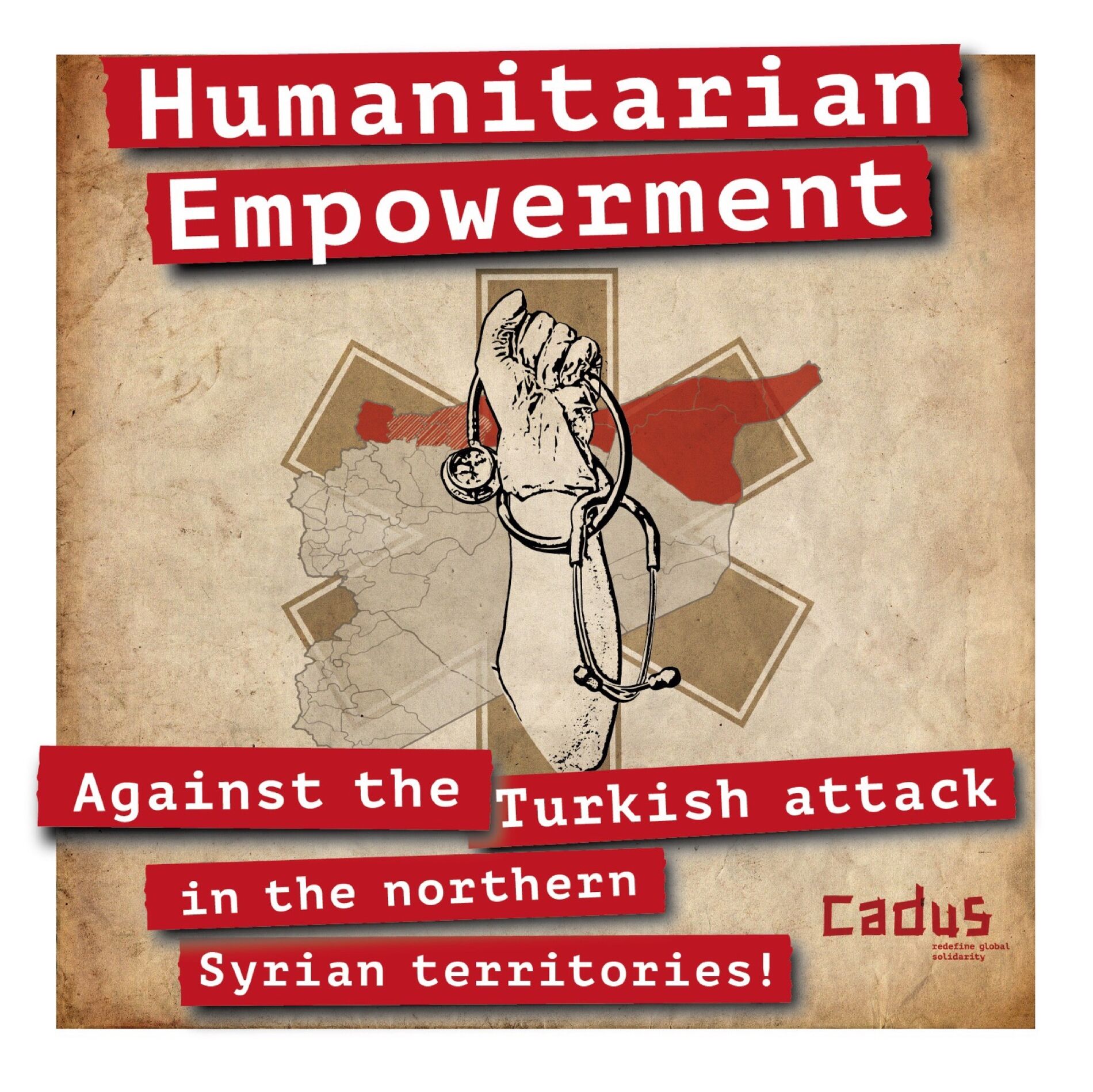
erdogan-s-war-or-how-to-destroy-progress-feature-IMG_2714-a6d39da4
It´s happening, the long feared invasion of Turkey is taking place. As a humanitarian aid organisation, the principle of neutrality requires us not to take a stand in conflicts. But what we can do is talk about facts.
The fact is that an attack by Turkish troops on Syrian territory is a breach of international law.
The fact is that the "security zone" is not a reaction to aggression on the part of the Kurdish self-government, but purely "preventive" and can therefore be called a pretext, with a clear conscience.
It is also a fact that a politician like Erdogan alone shows where we are heading to, when he talks about "protection zones" on one side and "exterminate" on the other.
It is also a fact that ISIS built many of its improvised booby traps in Rojava, which still cause fatalities until today, with chemicals from fertilizer supplies from Turkey, while humanitarian aid supplies for the region of northeastern Syria were not allowed through.
It is also a fact that after the invasion of the Turkish troops, respectively the TFSA militias supported by Turkey, countless war crimes and human rights violations took place in Afrin, unilaterally at the expense of the Kurdish part of the population.
It is also a fact that the humanitarian situation in Rojava has steadily improved in recent years. And this despite all the adversities and efforts faced by the local population and our local partners. The lack of functioning equipment, lack of financial ressources, repeatedly also humanitarian embargos on the part of Turkey in violation of international law and the constant defensive struggle against ISIS, made it difficult to bring improvements in the region. And yet the people there have managed to rebuild a health system.
It is also a fact that the health system in northeast Syria also takes care of the local population who fought on ISIS side until recently and their families. And thus acting in a very direct humanitarian manner.
It is also a fact that all these positive achievements are endangered or destroyed by a Turkish attack.
As a humanitarian aid organization we must express ourselves "neutrally", but sometimes a simple enumeration of the facts says enough.
Since 2014 we have been working in Rojava at the side of Hevya Sor a Kurd, in different frequencies, but permanently for 1.5 years. Our projects treat around 4500 patients at two locations each month. The current situation also puts these projects in acute danger.
Together with our Kurdish partners we monitor the situation very closely and will keep our international teams on site as long as possible. At the same time, we are currently also seriously considering how our aid measures can be expanded should the number of warlike acts continue to increase.
Your help is essential!
CADUS supports – support CADUS
Published
Author: by Jonas Grünwald
Wie war das noch mit den Menschenrechten?
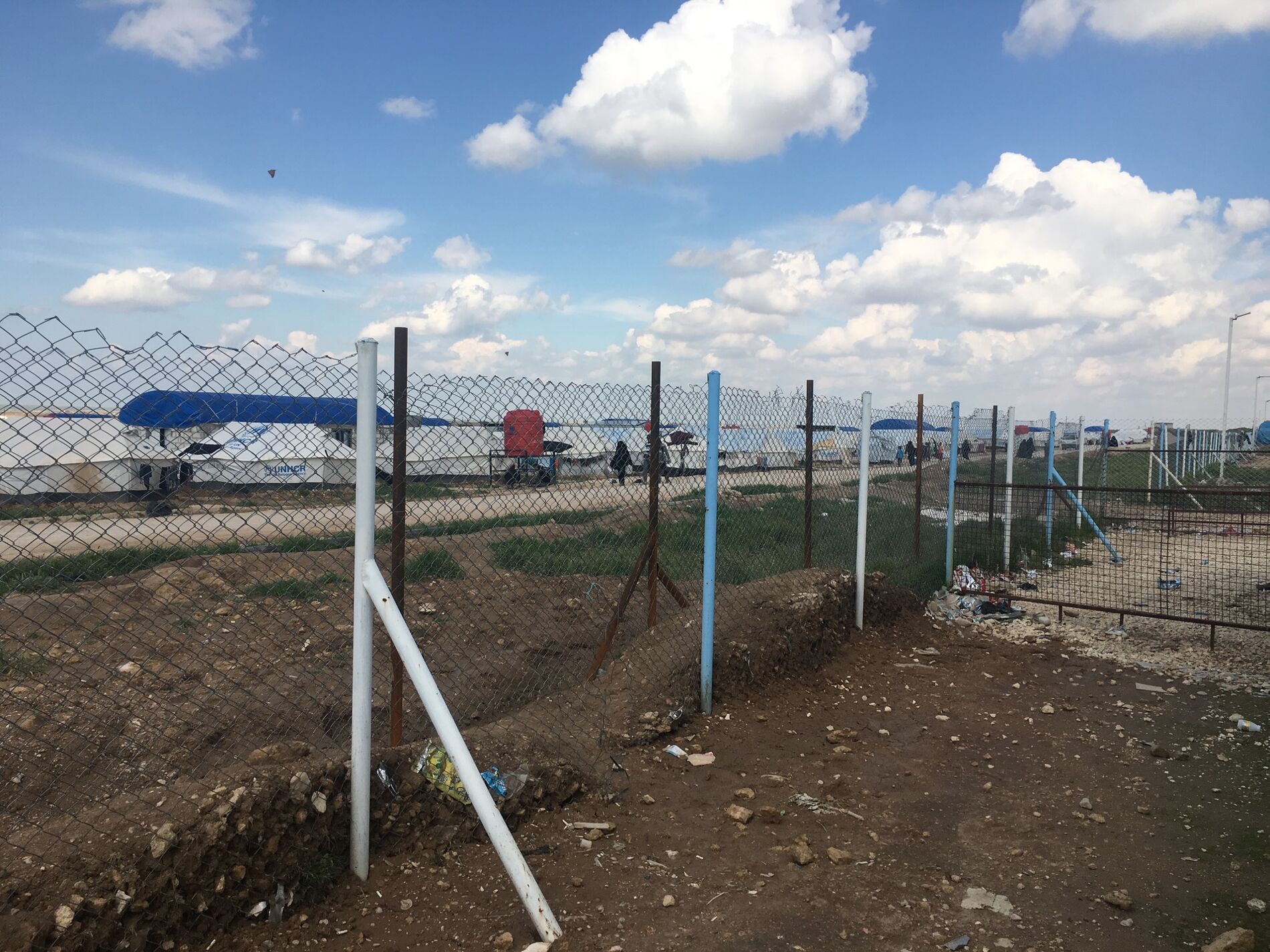
Das Geflüchtetenlager al-Hol in Nordostsyrien ist nach den Kämpfen gegen die letzten Überreste des IS komplett überfüllt und jegliche Struktur überlastet. Die gemeinsame Unterbringung von IS-Angehörigen und deren ehemaligen Opfern sorgt immer wieder für Konflikte unter den Bewohner*innen. Angesichts dessen stellt …
Pressemitteilung – Social Media Action Day #RechtaufFlucht
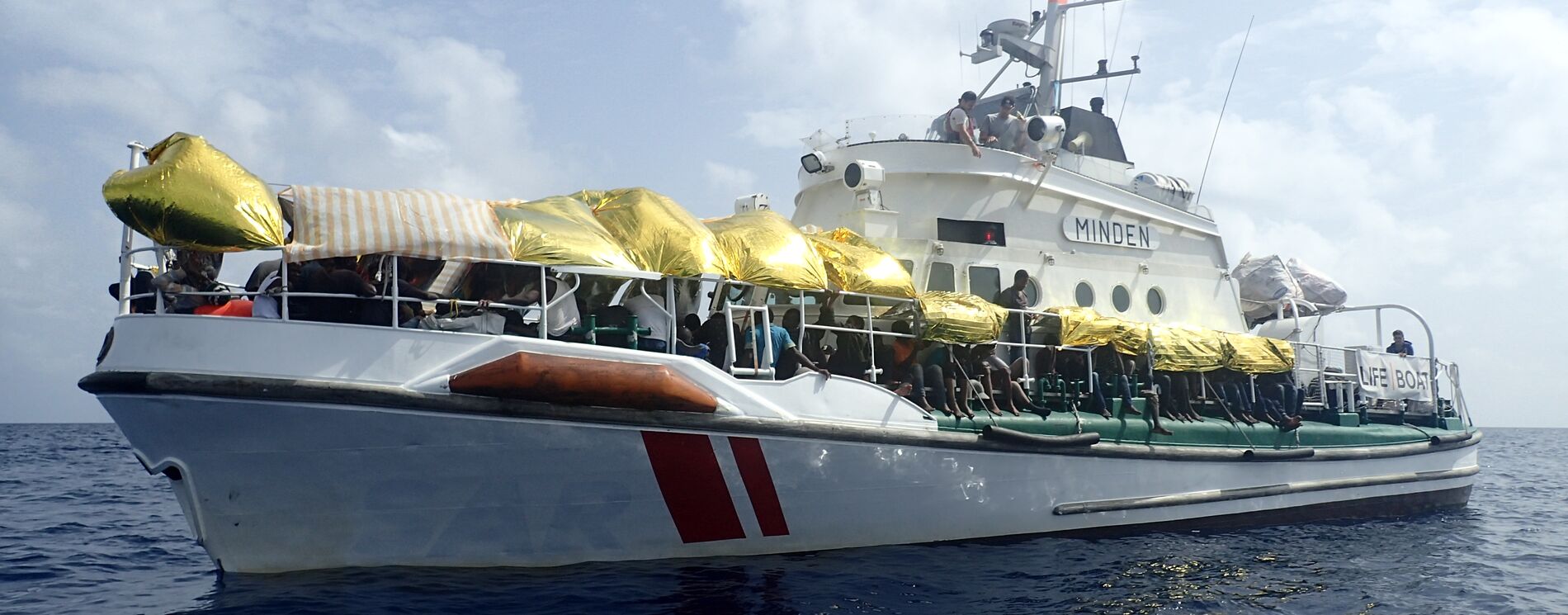
Gemeinsamer Social Media Action Day: Stoppt EU-Unterstützung für Libysche „Küstenwache“ Am Sonntag, den 28. Januar 2018 rufen Organisationen der zivilen Seenotrettung und humanitären Hilfe zu einem Social Media Action Day auf. Über den gesamten Tag werden die beteiligten Organisationen Artikel, Bilder und Videos …
Press release: Treatment of displaced persons from ISIS territory: CADUS starts providing medical care at al-Hawl refugee camp
Berlin based relief organisation CADUS e.V. is supporting the construction of a field hospital in the al-Hawl refugee camp in the northeast of Syria. Medical care is one of the most pressing issues of the camp which is hopelessly crowded with over 75.000 people. One of the main reasons for the big number of people in …