Trauma Stabilisation Point Mossul
Published on 30. September 2021
from CADUS-PR
trauma-stabilisation-point-mossul-feature-KAR_85205B15D
Target country/region: Iraq
Period: June 2017- December 2017
Brief Description:
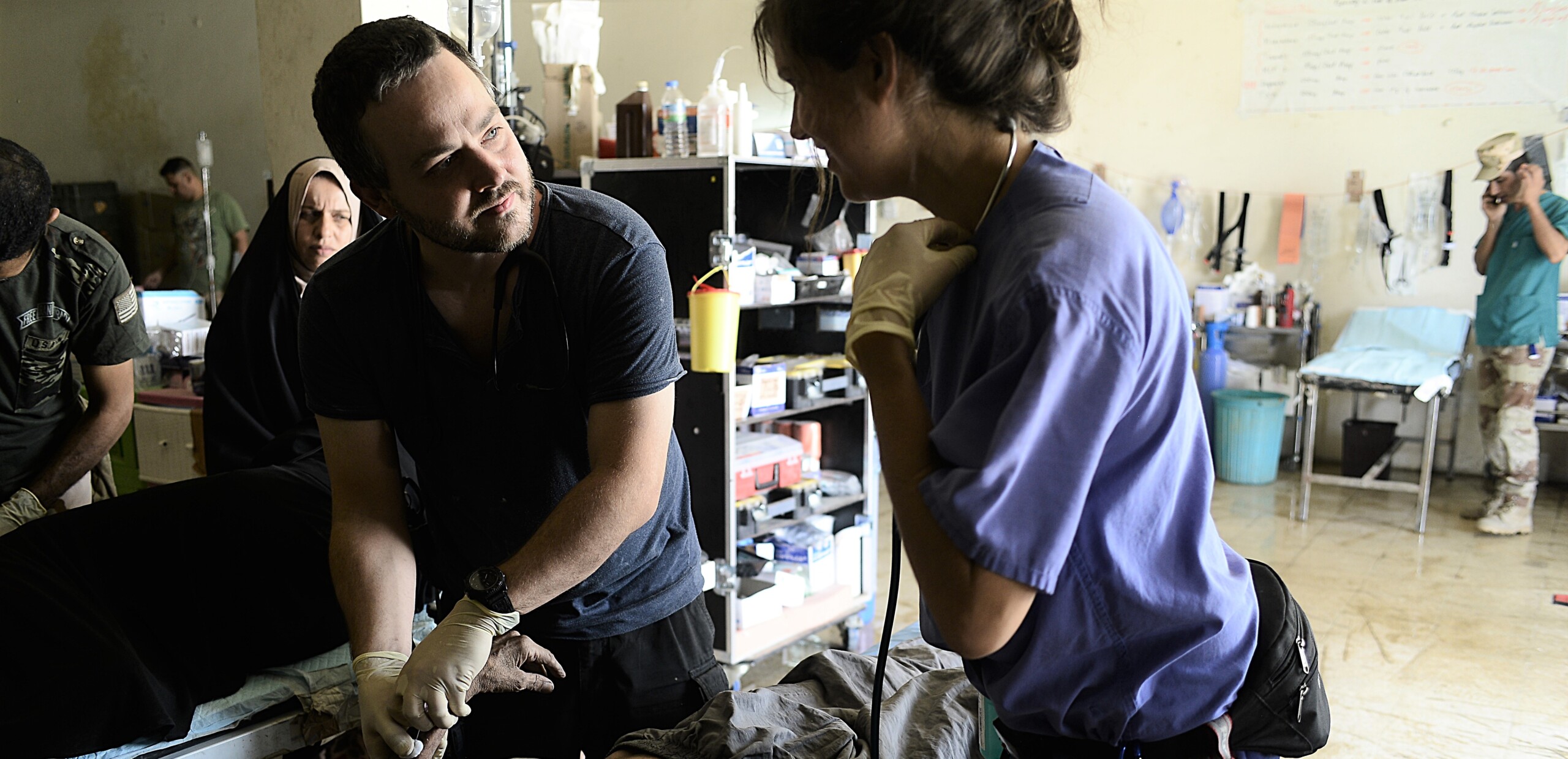
CADUS provided medical trauma care to civilians in the course of retaking West Mosul. In doing so, this deployment took us one and a half kilometres behind the fighting lines in the summer of 2017. There, we were a part of the first link in the emergency supply chain. As the project progressed, our outreach expanded to Tal Afar, Hawijah, and al-Anbar province.
Project Progress:
As part of the Mobile Hospital project, we were approached by international and Iraqi organizations to provide a civilian trauma stabilization point in Mosul with some of the equipment. At that time, the western part of the city was still heavily contested between Islamic State and Iraqi security forces, and the injured population often received inadequate care despite being severely wounded. Our task was to provide initial care to the injured before they were sent to the far-flung hospitals, to stop life-threatening bleeding and to stabilize them for the necessary transport.
In Mosul alone, we treated several thousand people, including many malnourished children in the final phase of the military campaign. The later missions much further away from the fighting were characterized by urgently needed general medical care for the civilian population. Many had received inadequate or no medical care for years, and some chronic illnesses were correspondingly serious.
Our first mission in a war zone, so close to the conflict, was very challenging but also brought us a big step forward as an organization.
We thank all supporters and donors who made this project possible!

The climate catastrophe as the greatest challenge for humanitarian aid
What impact does the climate catastrophe have on humanitarian aid? What can and must humanitarian actors prepare for and how must they adapt in order to counter the consequences of the climate catastrophe?

The future of humanitarian aid
Writing a text about the future of humanitarian aid. My first impulse: this is going to be a gloomy text. The present of humanitarian aid leaves little room for optimism. Wars continue, people are dying in Sudan unnoticed by the
How AI Is Changing Humanitarian Aid: Risks and Opportunities
I’ve spent enough nights under mosquito nets and sat through long, often circular UN coordination meetings to know this: if we want to reach people in crisis faster, with less waste, and without burning out the sector, we can’t