Update from the field hospital
Published on 25. July 2019
from CADUS-PR
update-from-the-field-hospital-feature-TB.Syrien19.Farbe_.13-e1085573
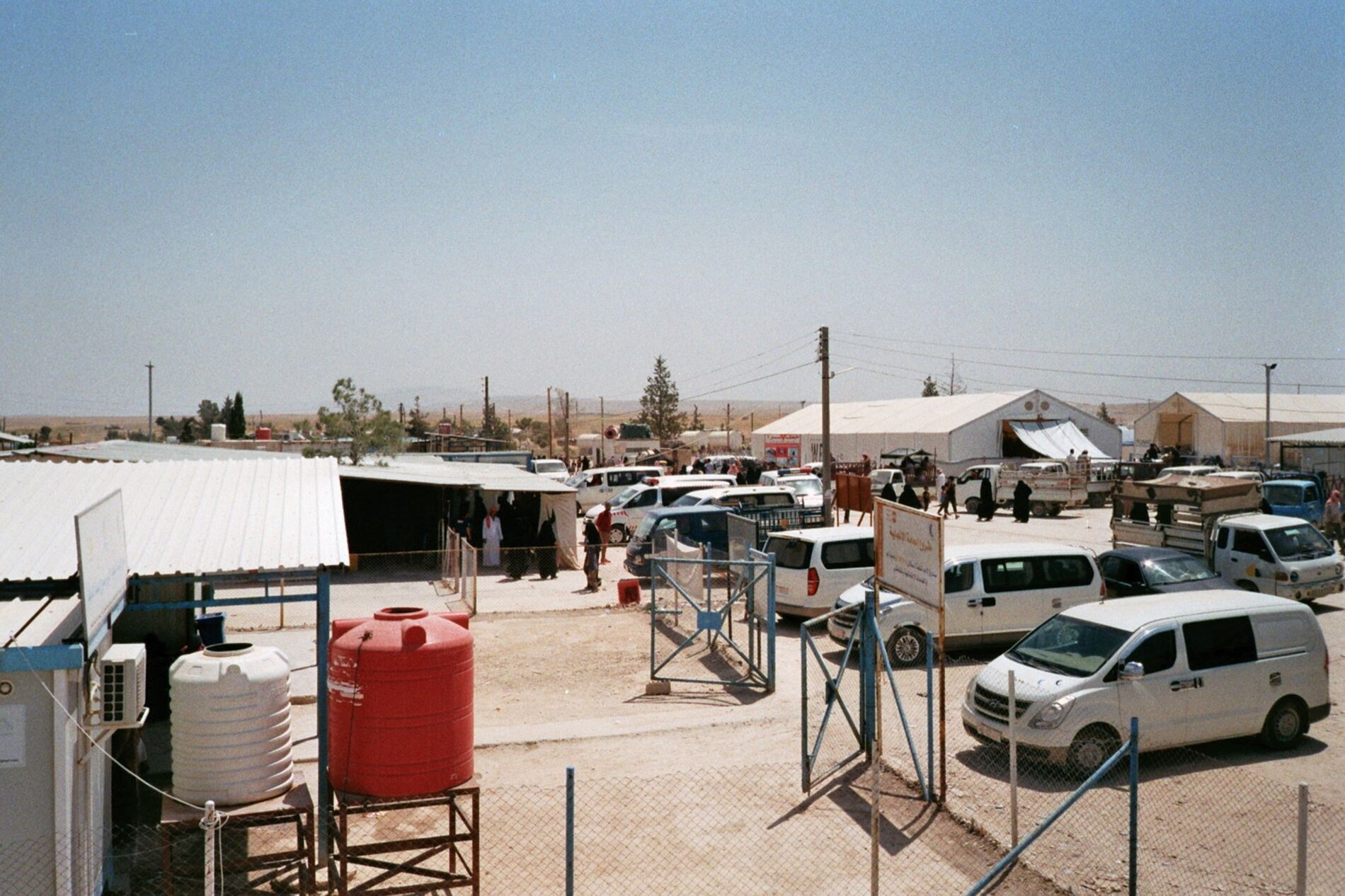
For several weeks, the field hospital in the al-Hol camp has opened. Time for an update.
The hospital in the al-Hawl camp in northern Syria is now undergoing regular surgery, including mainly orthopedic procedures, such as the treatment of old fractures but also operations of hernia (breakthrough of viscera from the abdominal cavity) are performed regularly. Helpful in this is the newly established blood bank, with which transfusions are now also possible and therefore also operations with higher blood loss can be performed. At the facility we run together with our partner organization, we almost exclusively treat children. After a somewhat sluggish start-up phase our 17 beds are usually busy.
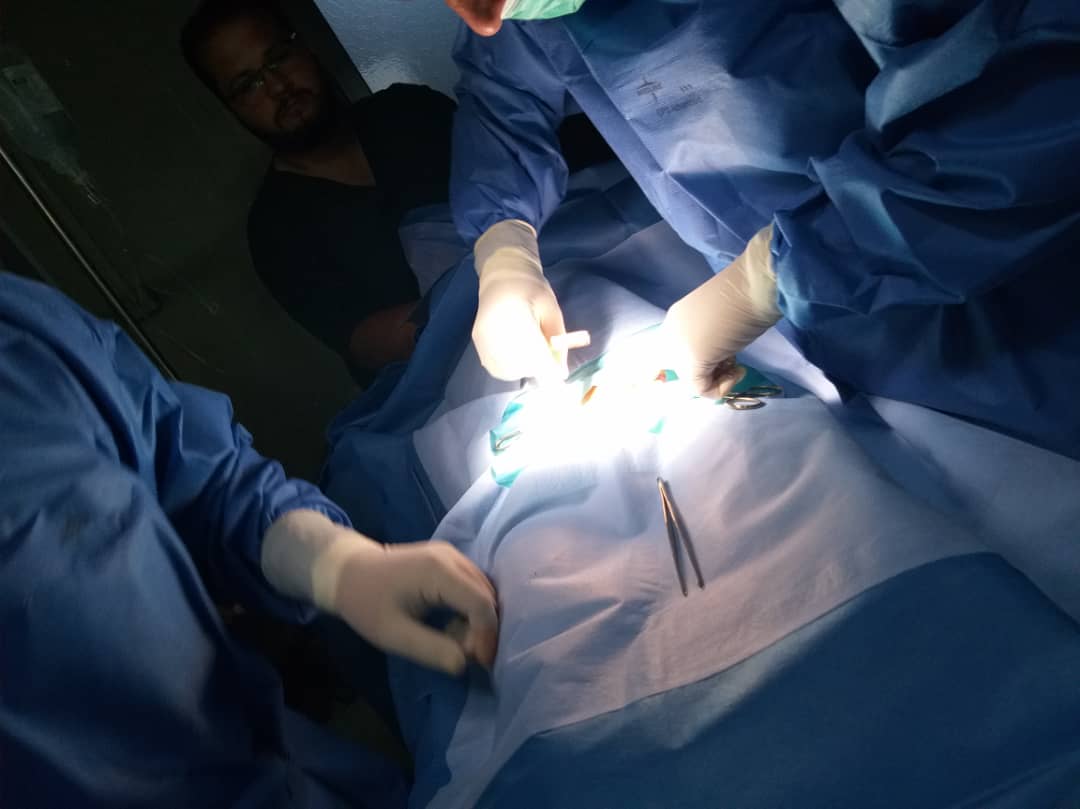 The operating room is already undergoing surgery. Here a hernia is treated. @CADUS
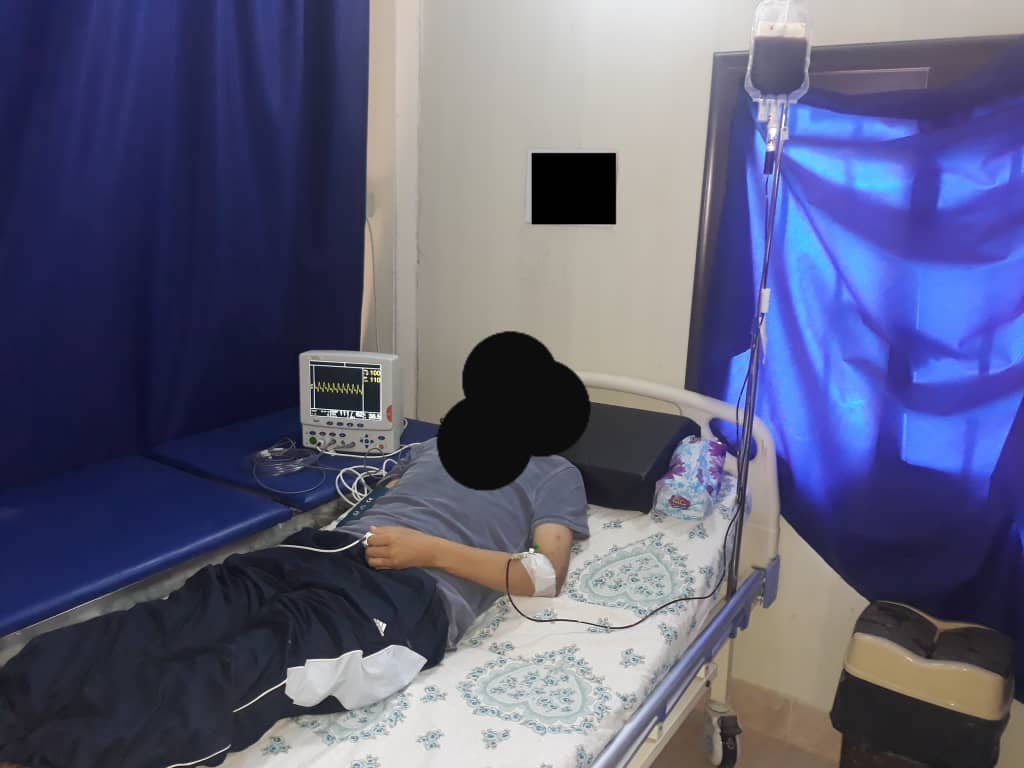
A patient receives its blood transfusion thanks to our new established blood bank. @CADUS
The Operation Desk, the emergency center for the distribution of patients in the camp, greatly facilitates collaboration between hospitals. Because of the high demand, we have doubled the staff meanwhile
Despite the overall improved infrastructure and a decline of 3,000 to around 70,000 inhabitants, the camp is still operating at its full capacity.
There are still major problems with drinking water. The high temperatures cause poor water quality, which in turn leads to an increase in diarrhea. The fight against widespread malnutrition has not yet been won.
There are currently 90 beds available in the three field hospitals in the camp, so 1.3 beds per 1000 inhabitants. Not enough for 70,000 people (for comparison: in Germany 8 beds per 1000 inhabitants*). In particular, there is a shortage of emergency, surgery and infectious disease treatment locations.
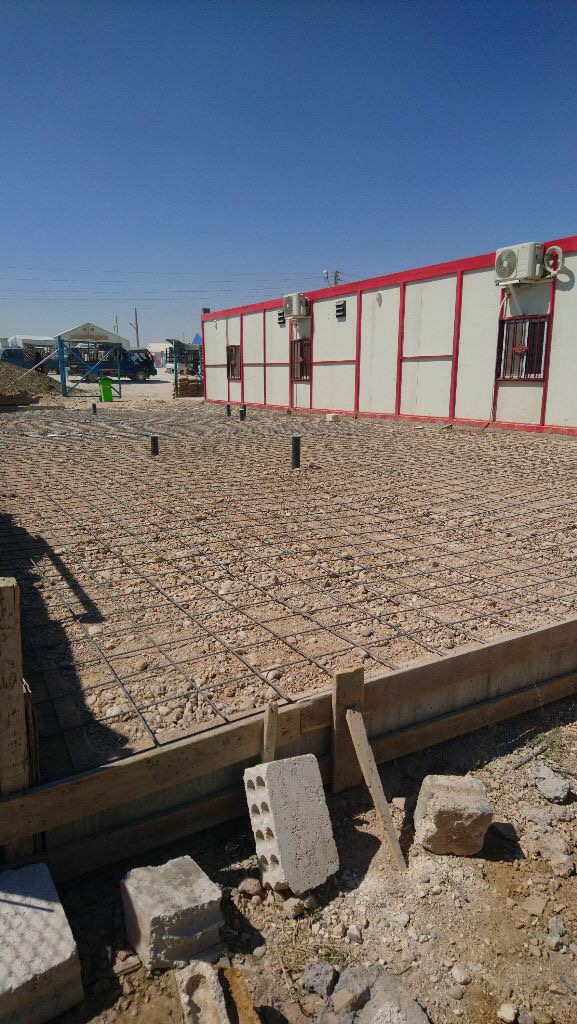
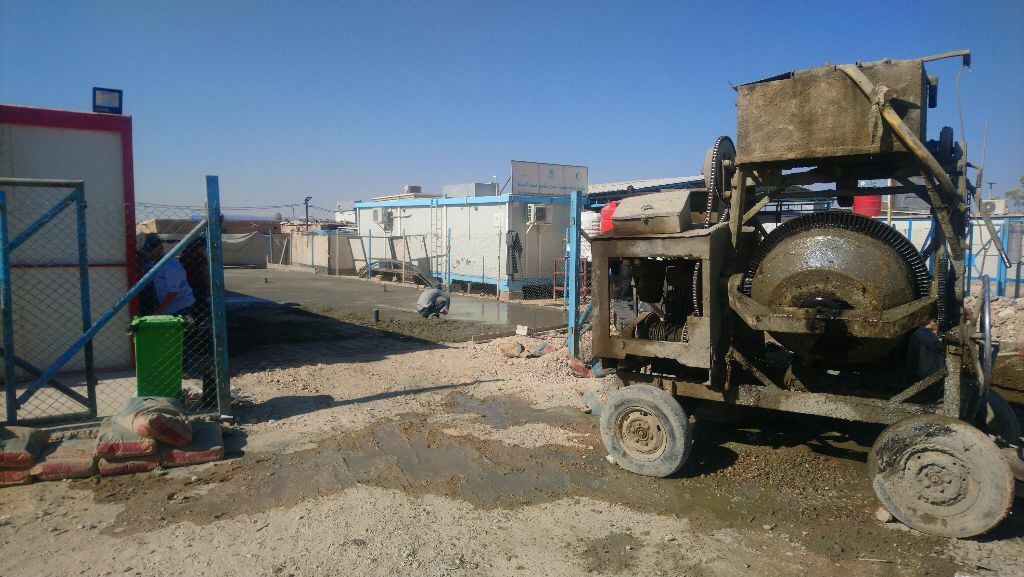
The concrete foundation for stage 2 of the hospital is ready. ©CADUS
In the second expansion stage of the field hospital, we will increase the capacity for exactly these cases, among other things. The construction had begun with a slight delay, but now shows significant progress. After completion, an additional 12 beds will be available and larger operations and their follow-up will be possible.
We still hope for your support!
Published
Author: by Jonas Grünwald
The climate catastrophe as the greatest challenge for humanitarian aid
What impact does the climate catastrophe have on humanitarian aid? What can and must humanitarian actors prepare for and how must they adapt in order to counter the consequences of the climate catastrophe?
The future of humanitarian aid
Writing a text about the future of humanitarian aid. My first impulse: this is going to be a gloomy text. The present of humanitarian aid leaves little room for optimism. Wars continue, people are dying in Sudan unnoticed by the
How AI Is Changing Humanitarian Aid: Risks and Opportunities
I’ve spent enough nights under mosquito nets and sat through long, often circular UN coordination meetings to know this: if we want to reach people in crisis faster, with less waste, and without burning out the sector, we can’t