Safety issues in a warzone
Published on 31. July 2017
from CADUS-PR
von-sicherheit-und-anderen-notwendigkeiten-im-kriegsgebiet-201-feature-Auswahl220281420von201729-6bf882c2
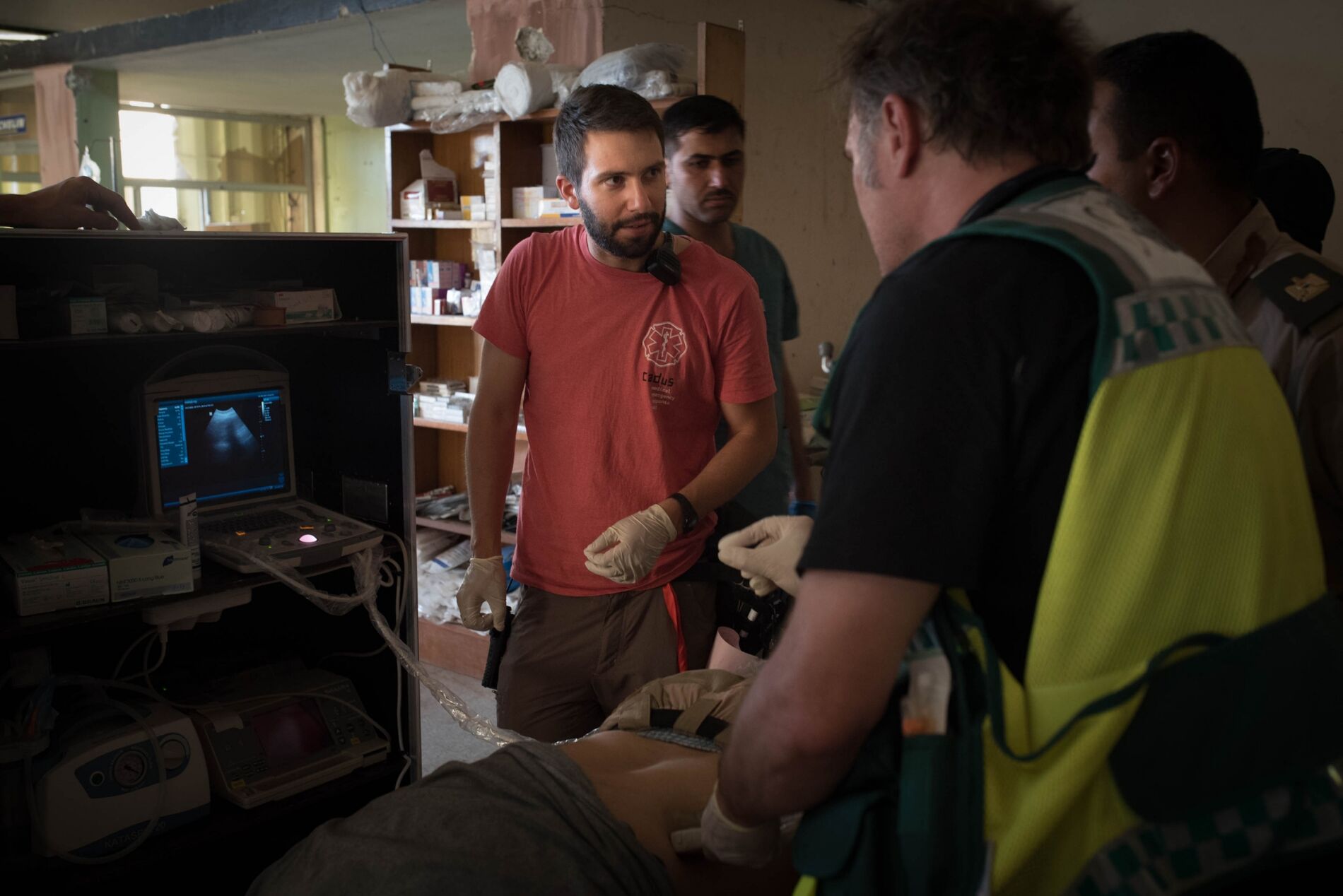
Right next to our camp is the “Casualties Collection Point” (CCP) of the 9th division of the Iraqi military. A CCP is the military version of our “Trauma Stabilisation Points (TSP). Throughout Mossul, all non-governmental TSPs are entirely embedded in the military posts, where NGO staff and military units eat, sleep and work together side by side.
Peculiar insofar as the fact that humanitarian organizations are usually bound to a pledge of political neutrality/ policy of non-alignment. However, as the “Islamic State” couldn’t care less about the Geneva Convention and considers hospitals a legitimate target, the close cooperation of military and NGOs was born out of a necessity for safety.
Furthermore, with the current situation, the only way for organizations like ours to reach injured civilians, or for them to reach us, is through the military. The “Islamic State” shoots civilians attempting to flee and likewise fires at members of aid groups who are attempting to help the injured.
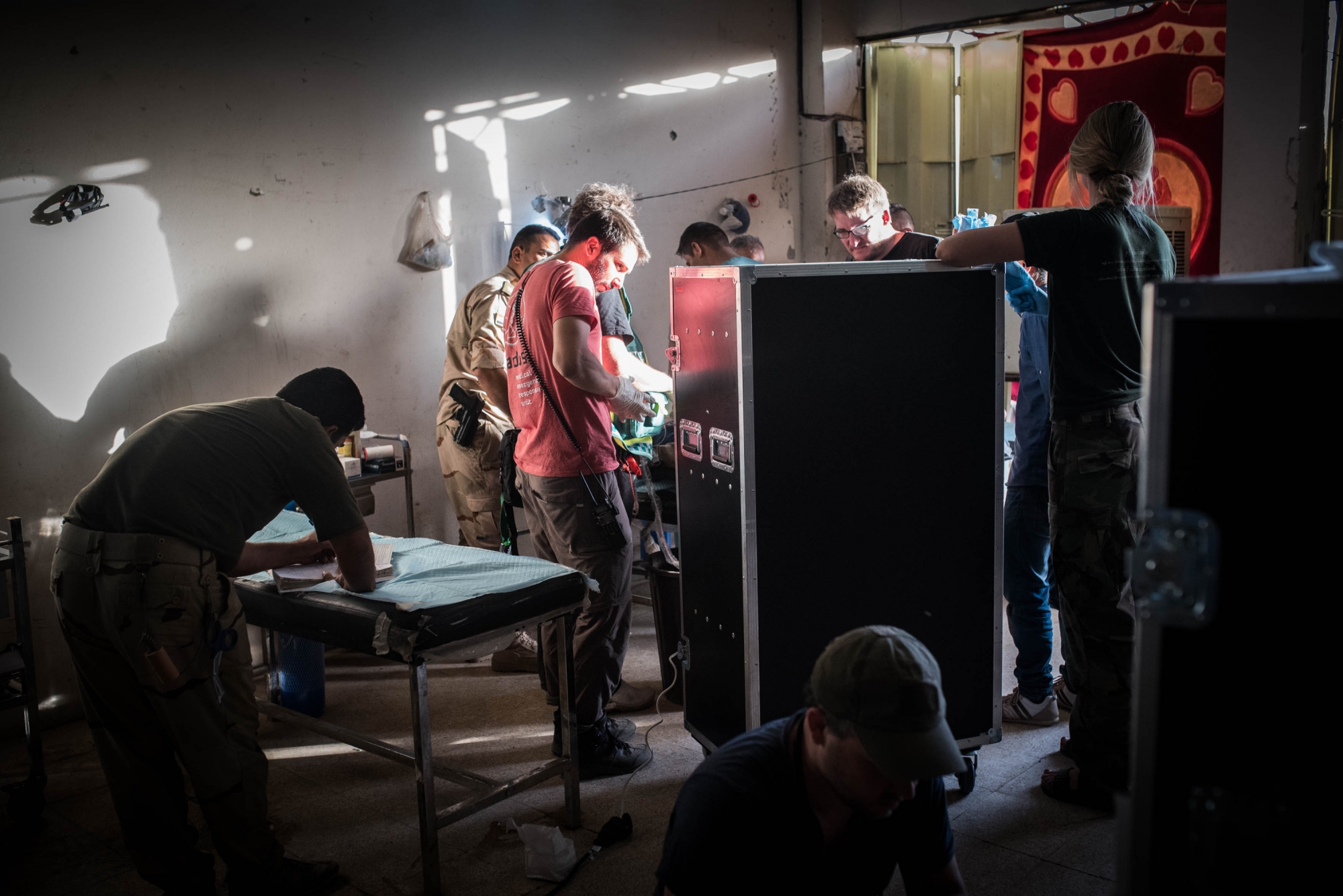
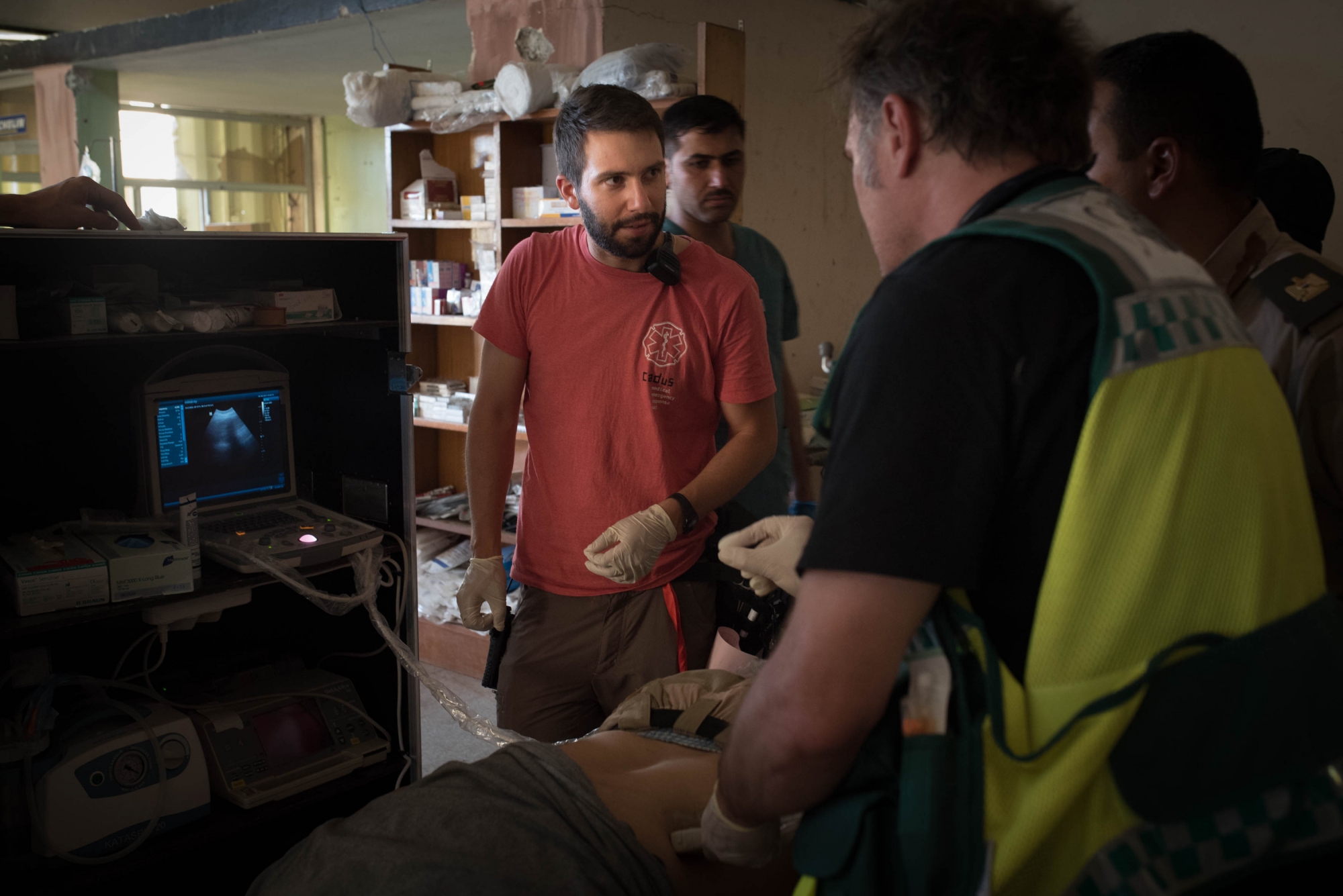
The only way to get medical attention is to get picked up by the military, who are themselves retrieving their injured troops. Otherwise, wounded civilians are left to succumb to their injuries or the desert sun in the wastelands between the Iraqi military and the “Islamic State”.
These circumstances have led us to work much closer with the military than intended. The collaboration between NGOs and the Iraqi army is on one hand an important safety measure and on the other hand an emergency logistical necessity. Reality is shifted in warzones. Nevertheless, helping civilian communities remains our highest priority.
Published
Author: by Jonas Grünwald
CADUS annual review 2023
"Air alert all night - team is safe, everyone is fine!" was one of the most frequent sentences we read from our Team 2023 from Ukraine. This year was also almost completely overshadowed by the war there. Read more about
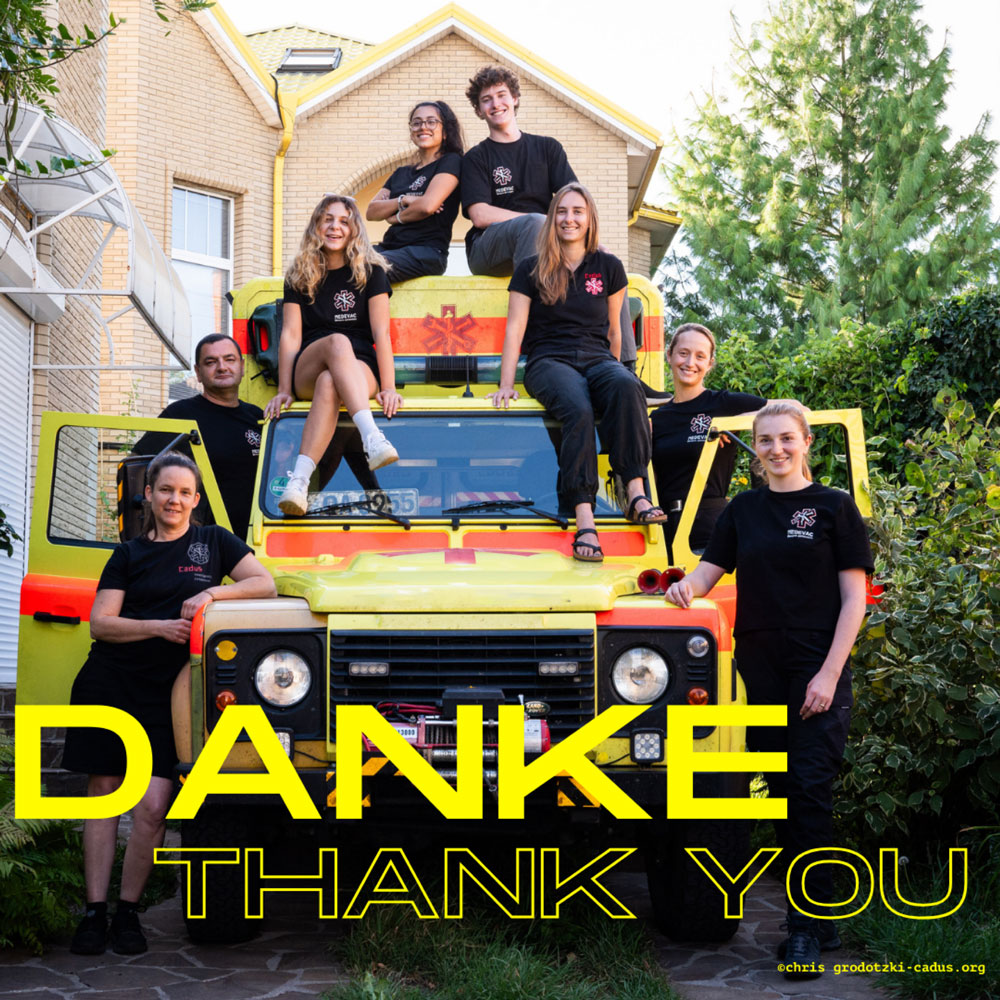
Welcome back, Landy!
A motorized employee who has been active in Ukraine since the first hours of our mission has returned to us in Berlin. Without our vehicles, our medical emergency trips would be inconceivable. An occasion for us to pay tribute
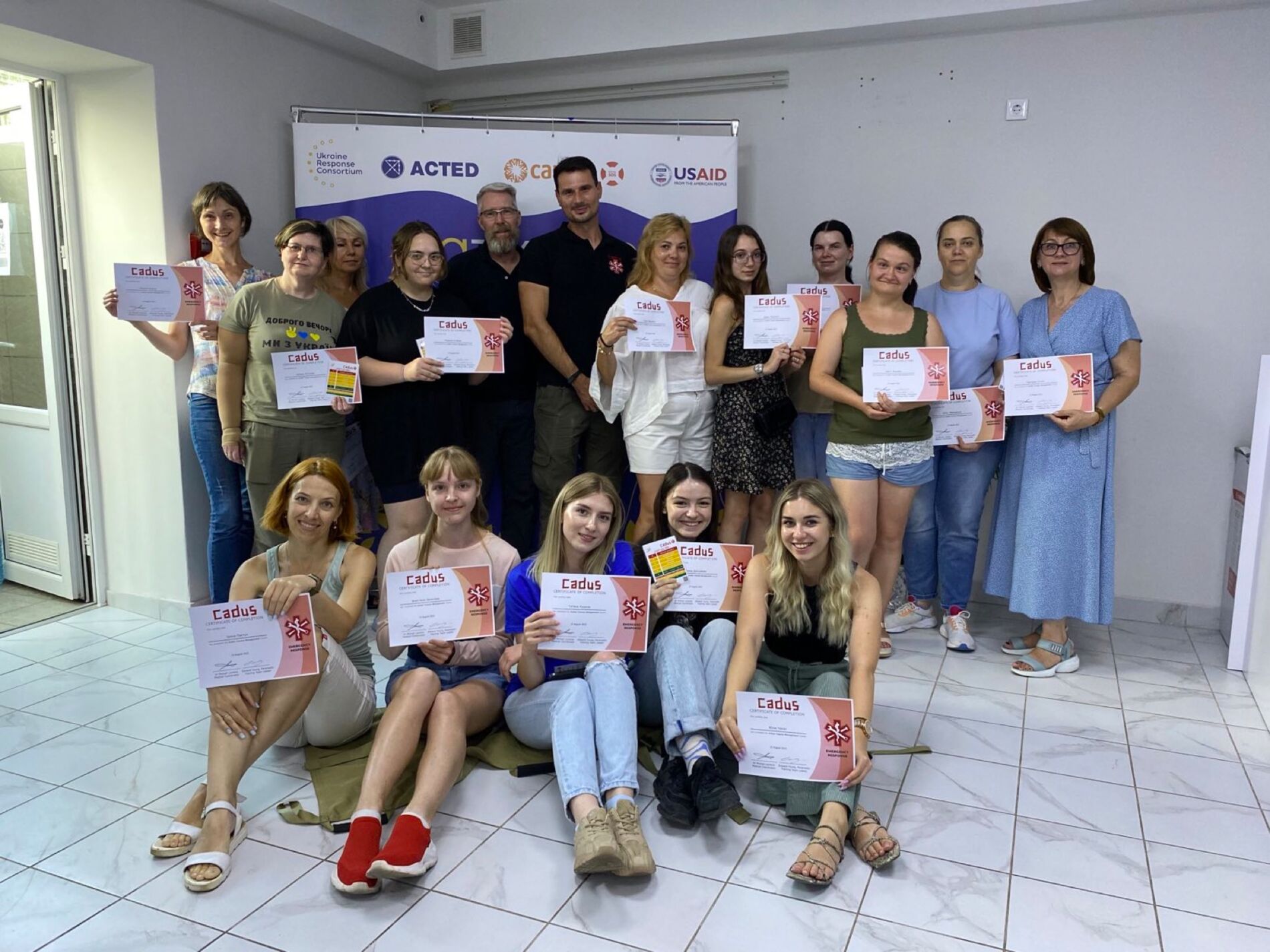
Each one teach one – medical trainings in Ukraine
Shortly after our first missions in Ukraine, the need for medical training in particular became obvious on the ground. In addition to the numerous medical novices from the population, who suddenly had to and wanted to treat injured people in times of war, specialists also asked for support in this also medically …