Safety issues in a warzone
Published on 31. July 2017
from CADUS-PR
von-sicherheit-und-anderen-notwendigkeiten-im-kriegsgebiet-201-feature-Auswahl220281420von201729-6bf882c2
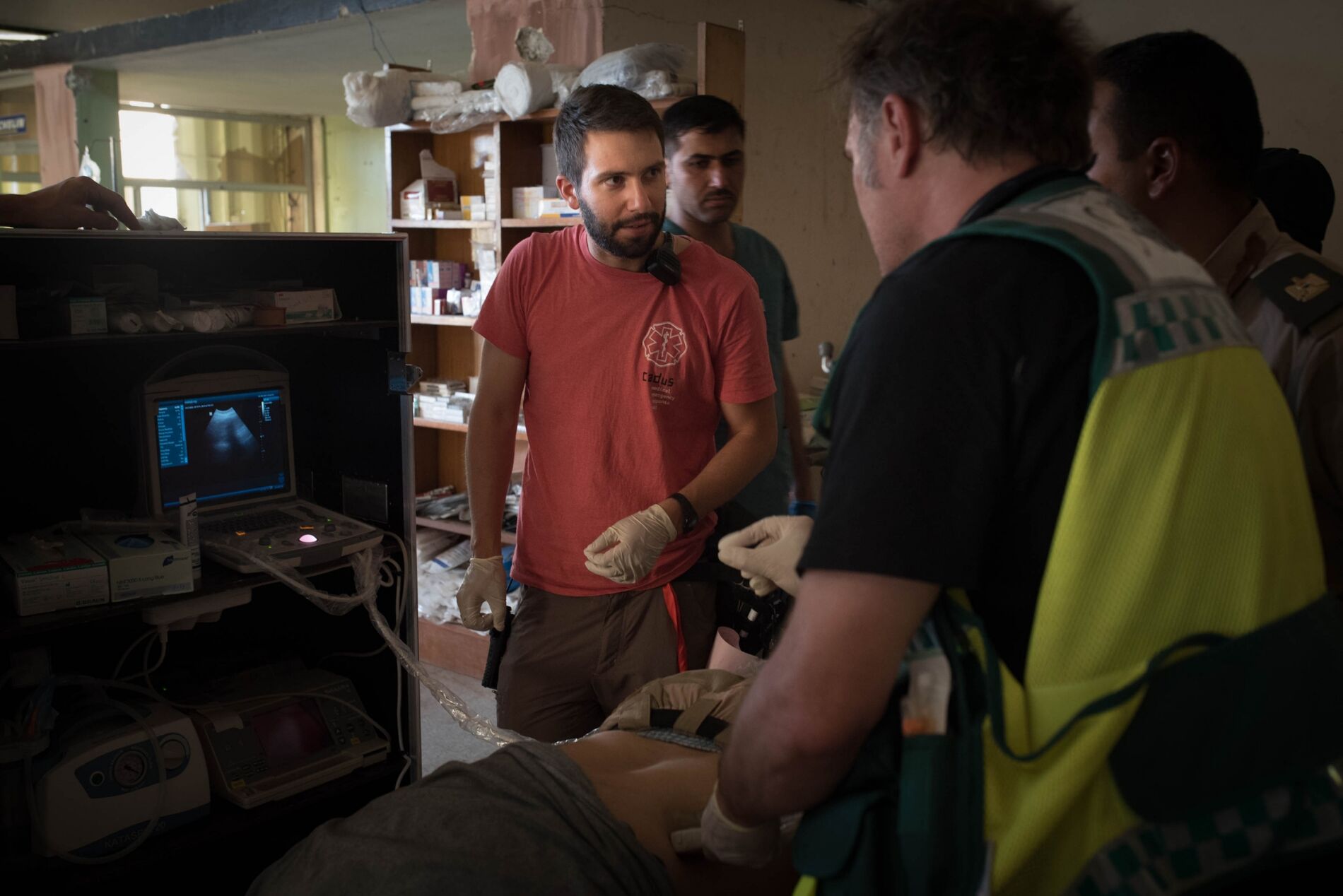
Right next to our camp is the “Casualties Collection Point” (CCP) of the 9th division of the Iraqi military. A CCP is the military version of our “Trauma Stabilisation Points (TSP). Throughout Mossul, all non-governmental TSPs are entirely embedded in the military posts, where NGO staff and military units eat, sleep and work together side by side.
Peculiar insofar as the fact that humanitarian organizations are usually bound to a pledge of political neutrality/ policy of non-alignment. However, as the “Islamic State” couldn’t care less about the Geneva Convention and considers hospitals a legitimate target, the close cooperation of military and NGOs was born out of a necessity for safety.
Furthermore, with the current situation, the only way for organizations like ours to reach injured civilians, or for them to reach us, is through the military. The “Islamic State” shoots civilians attempting to flee and likewise fires at members of aid groups who are attempting to help the injured.
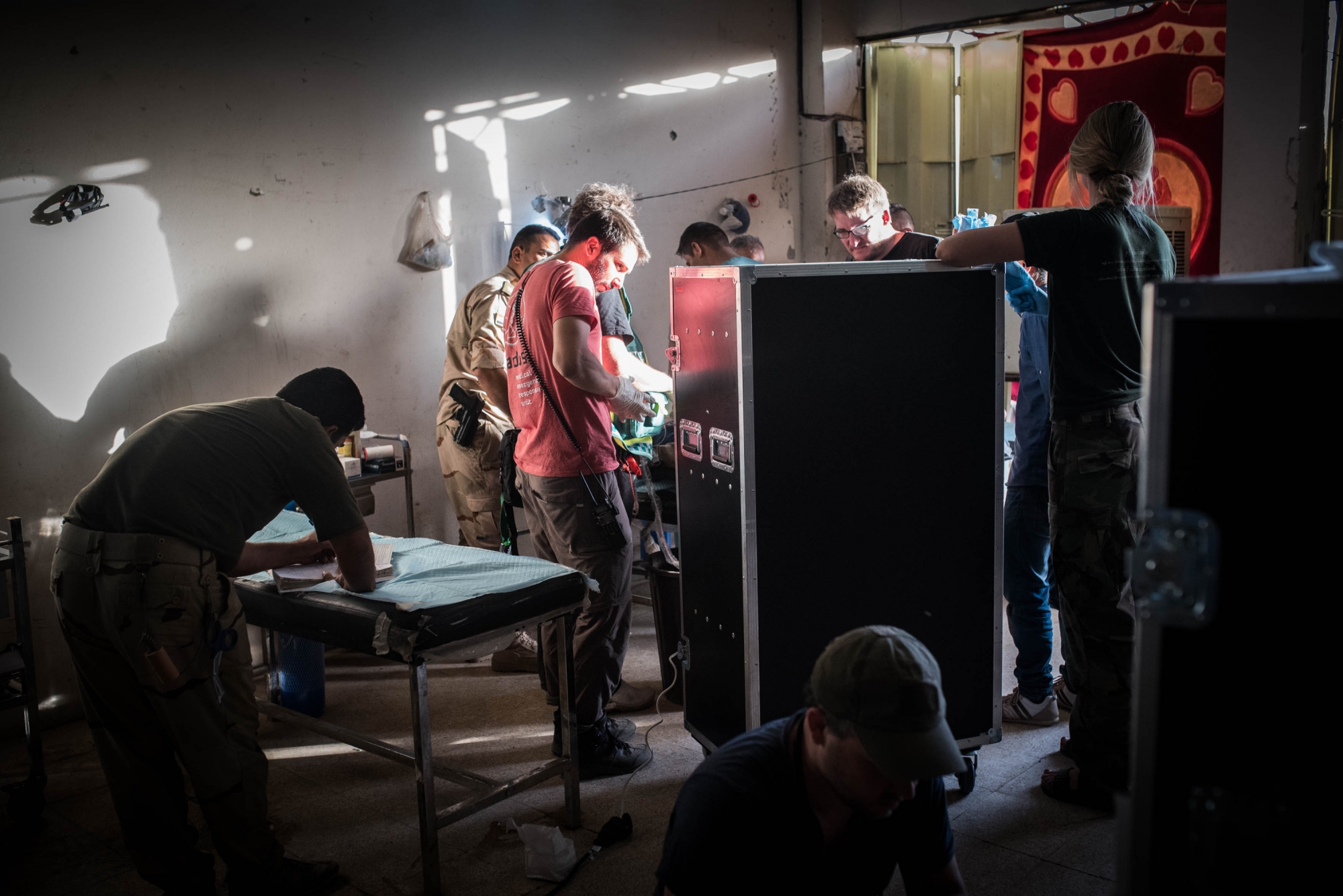
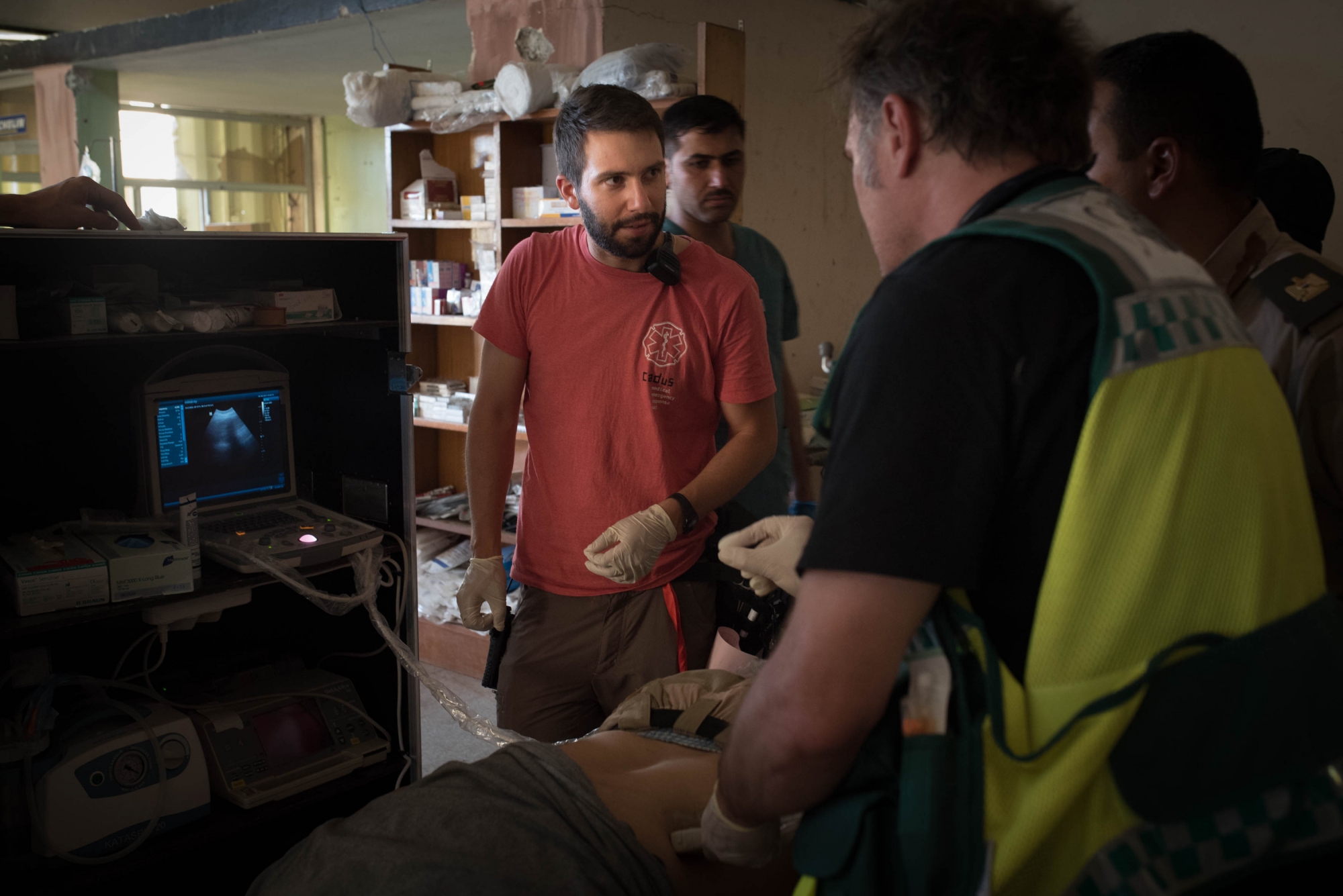
The only way to get medical attention is to get picked up by the military, who are themselves retrieving their injured troops. Otherwise, wounded civilians are left to succumb to their injuries or the desert sun in the wastelands between the Iraqi military and the “Islamic State”.
These circumstances have led us to work much closer with the military than intended. The collaboration between NGOs and the Iraqi army is on one hand an important safety measure and on the other hand an emergency logistical necessity. Reality is shifted in warzones. Nevertheless, helping civilian communities remains our highest priority.
Published
Author: by Jonas Grünwald
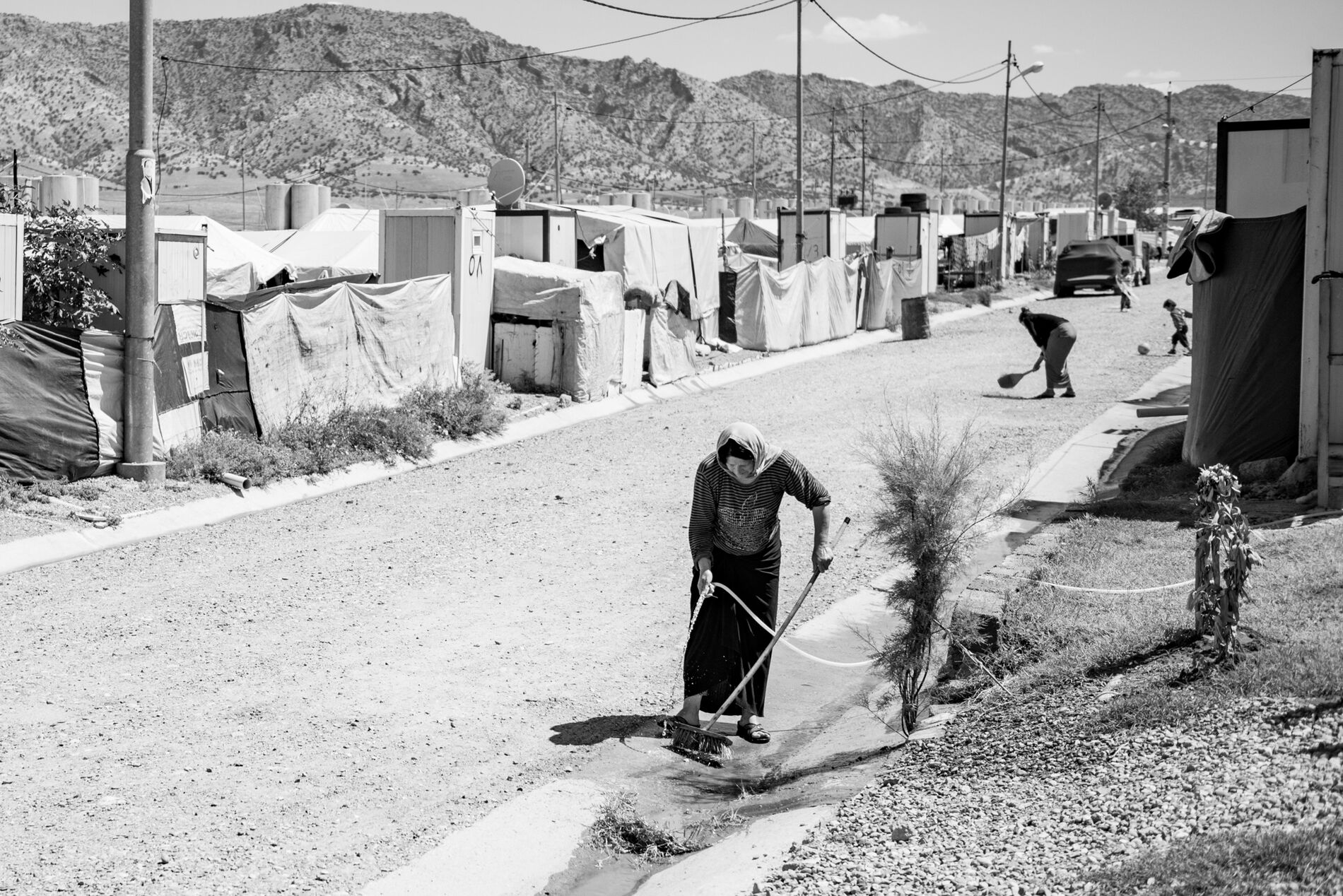
The defeated IS – is this really the end?
The Islamic State (IS) is defeated, that´s what you can read everywhere right now. With a lot of sacrifice, the people of Iraq and Syria have managed to disempower the terrorist organization. As joyous as the news is in the face of the IS's atrocities, it should not hide the fact that the region is facing massive …
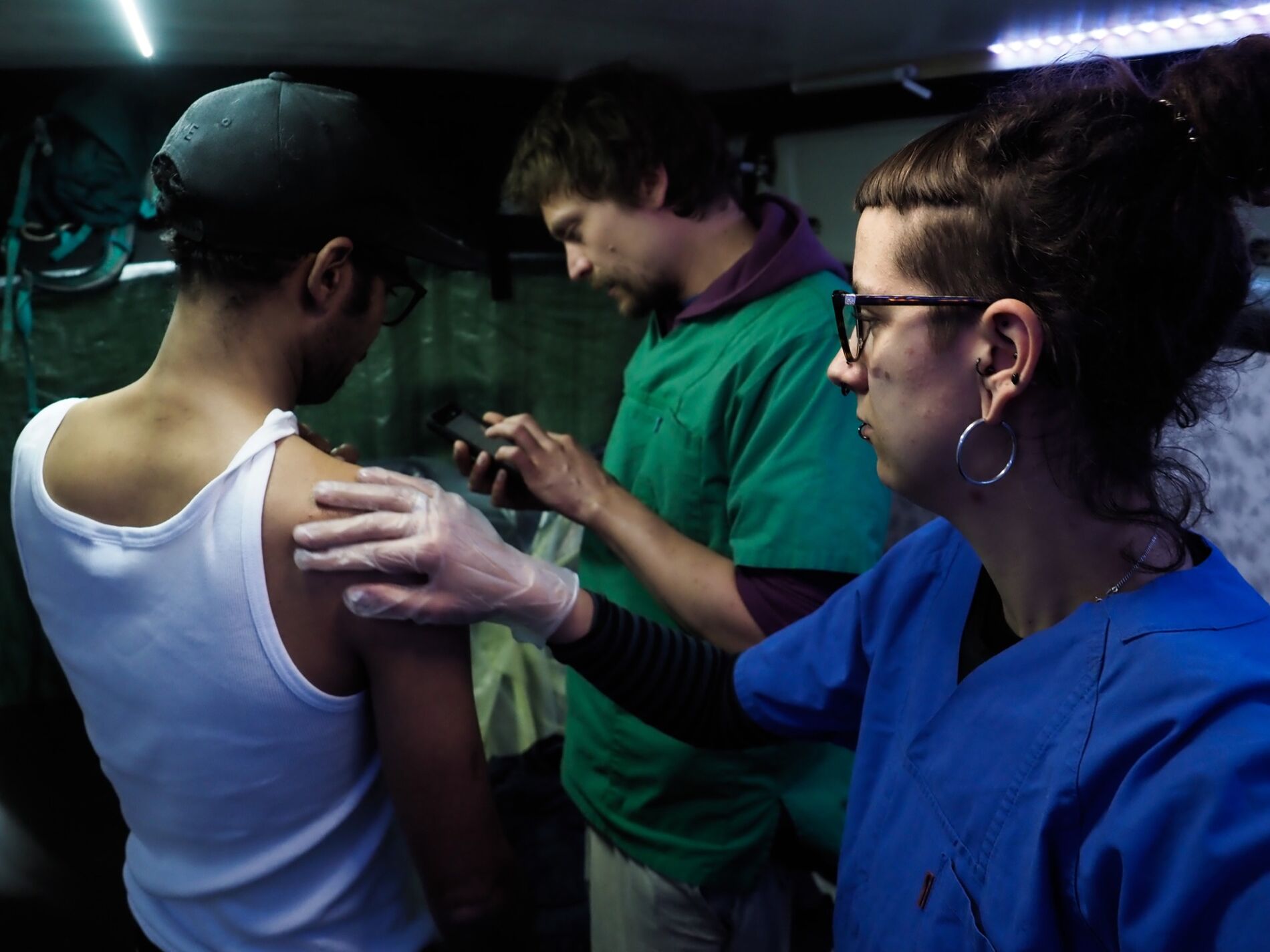
Vier Monate Emergency Response Balkan – Ein Abschlussbericht
Unsere Emergency Response in Sarajevo, Bosnien ist nach vier Monaten beendet. Unser Projektkoordinator fasst die Situation, die Herausforderungen und unseren Einsatz vor Ort noch einmal zusammen.
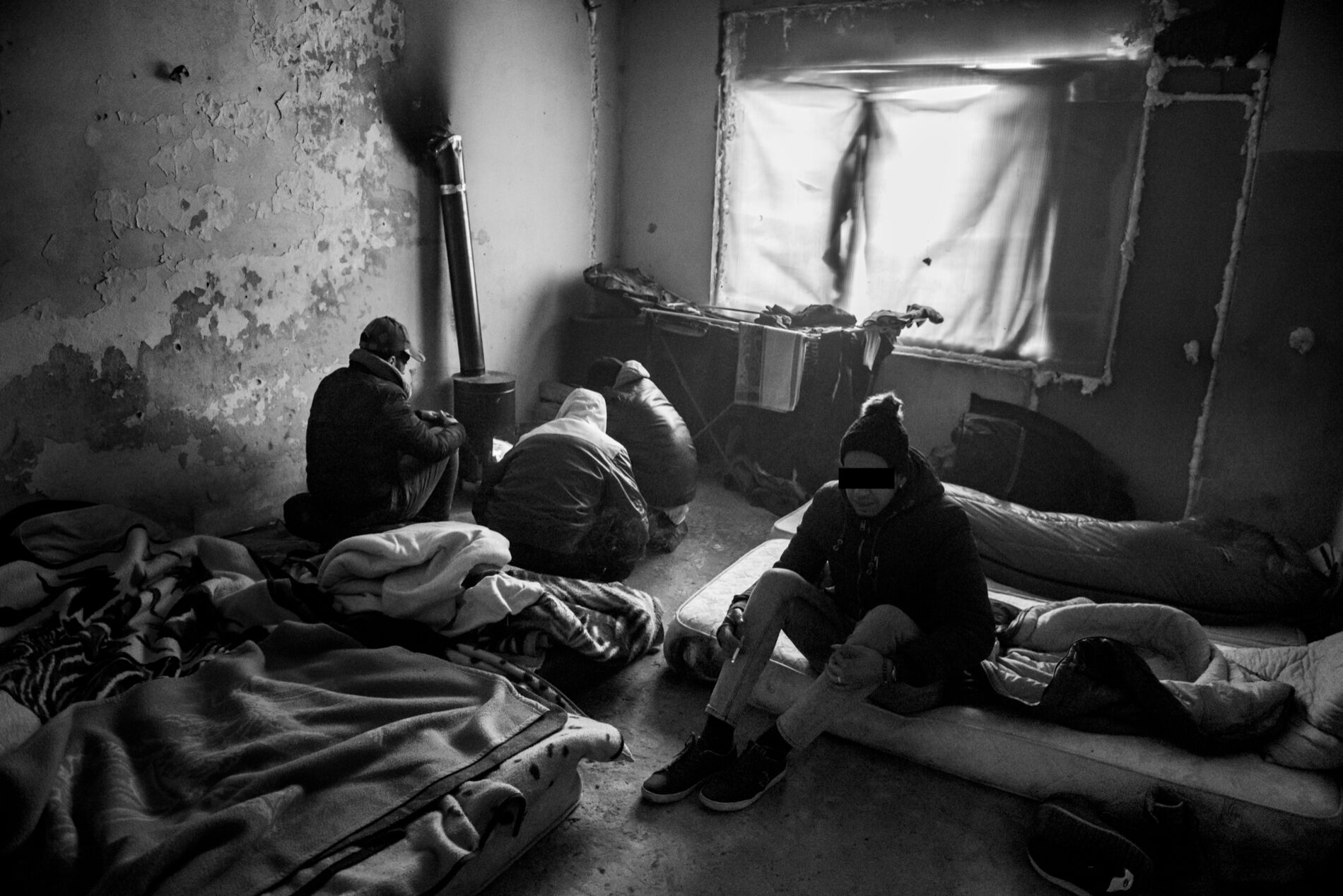
Tag der Menschenrechte – auch auf der Balkanroute?
Den Tag der Menschenrechte, vor genau 70 Jahren durch die UN verabschiedet, nehmen wir zum Anlass um auf die Situation Geflüchteter auf der sogenannten Balkanroute aufmerksam zu machen.