In the heat of the night
Published on 31. July 2017
from CADUS-PR
in-the-heat-of-the-night-200-feature-mobile_hospital_07-06-172028620von201829-1a438e9e
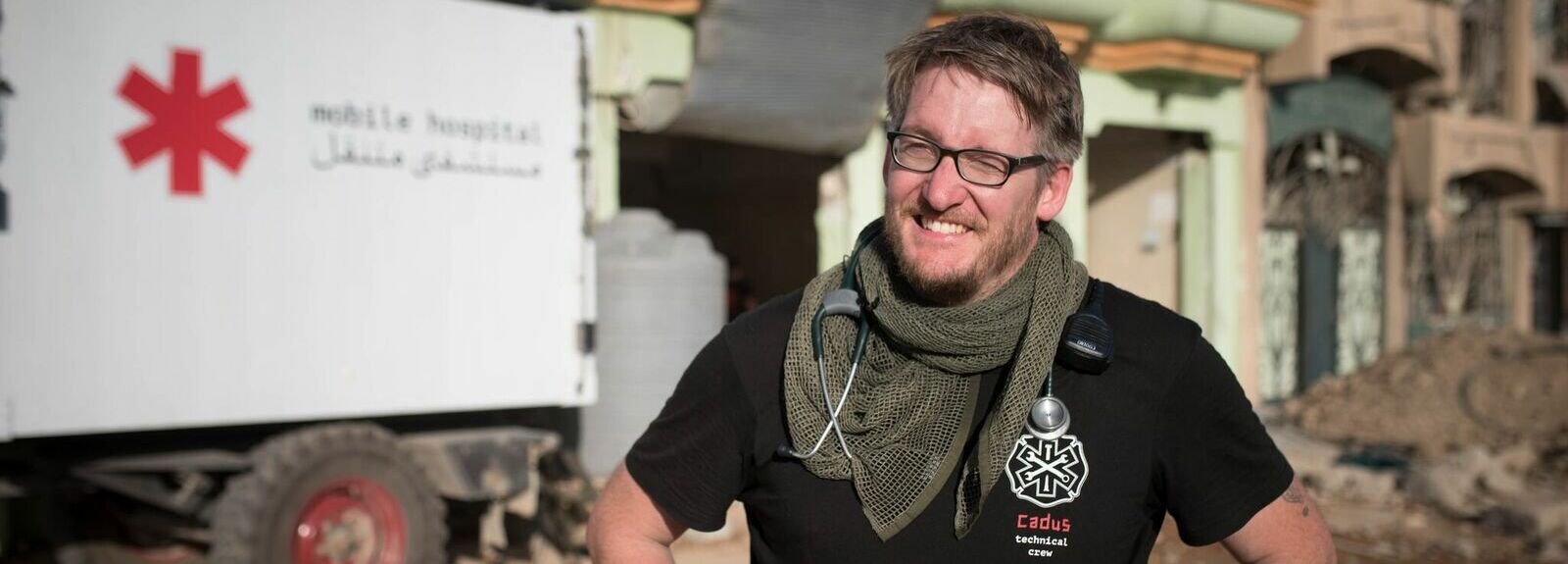
“Another night shift is over for the CADUS team in our Mosul TSP. After the breaking of the fast, when it's getting dark and temperature is falling a little bit, gunfights are starting again. It's almost certain that there will be another high influx of patients during the night.
At this point, our team has already been working for 14 hours straight at 45 degrees Celsius (113 degrees Fahrenheit) in a dry, dusty climate with lots of patients to care for and all the other regular tasks: getting water and beverages, the logistics of our camp, restocking of the TSP supply cabinets and the cleaning of bloody instruments.
There is a service schedule for the night shift, but it's rather symbolic. If something happens, it's usually a serious incident, meaning 3 or 4 badly injured people arrive simultaneously and the whole team is needed once again. When there are no patients to care for, everyone is trying to rest a few minutes. Mosquitoes, heat and the recent experiences often make it difficult to relax and rest.
We just made a quick group picture… and realised the whole team doesn't really look “fresh“ anymore. Nevertheless it's a great pleasure to do this important work here with such wonderful people.“
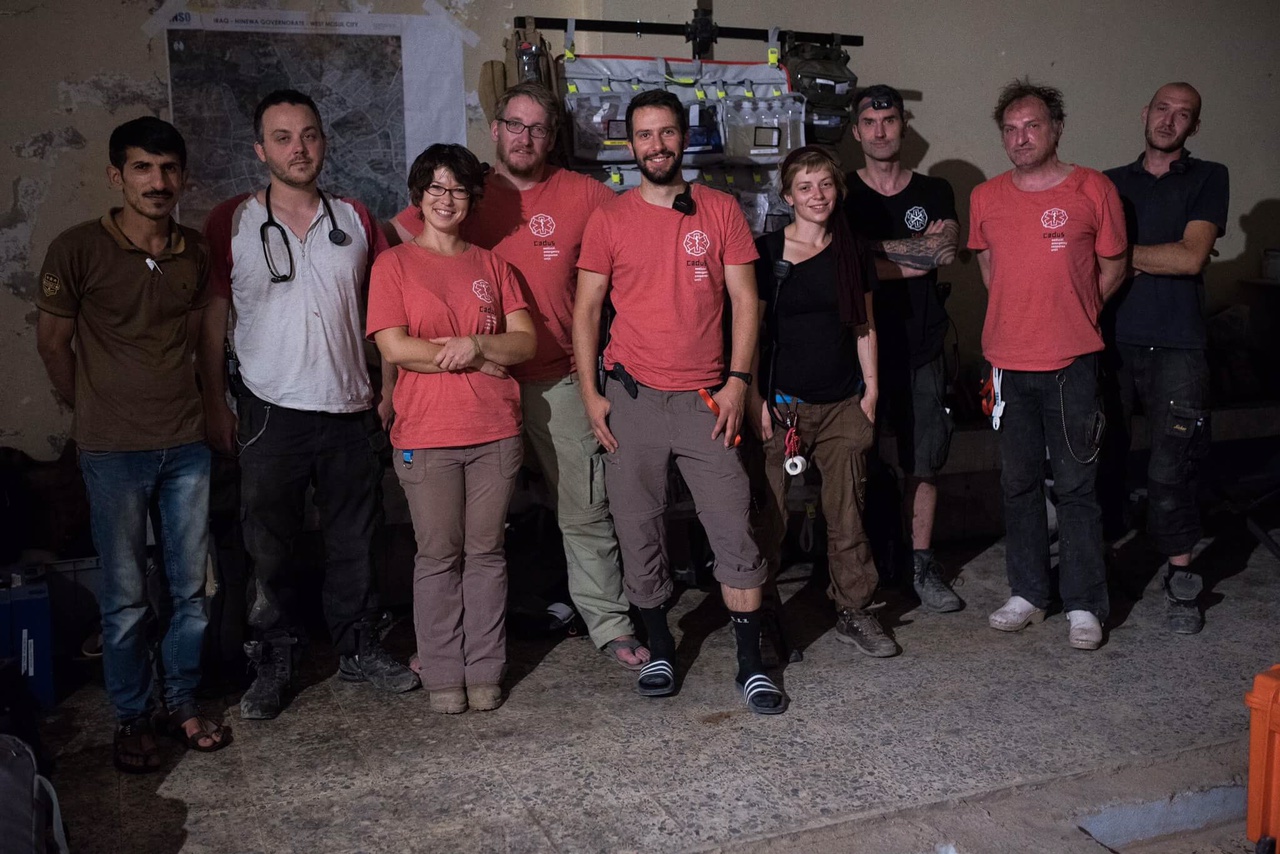 Our current team in our TSP in Mosul. Picture: CADUS
Published
Author: by Jonas Grünwald
CADUS annual review 2023
"Air alert all night - team is safe, everyone is fine!" was one of the most frequent sentences we read from our Team 2023 from Ukraine. This year was also almost completely overshadowed by the war there. Read more about
Welcome back, Landy!
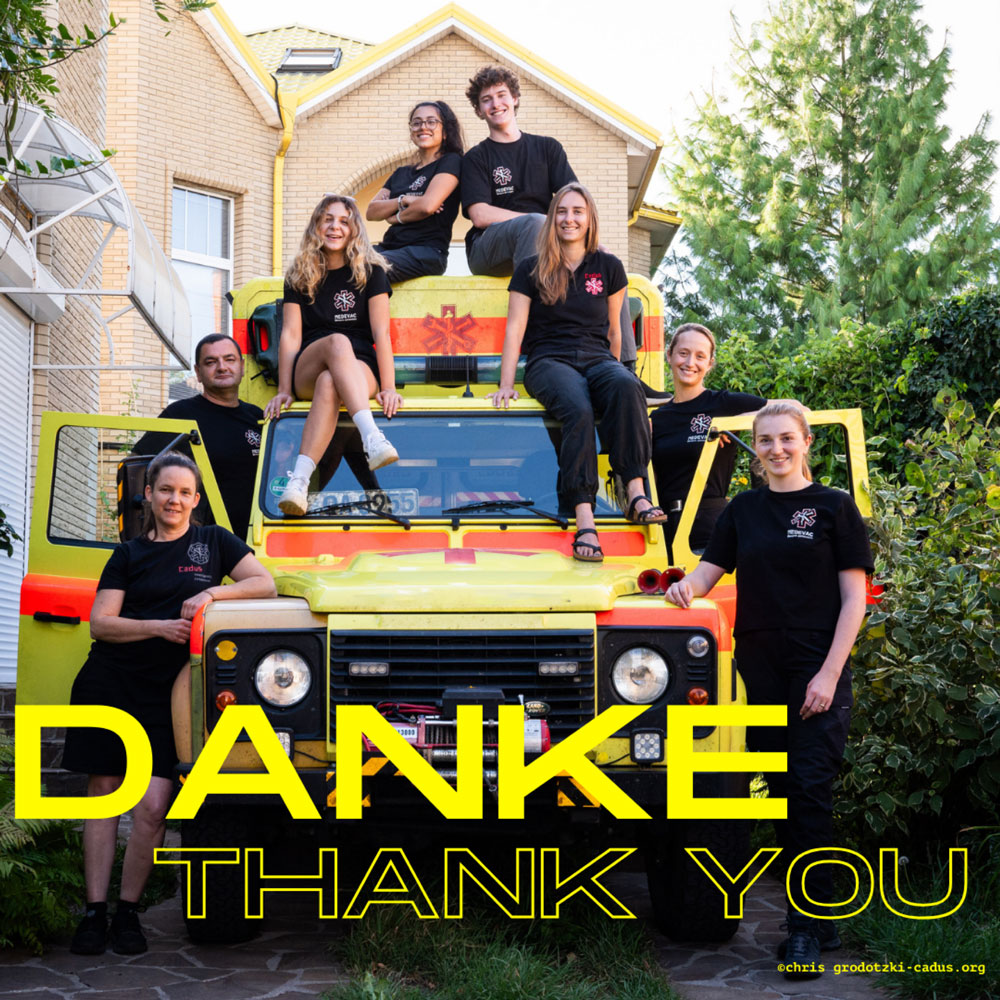
A motorized employee who has been active in Ukraine since the first hours of our mission has returned to us in Berlin. Without our vehicles, our medical emergency trips would be inconceivable. An occasion for us to pay tribute
Each one teach one – medical trainings in Ukraine
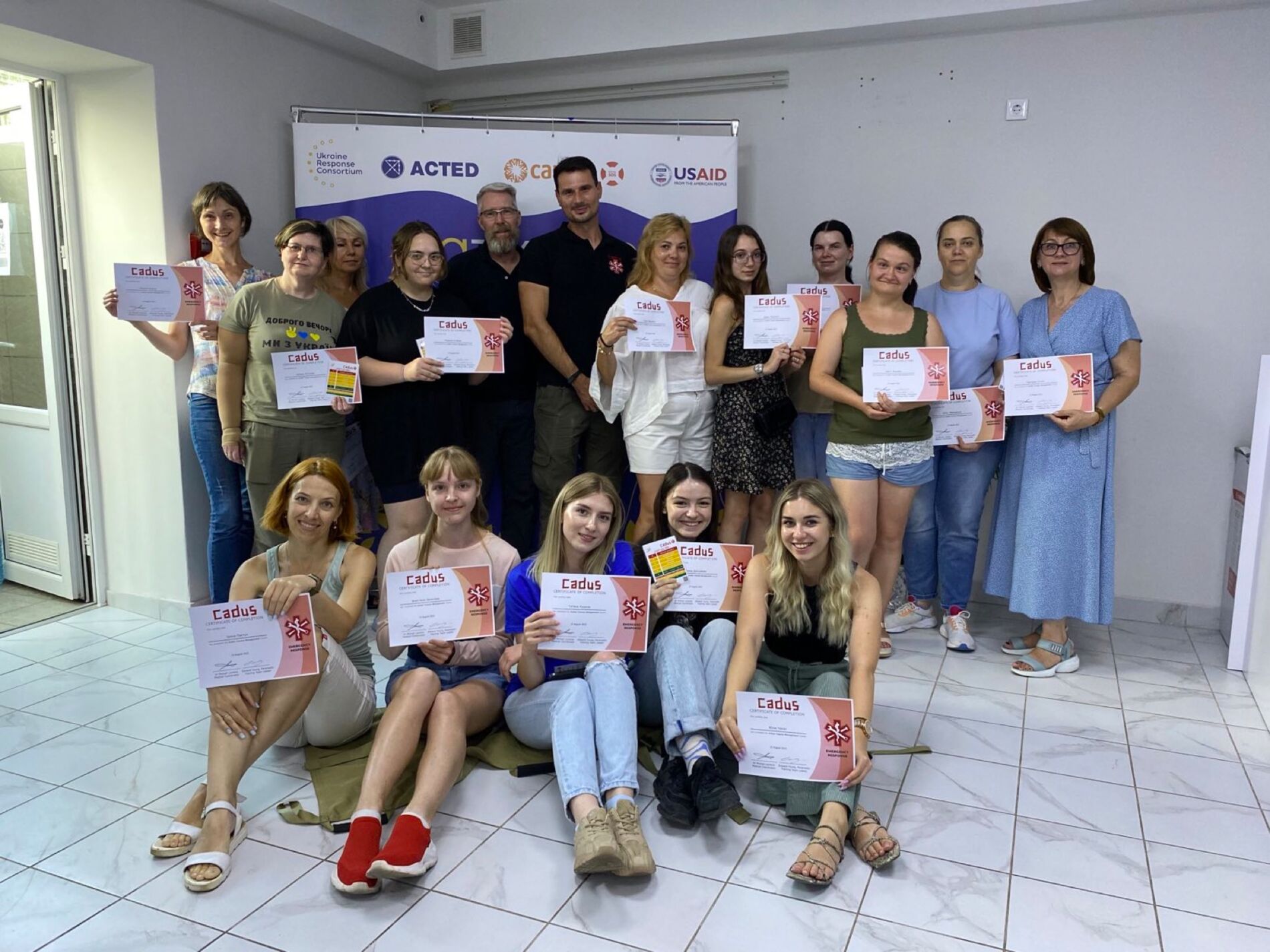
Shortly after our first missions in Ukraine, the need for medical training in particular became obvious on the ground. In addition to the numerous medical novices from the population, who suddenly had to and wanted to treat injured people in times of war, specialists also asked for support in this also medically …