In the heat of the night
Published on 31. July 2017
from CADUS-PR
in-the-heat-of-the-night-200-feature-mobile_hospital_07-06-172028620von201829-1a438e9e
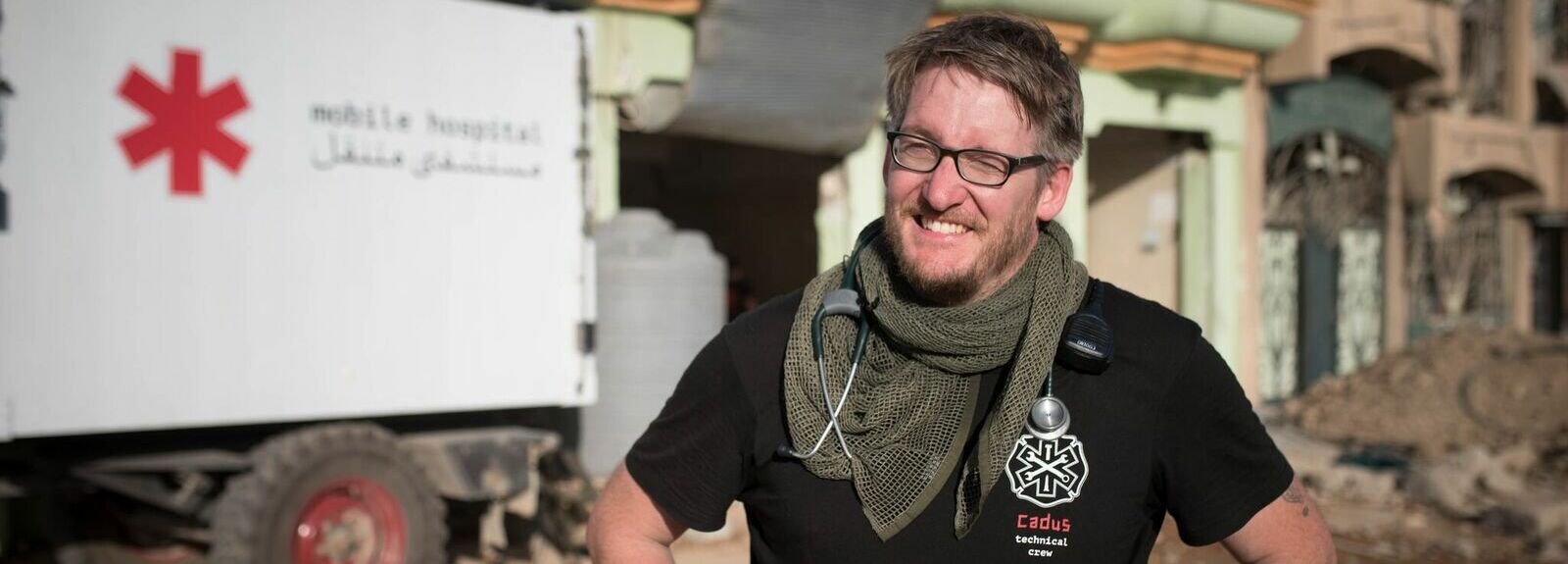
“Another night shift is over for the CADUS team in our Mosul TSP. After the breaking of the fast, when it's getting dark and temperature is falling a little bit, gunfights are starting again. It's almost certain that there will be another high influx of patients during the night.
At this point, our team has already been working for 14 hours straight at 45 degrees Celsius (113 degrees Fahrenheit) in a dry, dusty climate with lots of patients to care for and all the other regular tasks: getting water and beverages, the logistics of our camp, restocking of the TSP supply cabinets and the cleaning of bloody instruments.
There is a service schedule for the night shift, but it's rather symbolic. If something happens, it's usually a serious incident, meaning 3 or 4 badly injured people arrive simultaneously and the whole team is needed once again. When there are no patients to care for, everyone is trying to rest a few minutes. Mosquitoes, heat and the recent experiences often make it difficult to relax and rest.
We just made a quick group picture… and realised the whole team doesn't really look “fresh“ anymore. Nevertheless it's a great pleasure to do this important work here with such wonderful people.“
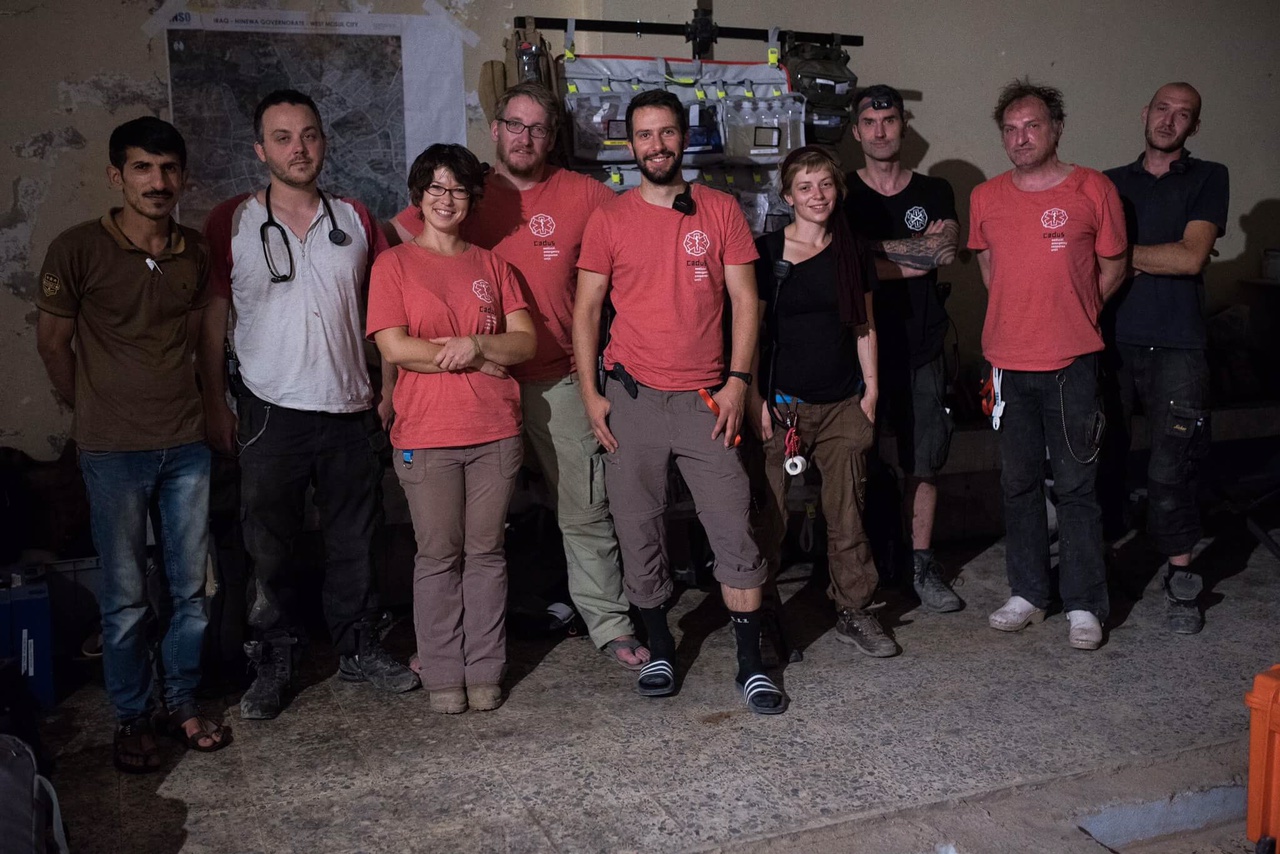 Our current team in our TSP in Mosul. Picture: CADUS
Published
Author: by Jonas Grünwald

Erneuter Einsatz von Dr. Michael Wilk
Vorweg: In den letzten Monaten litt unsere Öffentlichkeitsarbeit stark unter unserem Arbeitspensum. Die Projekte vor Ort voranzutreiben, stand für uns im Mittelpunkt. Aber nun wollen wir Stück für Stück in unserem Blog alle Teams und die Arbeit des letzten Jahres vorstellen.
Syrien, oder was?
Das Arbeitsfeld dehnt sich aus. In den letzten Tagen hörten wir häufiger die Frage: „Was macht ihr in Kroatien? Seid ihr nicht in Rojava aktiv?“
CADUS Ausbildung 2.0
Letzte Woche wurde Sindschar vom IS befreit. Die Stadt im Norden Iraks, in der KRG, war über ein Jahr lang besetzt. Ihre damalige Eroberung durch den IS markierte einen der Höhepunkte des Genozids an den Yezid*innen.