Cholera prevention in Sudan
Published on 15. March 2026
from Jonas Gruenwald
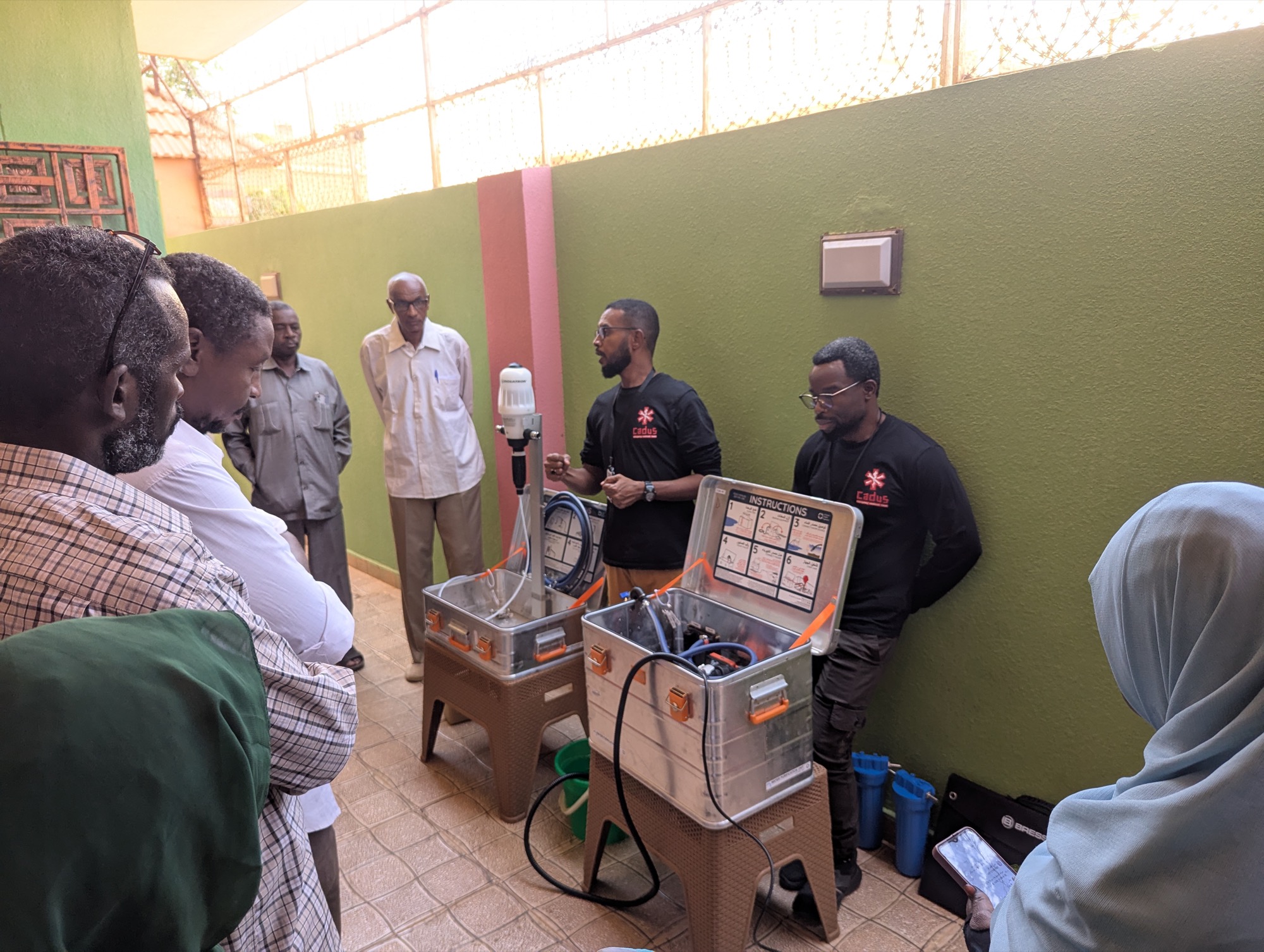
We are helping to prevent future cholera outbreaks by providing training and equipment for drinking water treatment in Sudan.
The civil war in Sudan is causing immense suffering: more than 33 million people are dependent on humanitarian aid, over 13 million people have been displaced within the country, tens of thousands have died and livelihoods have been destroyed.
The water supply is also affected; clean drinking water is not available in large parts of the country. Sudan is regularly affected by cholera outbreaks, and the effects of the war exacerbate the problem. Wells and sanitary facilities are destroyed, springs are polluted by flooding and, above all, the people who have fled lack access to clean water, sanitary facilities and medical care.
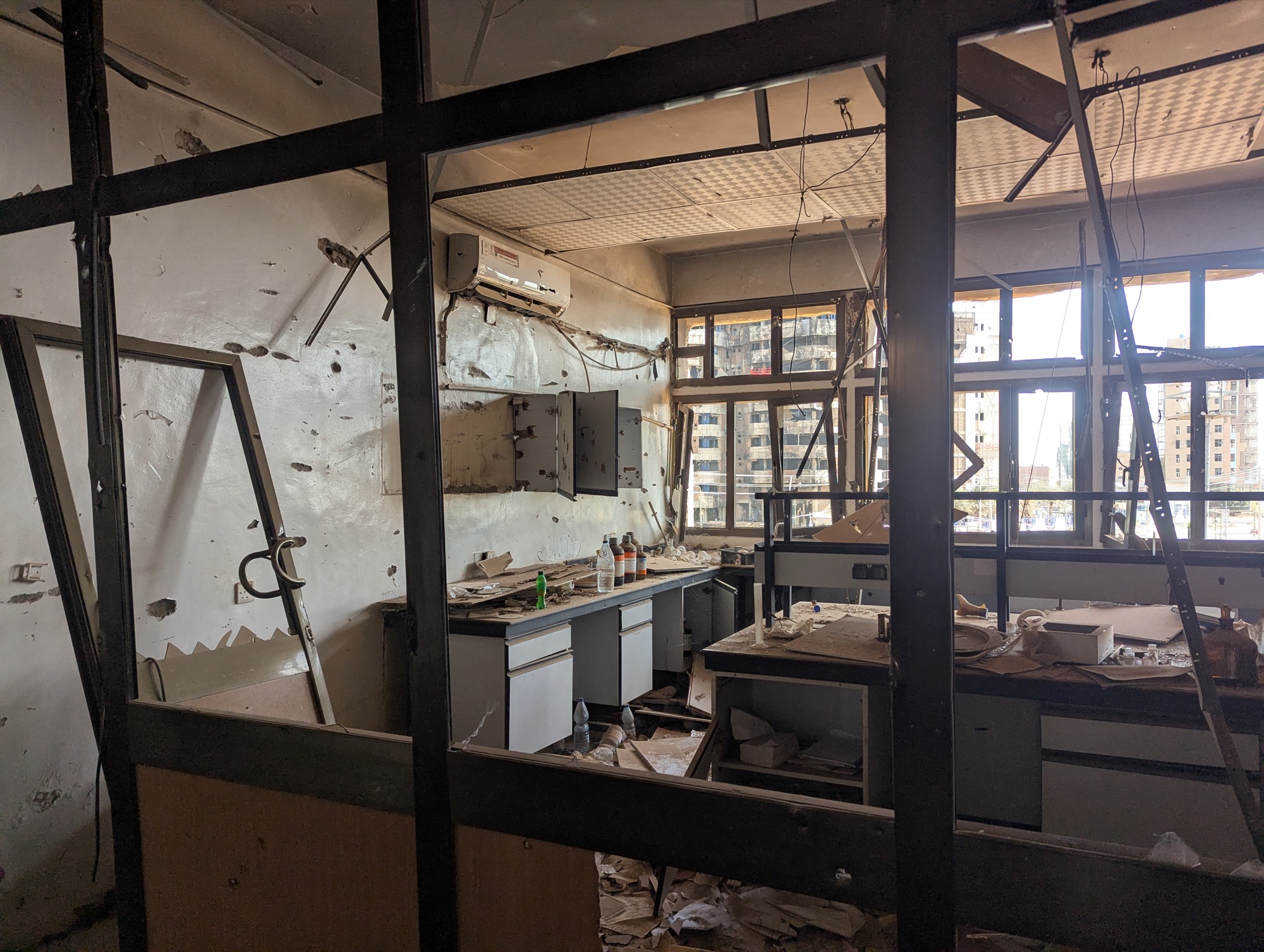 A destroyed water laboratory in Khartoum. Samples from the entire region used to be analyzed here. Much of the infrastructure in Sudan, that is necessary for clean drinking water, has been destroyed. Photo: CADUS
WASH training
The last cholera outbreak was officially confirmed in August 2024 and only declared over in March this year. Across Sudan, 124,418 people were infected and 3573 deaths were reported*.
In order to prevent further cholera outbreaks, we started our first WASH (water, sanitation and hygiene) training courses in February, focusing on the production, storage and distribution of drinking water. Further content included measures to ensure the quality of water, as well as basic knowledge on hygiene and infection prevention and the fundamentals of safe sanitation.
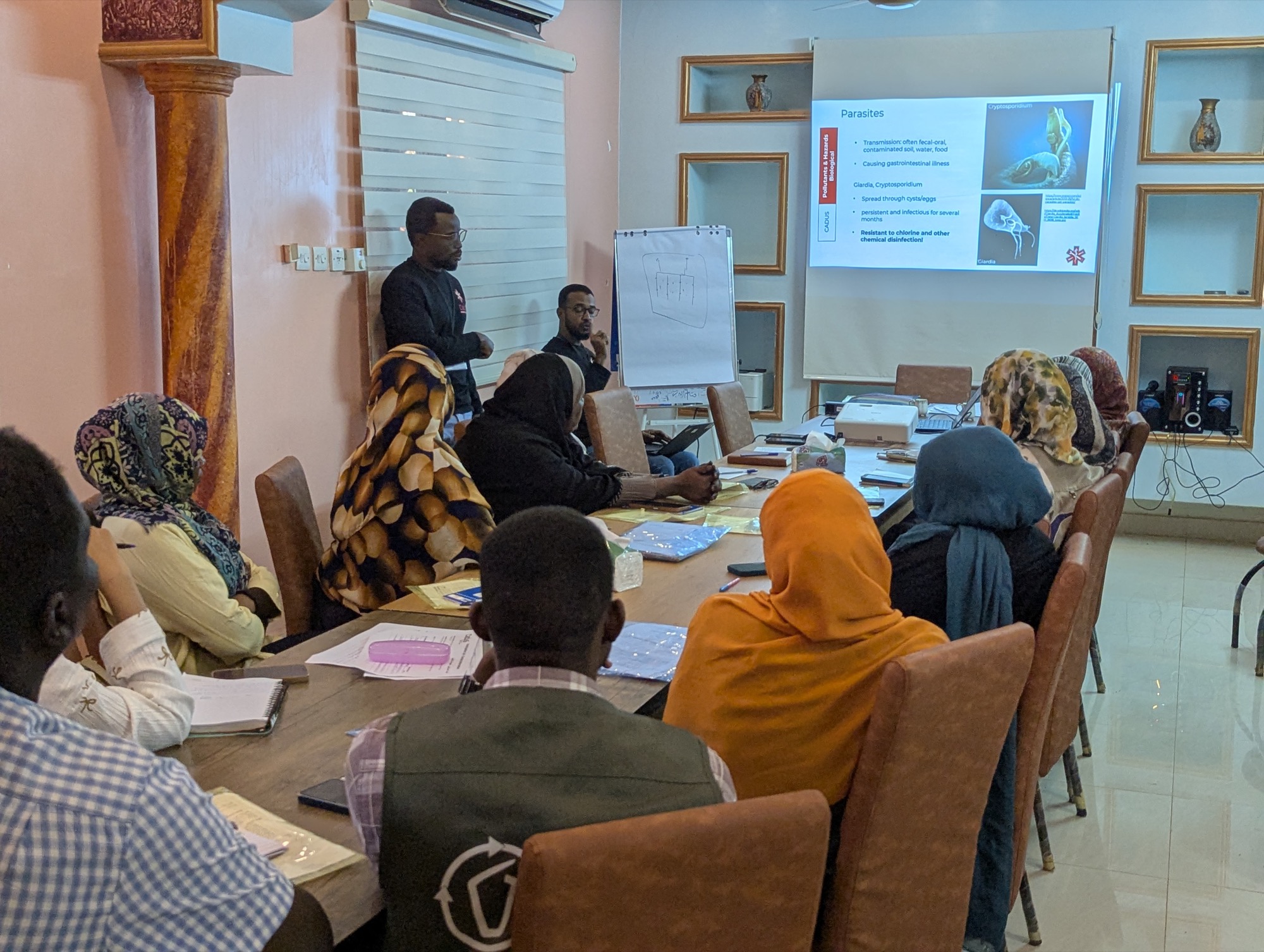
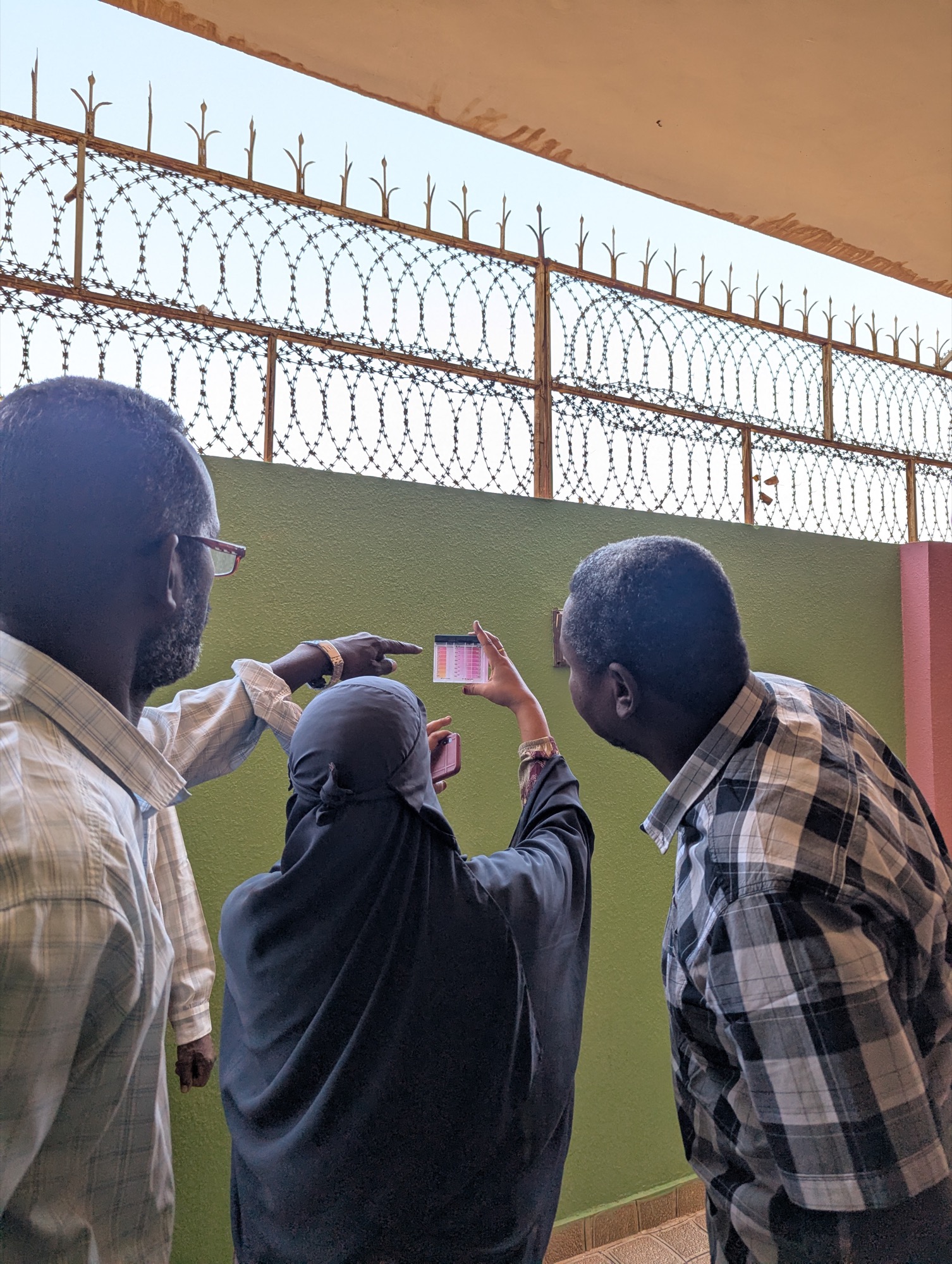 In addition to theoretical content, practical exercises were also carried out, such as measuring the pH value and chlorine content in water. Photo: CADUS
How to drink water
The second pillar of our program is the distribution of drinking water treatment devices: one for filtering and disinfecting and one for chlorinating the water. The devices are distributed to medical partner organizations and the Ministry of Health in Sudan to enable the production of clean drinking water at the respective supply points and to prevent future cholera outbreaks.
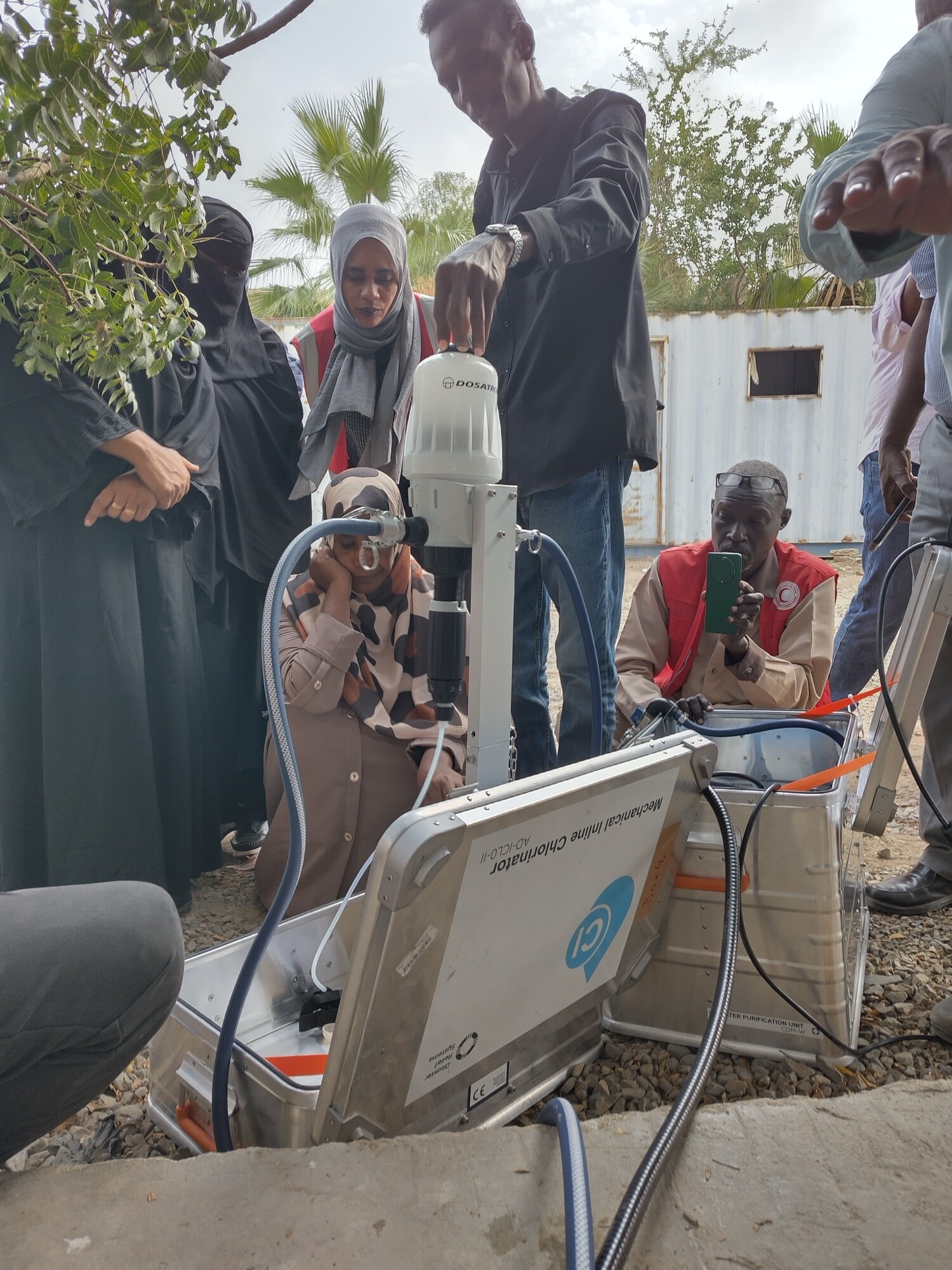 The use of equipment for drinking water treatment and chlorination was also tested. Photo: CADUS
During the training sessions, the participants were given a theoretical and practical introduction to using the devices. In total, we were able to train 59 people from different organizations and authorities in four training sessions in Port Sudan and Khartoum. Our teams were also able to learn a lot about the local challenges and practical solutions of their colleagues on the ground.
Device distribution
In each case, 38 devices including analysis technology, consumables and spare parts are currently on their way to Sudan.
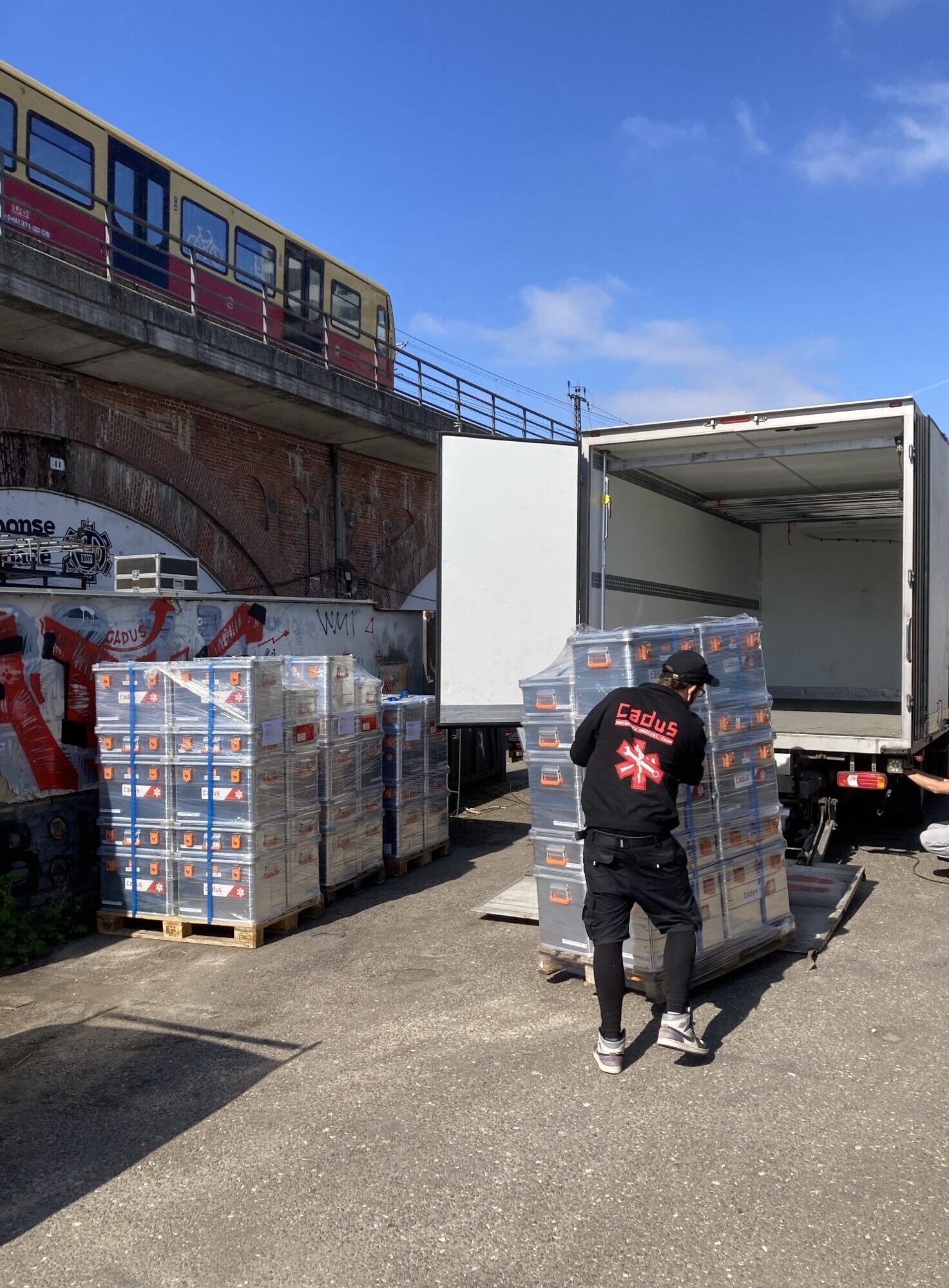 The devices are loaded at our warehouse in Berlin. They are delivered to Port Sudan via Belgium and Kenya and distributed from there. Photo: CADUS
For our local partners, this means a mobile, decentralized and independent option for drinking water treatment – and thus at least some security between cholera and war.
*https://reliefweb.int/report/sudan/sudan-declares-end-its-cholera-outbreak
The climate catastrophe as the greatest challenge for humanitarian aid
What impact does the climate catastrophe have on humanitarian aid? What can and must humanitarian actors prepare for and how must they adapt in order to counter the consequences of the climate catastrophe?
The future of humanitarian aid
Writing a text about the future of humanitarian aid. My first impulse: this is going to be a gloomy text. The present of humanitarian aid leaves little room for optimism. Wars continue, people are dying in Sudan unnoticed by the
How AI Is Changing Humanitarian Aid: Risks and Opportunities
I’ve spent enough nights under mosquito nets and sat through long, often circular UN coordination meetings to know this: if we want to reach people in crisis faster, with less waste, and without burning out the sector, we can’t