Gaza: 1000 patients and no end in sight
Published on 10. April 2024
from Jonas Gruenwald
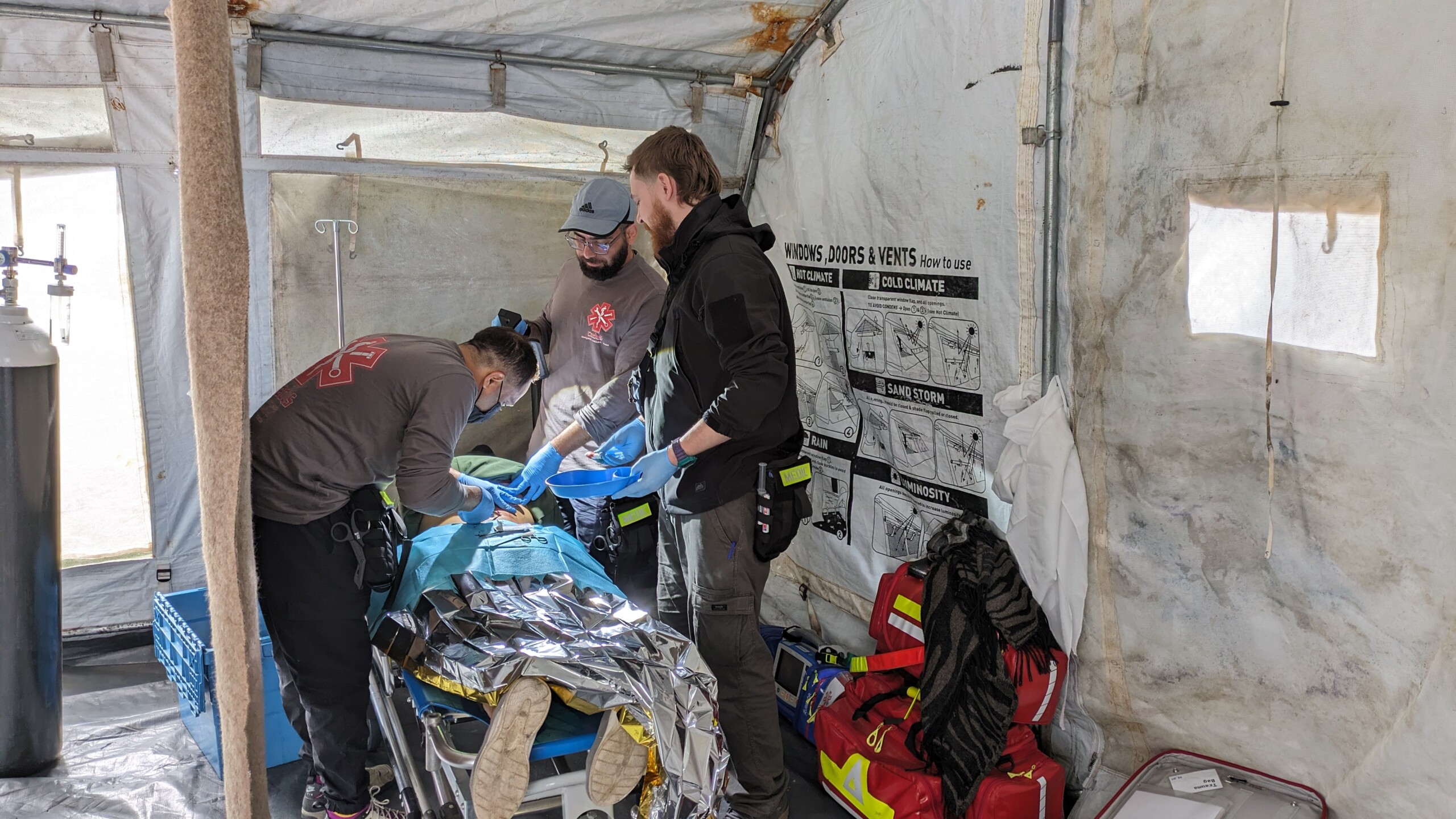
Our team removes a bullet from the back of a young woman. Photo: CADUS
A few days ago, our team in Rafah, Gaza, treated the thousandth patient at the Trauma Stabilization Point (TSP) of the Palestinian Red Crescent Society (PRCS).
Almost a third of our patients are under the age of 18. Nearly 60%, and therefore the majority, are in the age group up to 49. Our teams therefore treat many children, adolescents and young adults. This is not surprising with such a young overall population. Every day our teams see injuries directly caused by the war, as well as health problems caused by the poor living conditions, including untreated chronic illnesses.
On average, we treat 18 people a day at the TSP. In the case of mass casualty incidents (MCIs), i.e. a mass casualty incident caused by an explosion, for example, there can be dozens of patients within a few minutes. So far, our team has been confronted with this situation three times, where there were more patients than could be cared for with the available capacity at the first attempt. A total of 115 people were treated during the MCIs.
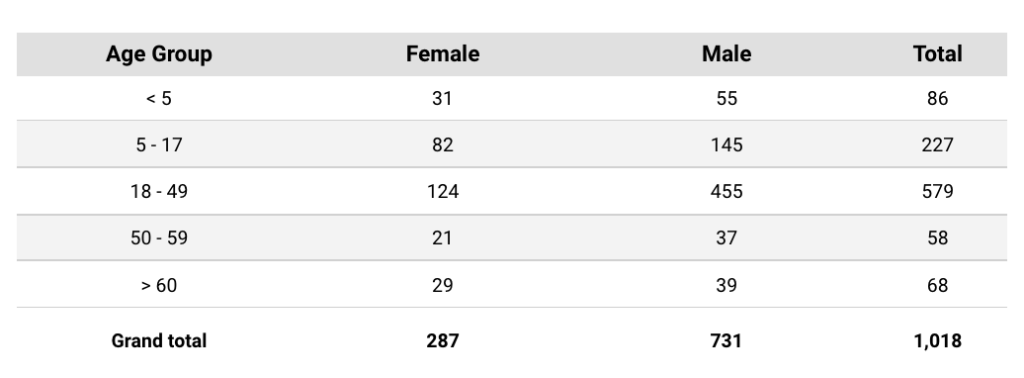
A detailed breakdown of our patients in the TSP by age and gender. Graphic: CADUS
We have helped over 1000 people in Gaza so far, thanks in part to the support of our donors and partners. However, we also know that this help is not enough. Thousands of people urgently need medical care and living conditions that at least allow them to survive.

A breakdown by reason for the patient’s treatment. A third of the injuries are due to explosions, gunshot wounds and shrapnel. Graphic: CADUS
We do not know exactly how many people do not even reach our treatment point. But judging by the impacts that can be heard, we should actually be seeing more patients. Unfortunately, many can only be brought to the TSP as “dead on arrival”, days after the fighting, when the army has withdrawn completely. Sometimes there are up to 40 deaths in one day. The corpses that our MedEvac teams repeatedly see by the roadside as they head north also do not bode well.
After five weeks without transportation from the north of Gaza, we were able to successfully transport two children to the south. Video: CADUS
Despite all the arrangements and preparations, MedEvacs always involve a risk for everyone involved. Video: CADUS
On 23.03.24 we were able to carry out our first successful MedEvac (medical evacuation). This is the medically accompanied transportation of critically ill or injured patients. On behalf of the WHO, we bring them from the completely destroyed north of Gaza to the still partially functioning hospitals in the south. Over a month ago, PRCS was still carrying out these transports itself. But due to repeated attacks and the arrest of their drivers, they had to stop the MedEvacs.
So far, we have had four successful transports. That’s five people who can now receive adequate medical care. On the other hand, there were 10 unsuccessful attempts that had to be aborted due to a lack of clearance or contradictory instructions from the Israeli army. Our team cancelled a MedEvac after the deadly attack on a convoy of the World Central Kitchen organization, in which seven aid workers were killed. For the MedEvacs the same apply: for every person who has received help, there are hundreds who have to wait further, if they survive.
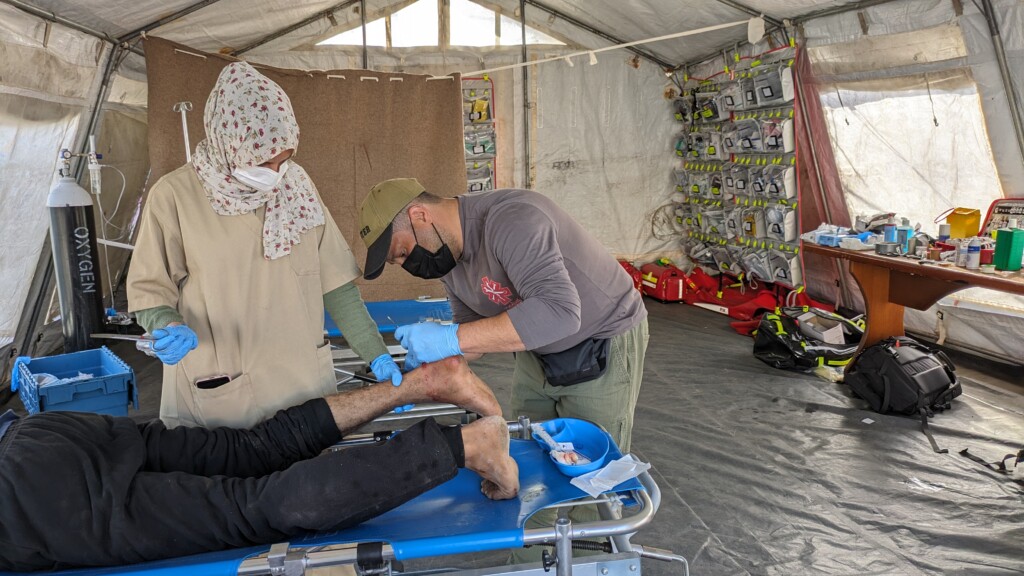
The TSP of the Palestinian Red Crescent where we work is one of the few places where people can get medical treatment. Photo: CADUS
Just as there is slight hope that the situation in Gaza could ease as a result of the announced border openings, the offensive on Rafah threatens to make the situation even worse.
We will continue to stay in Gaza and help as many people as possible. However, the overall situation can only be improved at a political level.
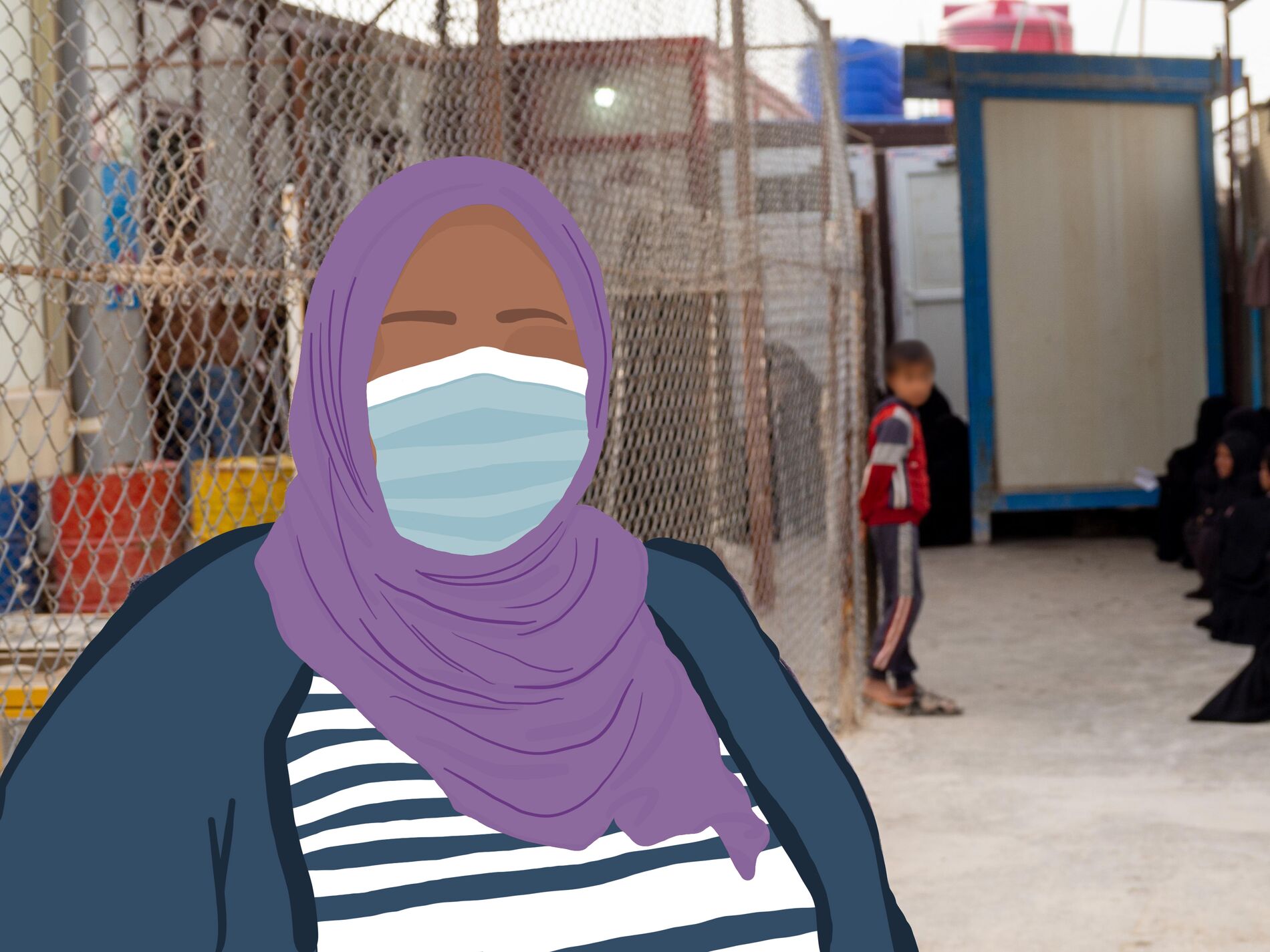
“A woman must always be strong to continue her life.”
Farah, who talks to us about her life on the occasion of International Womens Day, has a lot to tell. She works as a translator for CADUS in the Al-Hol refugee camp in northeast Syria and tells us about her work as a teacher, her flight from IS and her dreams.
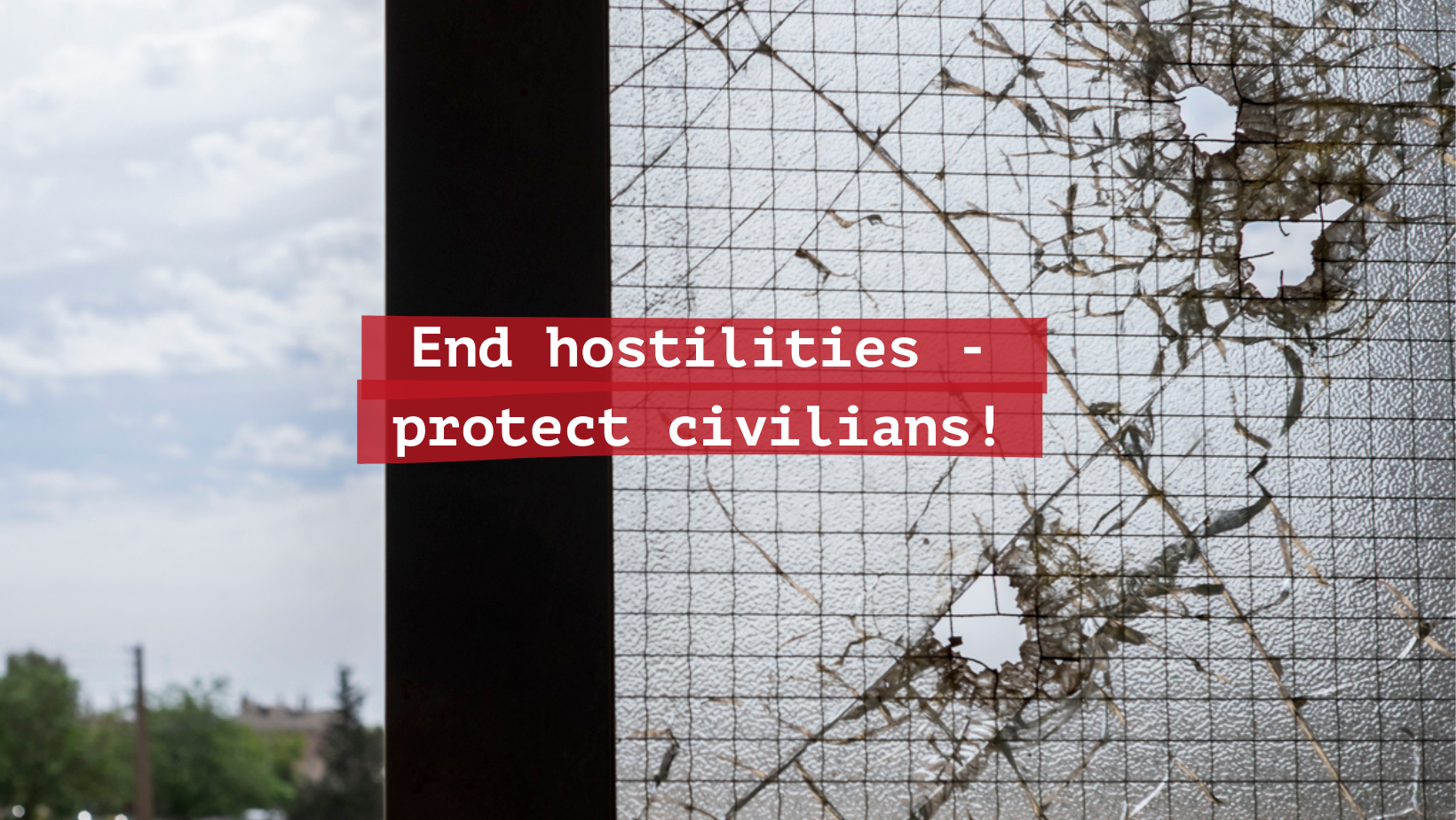
End hostilities – protect civilian population! Russia-Ukraine conflictRussia Ukraine Conflict
War is back on European soil - 27 years after the end of fighting in Bosnia. The hope of the last weeks to solve the conflict at the negotiating table has been dashed for the time being. Russian troops have crossed the Ukrainian border, there are reports of shelling from several towns, and the first deaths have been …
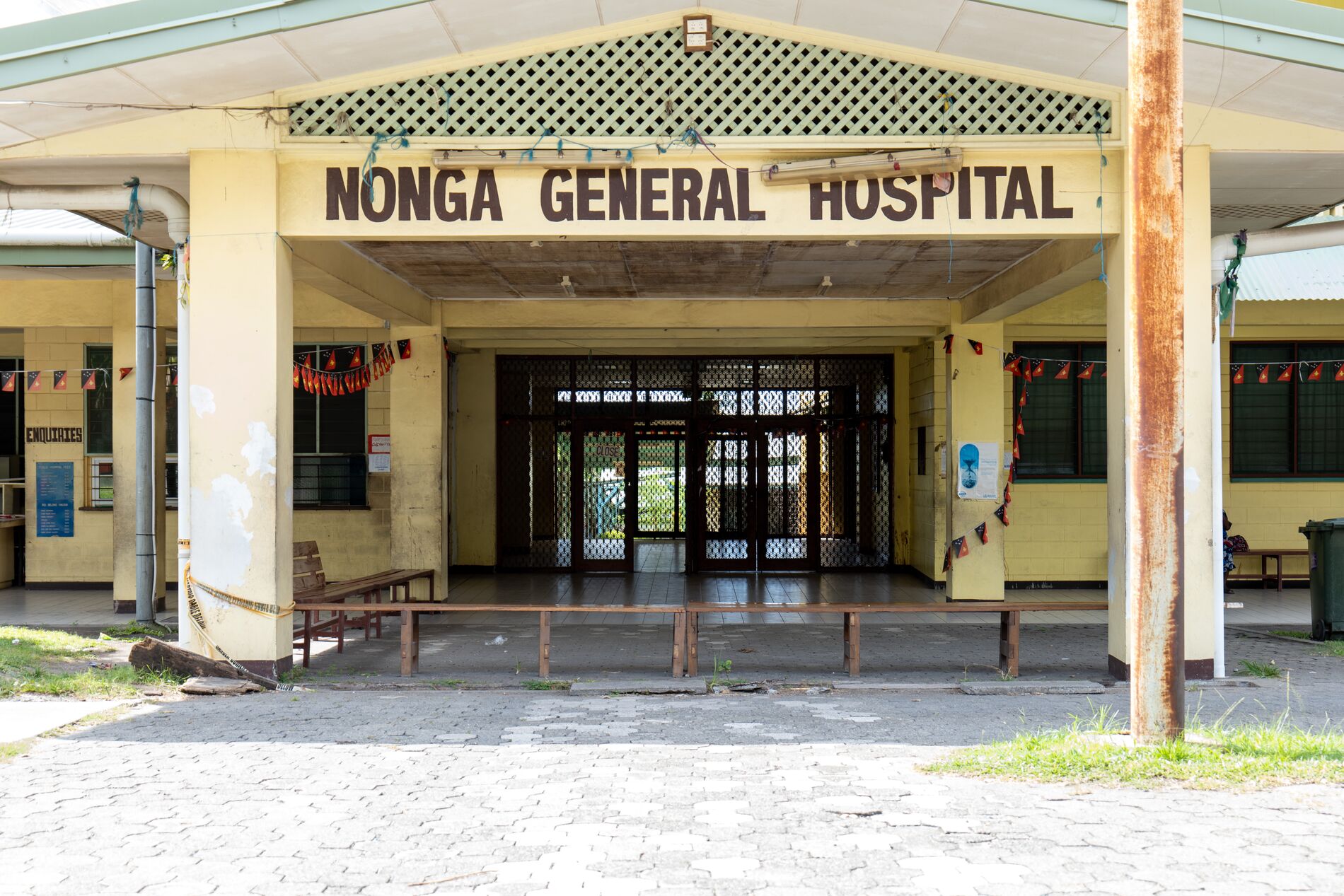
EMT Mission in Papua – Neu Guinea
Rapid action and early lockdowns have helped Papua New Guinea cope pretty well with the Corona pandemic as compared to other countries. However, with the emergence of the delta variant, case numbers have skyrocketed here as well, and the country has requested international support.