Not easy to stop the bleeding once it started
Published on 24. March 2026
from Julius Bauer
Photographer Julius Bauer visited our Medevac team in Dnipro, Ukraine, in February. In this guest article, he gives us a brief insight into the everyday life of our colleagues on site, takes us along on the transport of a wounded patient and shares his thoughts on the recurring war trauma in Ukraine and his impressions of life in the war zone.
All photos in this article were taken by him.
“Dnipro 6 A.M. Arrived with the overnight train from Kyiv. Hanno, the security manager, picks me up from the train station. We watch the sun rise, illuminating the industrial part of the city. Towering chimneys crowned with clouds of smoke. Dnipro is an industrial city and, in some ways, it reminds me of my hometown. It lies at the end of the Dnipro River, the gateway to eastern Ukraine, named after the river itself. The lifeline of the country. We take the main road along the Dnipro and stop at a petrol station for coffee. The city hasn’t woken up yet. It’s cold. Slowly, people begin to appear on the streets. I clasp my coffee between my hands. Hano tells me how he arrived in Ukraine seven years ago and fell in love with the country. Before CADUS, he monitored the war for NGOs in the Donbas from the beginning, an undercover conflict fought by separatists, largely the infamous Wagner Group. Now he is CADUS’ security officer, responsible for everyone’s safety, mine included. He’s a very kind man, with a big beard and trustworthy eyes. It feels good knowing he’s overseeing the trip.
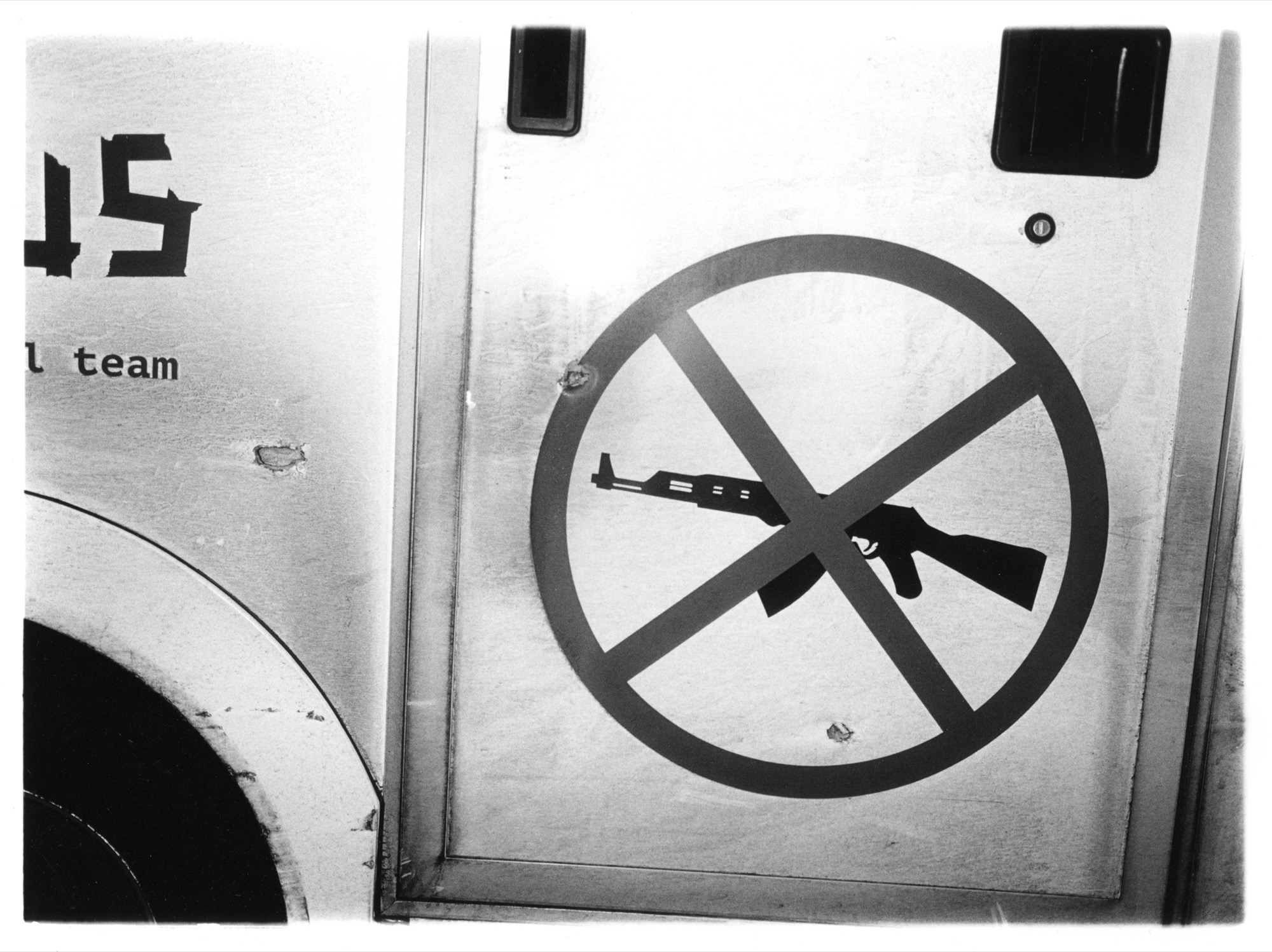
The team house is tucked away in a settlement above the city, overlooking the river. It’s a large house with three ambulances parked out front in a small residential neighborhood. Hano shows me Xenia, the ambulance that was hit by shrapnel in Sloviansk. On its side is a sticker: crossed-out AK-47s marked with a thick red line, meant to deter attacks. There’s a hole right through the middle of it. The base was hit four days earlier. An explosion nearby caused significant damage, destroyed the ambulance’s windshield and punctured the sticker. No one was injured, but the blast pressure blew out the windows and damaged the base. Later, during the morning briefing, Hano explains that they will most likely leave Sloviansk. I’m reminded of how serious the situation is. It’s seven o’clock, the house still asleep. I cling to another cup of coffee.
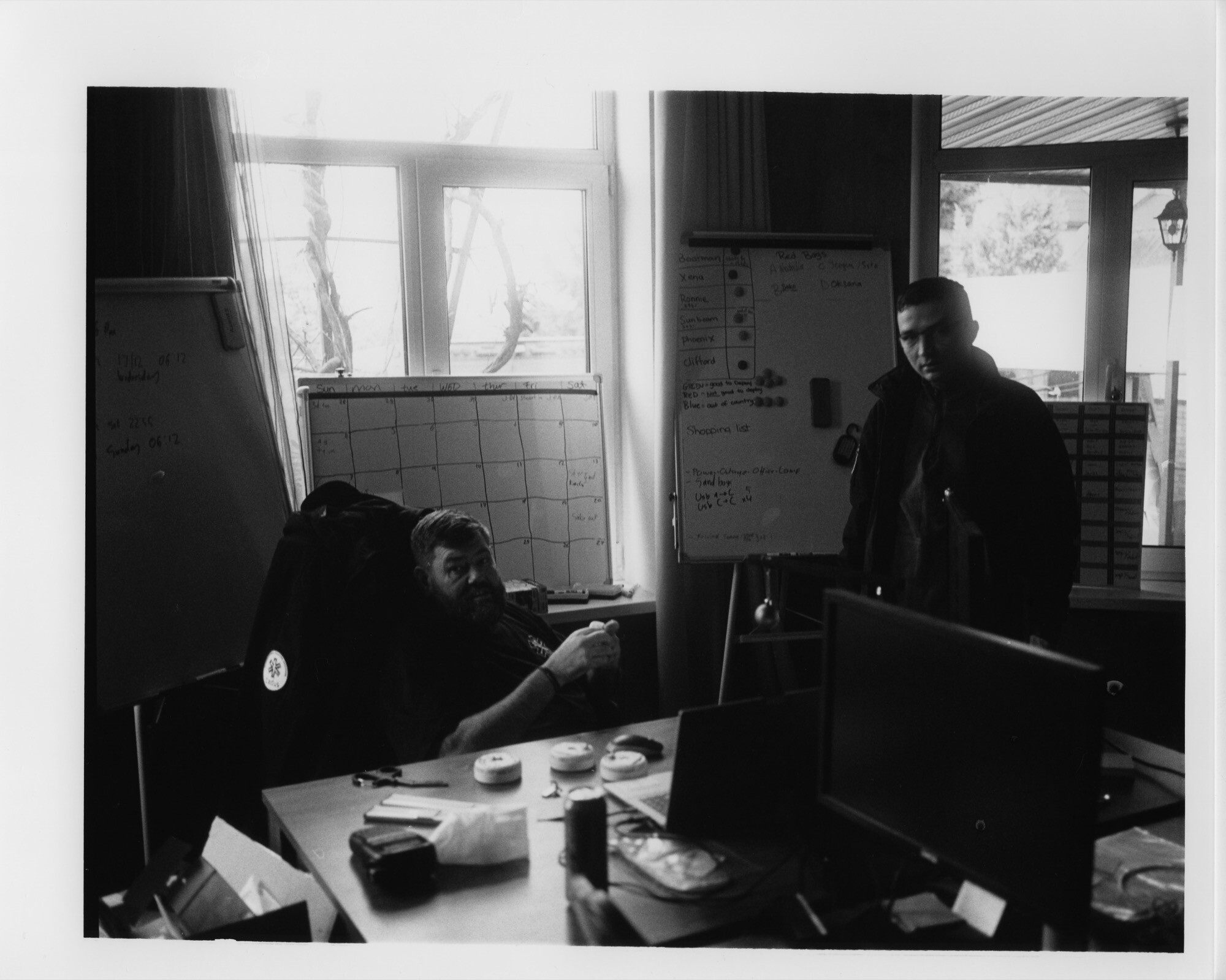
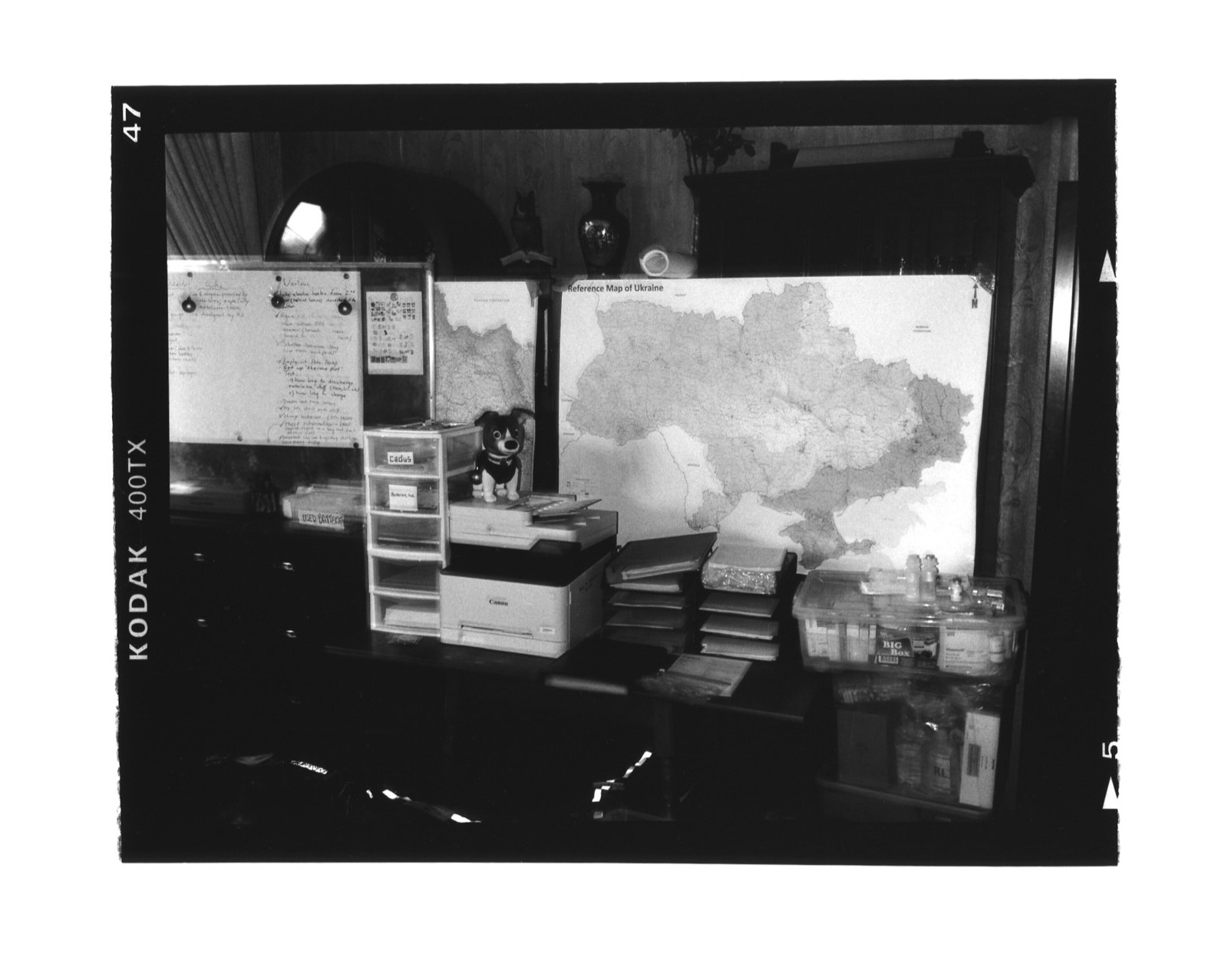
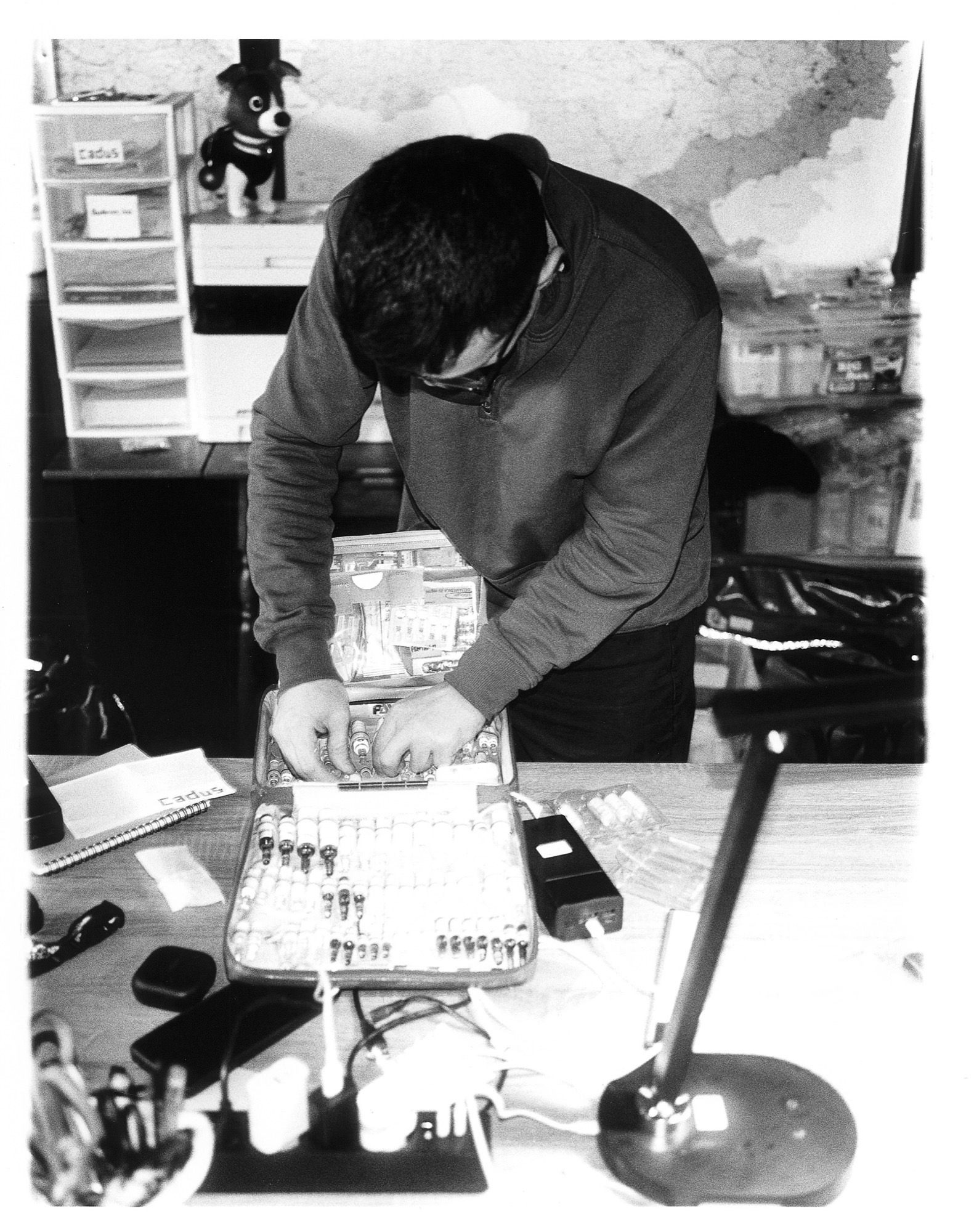
The meeting room is filled with gear, whiteboards, and medical supply. My eyes land on a small toy dog. The team mascot. One by one, team members
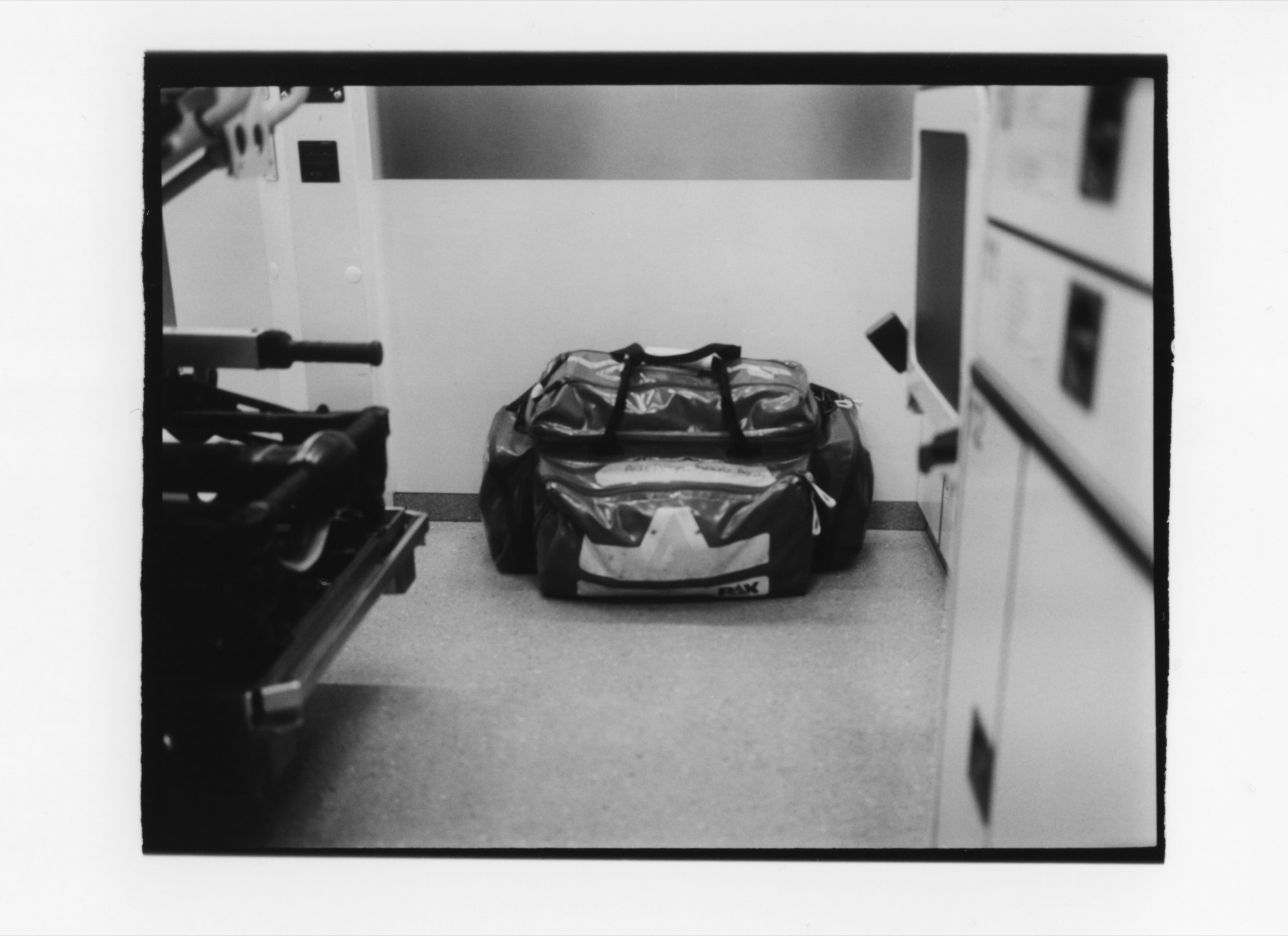
arrive and gather in the kitchen to fuel up for the day. CADUS evacuates critical patients from one location to another. A call can come in at any moment and the days are rarely planned. A call comes in. We’re scheduled to leave at 10:30, transporting a patient from a hospital in Dnipro to the military evacuation train, a fully functioning hospital on rails. I’m introduced to the team and it’s explained why they’re bringing a photographer along. The staff is mostly Ukrainian, with two volunteers from abroad. It’s time to head out. I’m not sure what to expect from this deployment. I agreed to come to see, to prepare for what lies ahead. The team consists of three people, plus me: a driver, a doctor, and an assistant. The ambulance is a tight space; I get a brief introduction on where to stand and how not to get in the way.
It’s a quiet morning—no blaring air-raid alarms while we drive through the streets. the ceilings are low, the corridors a labyrinthine as we enter the
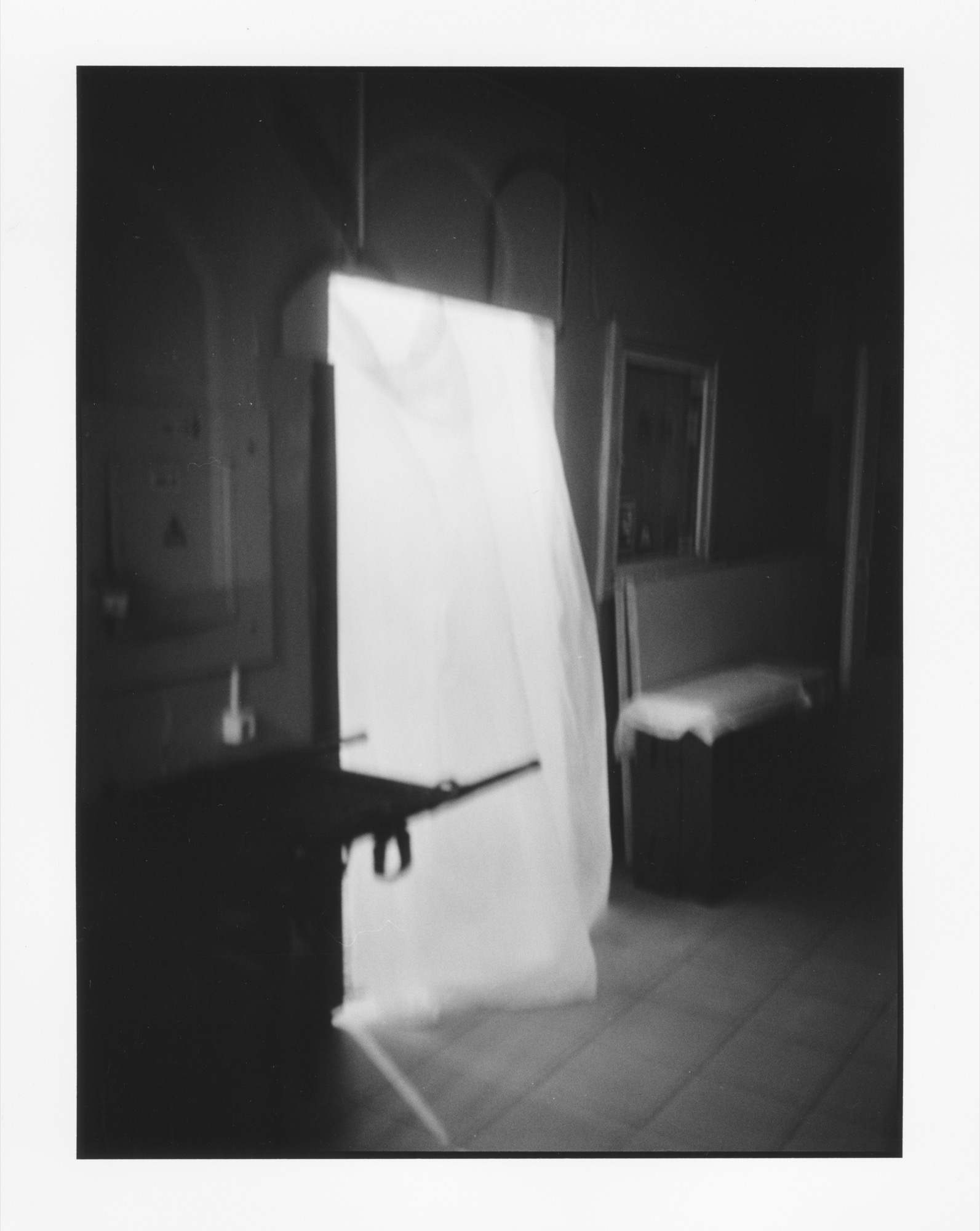
hospital. A nurse guides us into a section designated for the military. We pass relatives waiting on wooden benches outside. The tension is palpable—you could hear a needle drop. People stare into emptiness; their thoughts elsewhere. Everything is bathed in blue light, sterile and clean, as if people only pass through and leave no trace. A thought I’ve had since childhood resurfaces: no human being should be here. It feels alien, lifeless. The paradox is that lives are saved here. It always leaves me restless. I wait in the corridor as the others enter the room. On one side hangs a picture of an Orthodox saint; opposite it, a Ukrainian flag covered in signatures.
Through the doorway, I see a leg in a cast—the patient is still mostly hidden. The team prepares the gurney, ready to stabilize him. I realize he’s a soldier. There are four more beds in the room. All soldiers. An older woman steps out, holding a green plastic bag filled with personal items. Our eyes meet, and I know it’s his mother—something in her posture gives it away. Not defeat. Quite the opposite. There’s a quiet grace I can’t explain. She’s fighting back tears. Is he her only child? There’s no man with her—I can only assume. She presses the plastic bag into my hands, pointing to her chest and then to the man lying on the bed. My son. I try to grasp what she must be feeling. All of this caused by an unnecessary, violent invasion. I think about how complex her emotions must be—love for her son, hatred for whoever did this to him. How do you balance that? How do you keep hate from consuming you, even when you have every right to it?
Will the killing ever stop and if so what will peace look like? How will those who served and those who stayed behind face each other? Ukraine’s real work still lies ahead: dealing with what happened and trying to understand it.
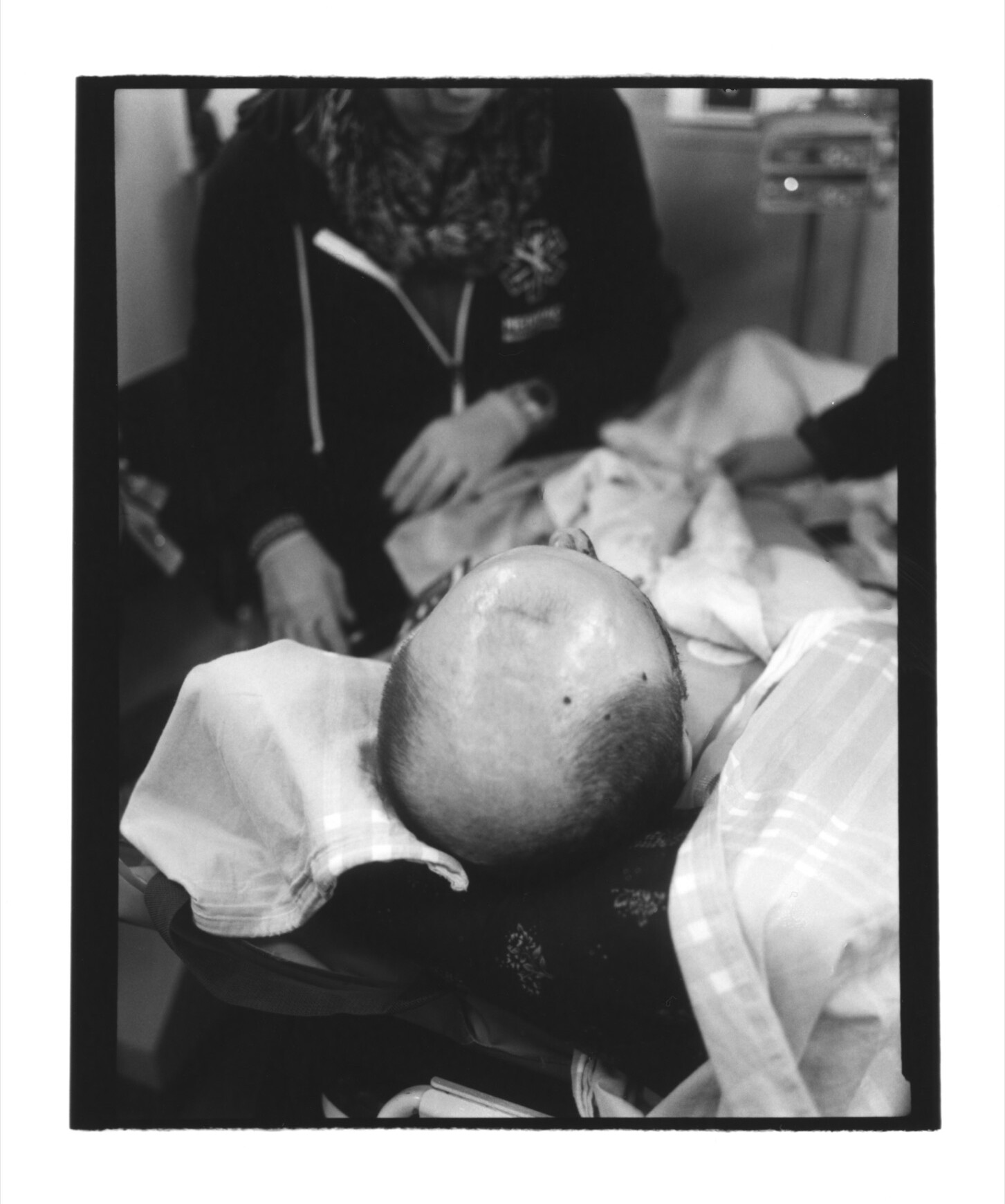
Still standing outside together, I decide to enter the room for the first time. I lean the plastic bag against the wall by the doorframe. Looking back, that green bag leaning against the doorframe is one of my clearest memories. Inside, I look left and see the team helping the patient sit up. I look into his face. His gaze is foggy from ketamine. Probably a drone or a landmine—the doctor doesn’t ask.
A wound at the right eye socket, extending from the eyelid.
The eyelid has fallen in.
The eyeball is missing.
The left arm is missing.
The right forearm is missing.
The left leg is missing.
The right leg is in a cast.
I step outside again, feeling even more displaced. How can I take photographs of this? Watching the team, I realize that despite their professional routine, they leave room for humanity. In a situation like this—injuries that will change a life forever—it’s hard to know how to move, how to exist. They are not robots, and they don’t treat the patient like one. They expose themselves to what they see, choosing to witness rather than shield themselves.
That takes courage. The entire job does. The team lowers the gurney and lifts the patient carefully. His body is covered with a blanket; only his face is visible. We move calmly through the hospital, using the elevator, his mother follows just behind us.
One foot out of the glass door of the hospital, the familiar sound of an air-raid alarm cuts through the air.
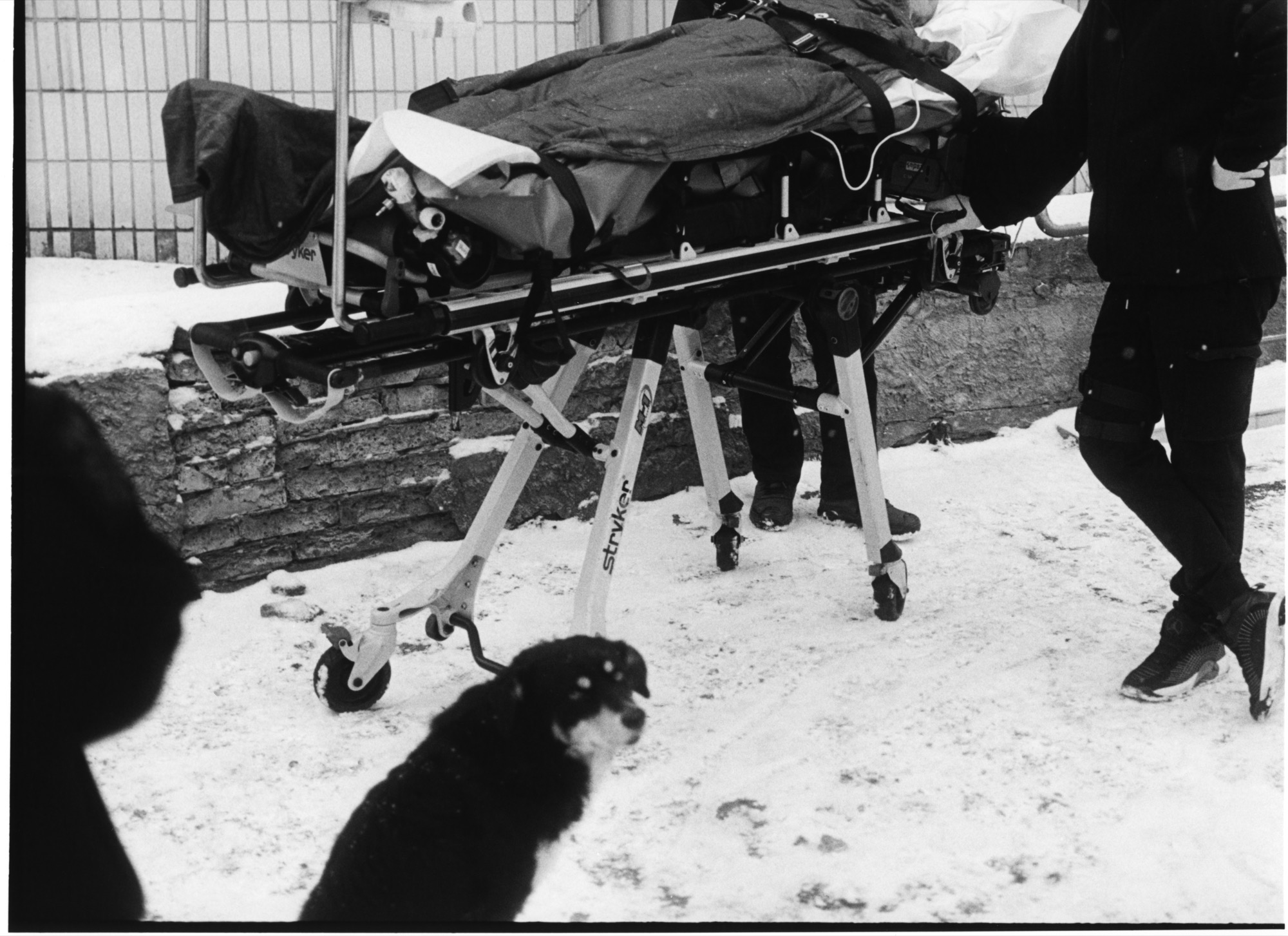
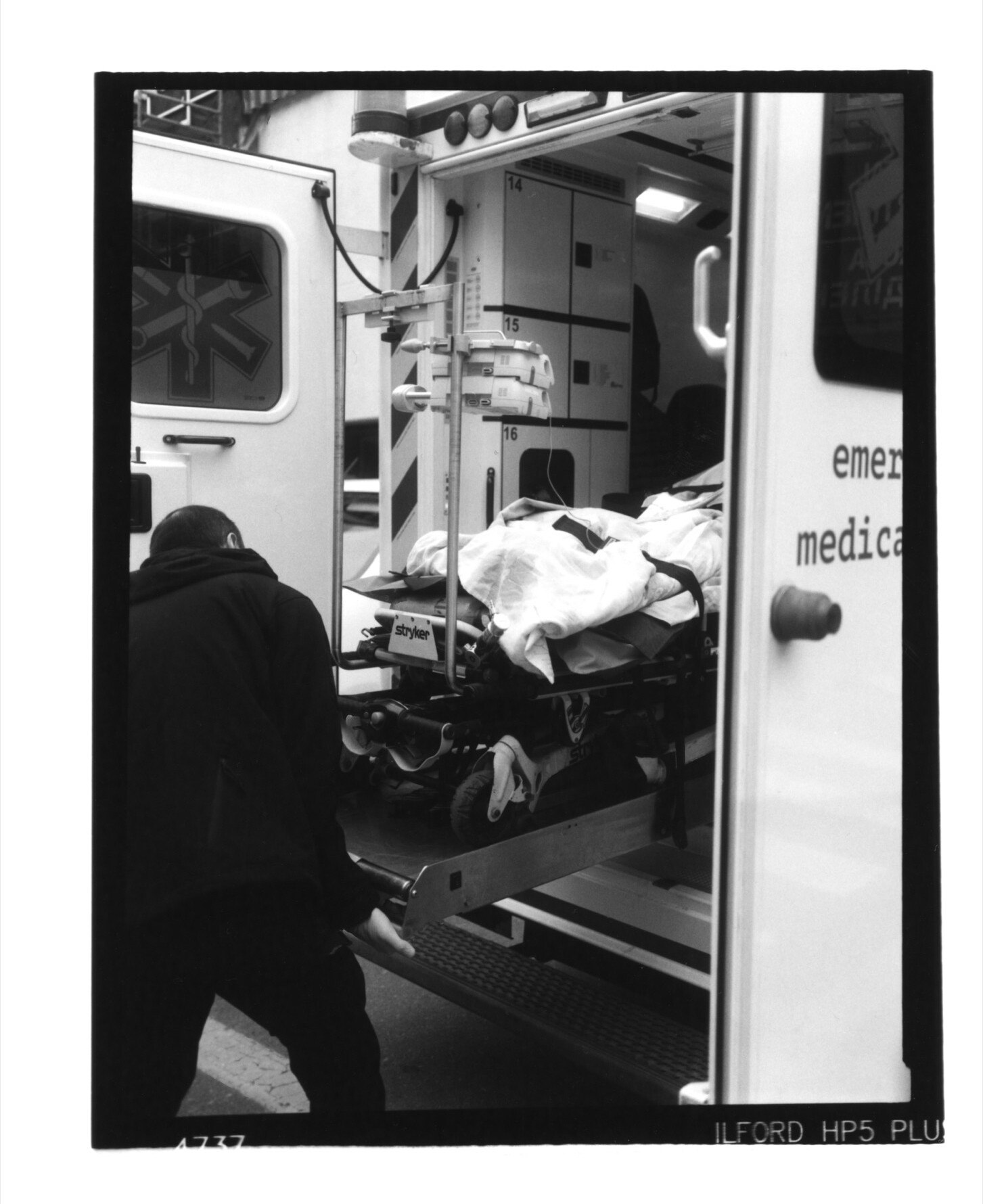
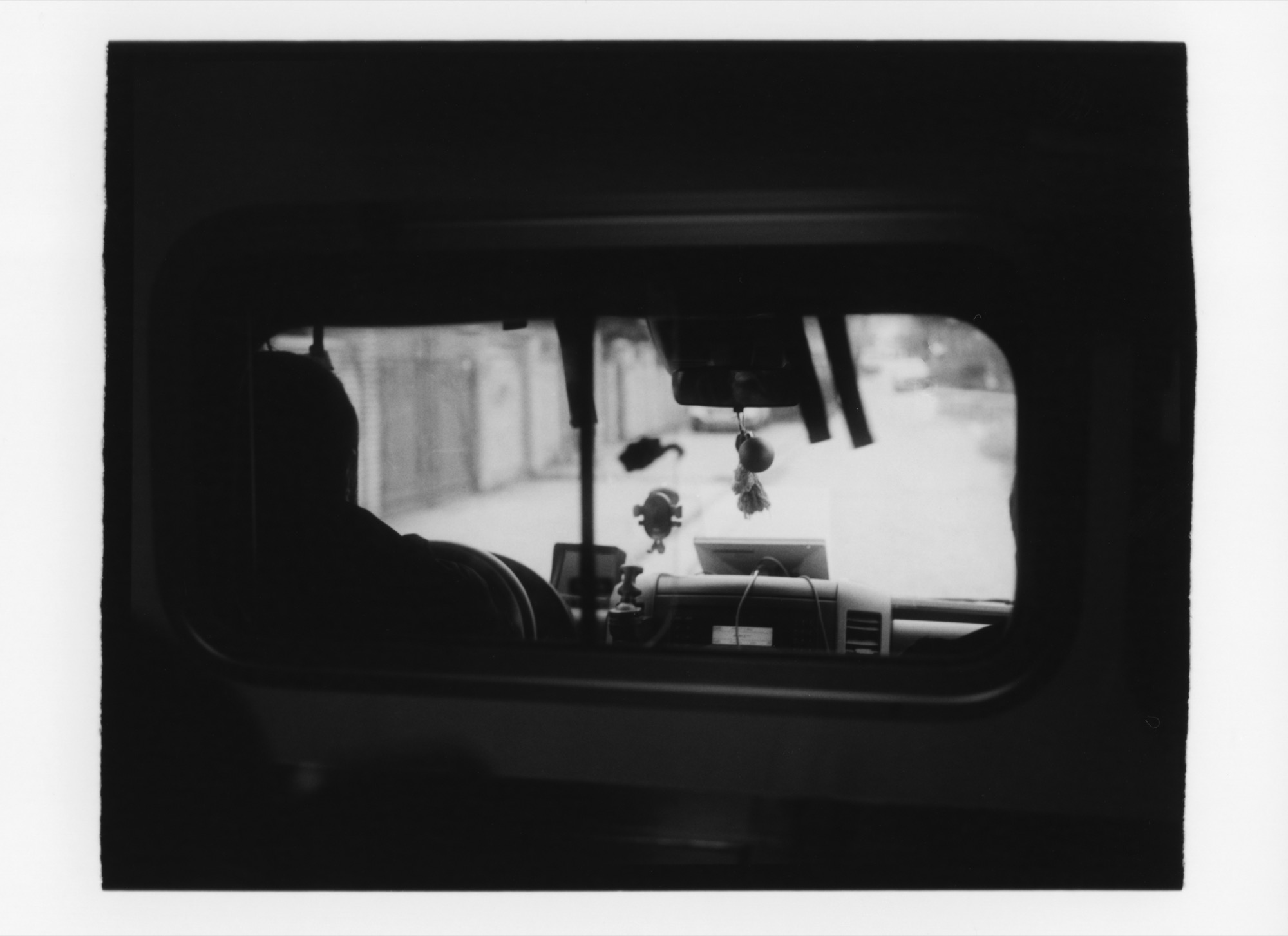
I can see only the back of the patient’s head, calm and still, as the city rolls by outside the window. The team mentions that sometimes patients can become aggressive, aware of their loss. Does he feel anything? Is he glad to be alive? Maybe he is simply relieved to be out of wherever he was before. I don’t ask, anything could trigger a reaction. Will he wonder whether it is worth it? I hope not. Life goes on, it has to. Giving up is not an option. At the ramp, another ambulance drops off a patient. I wait outside with his mum, grateful to leave the sterile environment behind. Onboard the train, photography is forbidden. The hospital is treated as a secret, understandably, as it is a target. Gifted by Doctors Without Borders, it functions as a fully operating hospital on rails. Across Ukraine, the train system keeps the country alive, connecting families, transporting goods, sustaining resistance. The assignment finishes, and the ambulance heads back. Movement is urgent, as attacks target city infrastructure and train stations are key.
At headquarters, the ambulance for the next trip is still under repair. Something is wrong with the oxygen bottle and its connection, and two team members work to fix it. The team I follow north consists of Ivan, Natalia, and Vadym. Ivan, the doctor, wears glasses and carries a quiet intelligence. He was born and raised in Dnipro. He has been working on the medical train as well as serving as a medic on the frontlines. Natalia, the nurse, has black hair and an easy warmth. She works for Doctors Without Borders in Afghanistan and will return there in two weeks. I barely see her not smiling. Vadym, the driver, is also in a way the producer, helping wherever he can. Born in Donetsk, he now lives in Dnipro, navigating pothole laden roads with astonishing skill.
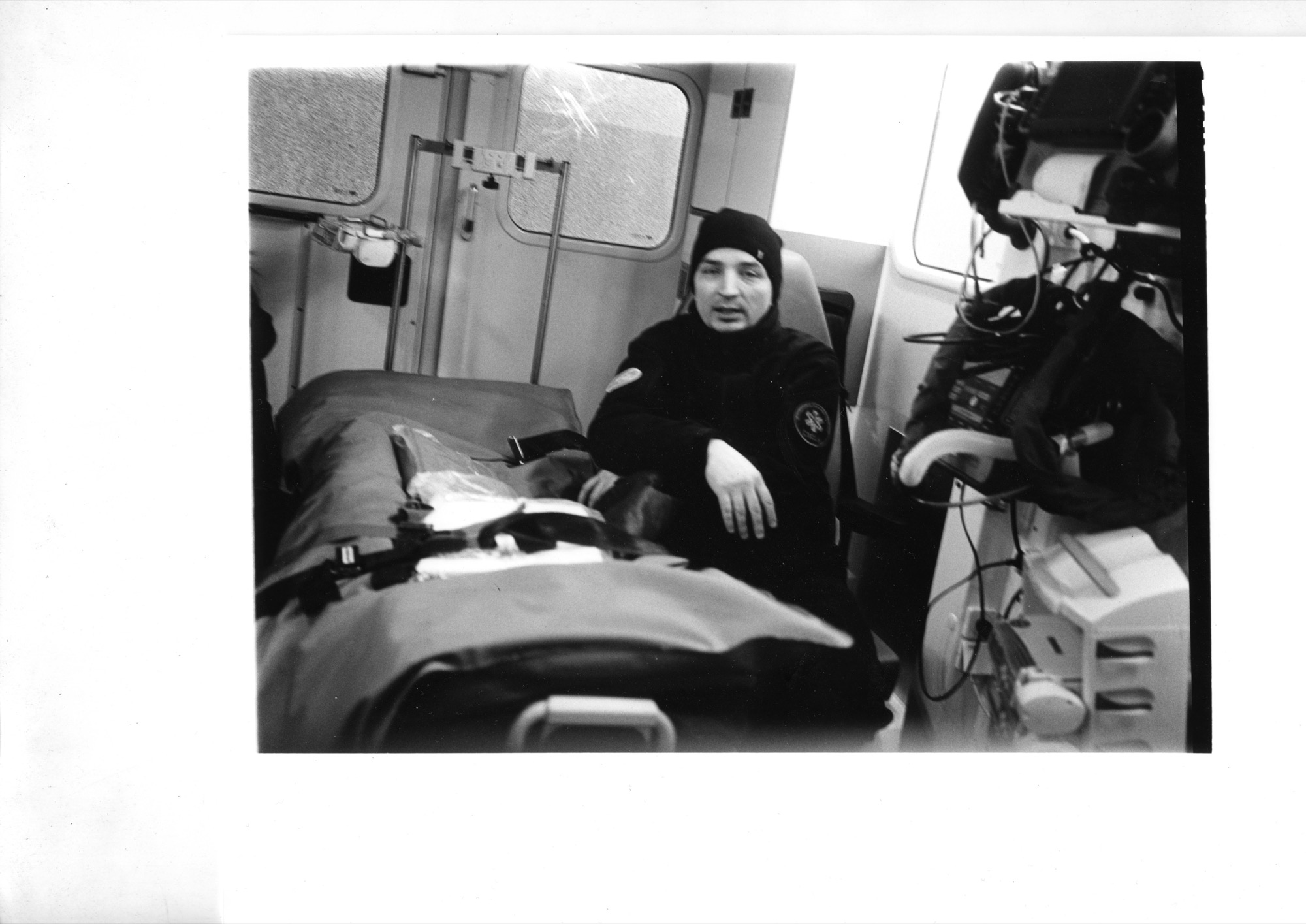
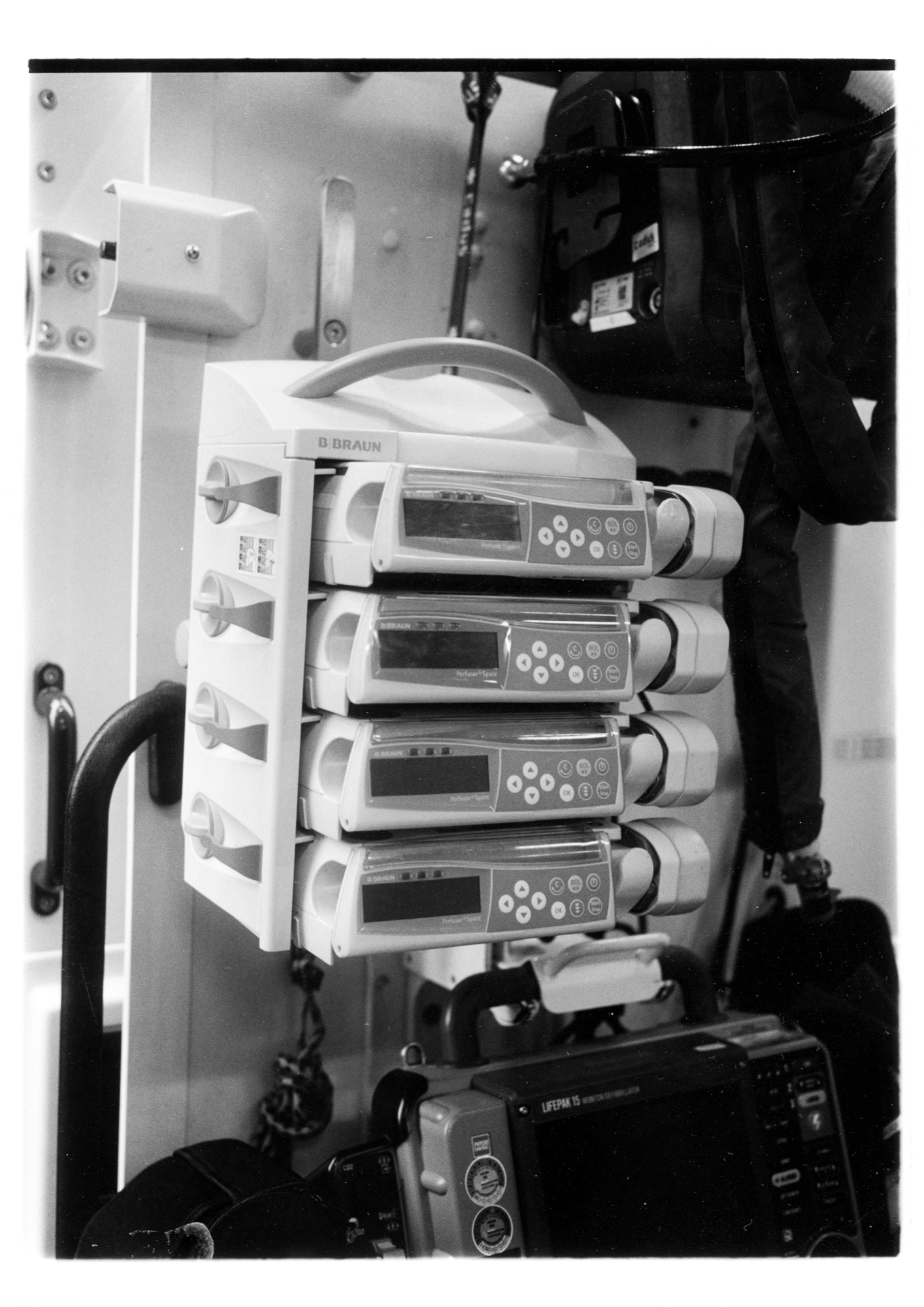
We pack the ambulance with luggage and medical equipment and head out as darkness falls. Ivan and I sit in the back beside the stretcher, Natalia and Vadym in the front. How to turn on the heating system remains a mystery throughout the drive, leaving the cabin cold. Sleep drifts in and out, while checkpoints remain in the back of the mind. An abrupt stop pulls us forward. Vadym stands in front of the ambulance, checking the engine while red warning lights glow inside the cockpit. Another ambulance is called, and we wait on the side of the road as trucks roar past, shaking the vehicle each time they overtake us. Xenia arrives, the ambulance that got hit in Sloviansk, somehow a good omen. Gear, luggage, and supplies are transferred quickly. Another five hours lie ahead. Schlagloch by schlagloch, we move forward again, guided by Vadym. Sleep drifts in once more, the day stretching until it feels like a week.
Ivan looks at me and asks if I’m alright. I am. We start talking. I ask how he ended up in this ambulance. He has been working on the medical train and in the military, also on the frontline. It is challenging, staying in position for long stretches without seeing his family. CADUS offers him a way to help his country while seeing his family more often. I ask how he feels about the war and the threat of Russia. He explains the history of Ukraine and how the country has been exposed to this since the beginning of its existence. Ukraine is tired, he says, but there is no other option than holding on. Everyone celebrates the resistance, but no one gives enough to actually change the situation. Tired of being called strong, knowing they do not really have a choice. Given just enough to survive. Tired of being glorified. The international geo chess of economic interests is once again ready to sacrifice a pawn. It has come to a point where everyone focuses on what he or she can change within their own real of possibility. Something I admire, even though it takes a heavy toll on each personal life in Ukraine. We talk about the future and what he thinks will happen next. Peace talks are going on right now. We speak about Donbas and whether it will be cut out of the Ukrainian flesh. There is no way around the question of whether the death and pain of the last year are worth it.
History and geography come up again. The last century and the future. A clearer sense forms of how Ukrainians feel and how Eastern Europe works, something rarely taught in Western Europe. The tendency is to look west. For too long the east has been separated, first by a violent propaganda machine portraying everything east as inferior, Slavic, to be captured and used as living space. Then by the Iron Curtain, which leaves fear of a third world war and of what lies beyond. Forgotten is that this region was and still is an integral part of Europe. Growing up, trips lead to France, Spain, and America. Never to Poland, Romania, or Ukraine. That absence shapes understanding and perhaps explains why many believe this war is none of our concern. It very much is.
We are close to the frontline, I realize, at the gas station just short of our destination. Like a fish out of water, I’m surrounded by uniforms. Waiting for my hotdog that I have been excited about since we broke down on the highway. Let me explain a Ukrainian hotdog to you: a bread roll with a hole in the middle, filled to the brim with the sauce of your choice—mustard or ketchup, I prefer a mix. The sausage is grilled and slipped into the hole. The right amount shows when the sauce spills over. You can get them everywhere, and I love them, especially in the train’s food wagon, where the whole cabinet smells of grilled sausages. Far from fancy, a far cry from high quality, but it always hits the spot. For the sake of Ukrainian national pride, a Ukrainian borscht is still one of the best dishes in the world. The sky is clear, untouched by the chaos below. For many, this gas station marks the last stop before the frontline, a coffee and a hotdog as the edge of civilization.
A car with a drone cage arrives as our ambulance departs. Arriving at the sleeping location, rooms are assigned. Two share a room, one occupies a separate dorm style space. Instructions from the safety officer, translated by Nadya, outline protocol in emergencies. The kitchen walls are pink, curtains old, and above a poster from Doctors Without Borders declares neutrality and compassion. Tea boils on a camping stove. The building, an old Soviet medical university, is stripped to essentials for accessibility. Emphasis is placed on following directions if situations intensify. His hair is astonishingly white. Photos are requested and first denied with a friendly smile but then I get a go. The security officer leaves in the morning for his rotation, the hope is for a quiet night. Bread is shared among Nadya, Ivan, Vadym, and me. Ivan made the bread himself. Dinner preparation is minimal, but the simple act of sharing eases the tension of the day.
I step outside the building to smoke a cigarette. Ivan and Vadym are already outside. My eyes follow Ivan’s finger as he points at the North Star. Jupiter is the brightest little dot in the sky, Ivan explains. Велика Ведмедиця—the Big Bear—is close by.
Should have brought a sweater. I’m freezing during the night. Snow falls and covers the landscape in white. Ukraine can look grim when it is muddy, grey, and cold. Houses, streets, and the surrounding scenery carry heaviness, especially in a frontline city where so much is khaki. It can resemble the stereotype. Deep ruts. Everything drenched.
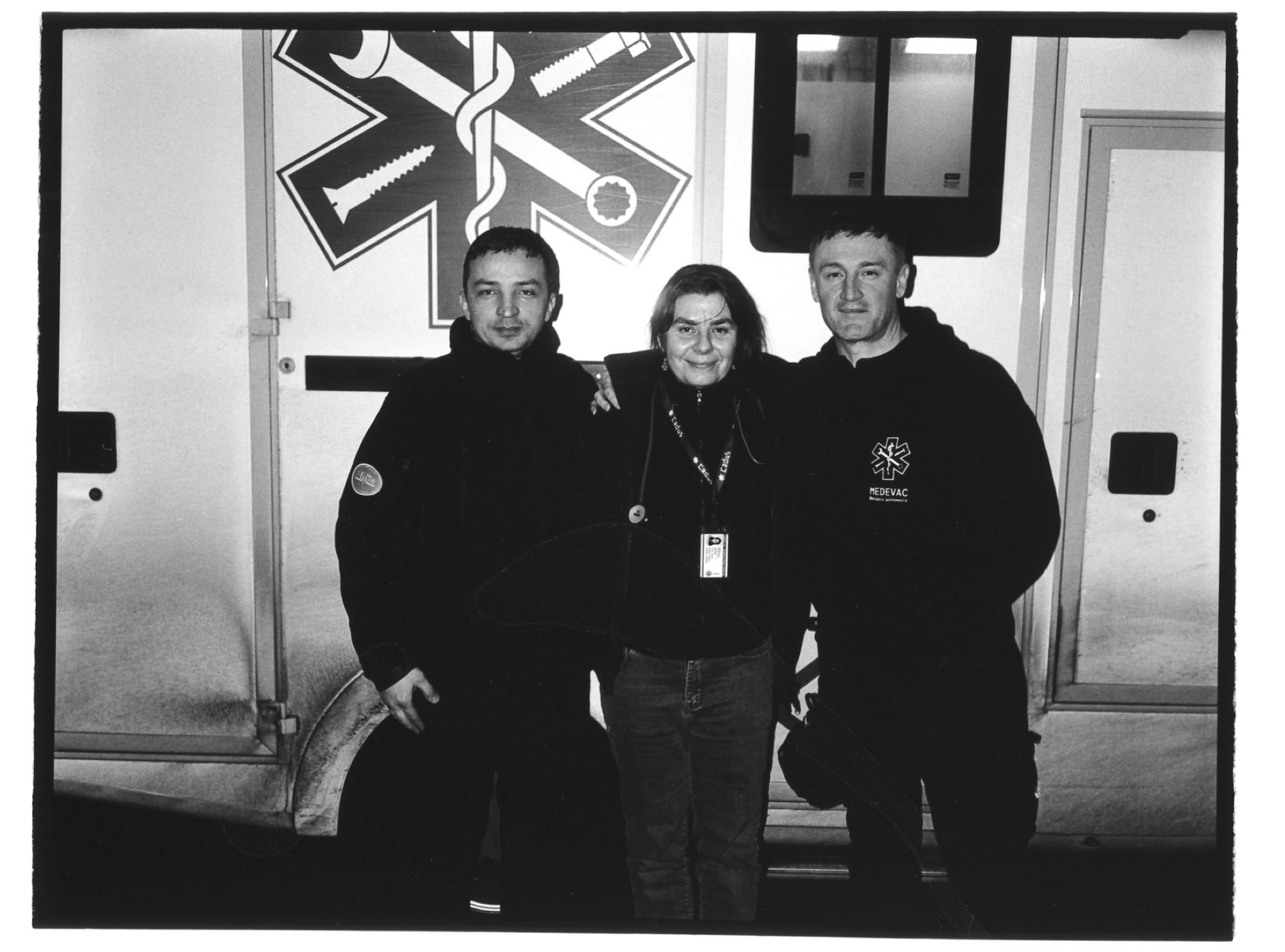
The snow that falls overnight hides all of it. The world feels wrapped in cotton wool, as if attempting to muffle and conceal everything cruel. It looks beautiful outside. We wake and prepare breakfast. Eggs, bread, and filter coffee. No call yet. I pack my things in case we drive to Kyiv. CADUS works on a call basis. Whenever a critical patient needs transport because the current facility lacks the tools or capacity for treatment, CADUS is called. Still sitting at the breakfast table when a call comes in from nearby. A transport to Kyiv. The patient has been hit by shrapnel in the stomach. Internal injuries. Now everything moves quickly. Set to leave in forty minutes, I pack my gear. Vadym brings the ambulance around. It is normally bright yellow, but the snow has turned it white. The “Wash me” someone painted on the back is still clearly visible. We leave. It is a fifteen-minute drive. Armored vehicles pass us, fitted with drone jammers and cages. For the first time, the meaning of drone warfare becomes visible. DIY steel constructions make pickups and tanks look like hedgehogs or vehicles from Mad Max. Welded cages with sharp spikes prevent drones from penetrating the vehicles. Is this the future of war? It feels surreal to watch them roll through a snow covered city while civilians carry supermarket bags and continue with their day.
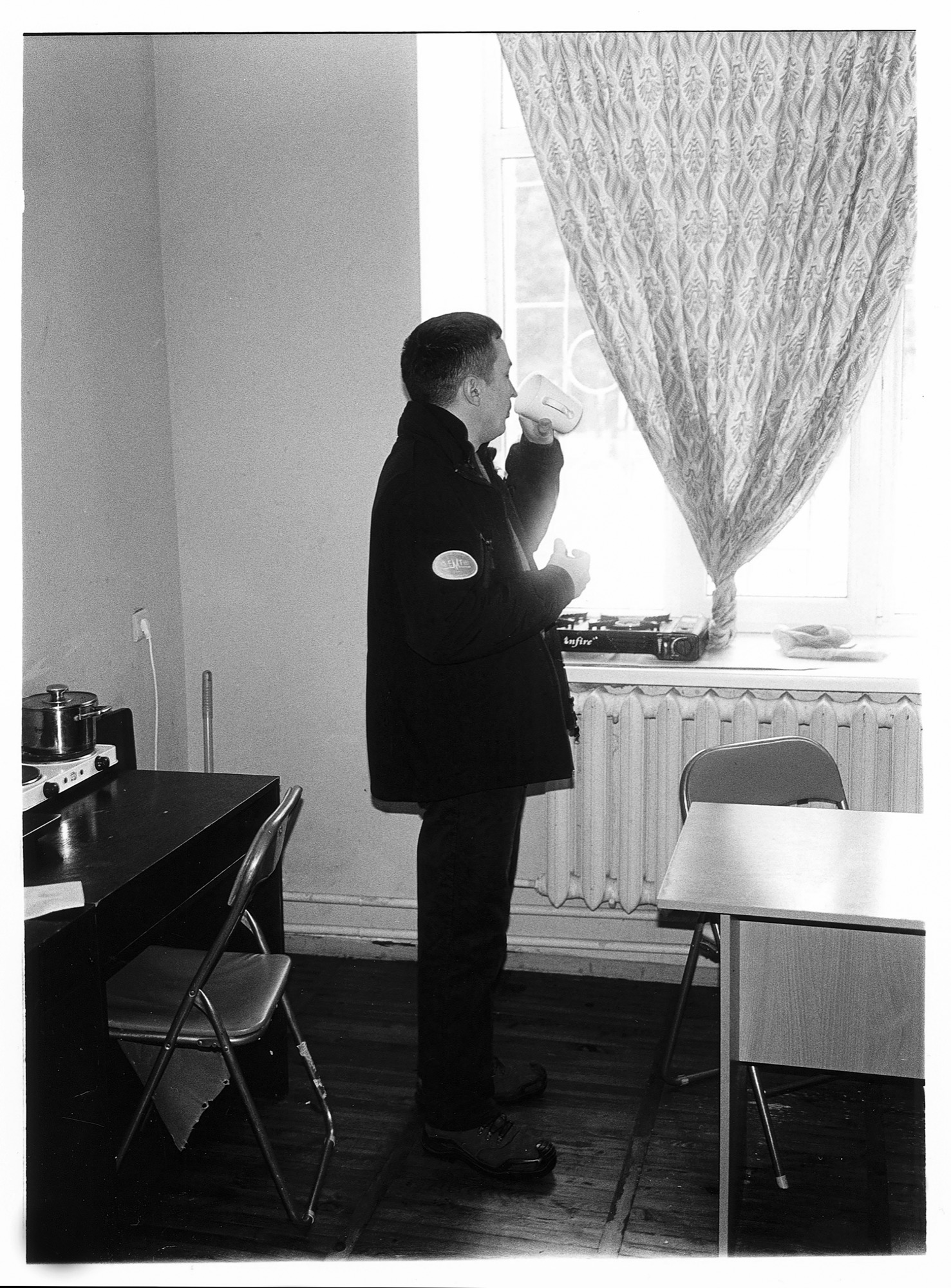
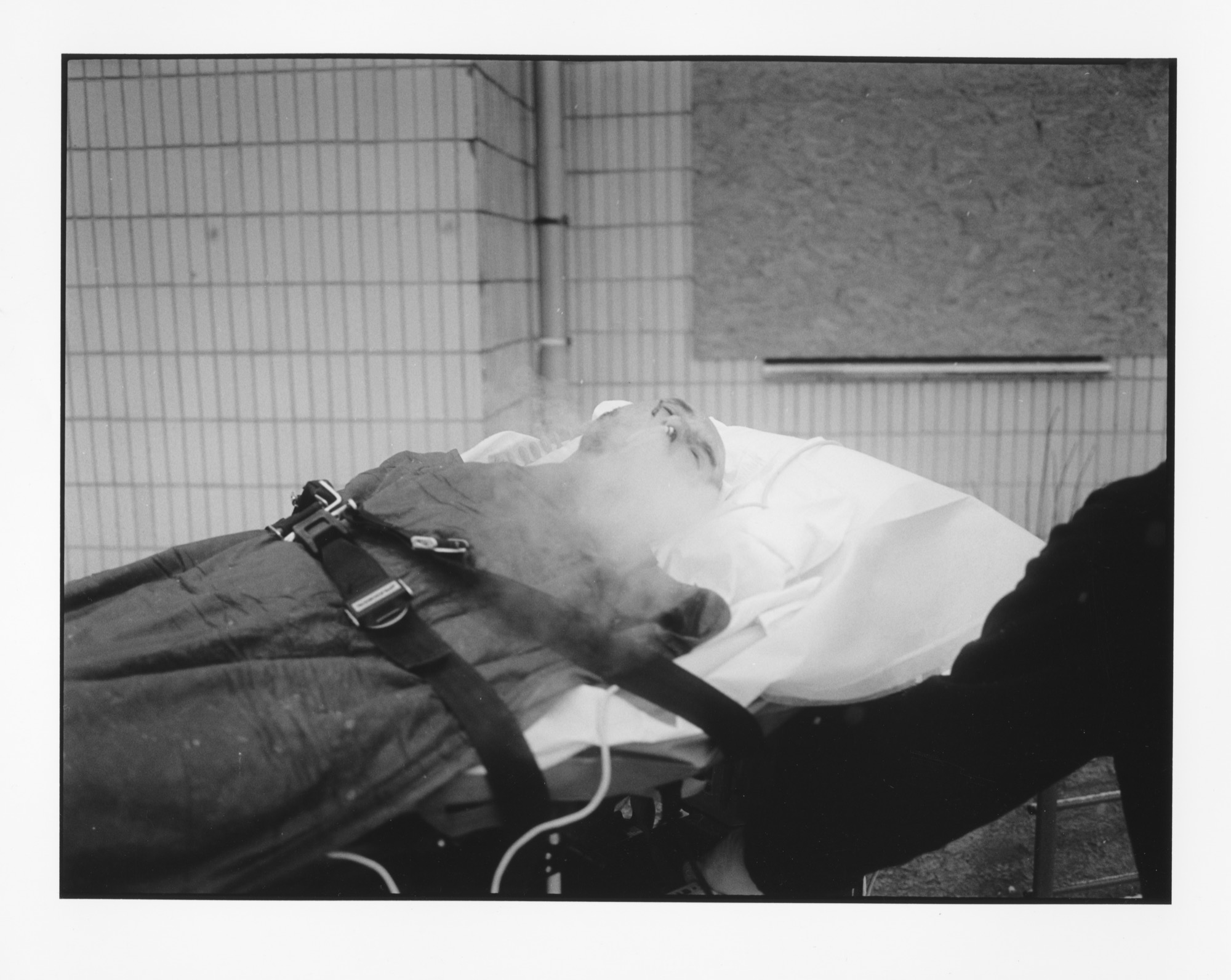
Artillery. No one flinches, the way no one reacts to a passing car while walking on the sidewalk. We hear it again as we step out in front of the hospital. The gurney is set up quickly and we head for the elevator. Nurses greet us and guide us to the patient. His injuries are internal, so every movement must be careful. The team shifts into proficiency within seconds. Ivan checks the anesthesia. Stomach injuries are complicated, especially with shrapnel that can move and cause internal bleeding. A poster catches my eye—hospital staff in peacetime, pinned against faded floral wallpaper. I wonder what each of them has seen since. How abruptly their lives have changed. We prepare to leave. I am asked to roll a cigarette for the patient. We move through the military corridor. Outside, I light it and tuck it into the corner of his mouth. We stand there for a moment. Artillery again in the distance. The patient smokes before the long journey to Kyiv. A brief moment of calm.
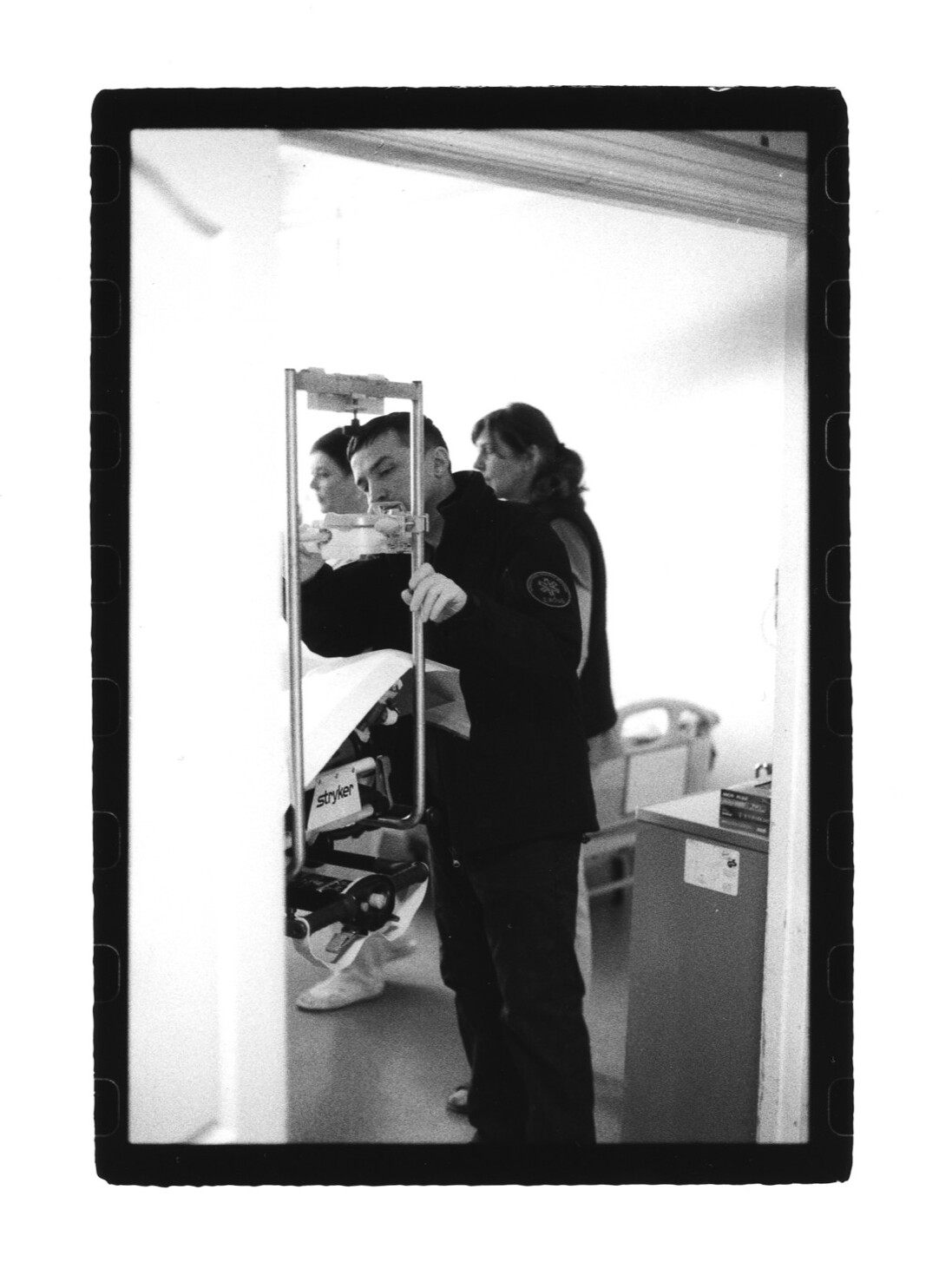
War, I realize, involves a great deal of waiting. We set off. Six hours to Kyiv. I sit in the front beside Vadym. Villages pass by. T-34 tank monuments— reminders of the Battle of Kursk—stand along the road as we cross military checkpoints. History feels close here, woven into the landscape. We arrive safely in Kyiv. The deployment ends here. The Team is heading up to Sumy again. Hurrying because it’s getting night and the checkpoints can be complicated later in the day. It’s a six hours drive back to Sumy making it a 12 hour round trip. Days can be long but the team is smiling when I say good bye. While sitting on the metro back to my apartment in Kyiv, I think about the word resistance. In a world increasingly governed by the rule of the strong, we must remember the power of unity and voice. Resistance comes in all shapes and sizes. Every small action, as insignificant as it may seem, makes a difference. That is something I have learned, seen, and witnessed in Ukraine.
It becomes even clearer how important it is not only to tell Ukrainians how strong they are, but to truly support them. It can mean educating yourself about the topic, talking about it, trying to understand, donating, or finding other ways to contribute.”
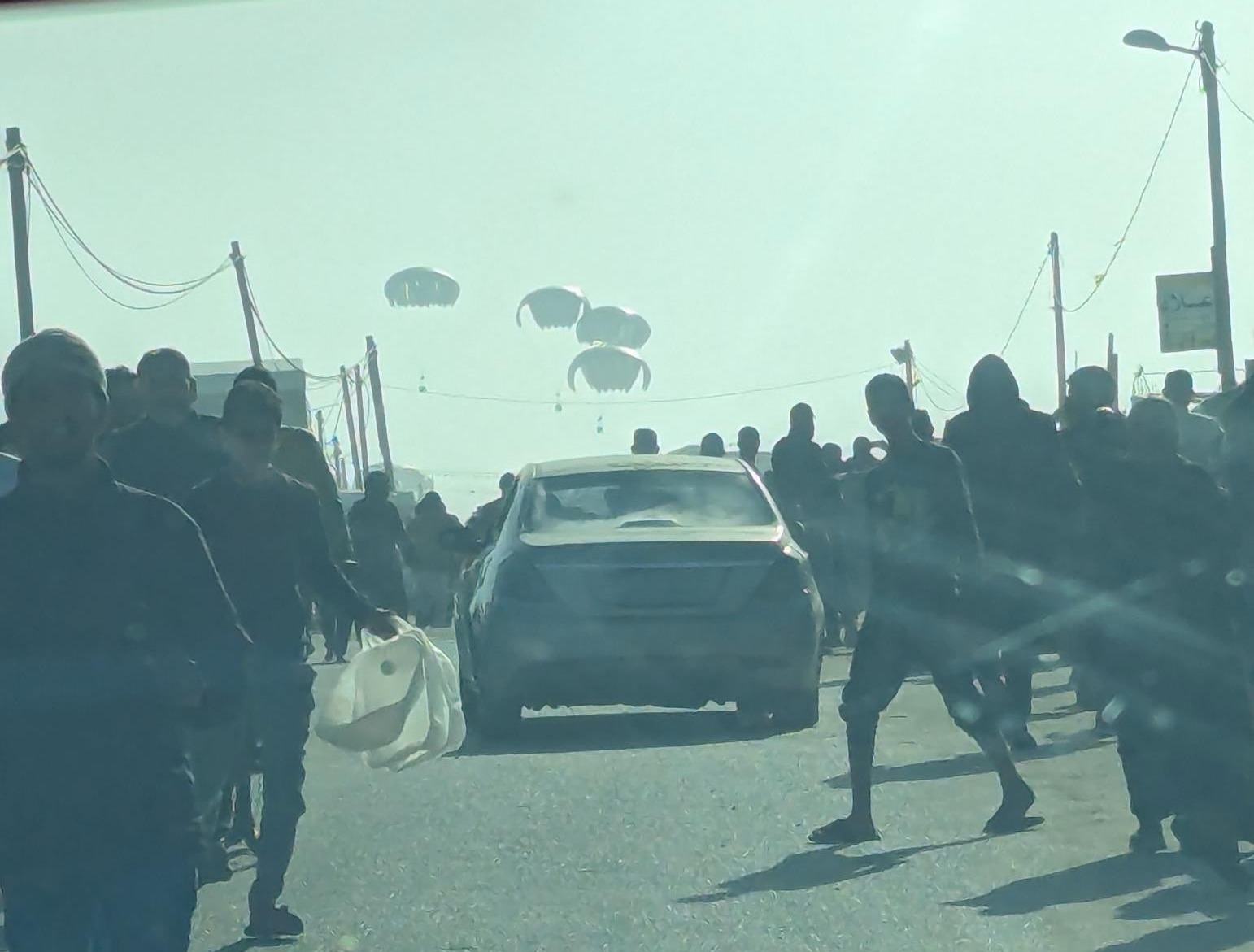
“It takes more than symbolic politics”
Statement from CADUS on the German government's planned airlift to Gaza. The German government's announcement that it will set up an airlift to Gaza together with Jordan is above all one thing: symbolic politics.

Congress Recap: Soliprepping – facing crises with solidarity
Last Saturday (14th June 2025), around 200 people gathered in the mathematics building at TU Berlin to explore new ways of solidarity-based crisis prevention.
Cholera mission in Angola – Part 2
In response to a request for assistance from the Angolan government due to an ongoing cholera outbreak, CADUS deployed a technical assistance team as part of a joint EMT mission with Arbeiter-Samariter-Bund, Malteser International and the Robert Koch Institute.