Ramadan Kareem
Published on 26. March 2025
from CADUS-PR
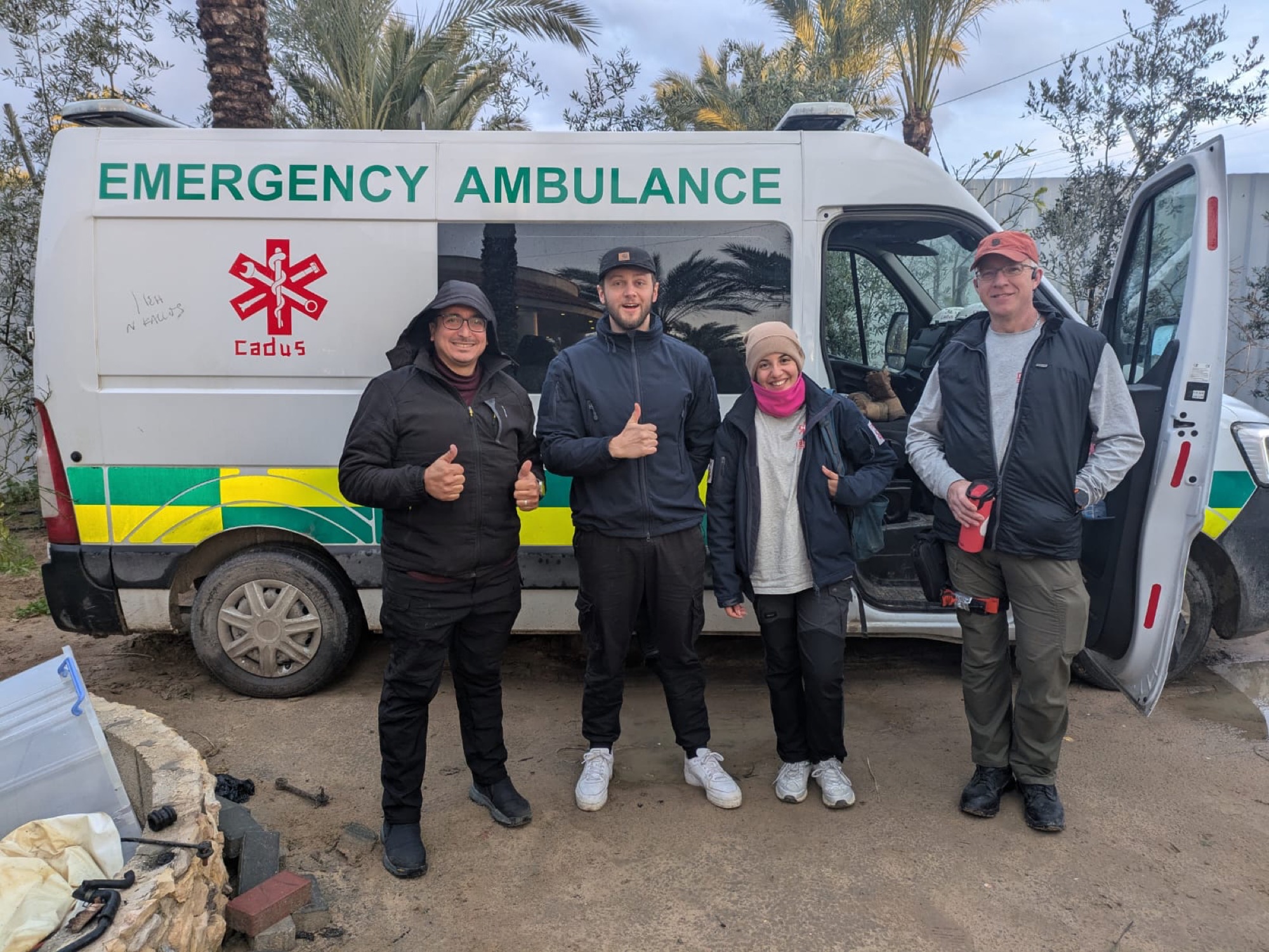
One of our team members in Gaza shares an insight into a special morning between war, ceasefire and religious holidays.
There’s a drone overhead, circling, scribbling a message in the sky, beyond sight. It’s been there much of the night, a backdrop to much of our sleep here, a permanent reminder of war that also remains, for now, out of sight, but never far.
We woke this morning at 6 o’clock, crawling out of cold beds into colder still air, the sun looking similarly sleepy and wishing for more time. The team was contacted late last night, requested to assist in evacuating a young patient, out of Gaza, to Egypt, and a quiet evening of rest and reflection was suddenly transformed into a haze of activity, preparations and checklists, all against a backdrop of flickering lights as the power cut in and out.
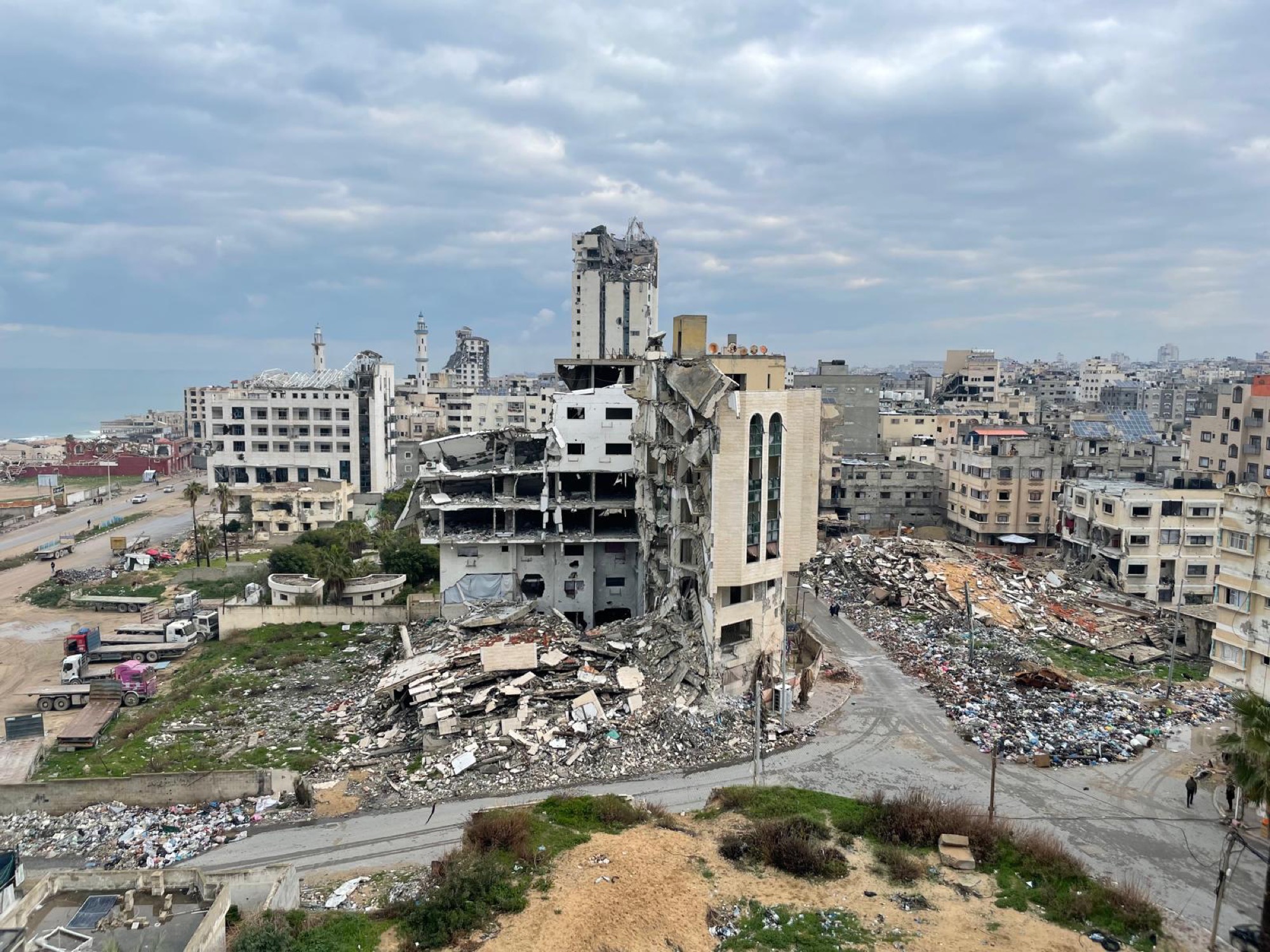
Between all the rubble is still life in Gaza. People with hopes and dreams worth to be supported in building a hopefully peaceful future. Photo: CADUS
Preparations
This morning, the team is ready though, motivated, focused, sharpened by the cool morning air, for this is what they were brought in to do. Any thought of comfort and ease is placed aside, next to the responsibility of the task. We cannot reverse the tides of war, but we can do the job we are brought in to do, in this case evacuate one young, sick patient, who needs long term care that Gaza may not be able to offer.
Since the ceasefire began in the middle of January, life here has slowly begun to return in all its forms, cars and donkeys moving people through the Strip, markets resuming their frenzied pace, people returning to families once more. The medevacs we conduct, almost on a daily basis, are both a sign of hope, each patient evacuated to Egypt carries with them family members, all of whom can perhaps find greater peace and hope for the future; but they are also a sign that no one trusts the fragile peace to last and now is the time to get out of the most vulnerable.
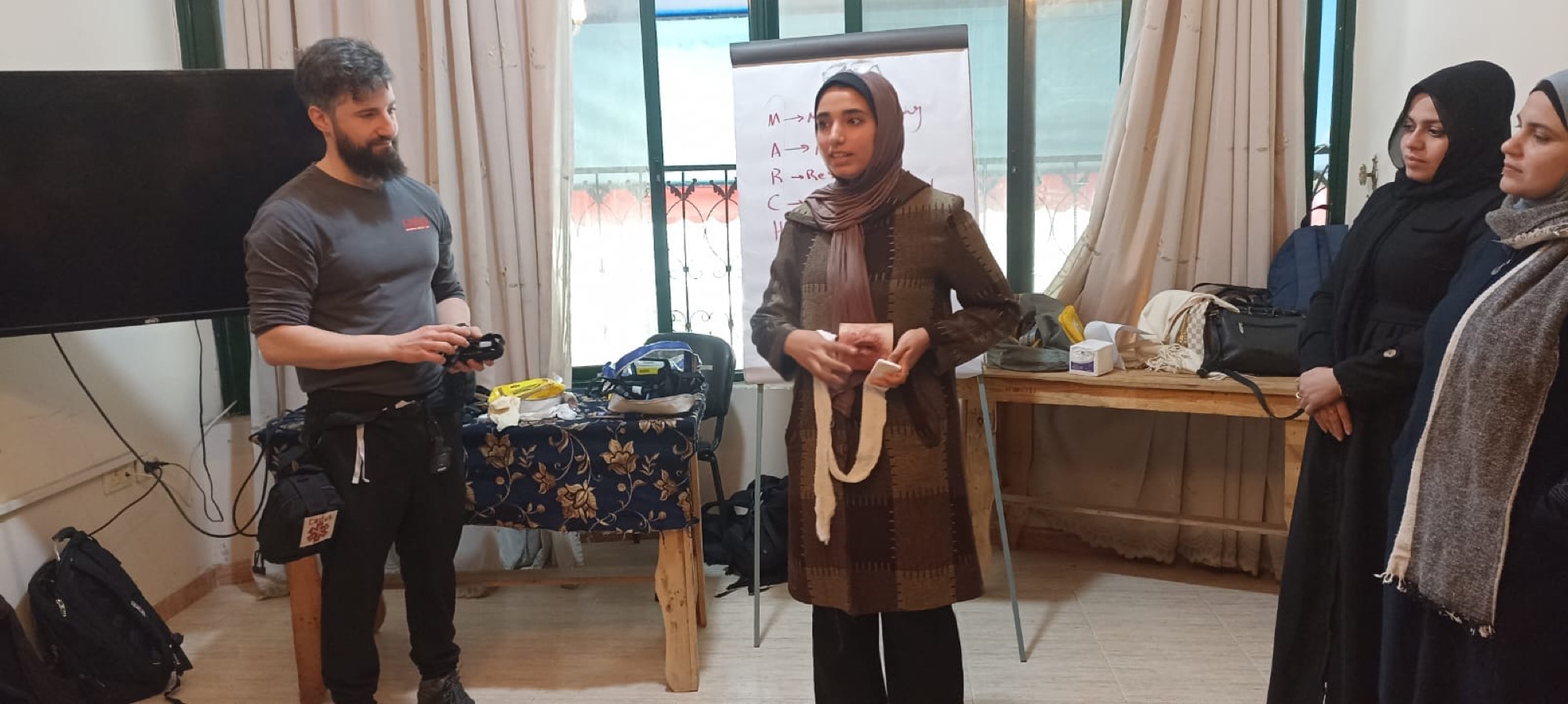
With medical trainings we build capacities for self-help within the community and beyond our time of engagement in Gaza. Photo: CADUS
Solidarity has many forms
Our ambulance joins a convoy of Palestinian Red Crescent Society ambulances, carrying in total 34 patients and 55 companions. We have the elevated status of ICU ambulance, reflecting the more advanced equipment we carry. But we also know that as well as the specialist function we deliver, our presence as an international NGO matters to our Palestinian colleagues. We bring that reminder and message that they are not forgotten, that we remain here to bring humanitarian aid, perhaps to act unconsciously as upholders of international law. The international community are the world’s eyes in this conflict and we watch closely, as the convoy of ambulances passes military units, whose guns remain trained on us throughout.
Today is the first day of Ramadan, a time for deep reflection, renewed devotion to Allah for the believers, and acts of compassion and generosity toward humanity. It feels real and more important than ever for our Muslim colleagues, friends and every person in Gaza. But for us at CADUS, for our international NGO colleagues, for all observers of this war, we can find both peace in our hearts to reflect but also renewed energy and focus to help those around us.
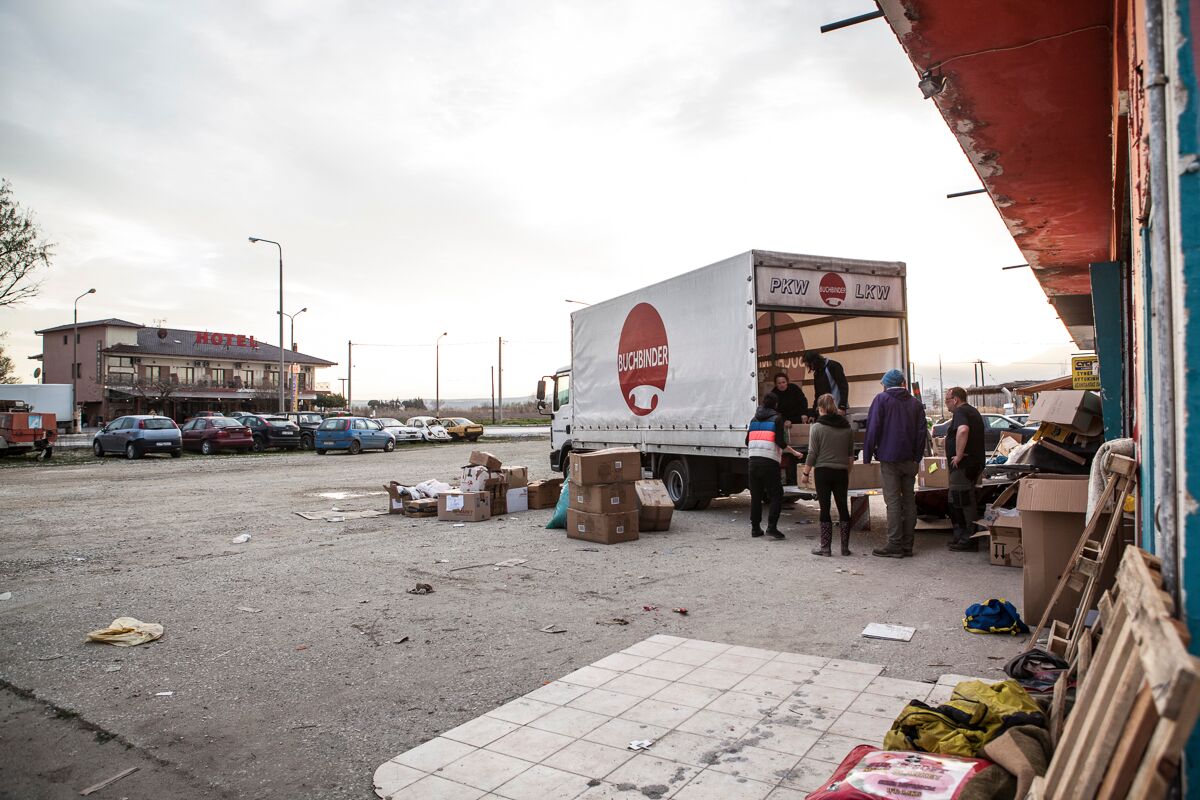
Hilfstransport aus Berlin in Idomeni angekommen
Hilfstransport in Idomeni angekommen – wenig Hoffnung für Refugees an der griechisch-mazedonischen Grenze
Fünf Jahre Revolution in Syrien
Die fragile Waffenruhe in weiten Teilen Syriens hat etwas eindrucksvoll in den Fokus gerückt, was uns allen schon fast entfallen war: Der blutige Bürgerkrieg ist kein Selbstzweck! Er ist die Folge einer Revolution, die nach wie vor von Menschen auf der Straße gelebt und verteidigt wird.
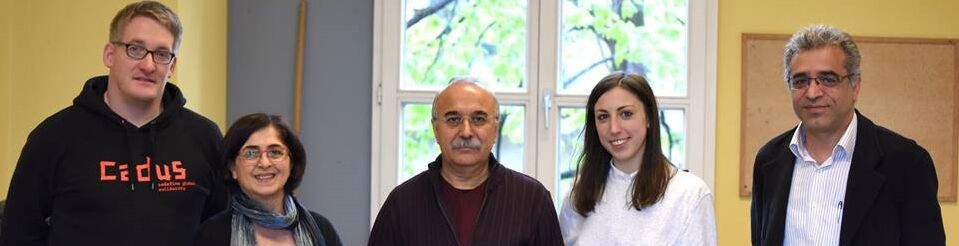
Vollgas für die NRW-Kampagne zum mobilen Krankenhaus!
Von Anfang an hat CADUS im Rahmen ihrer Projekte immer mit der Unterstützung von engagierten Partner*innen rechnen können. NAV-DEM Köln und Heyva Sor a Kurdistanê gehören seit Kurzem dazu.