Ceuta and the root causes of migration that the EU has ignored
Published on 6. August 2026
from Simon Strutwolf

In the “Off the Record” commentary series, we provide our staff and volunteers with a space to share their experiences from missions and their work with CADUS, as well as their thoughts on humanitarian aid, politics, and society. The views expressed do not necessarily reflect the opinions of the CADUS organization.
Why the current debate gets bogged down in discussions of fences and loss of control, rather than identifying colonial history and global inequality as the actual causes of migration.
According to the Spanish central government, within a few days, approximately 50,000 to 60,000 people attempted to reach the Spanish exclave of Ceuta in North Africa. It is currently estimated that 70 people lost their lives in the attempt. They drowned or died in the crush at the fence—the highest death toll since the deadly border operation carried out by Spanish police in Tarajal in 2014.And once again, the same reflex kicks in:
The media is talking about a “wave of refugees heading to Spain,” which suggests that tens of thousands have reached the European mainland. This is a calculated claim—insidious reporting designed to fuel right-wing narratives.
Ceuta is not part of mainland Europe, but a North African enclave designated as EU territory—though explicitly not part of the Schengen Area—and yet it is enough to cause an outcry in Brussels, Berlin, and across Europe to cause an outcry and trigger the same old demands: stricter immigration policies, more isolation, and more border security. The symptoms are being addressed. The root causes remain unaddressed.
Ceuta, one of many cities with a similar history, a remnant of European expansion on African soil, a Spanish administrative unit in the middle of Morocco that exists only because a colonial power appropriated territory centuries ago and has not reversed that appropriation to this day. This is not a historical detail that can be dismissed as a footnote, but rather the continuation of a structural injustice: a European state holds onto a territory on another continent, against the declared will of the neighboring country and the population that has lived there since time immemorial.
The fact that discussions about “loss of control” and “the influx of illegal groups of people” are now taking place in this very place is the height of cynicism. It is a pattern familiar from other regions of the world, where colonial border demarcations continue to fuel wars and conflicts to this day.
The reasons for fleeing are varied and cannot be generalized, but they usually have one thing in common: they stem from a person’s urge to escape the circumstances in which they must survive, and from the hope for a better life.
This is precisely where the debate—which is now heating up again—completely misses the point. People are talking about fences, the military, deportations, and a loss of control. They aren’t talking about why people are willing to risk their lives in the first place and leave their country of birth in the hope of a better life.
Migration flows have a cause; they do not arise without reason. They can be addressed, and they are closer to Europe than the public debate would like to admit.
They stem from colonial border demarcations that Europe still refuses to acknowledge as part of its own history.
They are in the midst of a climate crisis that is exacerbating droughts and water shortages in parts of West and North Africa—a crisis caused primarily by the very countries that are now calling the loudest for tighter border controls.
They lie in arms exports and geopolitical proxy conflicts from which European countries profit, while at the same time turning away people fleeing precisely these wars.
They are part of EU migration agreements with authoritarian regimes, under which border control is outsourced and paid for with money and diplomatic turning a blind eye, thereby turning migration itself into a political weapon.
They are part of a global economic system that prioritizes profit and growth above all else.
A system that is supposed to serve people, but ignores them as soon as they stand in the way of that purpose. And precisely because of this, it becomes an insatiable machine that is solely focused on its own survival. It is a system that divides people into classes, granting or denying them rights depending on which side of the fence they were born on.
None of this is even touched upon by more fences, more military presence, or stricter asylum laws. At most, it is merely shifted—to the next fence, the next coast, the next border, where people are turned away or lose their lives. In the Western world, this is little more than a headline, a tool for right-wing demagoguery that leads to the spinning of new narratives designed to fuel even more hatred and isolation—yet another reason to avoid addressing the root causes and instead criminalize people fleeing their homes.
That’s exactly why: Fuck Charity, Love Solidarity.
Charity is the gesture that addresses symptoms without ever questioning the causes. Rescuing, helping, donating—necessary, yes, as long as the system continues to function as it does, and as long as no one is willing to do anything to change the fundamental problems. But charity stops right there: it does what is necessary and then moves on to business as usual, without asking why the rescue was necessary in the first place. Charity is a way of buying one’s way out of responsibility without having to confront it—a gesture that ends precisely where it becomes uncomfortable—where it would require questioning one’s own position or changing one’s own behavior. It is an act of grace, and grace can only be granted by those in a privileged position: those who have enough to give without having to risk or give up anything themselves.
Solidarity means asking precisely this question, remaining uncomfortable, and seeking responsibility where it lies: in colonial rule, which continues to this day; in geopolitical and economic exploitation; and in policies that prefer to build walls rather than address the root causes of displacement. Unlike charity, solidarity takes place on equal footing; it seeks to solve problems together, not for someone or over their heads. It is radical in the original sense of the word: it tackles a problem at its root rather than merely managing it. As long as people fleeing their homes are criminalized instead of addressing the root causes of their flight, nothing will change in this ongoing debate or in society’s approach to it—it will simply shift to wherever the next fence stands.

“Every day at work is different. Unpredictable.”
Our Deputy Infield Operations Coordinator Moto Michikata has travelled several times to Ukraine since 2022. She shares her personal story as a person with neurodivergency, working and living in a war torn country and under constant threat of drones and missiles.

Moria: The Beacon That No One Sees Anymore
Six years ago, the infamous Moria refugee camp on Lesbos burned down. Since then, promises to improve the situation of refugees in the EU turned on its head.
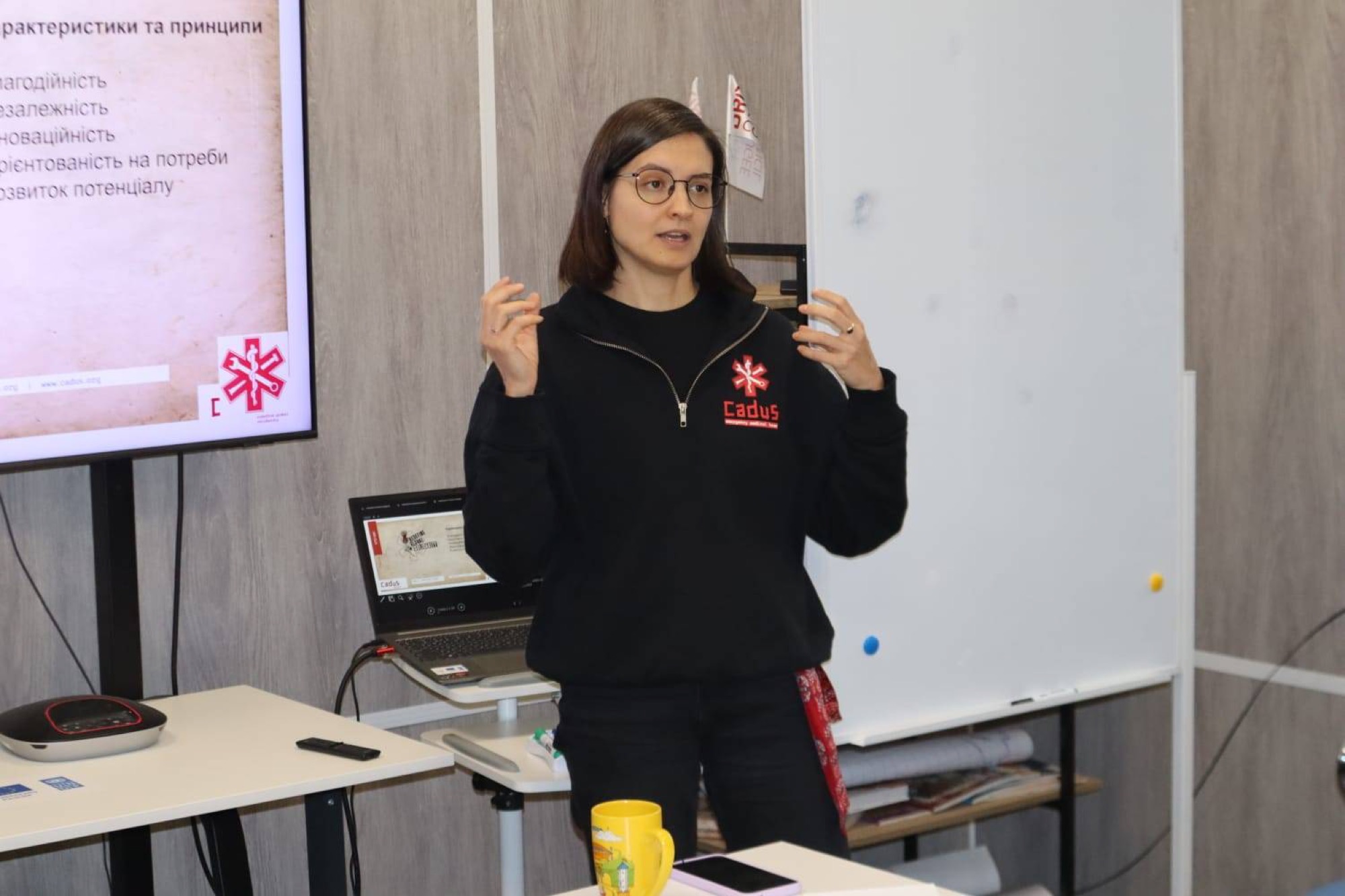
Meet our Team: Nastia, Infield Operations Coordinator in Ukraine
In this interview, we sat down with our Infield Operations Coordinator, Anastasia Vorobyova, in Ukraine to learn more about her background, her day-to-day life on the ground, and what drives her to continue her essential work. She shares her journey from running a language school to joining the humanitarian response, the realities of living in a conflict zone, and the incredible resilience of the people around her.