Meet our Team: Skye Steffens
Published on 12. October 2026
from Parastu Sherafatian
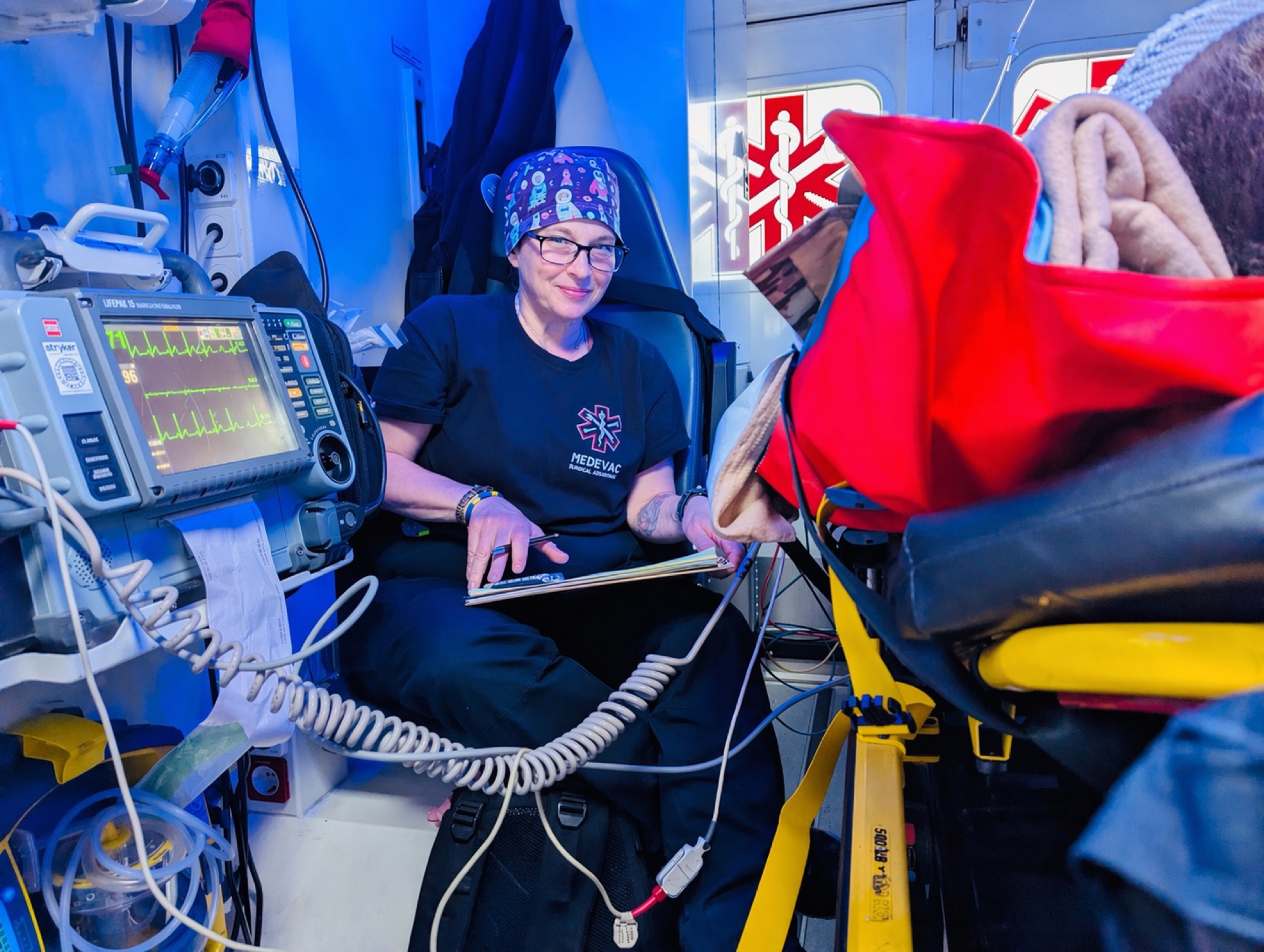
In our series, we introduce the people behind our responses. Today, we are speaking with Skye Steffens, a colleague from our medical evacuation team in Ukraine. She works as an experienced intensive care nurse under extreme conditions near the frontline. In the interview, she talks about her journey into humanitarian response, the unbreakable bonds with her team, and why looking away is not an option for her.
How do you introduce yourself and your role to someone who isn’t familiar with your work?
I explain that I’m a critical care transport medic from forward positions on the eastern front of the Ukrainian war. We treat all kinds of patients, whether they need a lot of medical intervention or not. Sometimes that means keeping a patient alive during a transport with ventilators and medication.
What did your life look like before you decided to step into humanitarian emergency response?
I was an ICU nurse in Cambridge University Hospital Addenbrooke’s. I have my background in trauma ICU. And before that, I was a wildland firefighter EMT in the United States. So I’m used to a wild range of environments.
Can you recall the moment that made you think, “I need to be in Ukraine”?
I very much believe that the only way that we’re going to actually make a difference in this world is if we actually do something. When the war started in Ukraine, I wanted to help, but I didn’t know what to do or where to even turn to. I just knew I needed to do something. For me personally, there was another layer of my heritage being Ukrainian so it felt particularly close to me.
Can you share a moment from a recent incident that made you think “This is why I’m here”?
Last December, I was in Sloviansk when the base there was hit by a missile strike. My team mates and I were sitting in the shelter and one after the other the missile hit. Then the airborne. Then the drone. And when the strikes were over, the three of us literally didn’t say any words to each other. We just checked each other if we were harmed, made eye contact and we went right back into continuing our work. This small moment of understanding each other without words and just doing what we needed to do was how I knew I was where I’m supposed to be.
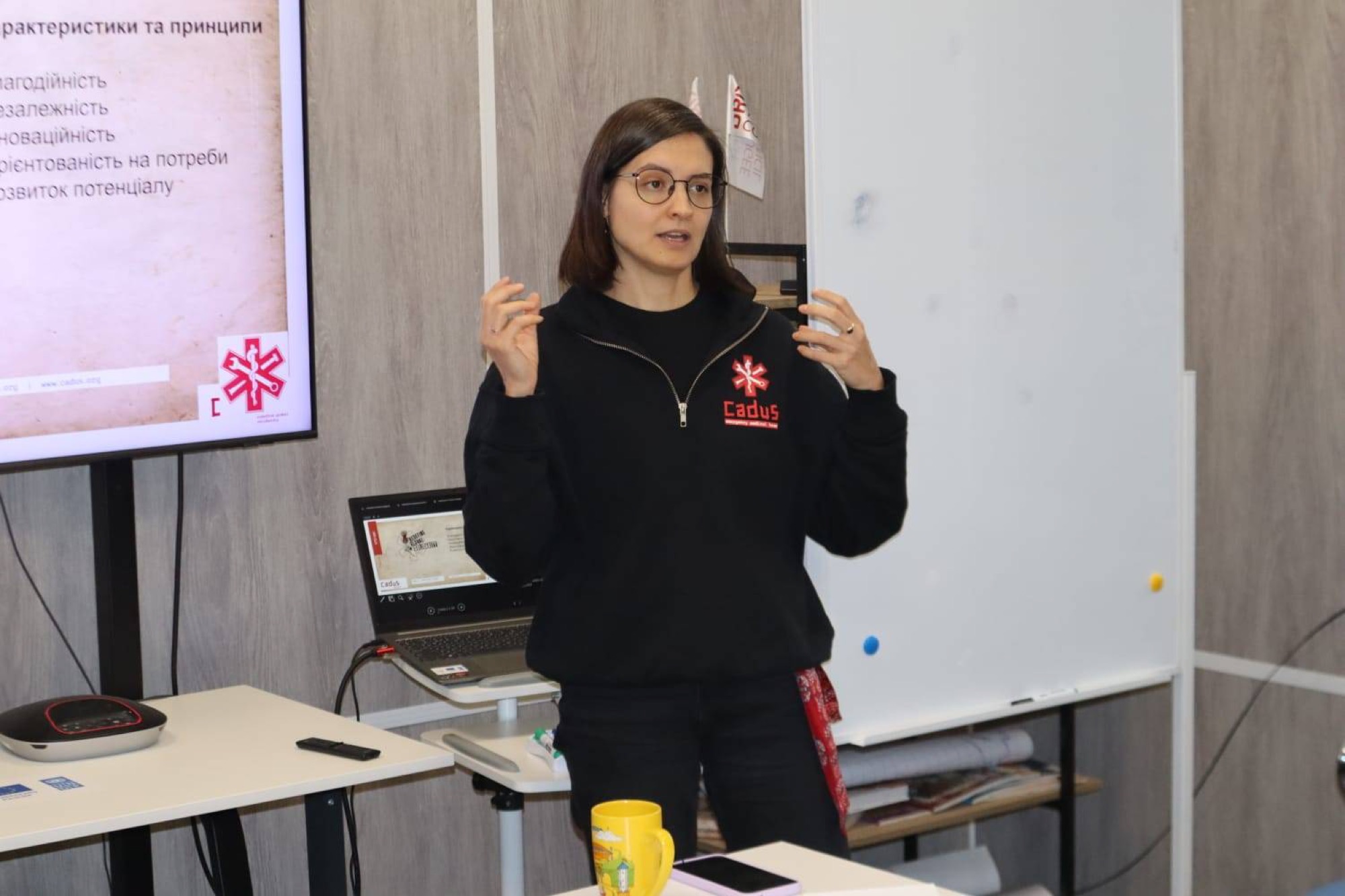
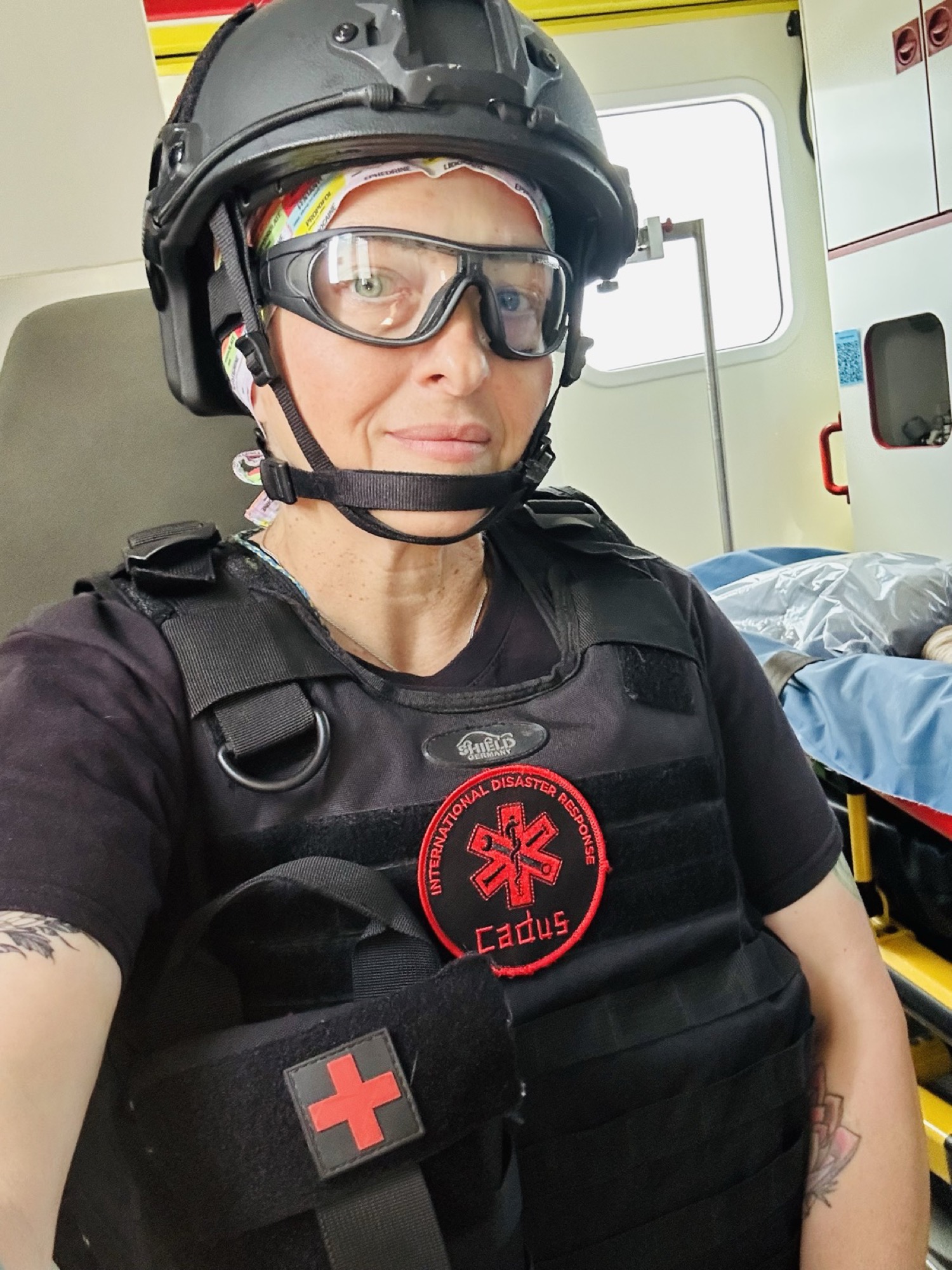 Even though working in Ukraine isn’t without danger, Skye wants to help the people of Ukraine. Photo: CADUS
When you talk to your family or friends back home, what is the hardest part of your work to explain to them?
Putting yourself in danger to help other people. It is. I get asked all the time, how I can be where a war is taking place. And my response to that is “How can I not?”. This is an entire country that needs help with human beings that genuinely just want to live their lives. My thought is “How can I not try to make the world a little bit better?”.
What has this work taught you about yourself that you didn’t know before joining CADUS?
That I am as strong as I am. This work has taught me so much. It has taught me that it’s okay to have emotions and to express them. I have learned to express if I’m stressed or scared. You learn a lot about yourself and others in situations like these.
With all the destruction and hardship you see every day, is there something that gives you hope?
What gives me hope is my team, the people here in Ukraine, everyone I work with here. The joy that people here have in little moments despite the war gives me hope, too. Hope to me is also sheltering all night because of constant drone strikes and then seeing life continue the next morning. It’s these moments that really prove that to me that life carries on and it has to.
“Every day at work is different. Unpredictable.”
Our Deputy Infield Operations Coordinator Moto Michikata has travelled several times to Ukraine since 2022. She shares her personal story as a person with neurodivergency, working and living in a war torn country and under constant threat of drones and missiles.

Moria: The Beacon That No One Sees Anymore
Six years ago, the infamous Moria refugee camp on Lesbos burned down. Since then, promises to improve the situation of refugees in the EU turned on its head.
Meet our Team: Nastia, Infield Operations Coordinator in Ukraine
In this interview, we sat down with our Infield Operations Coordinator, Anastasia Vorobyova, in Ukraine to learn more about her background, her day-to-day life on the ground, and what drives her to continue her essential work. She shares her journey from running a language school to joining the humanitarian response, the realities of living in a conflict zone, and the incredible resilience of the people around her.