Moria: The Beacon That No One Sees Anymore
Published on 11. September 2026
from Jonas Grünwald

Six years ago, the infamous Moria refugee camp on Lesbos burned down. Since then, promises to improve the situation of refugees in the EU turned on its head.
For many years, Moria was characterized by massive overcrowding, under-resourcing, inadequate medical care, unsustainable sanitary conditions, and neglect by the responsible authorities – all under the watchful eye of the EU.
Time and again, violence was directed at the residents when they protested the unsustainable conditions. A CADUS team was already on site in 2016 and reported on the state-sanctioned neglect of the camp. In 2018, we declined to carry out a mission in light of the untenable situation for refugees on Lesbos.
New Camp, Same Problems
On the night of September 8–9, 2021, Moria burned to the ground. The residents were relocated to the newly built Kara Tepe 2 camp. Despite obvious signs of being overwhelmed and serious issues in the camp, the Greek authorities initially refused to accept international assistance. Even an offer of assistance that we sent after careful consideration went unanswered for a long time. Finally, at the end of 2021, together with the Arbeiter-Samariter-Bund (ASB), we were able to take over medical care at Kara Tepe 2 as part of a two-week EMT mission.
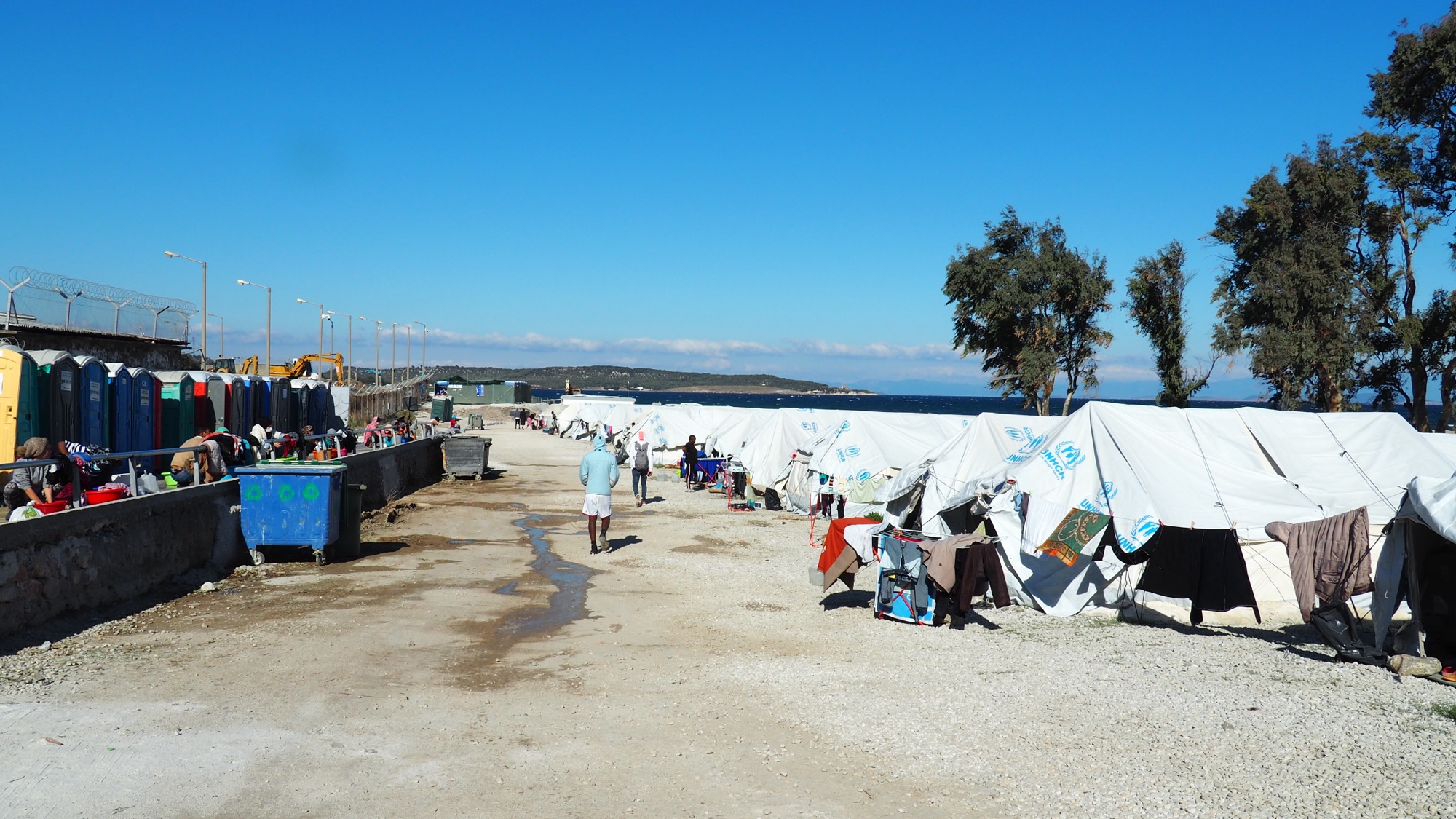 The new “Kara Tepe 2” camp was intended to resolve the problems that existed at “Moria,” but it, too, quickly reached its limits. Photo: CADUS
Prevent another Moria?
The situation surrounding Moria and Kara Tepe 2 caused a stir at the time, and politicians promised to ensure humane conditions in the future and to prevent a “Moria 2.” But even six years later, European policymakers –as seen, for example, in the situation in Ceuta, Spain – do not seem interested in treating refugees more humanely. The promise to prevent a “Moria 2” is nevertheless to be fulfilled. Instead of housing refugees in camps on the European mainland, efforts have been underway for years to intercept people before they reach Europe. A well-known example is the support provided to the Libyan coast guard, which is regularly criticized for its human rights violations. Or through agreements with partner states that intercept people beforehand and detain them in local camps, far from public scrutiny and the oversight of European citizens and authorities.
Haven’t learned a thing
Six years ago, the burning Moria was, in the truest sense of the word, a beacon of failed, inhumane immigration policies. Today, with regard to those events and the people fleeing, the motto of European policy is once again: “Out of sight, out of mind.”
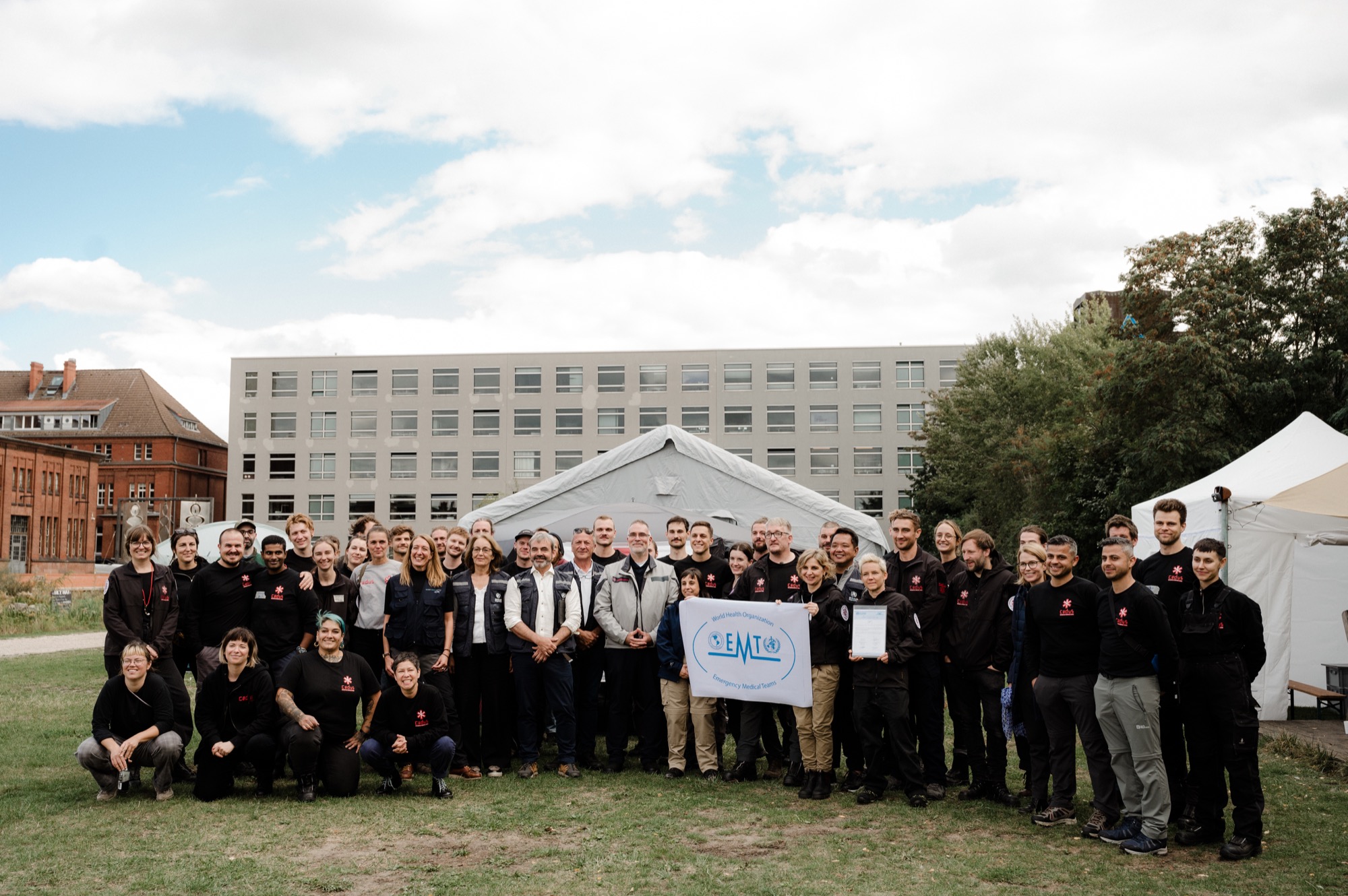
Classification successful: “‘Cause I’m E.M.T.!”*
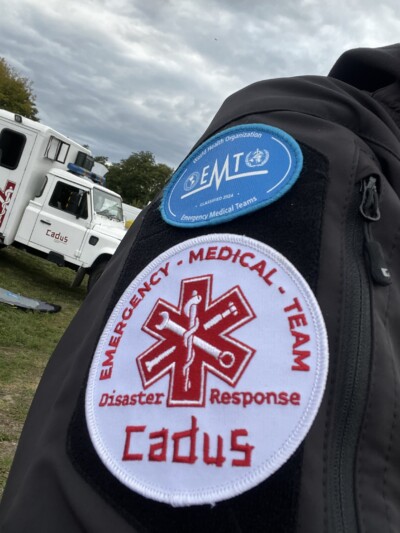
Just over a month ago, we were successfully classified as an Emergency Medical Team (EMT) by the World Health Organization (WHO). But what is actually behind this and what does it mean for us to be an EMT? Cheers, whistles
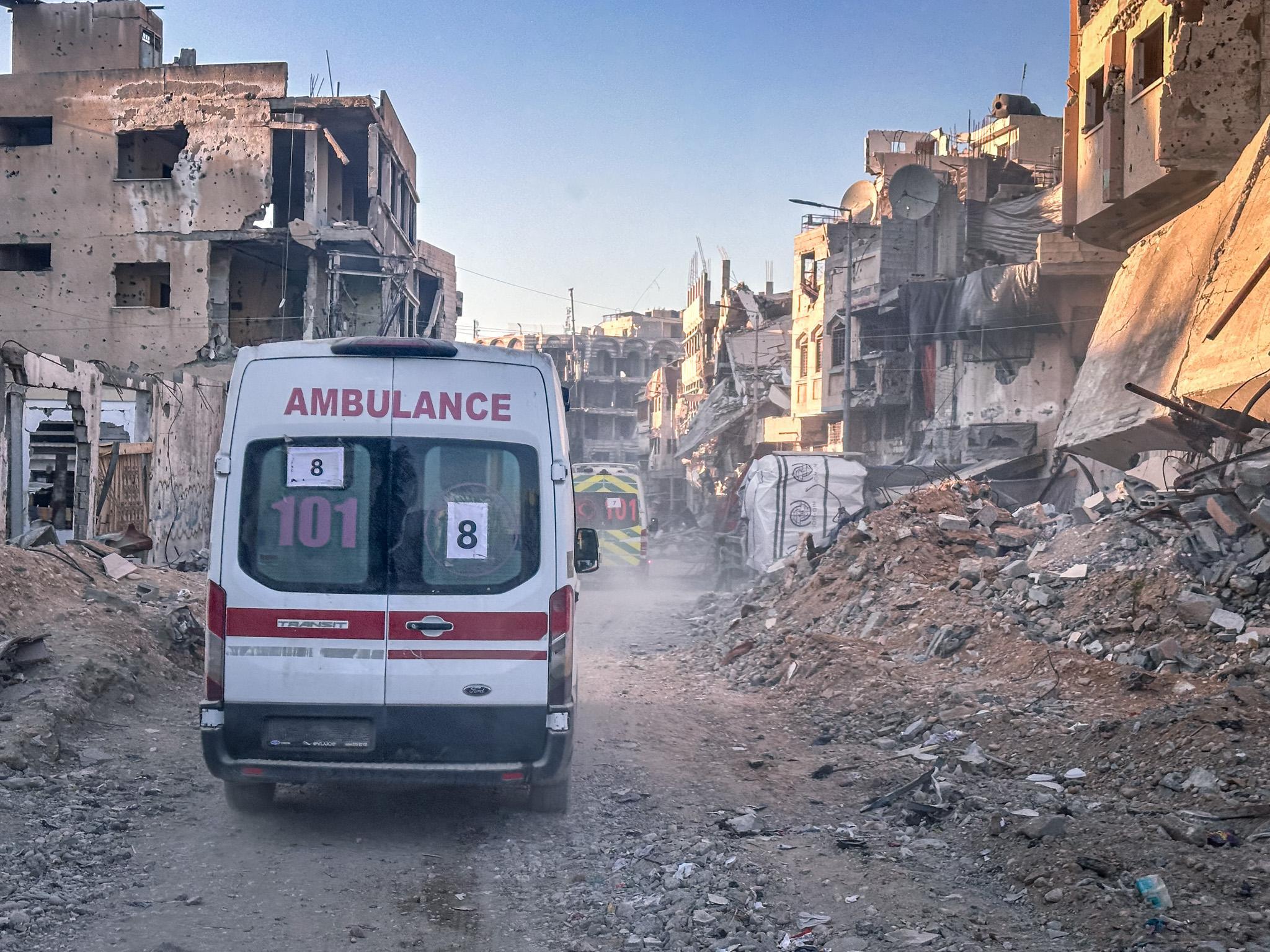
Encounter at IDF checkpoint on MEDEVAC 12/10/2024
Crossing Israeli Defense Forces (IDF) checkpoints in Gaza is a frequent occurrence. However, despite its regularity, it is far from routine. Each crossing involves significant risks, particularly in zones designated as active combat areas. Movements through these checkpoints require meticulous
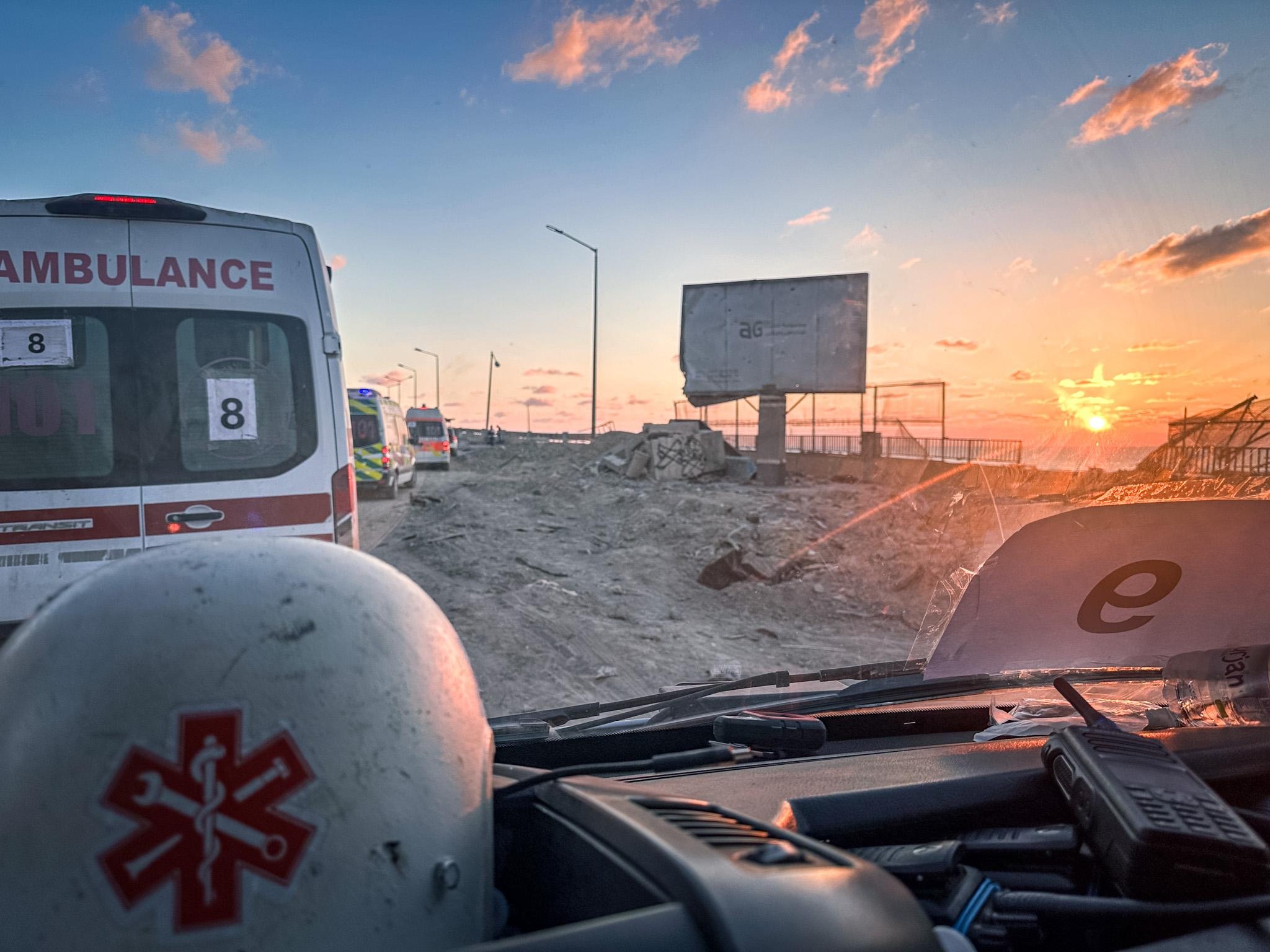
Statement on the Evacuation of Kamal Adwan Hospital in Northern Gaza
On October 7, Israel called for the estimated 175,000 residents of northern Gaza to evacuate to the south and began a ground offensive that placed the entire area under siege. On the same day, Kamal Adwan Hospital was given a