MedEvac 3/11/24 Statement on events
Published on 29. November 2024
from Jonas Gruenwald
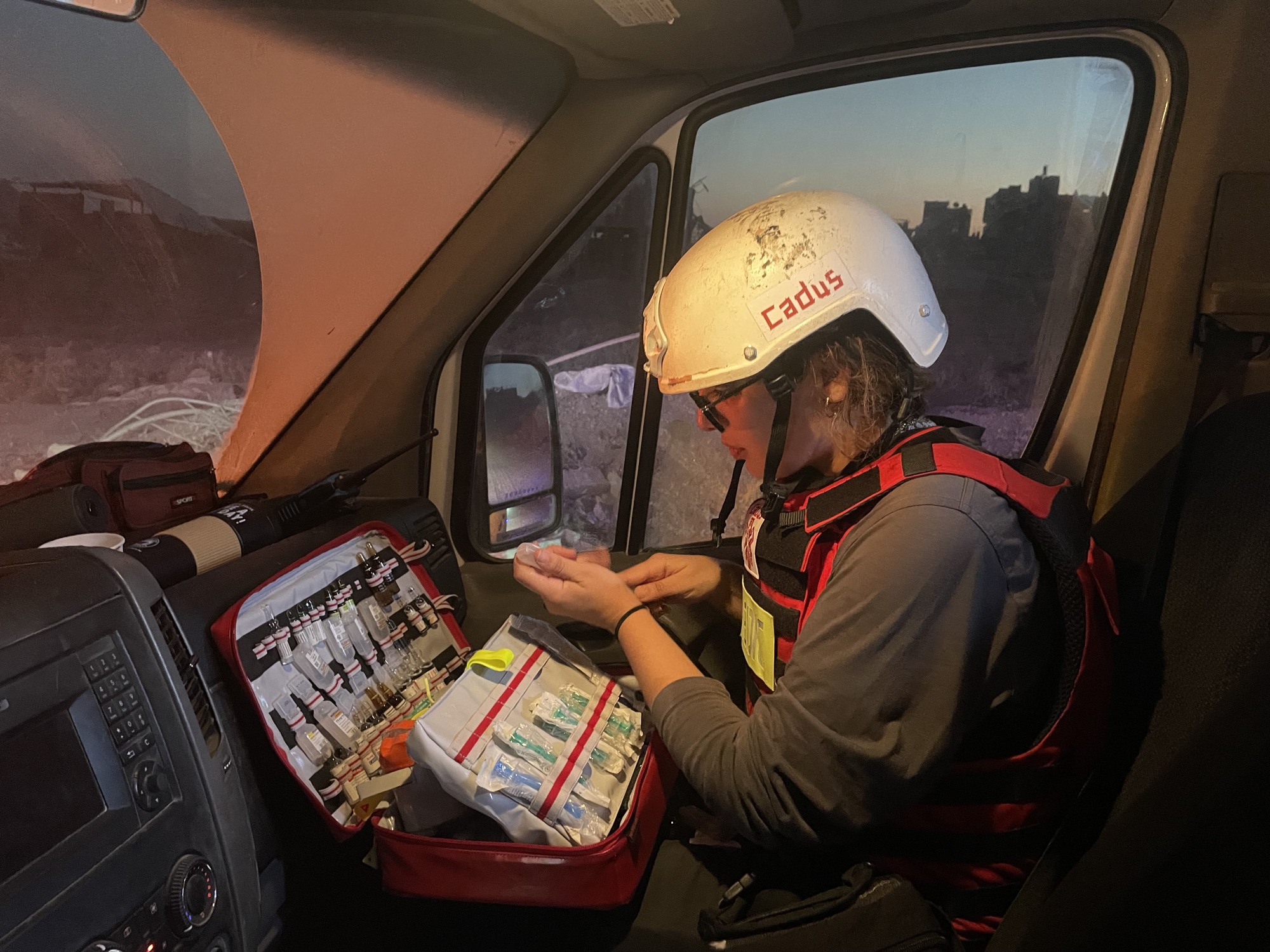
Report of our MedEvac team in northern Gaza about the events on the 3rd of November.
On 3/11/2024, CADUS collaborated with the WHO (World Health Organization) and PRCS (Palestine Red Crescent Society) to evacuate critical patients from the besieged Kamal Adwan Hospital in northern Gaza, to Al-Shifa Hospital in Gaza City.
The conditions facing our team, the patients under their care, and the medical staff and civilians remaining in the north, were horrifying, inhumane, and almost beyond description.
Despite the convoy departing early in the morning, due to hours of delays at multiple IDF (Israeli Defence Forces) checkpoints, we only arrived at Kamal Adwan just before nightfall. Conditions had deteriorated even since our previous visit.
Although our movements are closely coordinated with the IDF, our teams were at high risk of direct fire as the explosions were as close as 50 m from them. Video: CADUS
Due to fuel shortages, the hospital only had power for a few hours per day. Hundreds of people remained inside the hospital, many seriously injured, with reportedly as few as three doctors to care for them, including no surgeons. The hospital had been significantly damaged by airstrikes. Supplies were so limited that many patients go without dressing changes or analgesia. Basic hygiene infrastructure, such as running water for toilets, is no longer functional, so that the dirt and smell were not compatible with healthcare. People crowded in corridors crying out for food, water and medical attention.
The remaining staff are doing their best in the most difficult conditions. Their job is made impossible by a lack of equipment, supplies and specialized medical teams, and continued IDF aggression, with strikes continuing to hit the hospital site, even while our convoy was there. Each ambulance was required to take around 10 patients, far beyond their safe capacity, and despite this many patients requiring transfer were left behind.
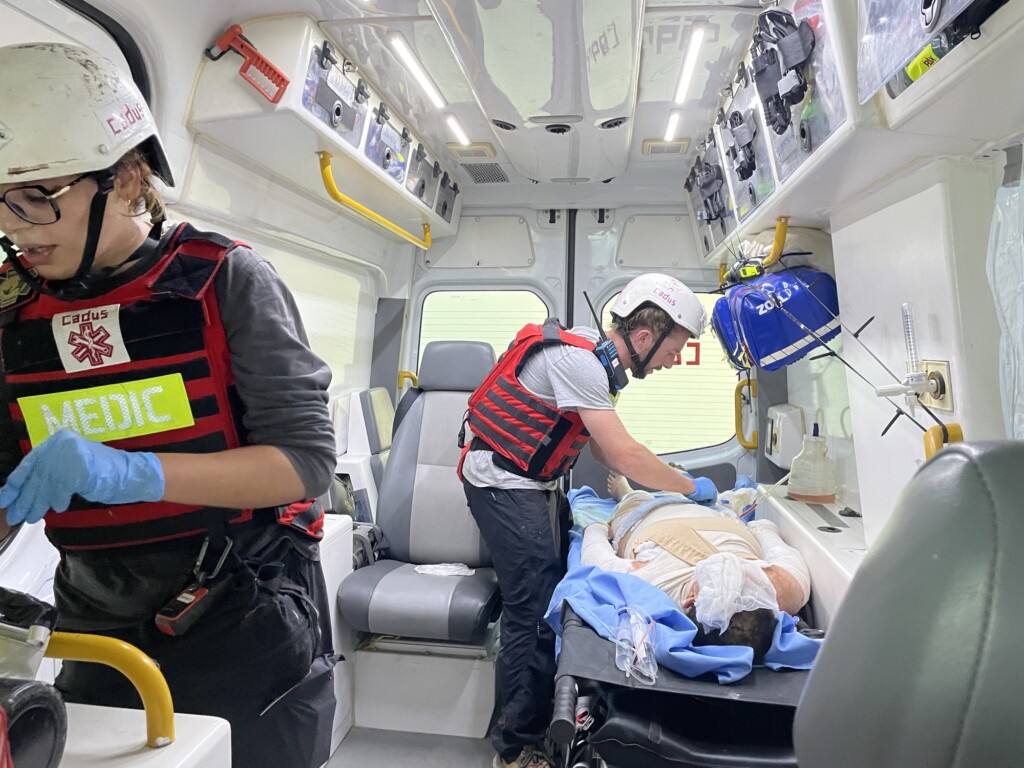
Despite the risks and the challenging circumstances our team provides the best medical care possible to our patients to keep them safe and secure. Foto: CADUS
One patient in our ambulance was a 38-year-old woman with 40% body surface area burns, a significant head injury, a displaced femoral fracture, and a penetrating chest injury. She had a chest drain in place and required supplemental oxygen, in addition to vasopressors to maintain her blood pressure. Her condition was extremely critical; even in optimal circumstances a transfer would be extremely risky.
Our team was faced with cratered roads, airstrikes hitting buildings less than 50 metres from the ambulance, and a journey which should have taken 30 minutes instead taking 5 hours due to checkpoints. By the time we arrived at Al-Shifa Hospital, our oxygen supply and blood pressure medication were almost finished. These delays caused an unacceptable level of risk to our patients and if such conditions persist, it is inevitable that patients will come to harm.
Burning buildings along the way of the convoy show the result of the shelling. Video: CADUS
Even with critical patients on board our ambulance, we were made to stop at an armed checkpoint. It was dark. One by one, each ambulance was made to turn around so that the back faced a line of soldiers and tanks, stationed in the rubble of bombed out buildings. A drone hovered between us and them. We were told to open the back doors. Blinding searchlights shone in at us and our patients. Every passenger who could walk, including the wounded, was required to get out of the ambulance and walk up to the soldiers with their ID. Children screamed as their mothers left the ambulance. For those who could not walk, the drone flew up to the ambulance and scanned their faces. One patient with an amputated leg was detained by the soldiers, despite his name having been cleared prior to departure. All the while we worried that the oxygen supply and medications keeping our patients alive were slowly running out.
Safe and humane healthcare is simply not possible in these conditions. The IDF is creating an environment where it is inevitable that civilian harm will occur despite the best efforts of healthcare and humanitarian workers; innocent people are suffering and dying every day. Political action is required to compel Israel to comply with laws of war and to allow aid to reach civilians.
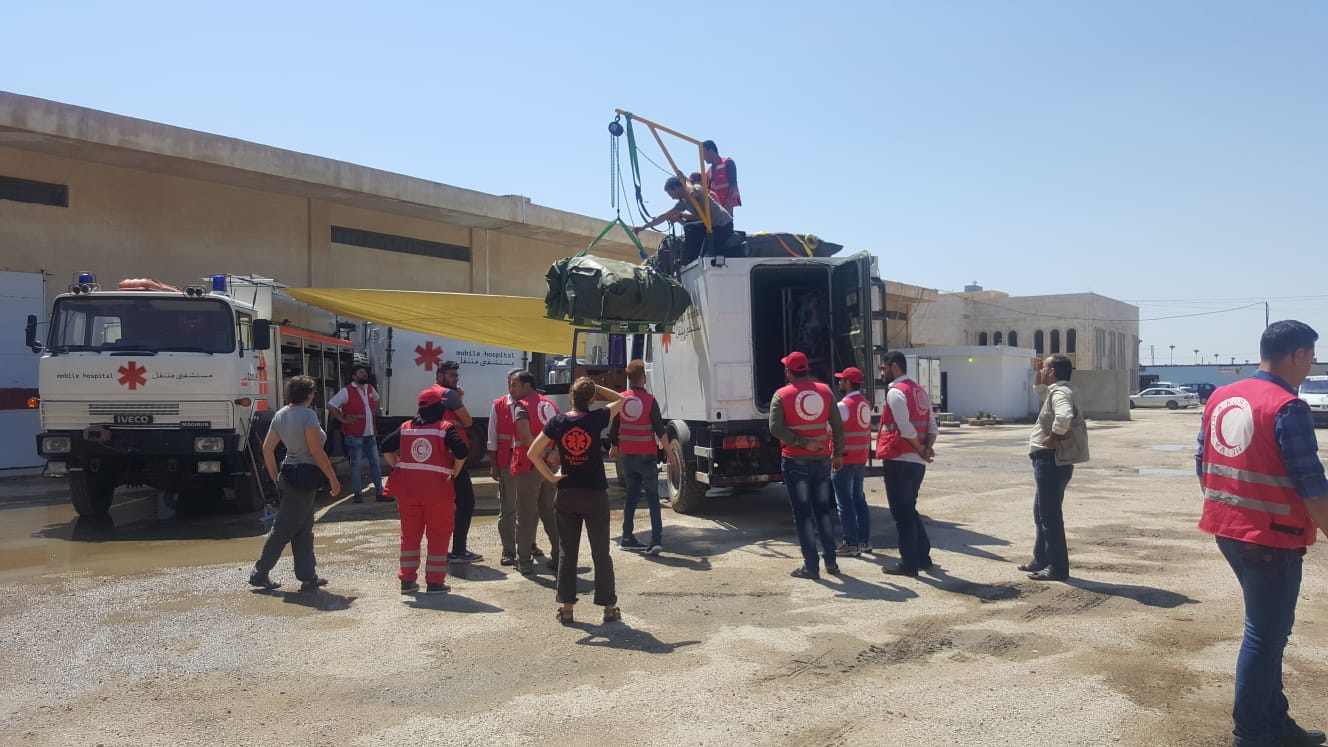
Mobile Hospital for Northeast Syria
Target country/region: Northeast Syria, (Iraq) Period: August 2015 - May 2018 CADUS built a mobile hospital on two four-wheel drive trucks for emergency medical care of the northeastern Syrian population. The mobile concept allows for reachingremote locations while escaping combat operations. Since 2018 our partner …
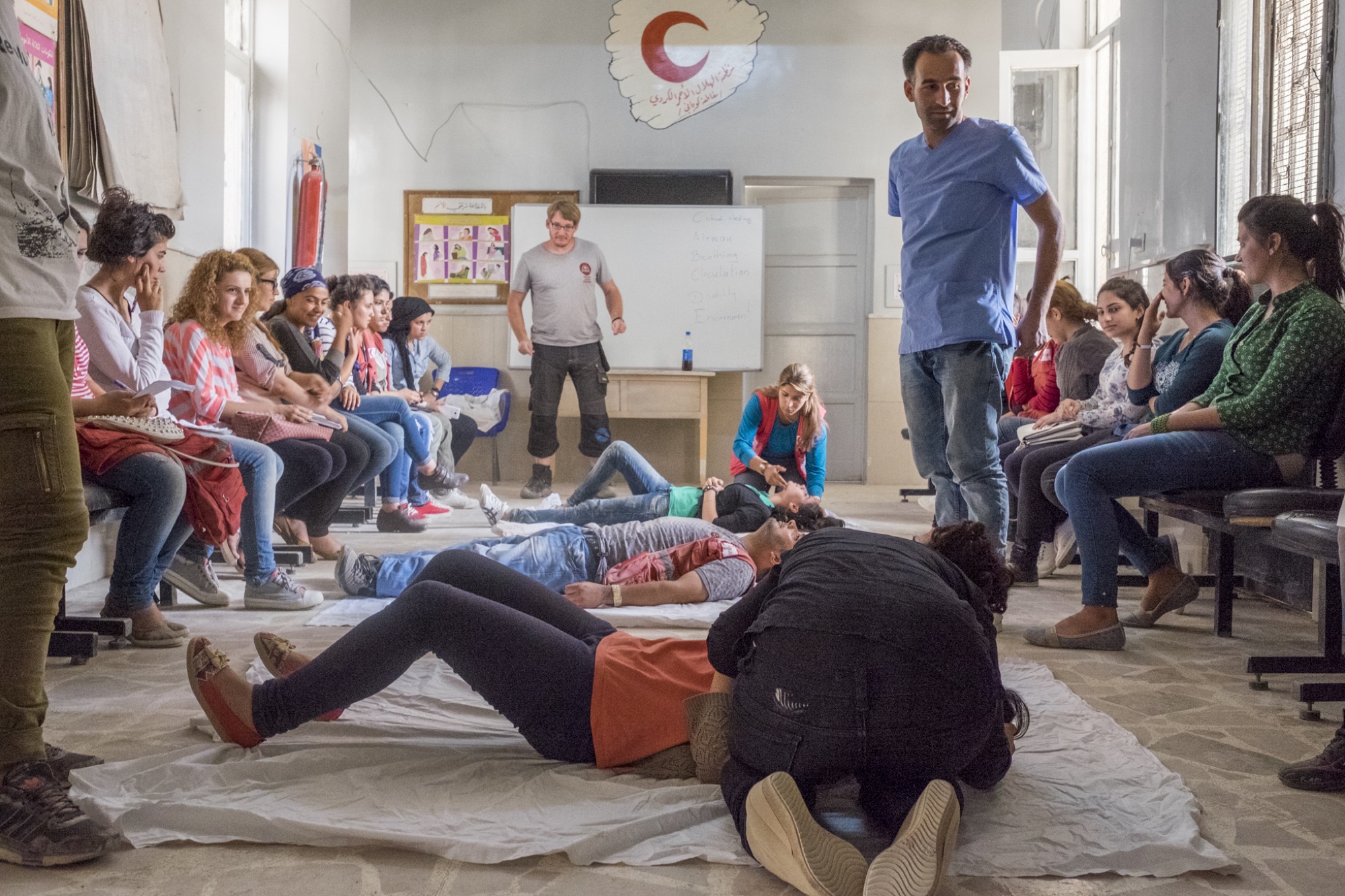
Paramedic Training In North East Syria
Target country/region: Northeast Syria Period: 2014-2015 The tense medical care situation in northeastern Syria was further strained by the ongoing fighting against the Islamic State. Medical facilities had been destroyed, and there was a shortage of medicines, materials, and specialized personnel. We wanted to counter …
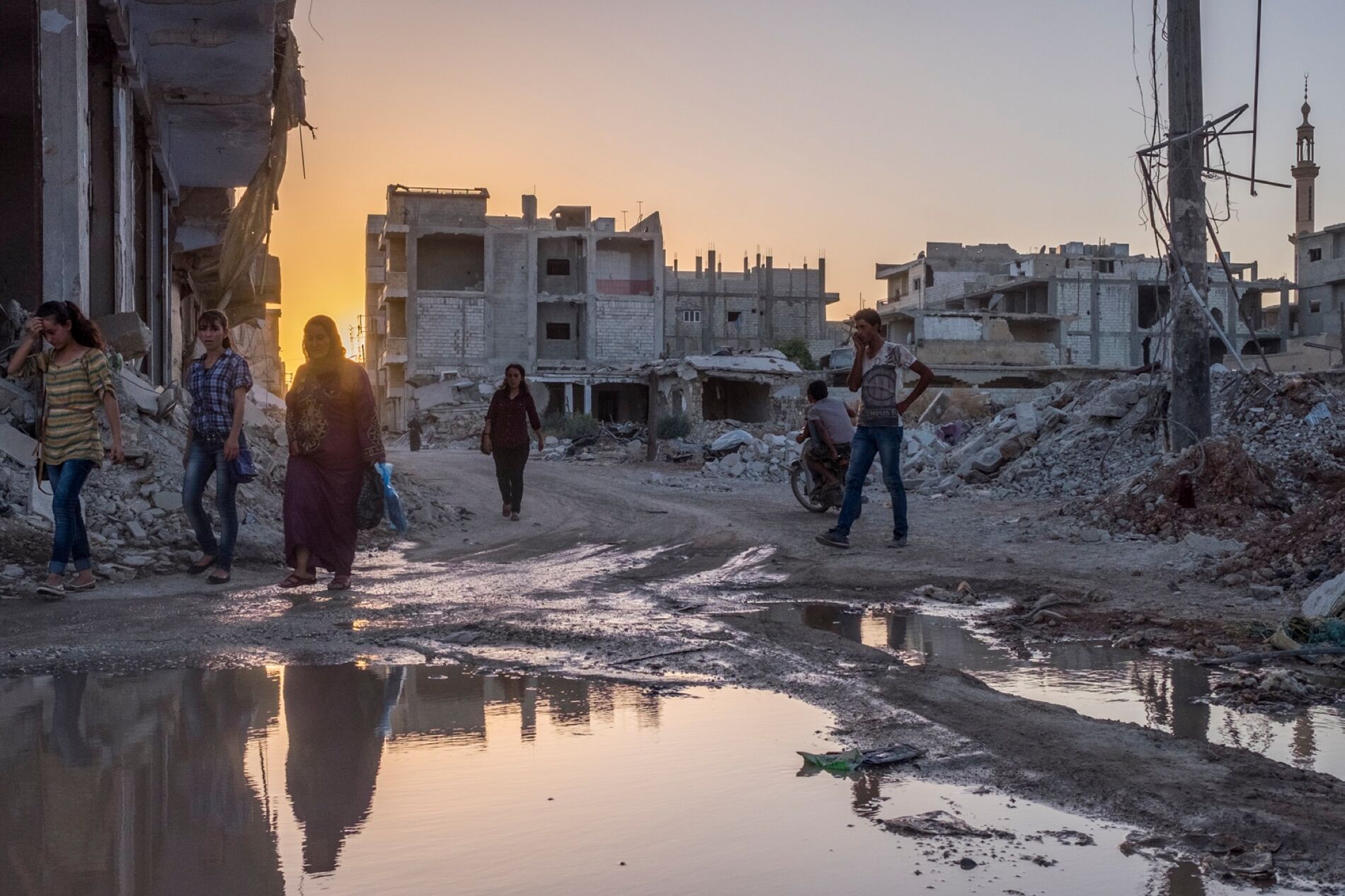
Idlib – an indicated catastrophe
Since the end of December, until a few weeks ago largely uncommented by European media, over a million people in Syria have been on the run again. Fleeing from Russian air strikes, heavy artillery strikes on densely populated areas, from the ground forces of the Syrian army. Idlib is approaching what can only be …