Faces of CADUS – Monitoring & Evaluation in Iraq
Published on 1. September 2021
from CADUS-PR
faces-of-cadus-monitoring-evalutaion-im-irak-kopie-feature-FACES20OF20CADUS2-eng-b9425741
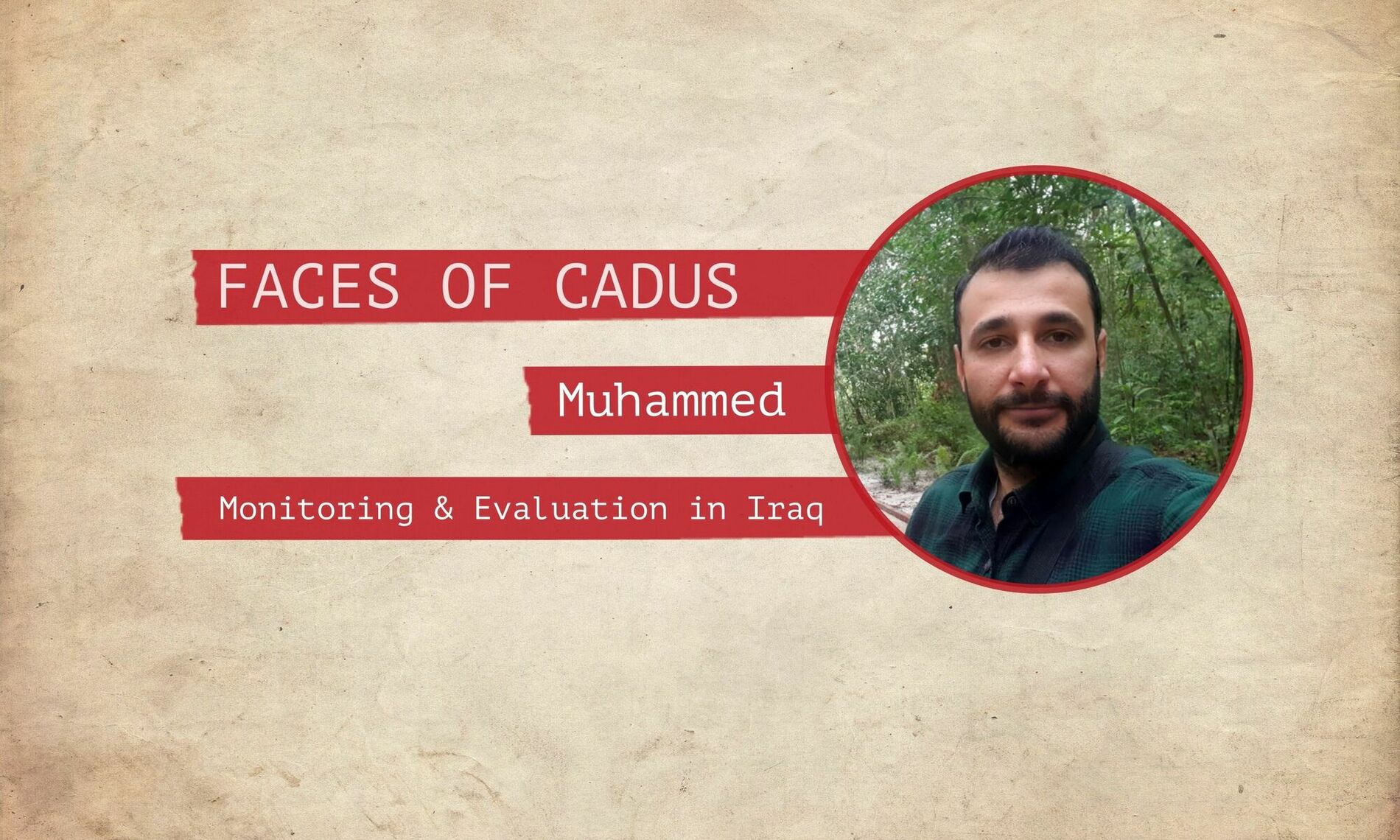
There are people where you can tell right away that they are truly passionate about what they do. This is the case with Muhammed, our newest employee in Iraq. Talking to him, it quickly becomes apparent that humanitarian work is his passion.
He has been a part of CADUS for a month and a half, expanding our presence in Iraq and planning new projects. He explains the complicated web of different active NGOs in Iraq and Syria and their relations with each other without much effort and is completely in his element. In addition to his work with us, Muhammed is currently writing his master's thesis on gender-based violence during the Covid-19 pandemic.
A conversation about humanitarian work and the challenges of working in Iraq.
How did you get involved in humanitarian work?
My mother is Arab and my father is a Kurd. They follow different faiths and are from different cities. That means I have always traveled a lot in Iraq, even as a child. I was fascinated by how communities can be so different from each other even though they are so close. That's why I started studying languages and literature, because language is the key to understanding a culture.
The studies led me to get involved with humanitarian work.
When I was growing up in Iraq, punishment was believed to be a necessary measure to correct behaviour. In order to raise a child properly, they must receive beatings on an occasional basis. I now understand this approach to be wrong and I chose to actively work against it. So I became particularly interested in gender-based violence and child protection in humanitarian work.
What are challenges for humanitarian work in Kurdistan and Iraq?
Especially working in gender-based violence can be difficult. People have so many problems, no income, no food, no security.
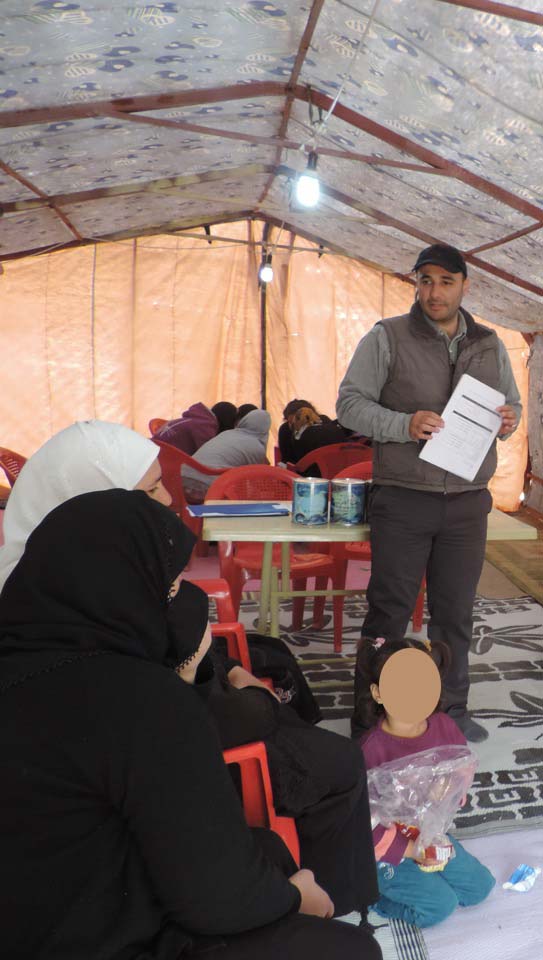
Muhammed at work during a focus group discussion.
It's hard to convince people that mental health is yet another thing they should care about.
Traditions and cultural norms are also one of the biggest challenges, of course. For me as a man, it's hard to impossible to talk to women about these issues, while other men often don't take me seriously.
Covid made things worse there. Local reports suggest that during the lockdown, the rate of domestic violence increased by 60%.
What would you like to change about humanitarian work ?
I would like to make aid less complex and more direct. It doesn't matter who the person is or where that person is coming from. Their background should not be the reason for me to help them. I find it very difficult to understand and accept that when somone goes to an organization and is asking for support they are able to say no because that person does not fit their criteria.
What encouraged you to keep going?
The most beautiful thing is that I can see the change. A few years ago it was impossible for girls to ride a bike through the streets of Erbil. Now it's totally normal, there are many opportunities for children to borrow bikes. In many parts of Iraq it's still not like that, but it's slowly getting better and better.
Published
Author: by Cadus PR
The crew talks about their work in Lesvos: “A lot of people are overwhelmed and powerless”
Two members of our crew, who've been in the camp Kara Tepe 2 talk about the time they spent there. Rebekka (doctor) and Lamin (paramedic) give an account of what it's like to do medical work in a refugee camp. They talk about what frustrated them the most and the new impressions they gained.
COVID, Camp und ein bisschen Chaos: ein Zwischenbericht unseres Einsatzes auf Lesbos.
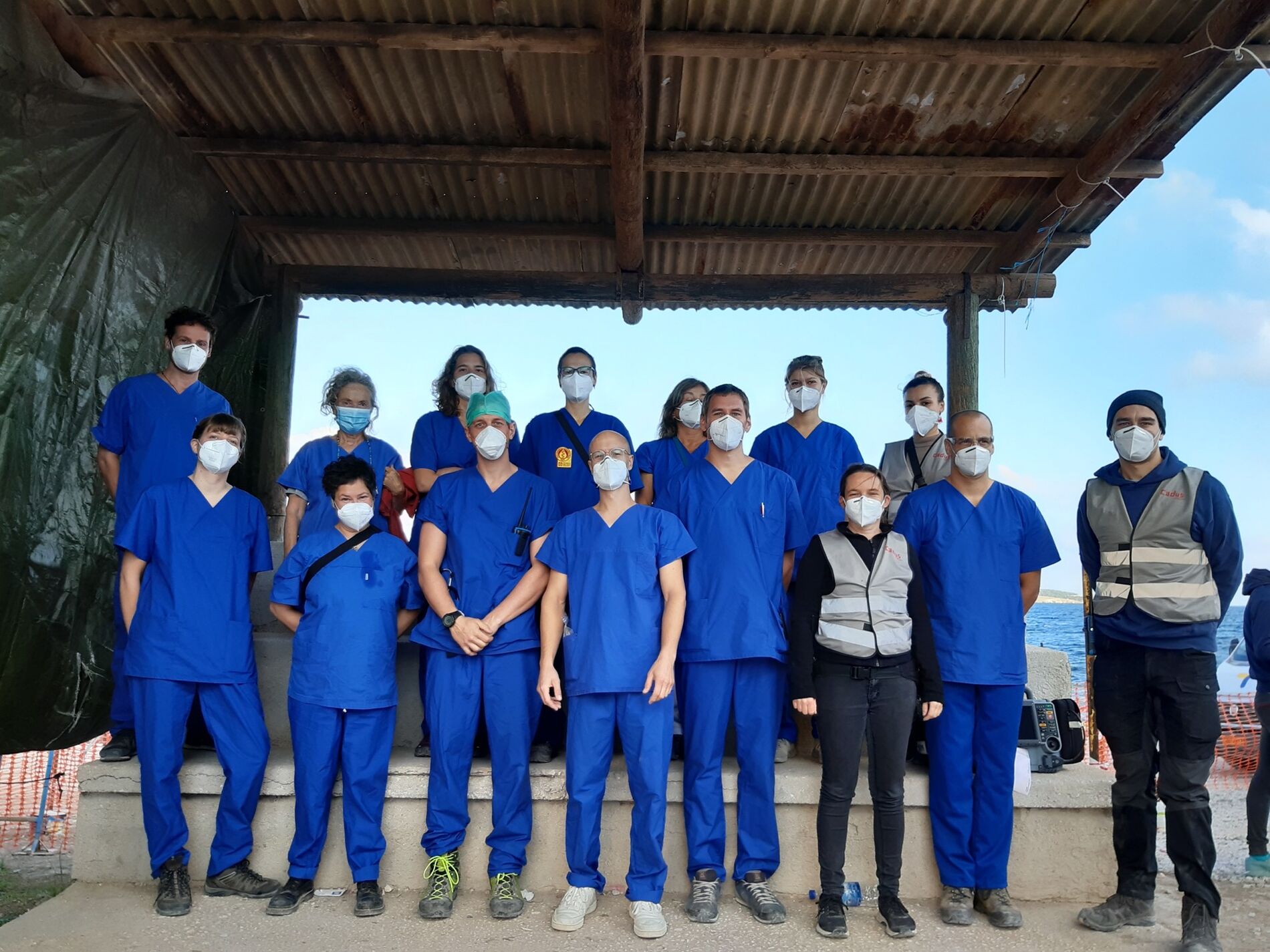
Wir sind nun zusammen mit dem ASB seit zwei Wochen im Camp Kara Tepe 2 auf Lesbos in Griechenland. Ein erstes Zwischenfazit des Einsatzes lautet: it‘s complicated. Wir wollen nicht, dass Menschen in Lagern leben müssen. Faktisch lässt sich der aktuelle Zustand aber nicht kurzfristig auflösen, solange die EU daran kein …
Medical mission in Lesvos – prevent a second Moria
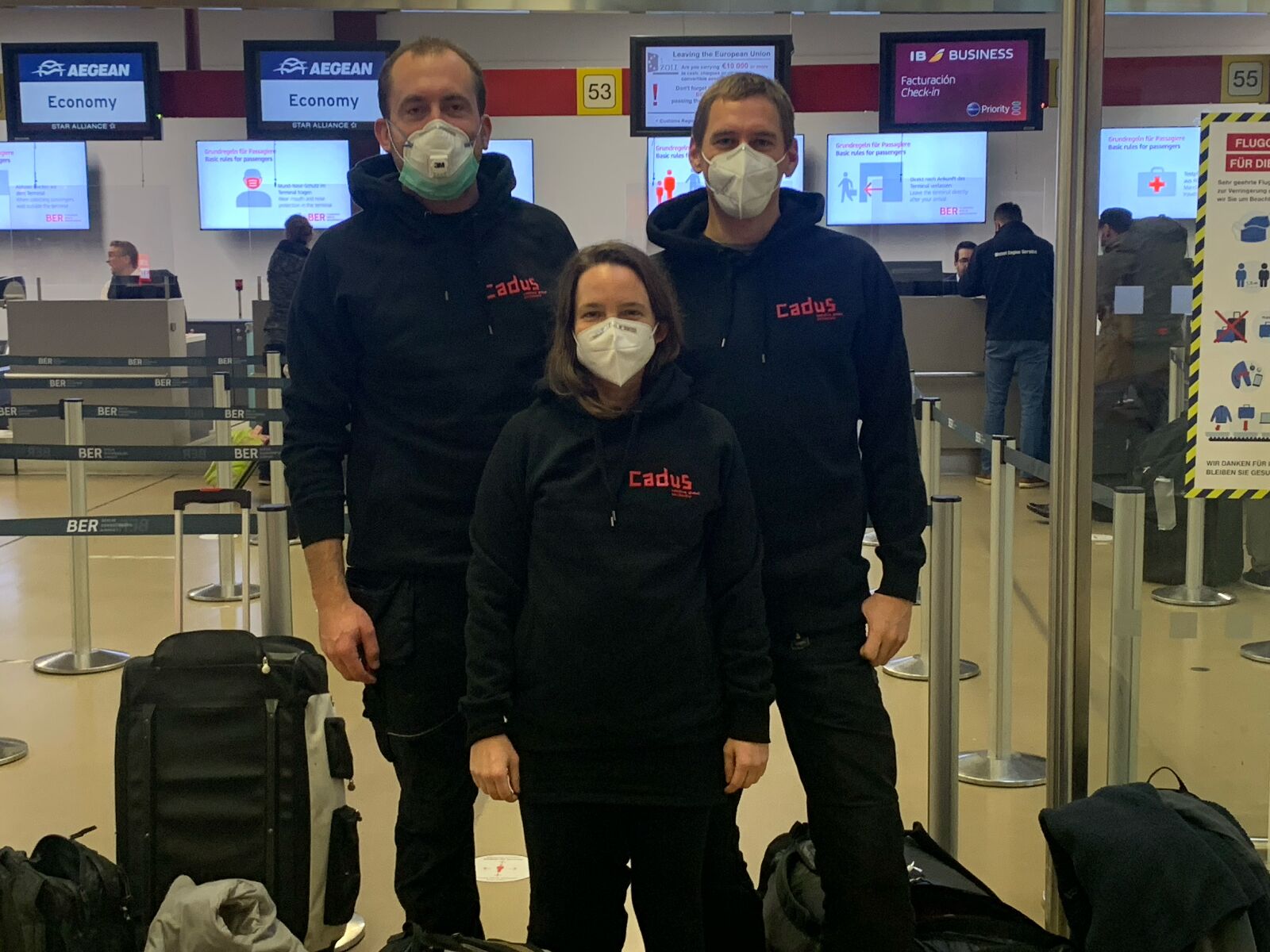
After a long wait and several failed attempts, it's happening: CADUS is going to Lesvos. In cooperation with the Arbeiter-Samariter-Bund (ASB), we have responded to an official request and are sending a medical team to Kara Tepe 2 (also called Moria 2) to provide humanitarian aid. A small crew from CADUS is already …