PHNX goes CADUS … but why?
Published on 29. August 2015
from CADUS-PR
phnx-goes-cadus-but-why-feature-cadus_distel_foto_homepage-8f28a589
18 months ago, when we first started, everything happened very quickly. The kid needed a name. We didn't waste a lot of time and thought, too much had to be done… events went head over heels. Anyway, content was more important than the cover. Who cares about the wrapping?We still put content over cover, of course. However, it didn't take long until we hit those limits that a young humanitarian aid organisation hits, when it doesn't have a clear concept about its public presence. With the only positive reference to your own name being the overworked “risen from the ashes”-mythology – apart from the fact that MacGyver too worked for the Phoenix Foundation – it was difficult to work longterm. And eventually we recognized that while content indeed prevails over cover, it is definitely the cover that assists when it comes to conveying the content.
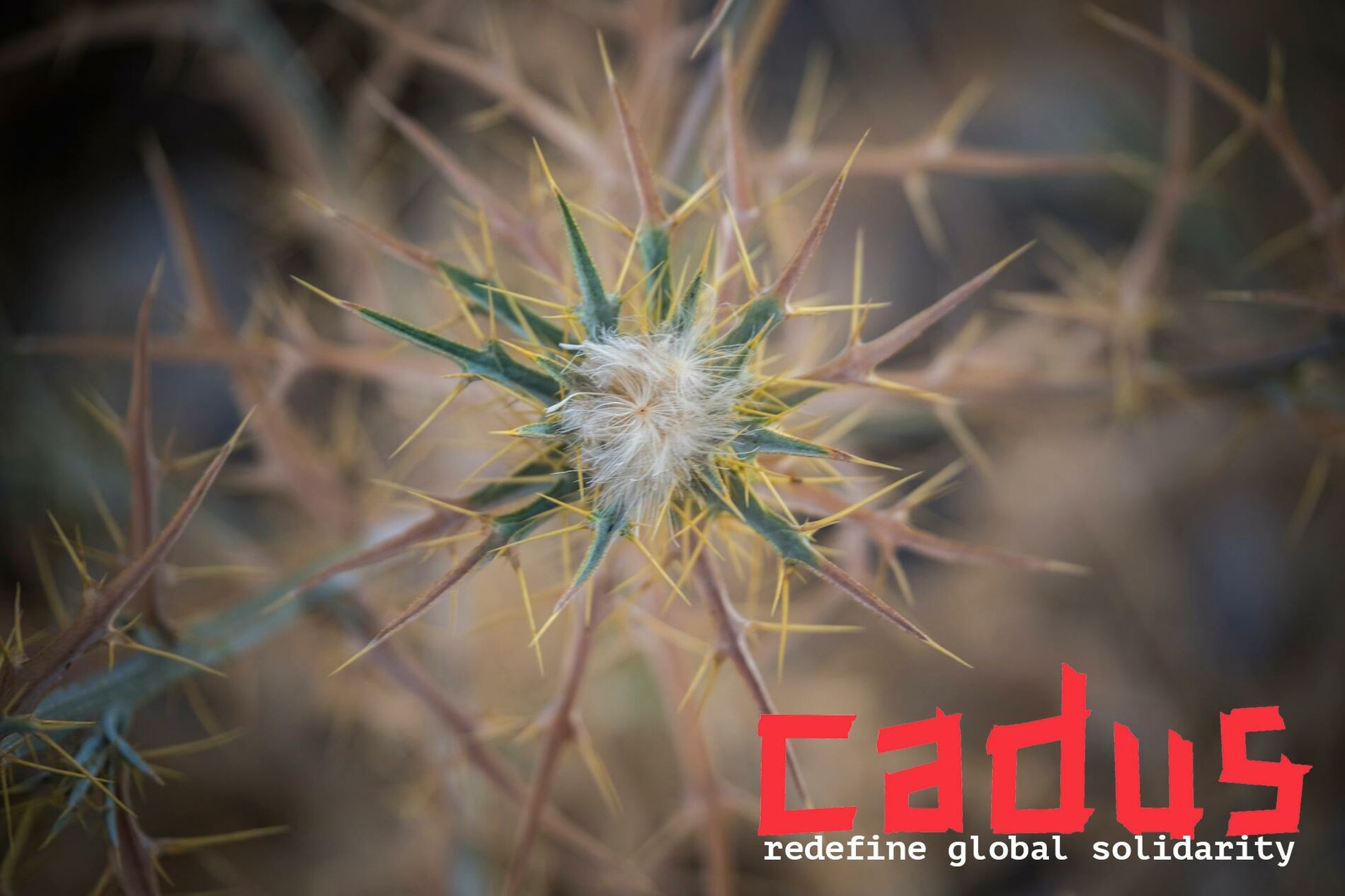
At least if you want to leave an enduring impression. CADUS. Derived from thistle (lat. Carduus), also to be found growing in Rojava. Like its botanical role model, CADUS stands for resiliency, perseverence and the ability to bloom where war and destruction have become the center of human survival.Whether we can live up to that standard… remains to be seen. We already love our new name and design… even without MacGyver.
Published
Author: by Jan Kout
The climate catastrophe as the greatest challenge for humanitarian aid
What impact does the climate catastrophe have on humanitarian aid? What can and must humanitarian actors prepare for and how must they adapt in order to counter the consequences of the climate catastrophe?
The future of humanitarian aid
Writing a text about the future of humanitarian aid. My first impulse: this is going to be a gloomy text. The present of humanitarian aid leaves little room for optimism. Wars continue, people are dying in Sudan unnoticed by the
How AI Is Changing Humanitarian Aid: Risks and Opportunities
I’ve spent enough nights under mosquito nets and sat through long, often circular UN coordination meetings to know this: if we want to reach people in crisis faster, with less waste, and without burning out the sector, we can’t