Meet our Team: Nastia, Infield Operations Coordinator in Ukraine
Published on 8. September 2026
from Parastu Sherafatian
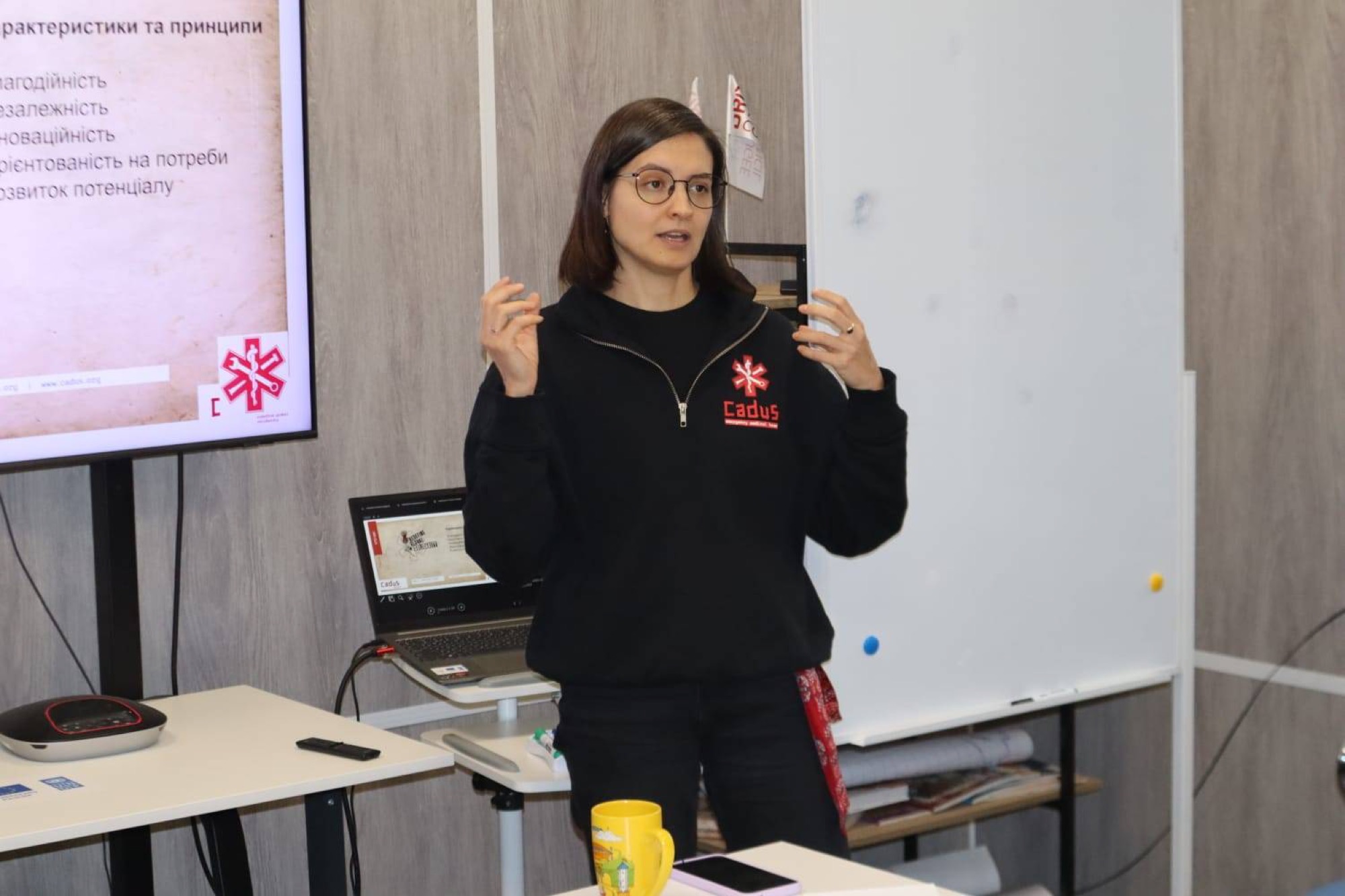
In this interview, we sat down with our Infield Operations Coordinator, Anastasia Vorobyova, in Ukraine to learn more about her background, her day-to-day life on the ground, and what drives her to continue her essential work. She shares her journey from running a language school to joining the humanitarian response, the realities of living in a conflict zone, and the incredible resilience of the people around her.
How do you introduce yourself and your role to someone who isn’t familiar with your work?
As an Infield Operations Coordinator, I see my role as supporting the field teams who do the most hands-on work with our beneficiaries and patients. I need to ensure that they can focus fully on their jobs and not be distracted by any logistical challenges around us. Those issues should be managed by our operations side so the medical team feels taken care of, covered, and can just relax, trust us, and do their jobs.
Because we spend six or seven weeks in a row here, this base is more of a home than our actual homes. It is important to ensure it is a place I would like to live in myself. We strive to create an environment where everything is addressed openly and transparently, and where we respect, trust, and support each other. It is not just the place where we work, sleep, and eat. It is where we live our lives most of the time.
What did your life look like before you decided to step into humanitarian emergency response?
Before doing humanitarian work, which I started in 2022 with the full-scale Russian invasion into Ukraine, I was a language teacher. I ran a small language school in Vinnytsia, a city in central-west Ukraine. I managed a team of teachers who provided speaking courses for adults in English, Spanish, French, and German, along with speaking clubs and different events.
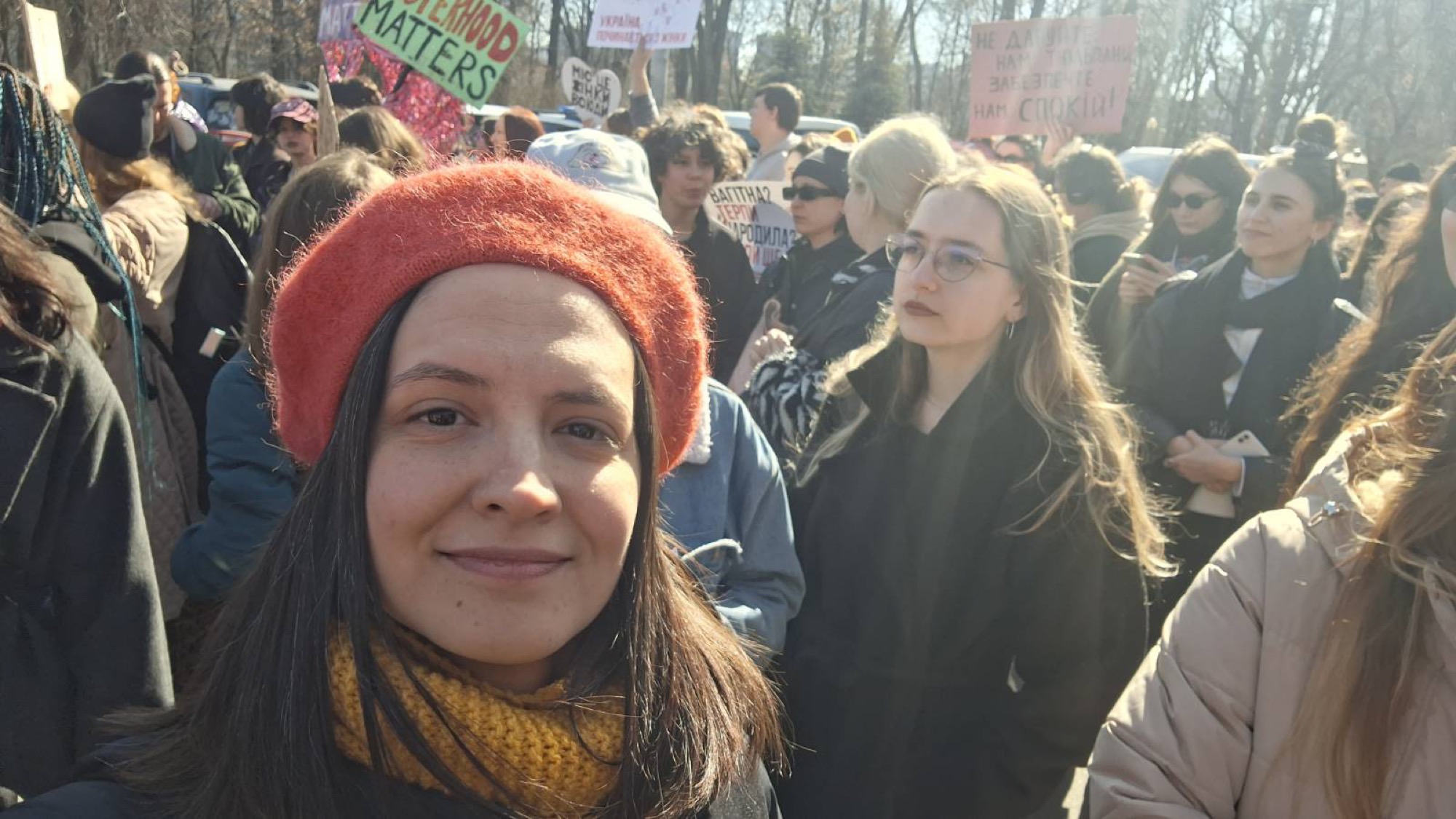 Before joining the humanitarian work force Anastasia was working as a language teacher. Photo: Anastasia Vorobyova
Can you recall the moment that made you think, “I need to be on the ground doing this work”?
It wasn’t my conscious choice at all. Very abruptly, the day before the full-scale invasion started, I had my last lesson at my language school. I did not know it was my last lesson at the time. During the first couple of weeks, you just volunteered and did whatever you could to contribute, from interpreting to making camouflage nets for the military.
One day, a friend contacted me saying a well-known medical organization needed support with translations the next day. I said sure and showed up. I thought I was doing a volunteer job for three days, but I soon found out I was actually already on a contract. These emergency responses were trying to build teams quickly, and I suddenly had a paid job. Since that moment, I have been working in the humanitarian field for over four years without any breaks, moving from one project and city to another.
Humanitarian work is physically and emotionally exhausting. When you wake up on a particularly difficult day, what is the thought that keeps you motivated?
Coffee and more coffee! Without it, I would not be able to function at all.
But to give a serious answer, I love Ukraine. That is the truth. Ukraine has been my life choice at different life stages, and living here and being part of this society is probably one of the most valuable things that I have. If I can do anything that connects me to this country, I will do it. That is why I chose to stay, and I am not considering moving anywhere abroad.
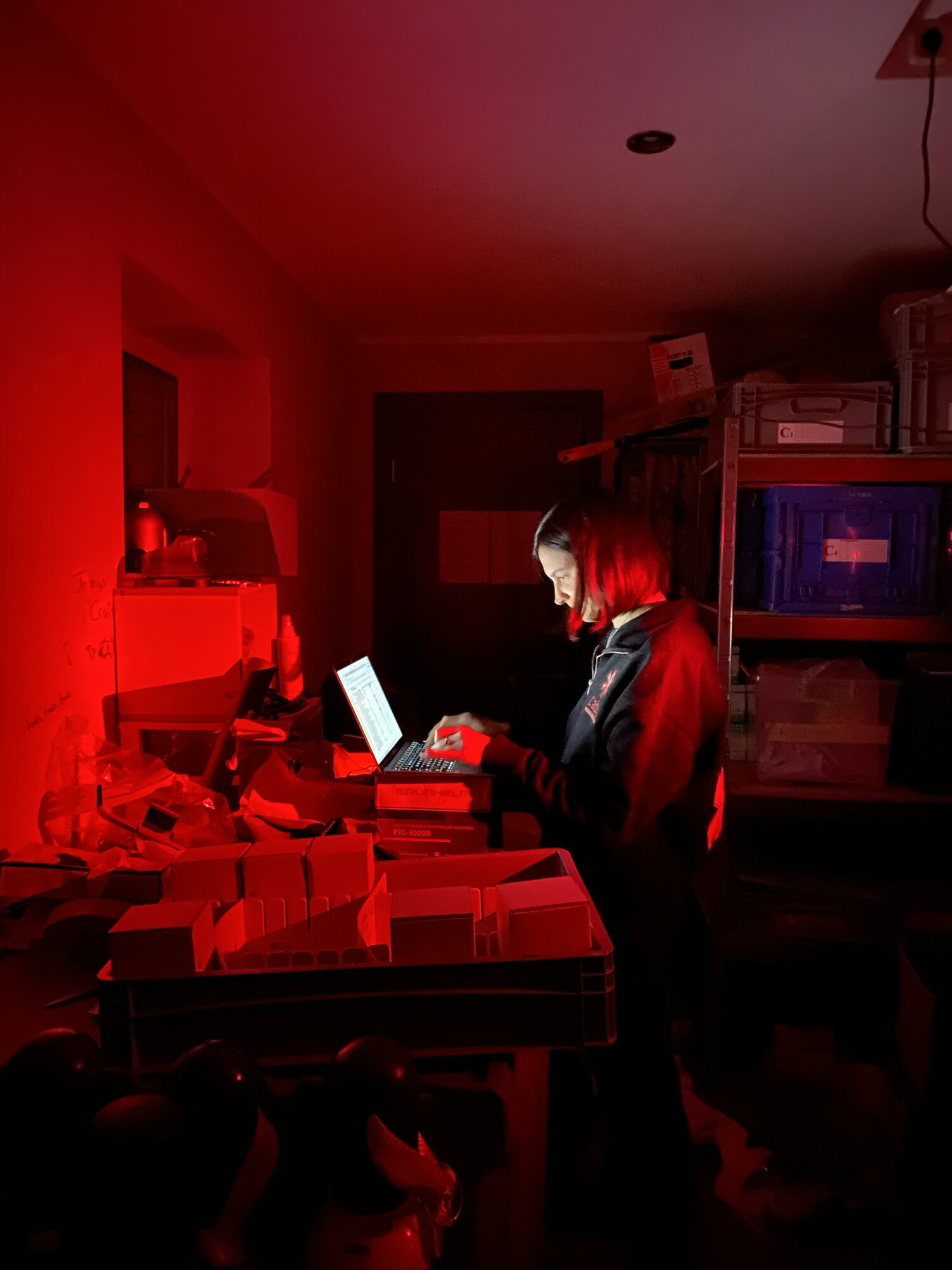 Sort supplies and medications in the warehouse and keep track of them so the rest of the team can focus on the MedEvacs and the patients. Photo: CADUS
When you talk to your family or friends, what is the hardest part of your job to explain to them?
My fourteen-year-old son lives in Romania with his father. When he asks me what locations I go to for work, he can get a little bit worried. I try to explain to him how our security management is done, how risks are assessed, and what we have in place to protect ourselves so that he does not feel anxious about my safety.
For some of my friends, it is difficult for them to understand how I move constantly. The places I move to for my job, like Kyiv, Mykolaiv or Dnipro, are often not the best choices from a security perspective.
What has this work taught you about yourself that you didn’t know before joining CADUS?
It taught me that I am a team player, capable of taking on the responsibility for other people, and once I do, my team is my absolute priority. One of my previous line managers in CADUS taught me that the best leadership style is the one that fits most naturally with who you are as a person. My team mates describe mine as caring.
I also learned that I can comfortably share a room with two or three other people! I consider myself more of an introvert and normally live alone with my cat. Now I have completely adjusted to sleeping in a shared space. It helps that all CADUS teams I have worked with have been super amazing. We celebrate our diversity, and people bring very different life experiences to the table. It is incredibly easy to work in an environment where people support you, cover for your mistakes, and are not out there seeking your weaknesses. I am really blessed to be working with such great people.
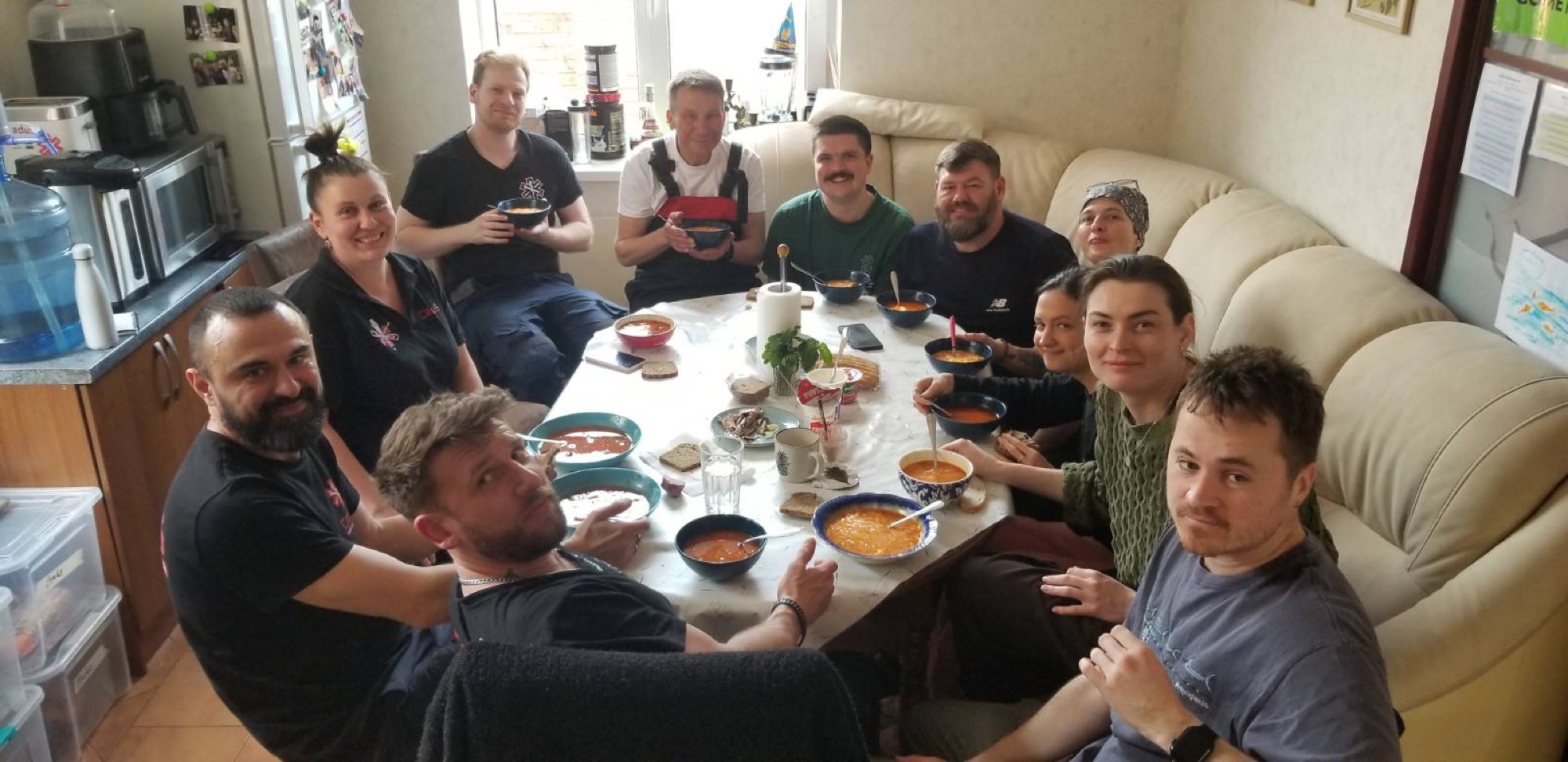
Anastasia (third from right) in the middle of her team in Dnipro while sharing home made Borschtsch. Moments like this help to cope with the stressful work under challenging conditions. Photo: CADUS
With all the destruction and hardship you see every day, is there something that gives you hope?
The fact that there are still people who genuinely choose to be here in Ukraine, not because the borders are closed, but because they make a conscious life choice. Regardless of what is happening security-wise or economically, they choose Ukraine consciously and passionately every single day.
They do what they can, where they can. Apart from their professional duties, they volunteer, support vulnerable people, help the military, and donate money. Daily life continues, but even after sleepless nights due to attacks, people still have the energy to do more. Being surrounded by these people motivates me immensely.
The future of humanitarian aid
Writing a text about the future of humanitarian aid. My first impulse: this is going to be a gloomy text. The present of humanitarian aid leaves little room for optimism. Wars continue, people are dying in Sudan unnoticed by the
How AI Is Changing Humanitarian Aid: Risks and Opportunities
I’ve spent enough nights under mosquito nets and sat through long, often circular UN coordination meetings to know this: if we want to reach people in crisis faster, with less waste, and without burning out the sector, we can’t
“It takes more than symbolic politics”
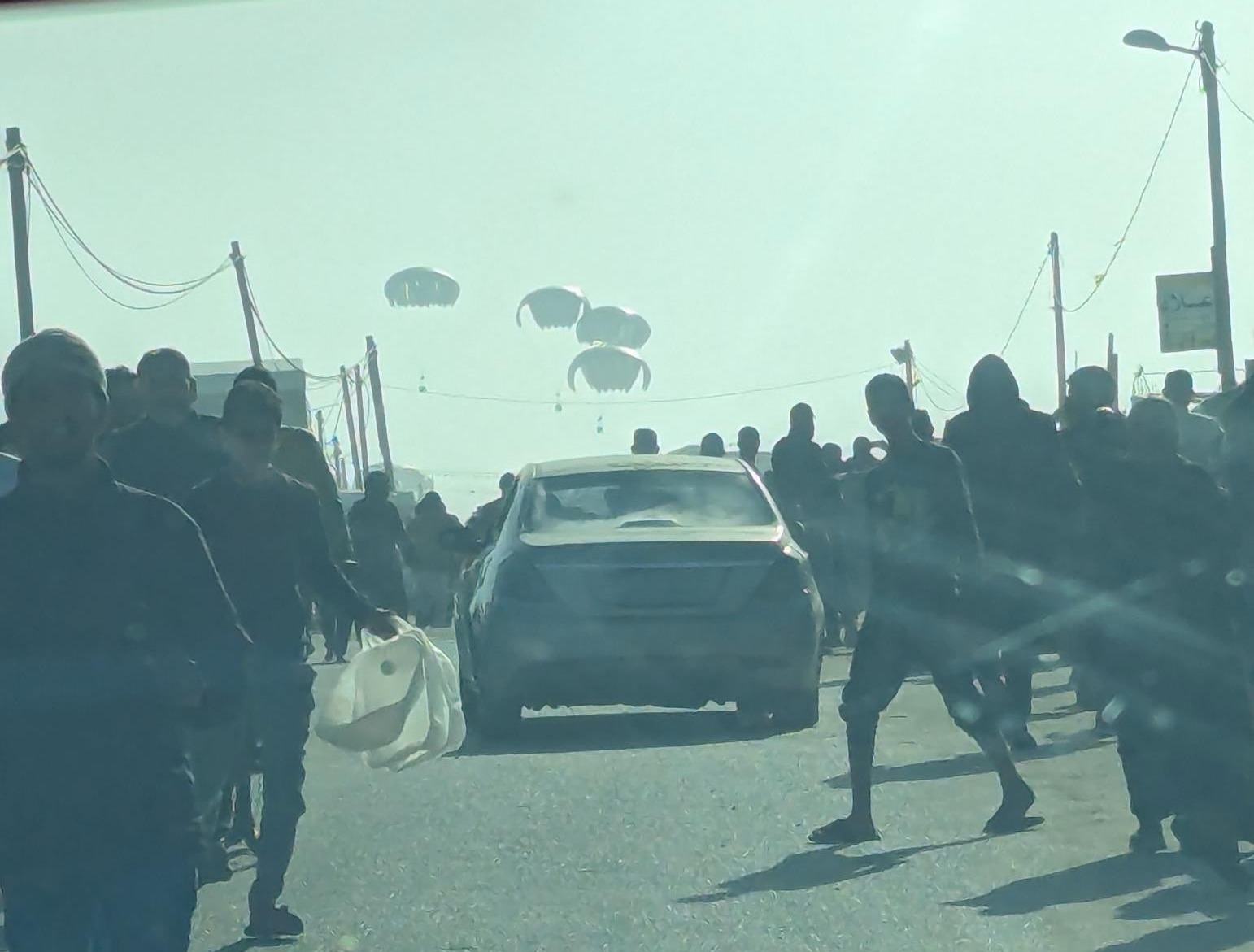
Statement from CADUS on the German government's planned airlift to Gaza. The German government's announcement that it will set up an airlift to Gaza together with Jordan is above all one thing: symbolic politics.