1 Year of Stagnation
Published on 10. October 2026
from Jonas Grünwald
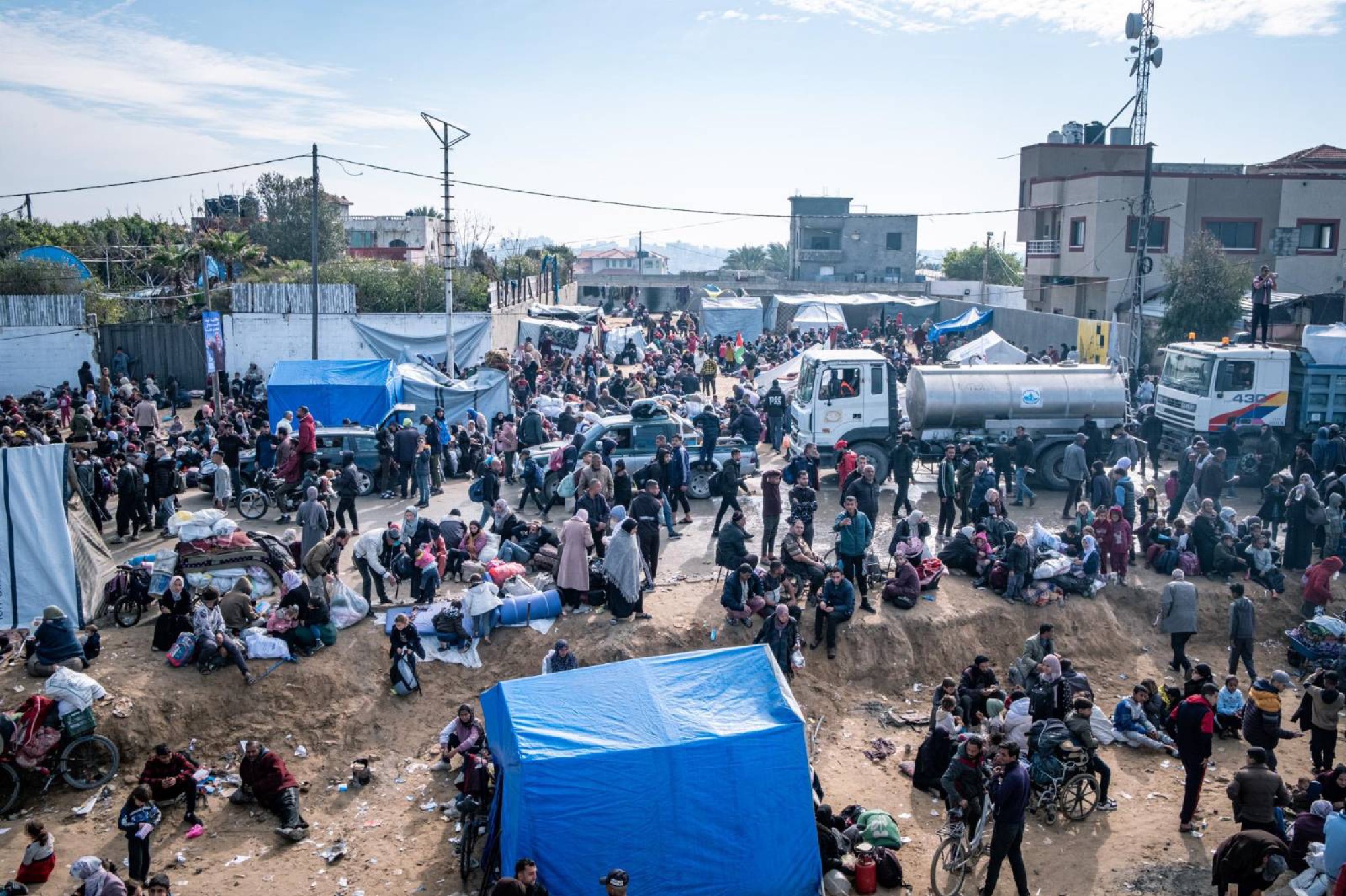
On October 10, 2025, a ceasefire was agreed upon between the Israeli army and Hamas. One year later, Gaza is still being bombed, albeit less than before. The only real standstill lies in the living conditions and prospects for the people of Gaza.
Cover photo: Mattia Bidoli
A year ago, U.S. President Trump boasted that, with the support of Turkey, Egypt, and Qatar, he had achieved a breakthrough in the Gaza war: Hamas and the Israeli army had agreed to end the fighting. This was tied to numerous conditions, such as the handover of Israeli hostages in exchange for Palestinian prisoners, the partial withdrawal of the Israeli army, and the delivery of sufficient humanitarian aid to Gaza.
No Lasting Peace
The ceasefire is part of Phase 1 of the multi-stage peace plan proposed by Trump. So far, both warring parties have agreed only to this part of the plan. Since then, progress has stalled. There is disagreement on too many points regarding the subsequent phases – most notably, the complete disarmament of Hamas, the full withdrawal of the Israeli army from Gaza, and who should take the first step. It’s a stalemate.
The initial joy felt by the people of Gaza over the ceasefire has quickly given way to disillusionment and resignation. They are stuck in a situation that offers them neither an improvement in their living conditions nor security. Since the end of the war was declared, Israeli airstrikes have left over 1,400 dead and nearly 5,000 injured. The local healthcare system, like 82% of the buildings in Gaza, lies in ruins. More than 18,500 patients, including 4,000 children, urgently need treatment abroad: this includes cancer treatments, complex surgeries, and treatment for chronic illnesses.
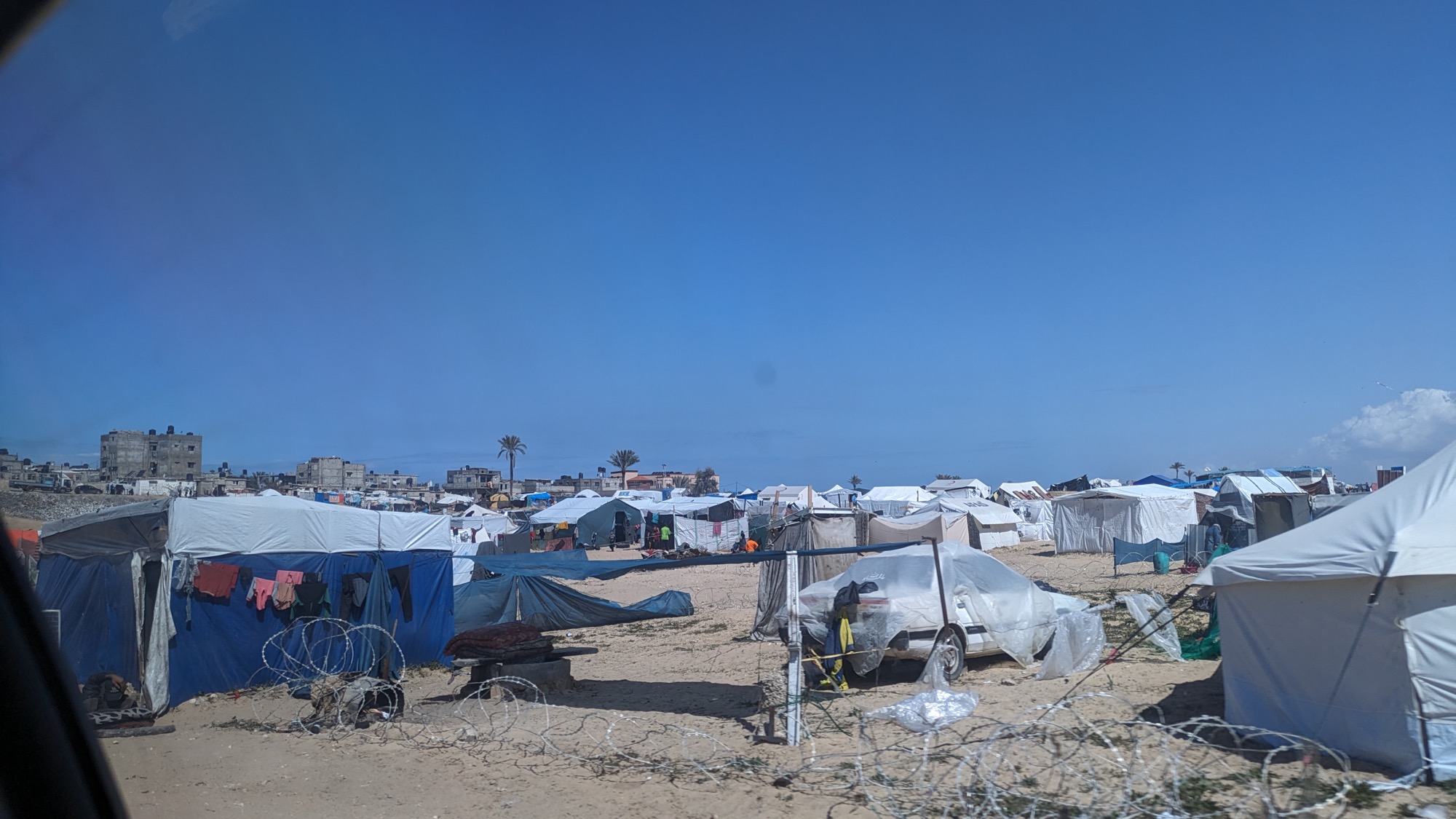 About 65% of families are forced to live in tents on a permanent basis. Photo: CADUS
Surviving in Times of Scarcity
Nor has anything changed regarding the pervasive shortages. Shipments of humanitarian aid are insufficient to meet the needs. On average, it takes 74 days for the Israeli authorities to approve the import of medical equipment, supplies, and medications. Food and building materials, needed to prepare shelters for the approaching winter, are in short supply.
However, the lack of oil and fuel supplies is particularly serious, as hospitals, sanitation and hygiene facilities, waste disposal, and drinking water treatment all rely on electricity from generators. Without fuel, the population cannot be provided for.
The shortage of supplies and spare parts, such as tires, light bulbs, and car batteries, is leaving more and more ambulances out of service. The vehicles used by our team in Gaza are also affected. No ambulances means no medical evacuations, which in turn means no life-saving treatment for patients. The survival of the people in Gaza is under acute threat due to the blockade imposed by the Israeli authorities.
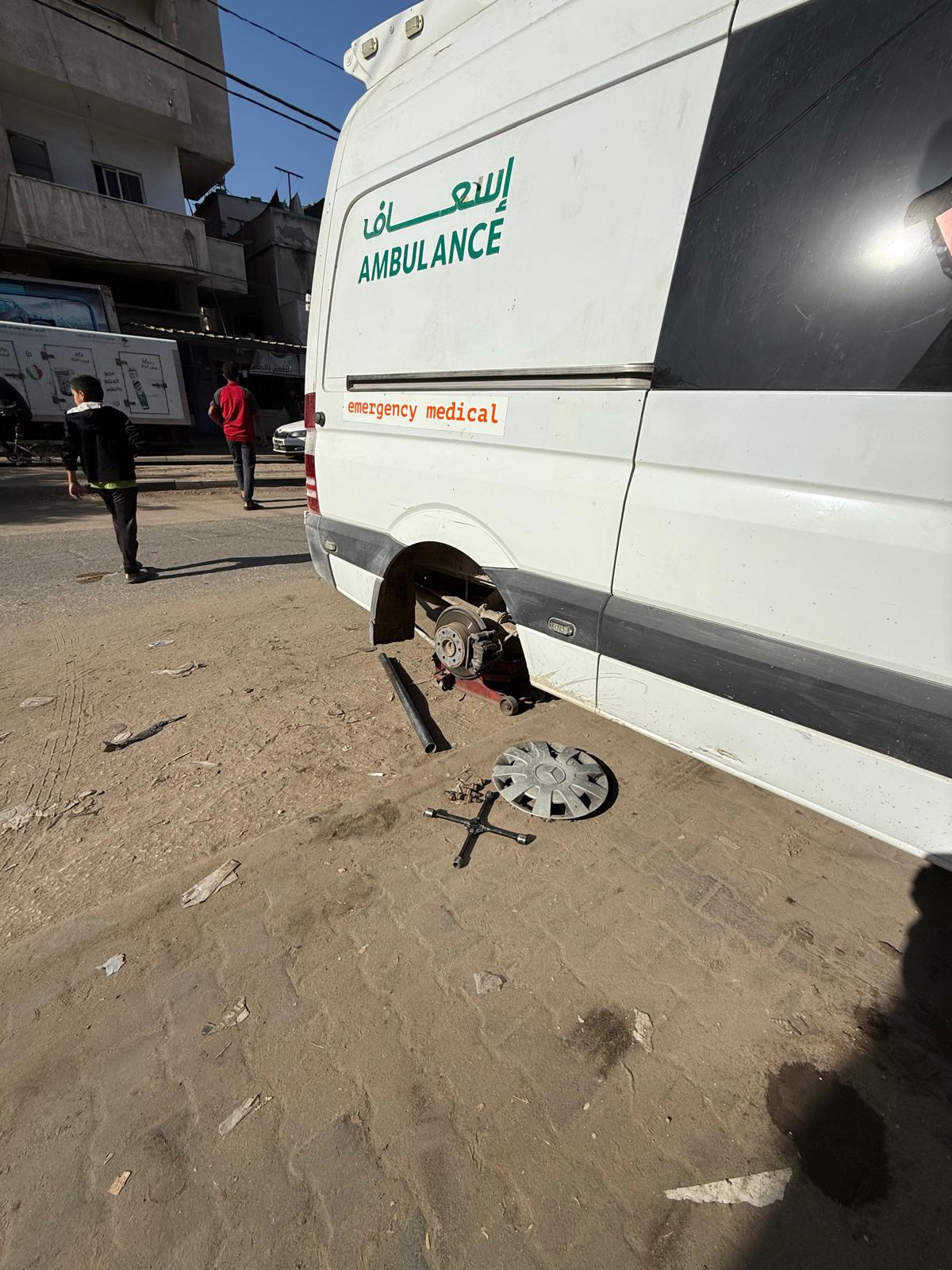 The shortage of replacement parts is making it increasingly difficult to provide medical care to the people of Gaza. The poor road conditions damage tires, which can only be patched up until they are completely worn out. New tires are not available. Photo: CADUS
A Comprehensive Solution Instead of Treating the Symptoms
Peter Dischler, CADUS field coordinator in Gaza, summarizes the situation: “A ceasefire does not mean that medical care is guaranteed. Medical evacuations ensure the survival of individuals, but they do not solve the structural problem. Only when sufficient quantities of relief supplies are brought into Gaza and local treatment capacity is rebuilt can we speak of a sustainable improvement.”
However, even a year after the ceasefire began, this seems to have become a distant prospect. Things have gone quiet around Trump’s peace plan and the so-called Peace Council established specifically for this purpose. The once-celebrated breakthrough has turned into a fragile ceasefire and a slow death for the people of Gaza. Hamas and the Israeli government must urgently continue negotiations to bring about a political solution. Until then, the people of Gaza will have to continue struggling to survive under indescribable conditions.
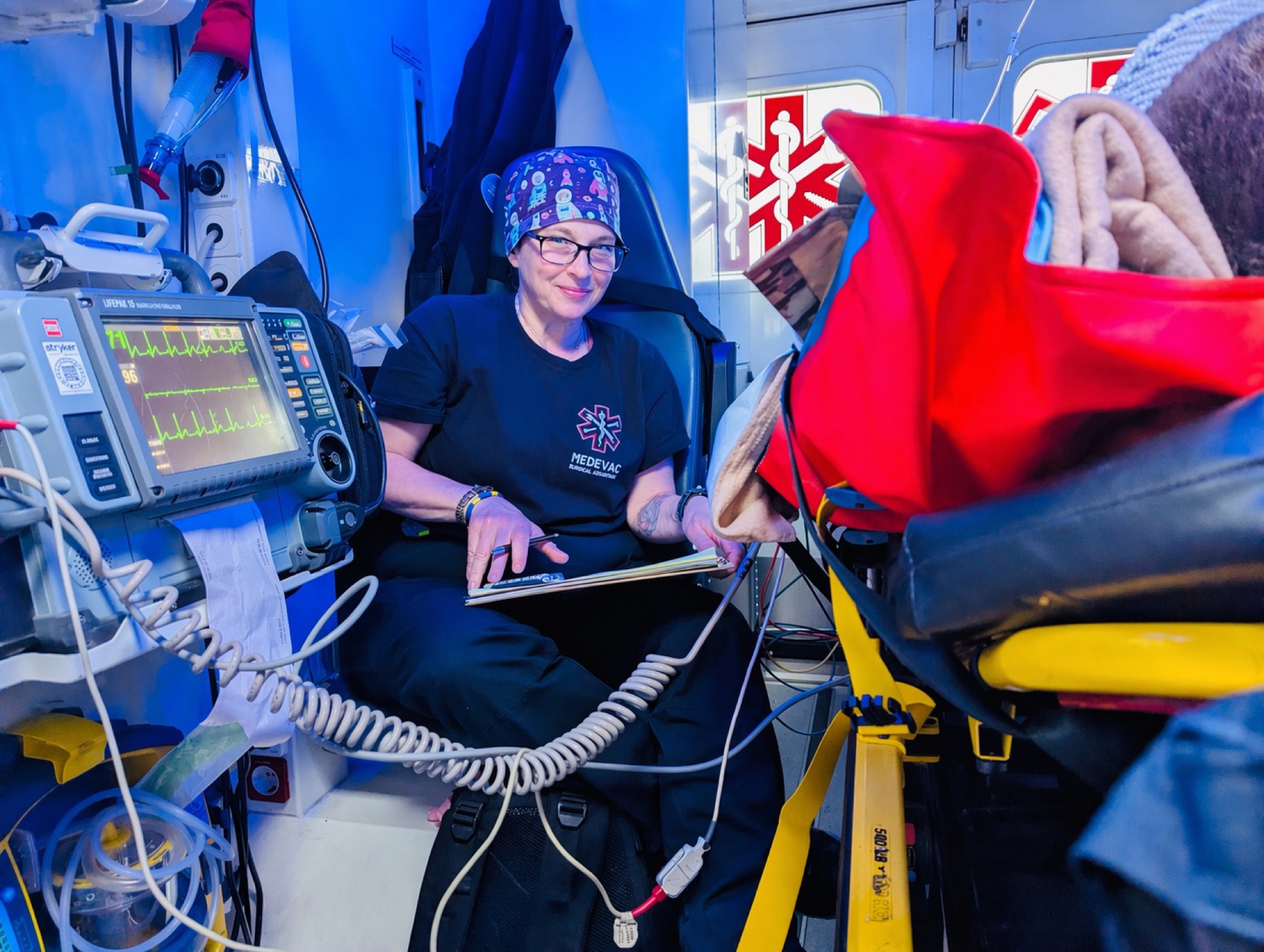
Meet our Team: Skye Steffens
In our series, we introduce the people behind our responses . Today, we are speaking with Skye Steffens, a colleague from our medical evacuation team in Ukraine. She works as an experienced intensive care nurse under extreme conditions near the frontline. In the interview, she talks about her journey into humanitarian response, the unbreakable bonds with her team, and why looking away is not an option for her.
1 Year of Stagnation
On October 10, 2025, a ceasefire was agreed upon between the Israeli army and Hamas. One year later, Gaza is still being bombed, albeit less than before. The only real standstill lies in the living conditions and prospects for the people of Gaza.

“Every day at work is different. Unpredictable.”
Our Deputy Infield Operations Coordinator Moto Michikata has travelled several times to Ukraine since 2022. She shares her personal story as a person with neurodivergency, working and living in a war torn country and under constant threat of drones and missiles.