A Bridge Between Research and Practice
Published on 20. July 2026
from CADUS-PR
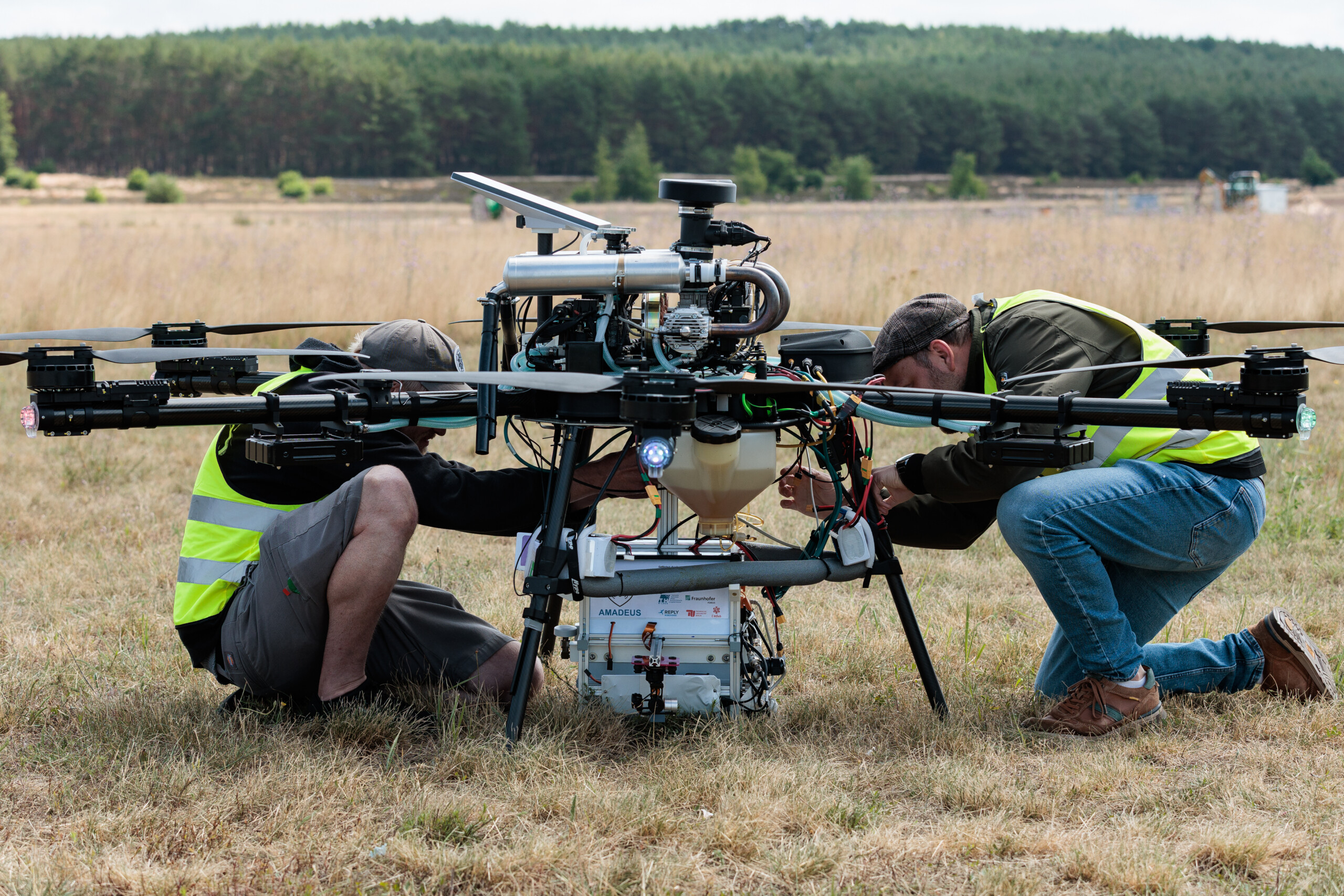
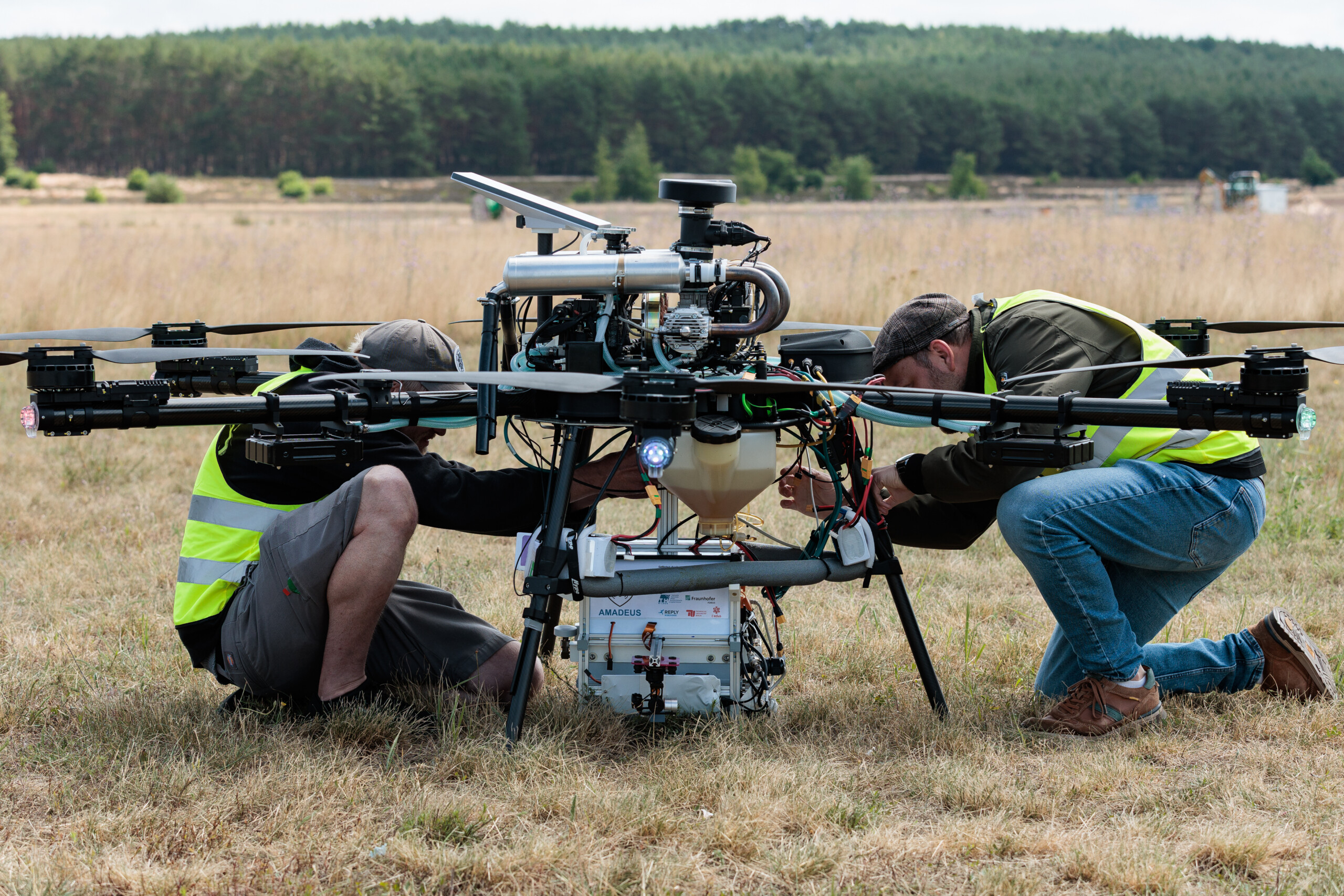
Heavy-duty drone with a cellular module © Philipp Plum / Fraunhofer FOKUS
Successful Completion of the AMADEUS Research Project
Amid fire and smoke, the live demonstration of the flying 5G mobile base station—complete with a communications platform designed to provide a detailed situational overview—kicked off on July 8, 2026. It was developed by a research consortium consisting of TH Wildau, Fraunhofer FOKUS, TU Berlin, and Roboverse Reply. We participated in the project as a consortium partner from the humanitarian emergency aid sector to bridge the gap between research and practice. And, of course, we didn’t actually set everything on fire at the end—instead, we simulated a crisis scenario that allowed us to demonstrate the functions of the communication system.
Rescue operations require communication technology
We’ve seen this happen many times in our work: We urgently need accurate information about the situation during a crisis or disaster so we can tailor our planned relief efforts to the needs on the ground. We also have to ensure that the response team can communicate with both the on-site leadership and headquarters in Berlin. Otherwise, not only is the necessary coordination of the operation at risk, but so is the safety of our team. Because if something does go wrong, we need to know how to get our people out of there as quickly as possible.
CADUS has already gained a great deal of experience in areas with limited or completely absent cellular coverage. And we are constantly working to improve our communications equipment. In addition to our existing standard systems, we are also testing low-tech solutions such as communication via LoRa. With AMADEUS, however, the focus was on the other end of the spectrum: pulling out all the stops and mobilizing everything possible.
Robots on the Runway
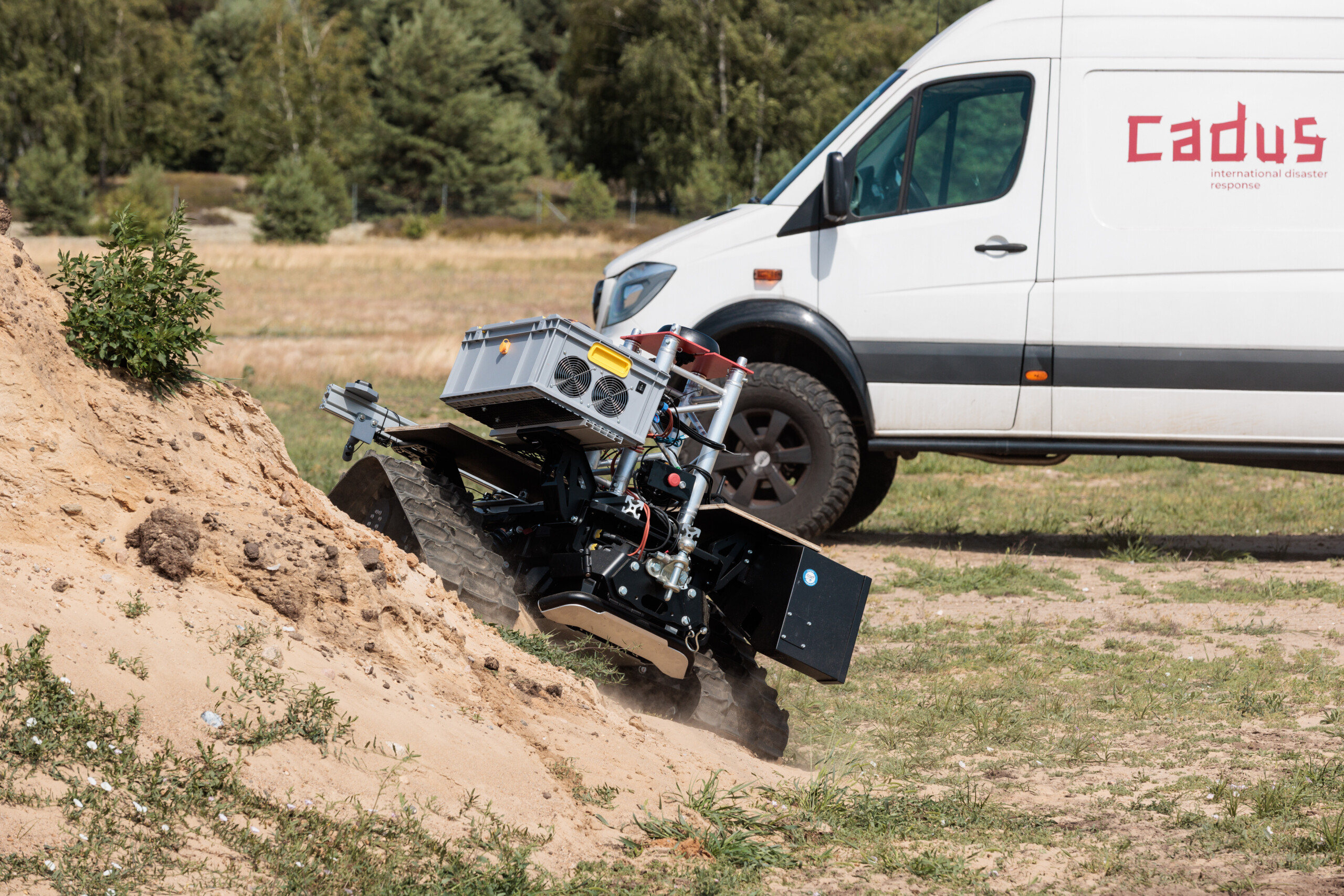
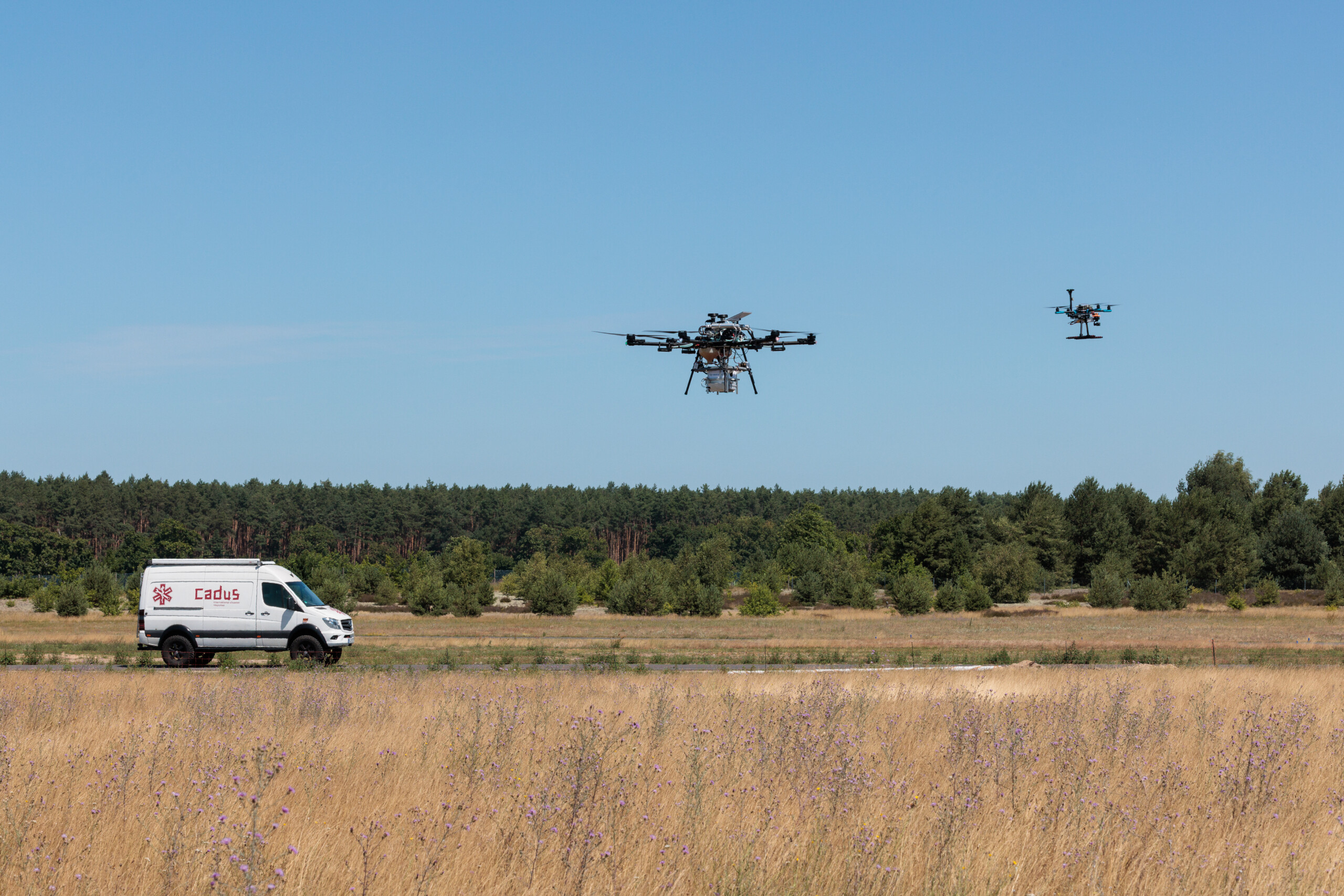
Thus, at the conclusion of the research project, a walking robot (Spot), a remote-controlled tracked vehicle (rover), a heavy-duty drone with internal combustion engines for lifting the cell tower, and other small drones were gathered at the Schönhagen Airport At the “Otto Lilienthal Research Airfield,” there is a constant bustle of small aircraft taking off and landing. Thanks to the well-coordinated operations there, AMADEUS has been able to conduct test flights repeatedly over the past year and a half and roll out the communications network.
For the live demonstration, we brought along pyrotechnicians Felix Rausch and Lisa Tatz, who, without further ado, set the crisis-stricken, fictional “Trebbinien” ablaze with flames and colorful smoke. The robots were immediately deployed and transmitted videos via the established broadband connection to the platform, from which the individual components can be controlled. The situational overview compiled from this information ultimately allowed for the deployment of human “rescue workers,” who, in a dramatic performance, pulled a “person buried under the rubble” to safety. On a screen, guests from the fields of rescue, research, and local politics who had been invited to the closing event were able to follow the progress of the “rescue operation.”
From the Field to Research—and Back Again
Exchange between research and practice is important to ensure that development proceeds in a targeted manner and that our professional field of humanitarian emergency aid benefits from new opportunities. Since its founding, CADUS has been committed to continually building this bridge. AMADEUS has now been completed, but we are already preparing for our next research projects.
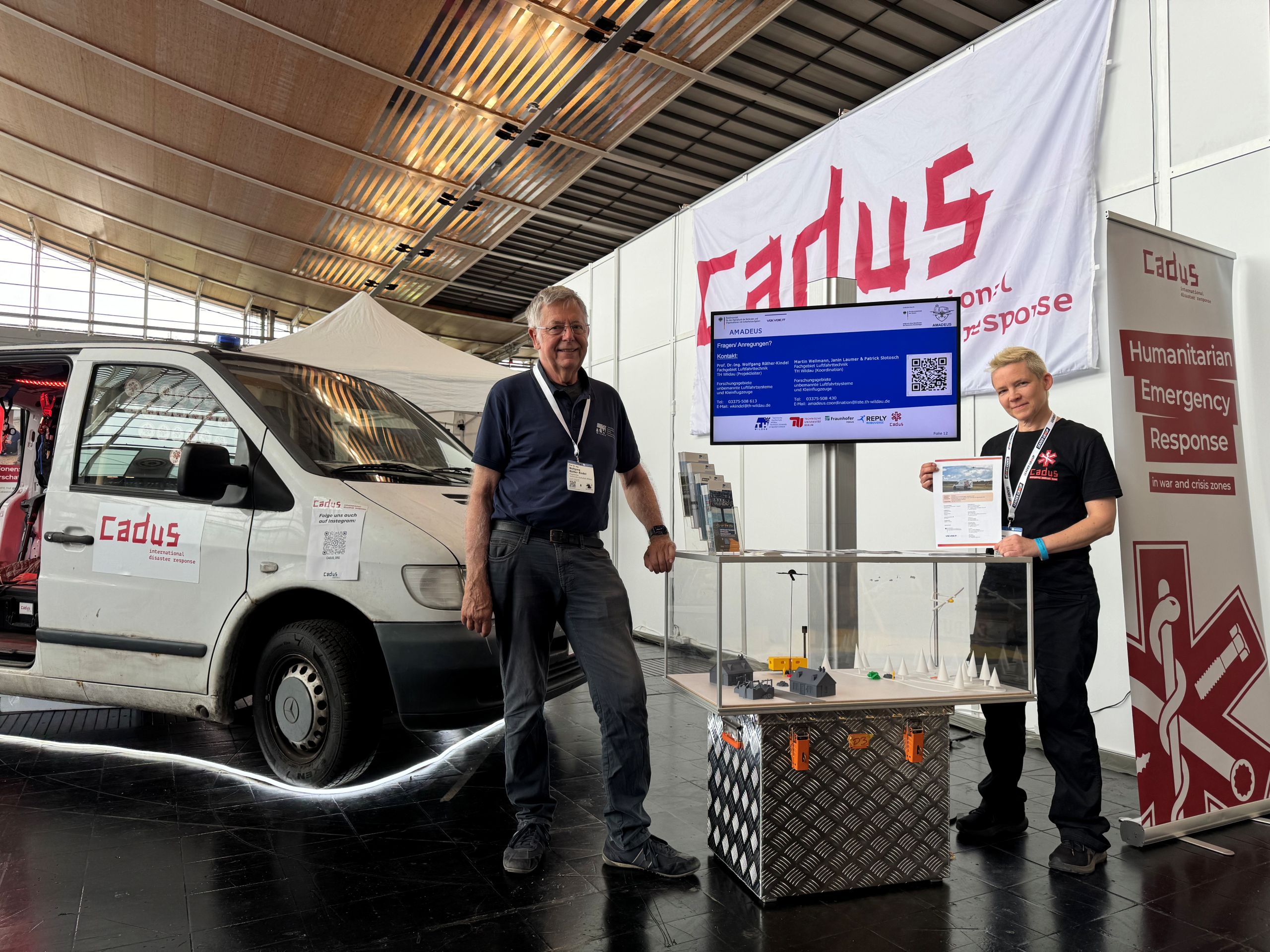
At INTERSCHUTZ, Wolfgang Rüther-Kindel, a professor at the Technical University of Applied Sciences in Wildau, and Corinna Schäfer, Head of the IT Department at CADUS, will present AMADEUS at the trade show in Hanover. The project was funded by the Federal Ministry of the Interior (BMI). ©CADUS
©Philipp Plum / Fraunhofer FOKUS
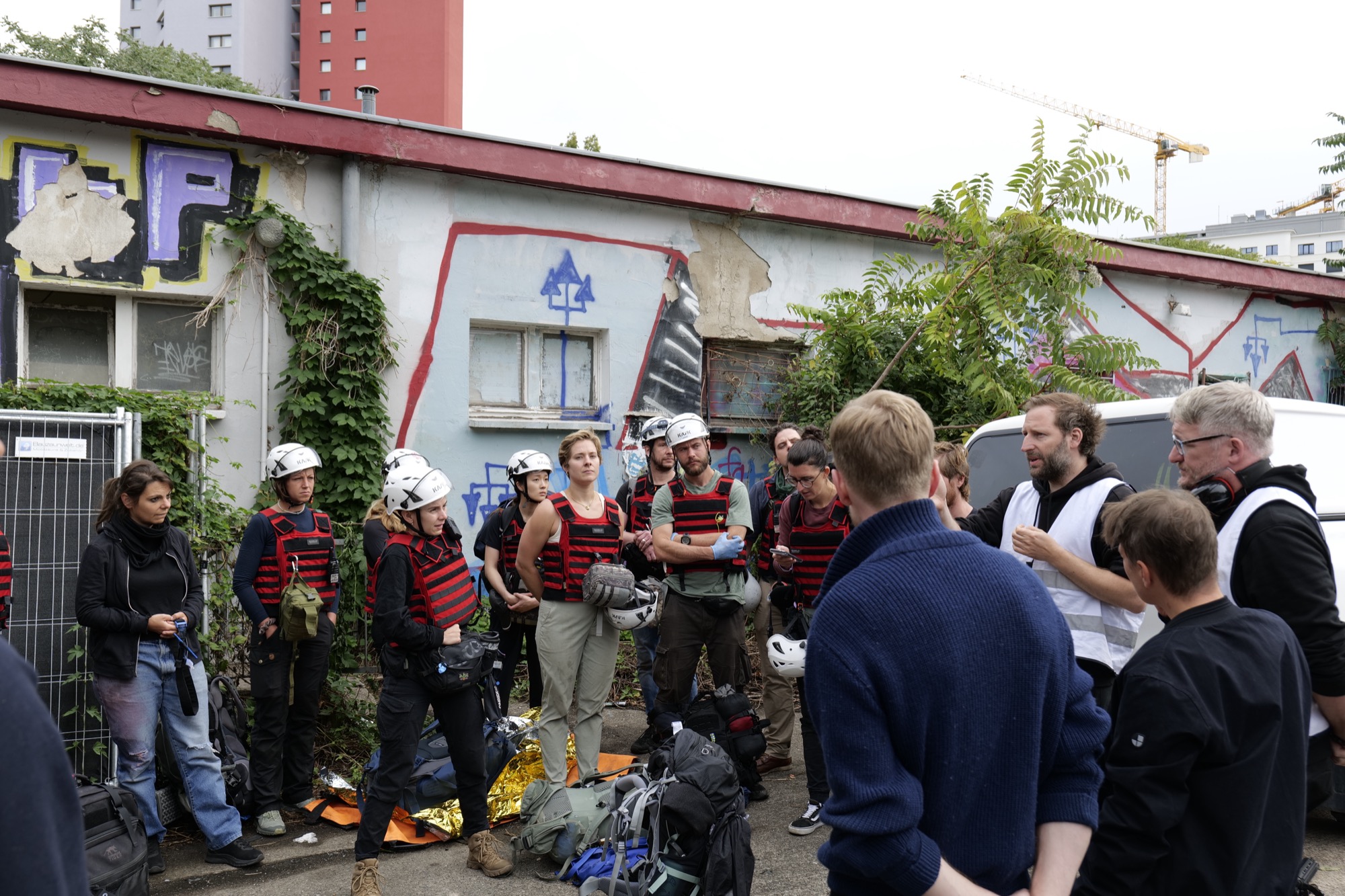
CADUS HEAT
For many organizations, Hostile Environment Awareness Training (HEAT) is part of the preparations for humanitarian missions in war and crisis zones. In this interview with our training team, you’ll learn how these trainings are conducted at CADUS, what participants learn, and what HEAT can actually achieve.
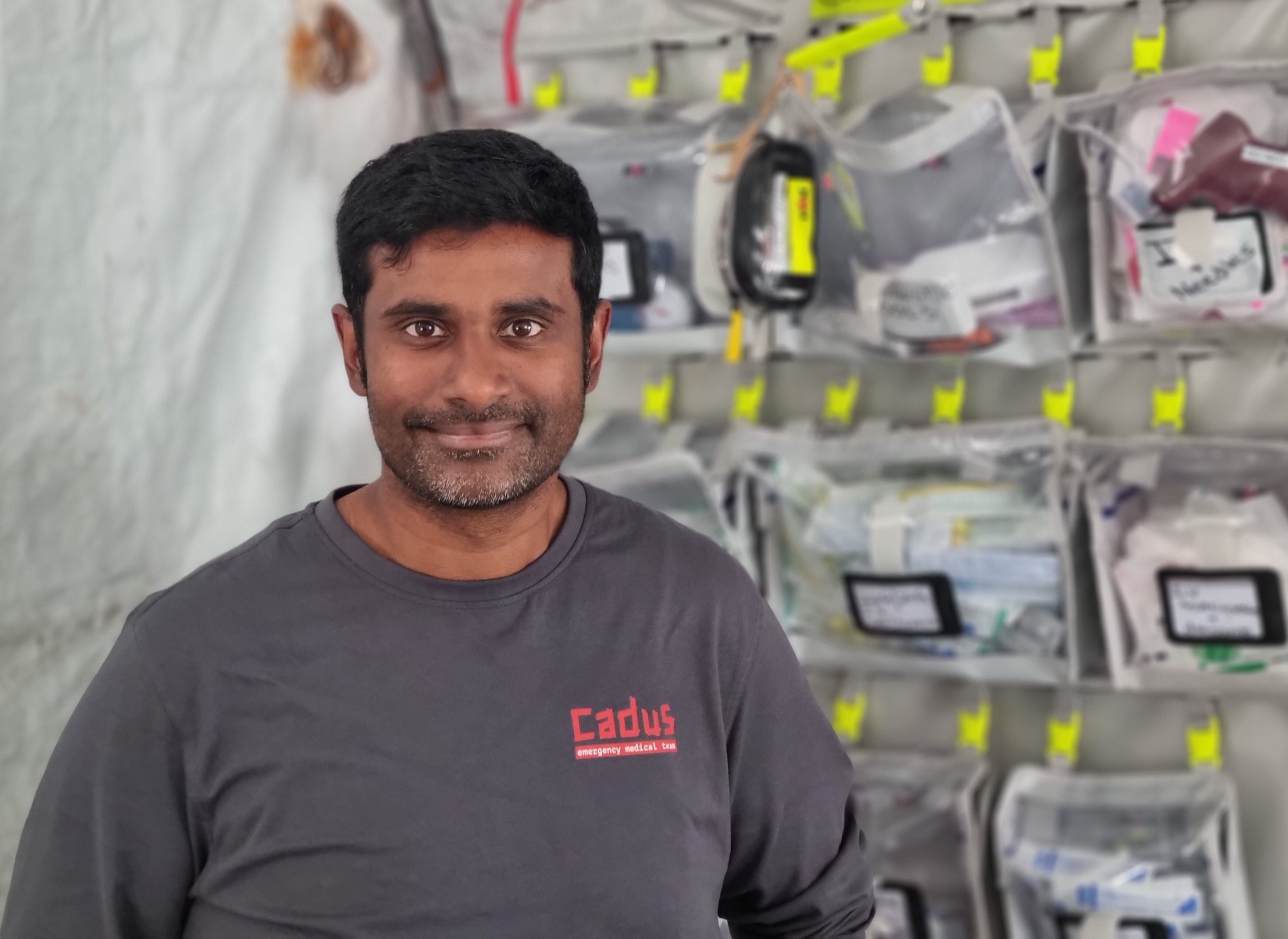
Meet our Team: Dr. Hareen De Silva
There’s almost no place nor community on earth too remote for our colleague and general practitioner Dr. Hareen De Silva BEM: From being the only doctor on a remote island, working on engaging and providing healthcare within marginalised communities to now leading the health department at CADUS. In this interview, Hareen shares what impassions him and which goals he has for humanitarian work.

Health and Democracy
The healthcare system in Germany is not in the best shape. But health isn't the only reason we should advocate for it.