Drones – A Threat and an Opportunity for Humanitarian Relief
Published on 9. November 2026
from Jonas Grünwald
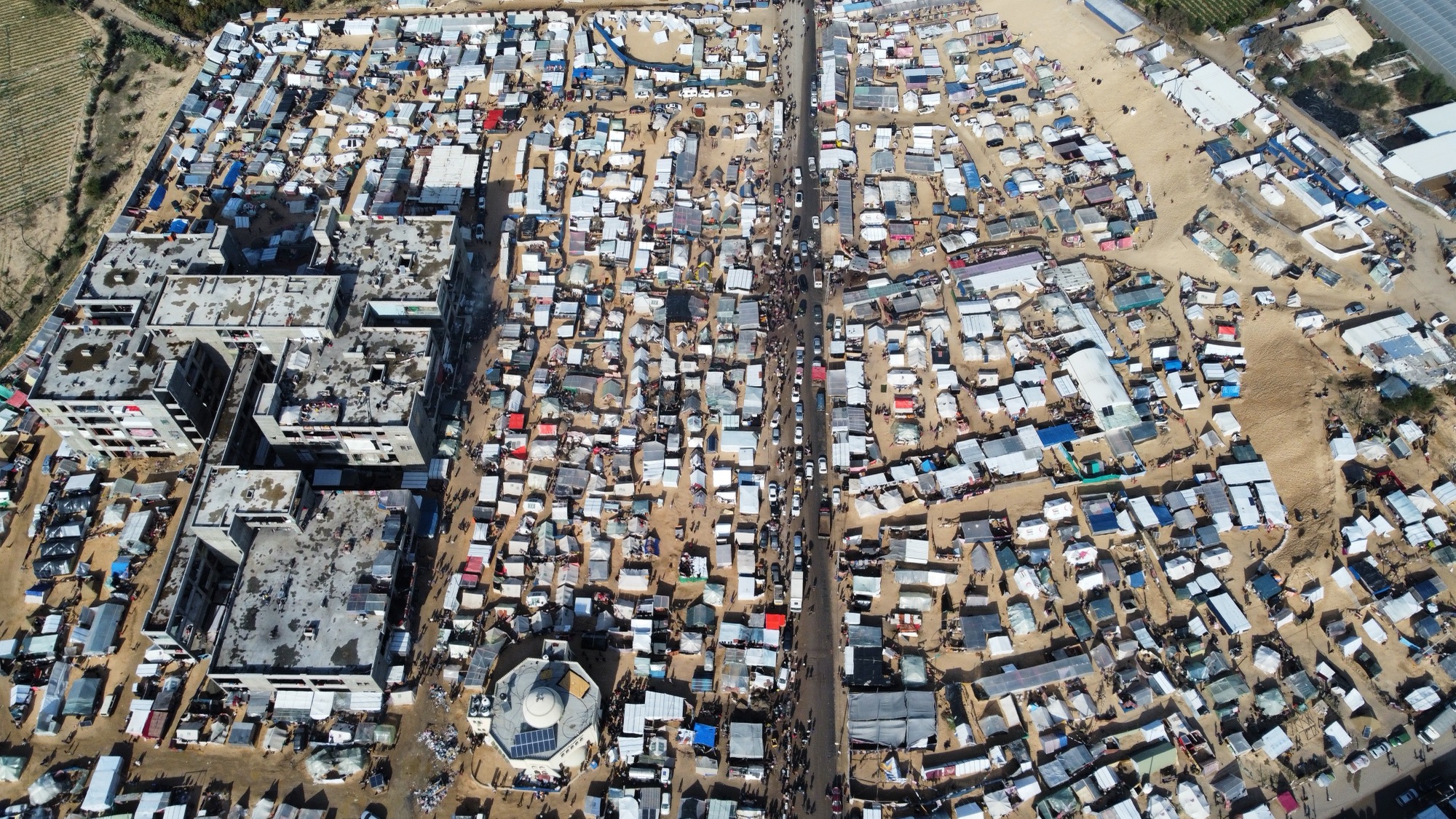
Rafah in Gaza from above, photographed by a drone: the same technology can be used to deliver humanitarian relief more efficiently or to identify targets for attacks. Photo: CADUS
The use of drones has long been a part of modern warfare as a means of surveillance, control, attack, and targeted killings.
In the past, high-tech drones, with wingspans of several meters and heavy armaments, were the exclusive domain of conventional armies. They were used most prominently by the United States in Afghanistan and Pakistan during the “War on Terror” and sparked far-reaching legal and ethical debates.
Ever since drones have become widely available on the open market at low cost, to everyone from militias and terrorist organizations to the military, the entire nature of warfare, as well as the threats faced by the civilian population, has changed. Drones that were once armed with homemade devices and flown within visual line of sight have quickly evolved into first-person view (FPV) drones, which are now mass-produced by defense contractors for use in war.
How does this development affect safety in humanitarian missions? And are there any positive aspects to the advancement of drone technology? An interview with CADUS Managing Director Sebastian Jünemann.
When did CADUS first come into contact with drones in the field?
It didn’t really become a major issue until 2016–17, when we set up a Trauma Stabilization Point (TSP) in Mosul – a first-aid station for the wounded located directly behind the front lines. There, we regularly witnessed drone attacks carried out by the Islamic State (IS). And that was also the first time we ourselves heard the whirring of the propellers – a sound that immediately puts you on high alert.
Back then, drones were already frequently used for surveillance or to scout out targets. But the fact that they would then drop mortars or grenades was relatively new. Kamikaze drones, such as those used daily in Ukraine today, did not yet exist at that time. And unfortunately, armed drones have since become a constant presence in our operations.
 During a Hostile Environmental Awareness Training (HEAT) session, Sebastian (center) also teaches participants how to incorporate the presence of drones into their mission planning. Photo: CADUS
How does the constant presence of drones affect CADUS operations and their planning?
In a war zone, there are many threats from the air: missiles, artillery, and aircraft. We’ve always had to keep an eye on them and factor them into our planning and security strategies. Then, in recent years, drones have been added to the mix.
Our security monitoring is now even more rigorous because the use of drones can change so quickly. Where drones were just being used for reconnaissance a moment ago, armed drones could be carrying out an attack shortly thereafter. Keeping a constant eye on this situation requires additional effort, which, of course, also incurs higher costs.
We’ve also adapted our training sessions and briefings, as the topic of drones is taking up more and more space. In fact, we now conduct standalone training sessions dedicated solely to this topic. These sessions are increasingly focused on practical matters, such as situation analysis using publicly available information, for example, analyzing local messaging groups, or the use of equipment capable of detecting drones. Simple “drone awareness” training sessions like those of the past are simply no longer sufficient.
In your opinion, what will be needed to cope with drones regarding humanitarian assistance?
As the use of drones evolves so rapidly, we must respond accordingly and adapt our approach. We can rely on international law only to a limited extent, as it is already being violated on a regular basis without any significant consequences. Moreover, the combination of artificial intelligence and drone warfare raises entirely new questions: Who is responsible if an AI-controlled drone strikes a hospital? How should I behave so that the AI doesn’t classify me as a threat? Presumably, international protection agreements should be adapted to these new developments. That would at least provide legal clarity.
I doubt that this would change anything in terms of the reality on the ground. And such regulations do not yet exist. Either way, all we can do is continue to draw attention to the dangers and insist on the protection of first responders and bystanders. At the same time, we’re approaching the issue with “operational acceptance”: Drones are ubiquitous and will not disappear. We’re adapting our analysis, equipment, and operational procedures accordingly.
 The markings identifying the vehicle as a medical or humanitarian one, which are visible from a distance, are intended to protect it from targeted attacks. In reality, unfortunately, this has not always been the case – and not just since the introduction of drones. Photo: CADUS
In your view, is there anything positive about the rapid development of drone technology when it comes to humanitarian response?
Drones are already being used to transport medicine and relief supplies across rough terrain. Drones are also invaluable for mapping terrain or navigating through rubble after an earthquake. We participated in the AMADEUS research project, which uses drones to set up a mobile phone network in areas where communications have broken down.
Here, too, the war is driving a great deal of development as a byproduct – development that, in principle, could also be applied to the civilian sector. Just recently, a patient in Ukraine was evacuated from an active combat zone entirely by drone for the first time. Prior to that, similar evacuations had been carried out there using remote-controlled vehicles.
This is, of course, highly interesting for situations that are too dangerous for humans, such as buildings at risk of collapse or gas leaks. Unfortunately, the immense costs will initially prevent such systems from being deployed quickly and on a large scale for humanitarian response. But given the current pace of development in this field, that could change quickly.
The issue of drones will certainly continue to be a focus for us – both in a negative and a positive sense. We’re monitoring developments and adapting accordingly. That’s how we’ve handled it since our mission in Mosul, and that’s how we’ll continue to do so.
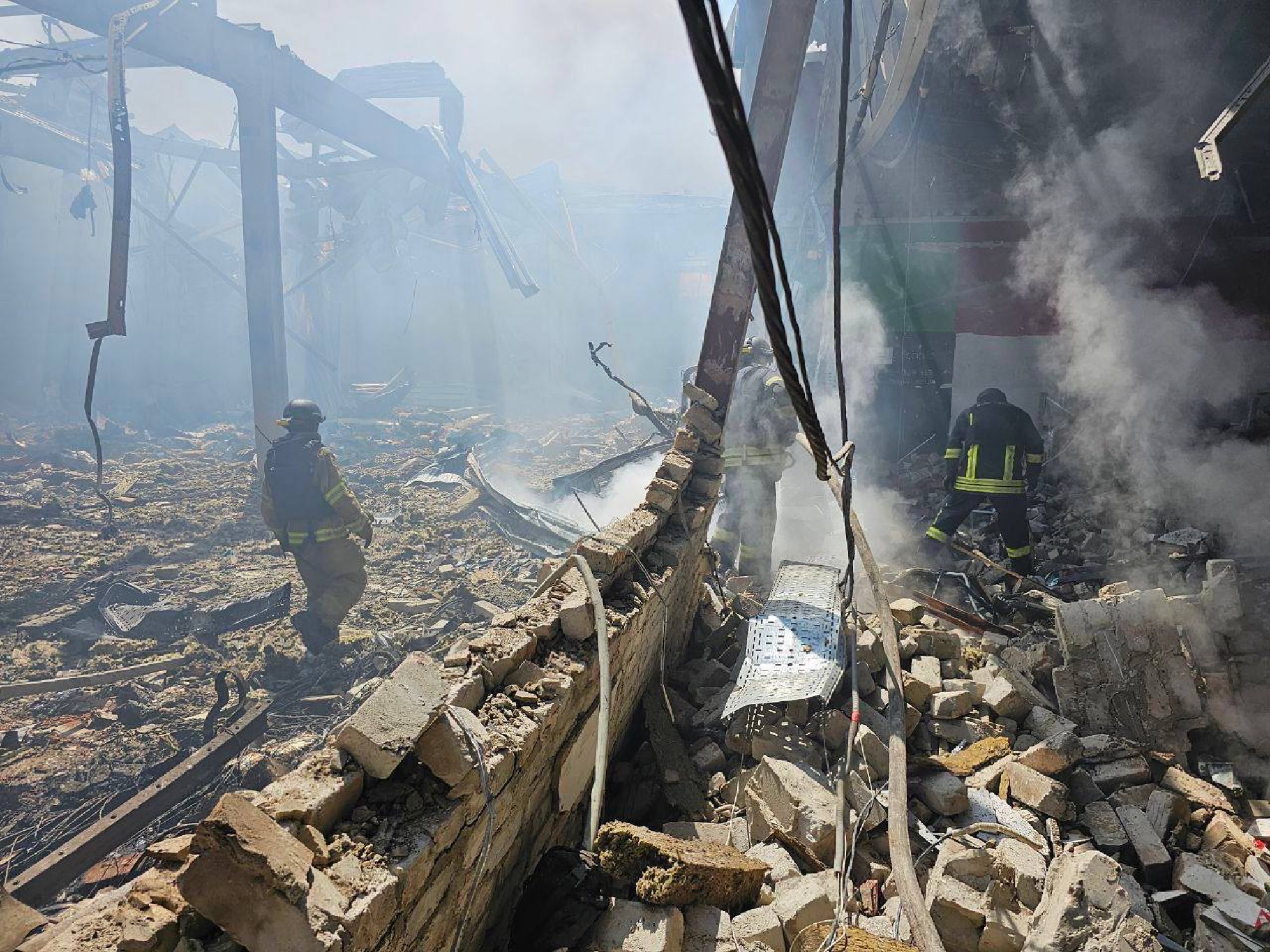
An eventful night in Dnipro
The attacks on Ukrainian cities continue relentlessly. Time and again civilian infrastructure is targeted. Just recently a train station in Dnipro was bombed with 14 people killed. Last night Dnipro and other cities were hit again. A report from our Infield Operations Coordinator Moto Michikata.
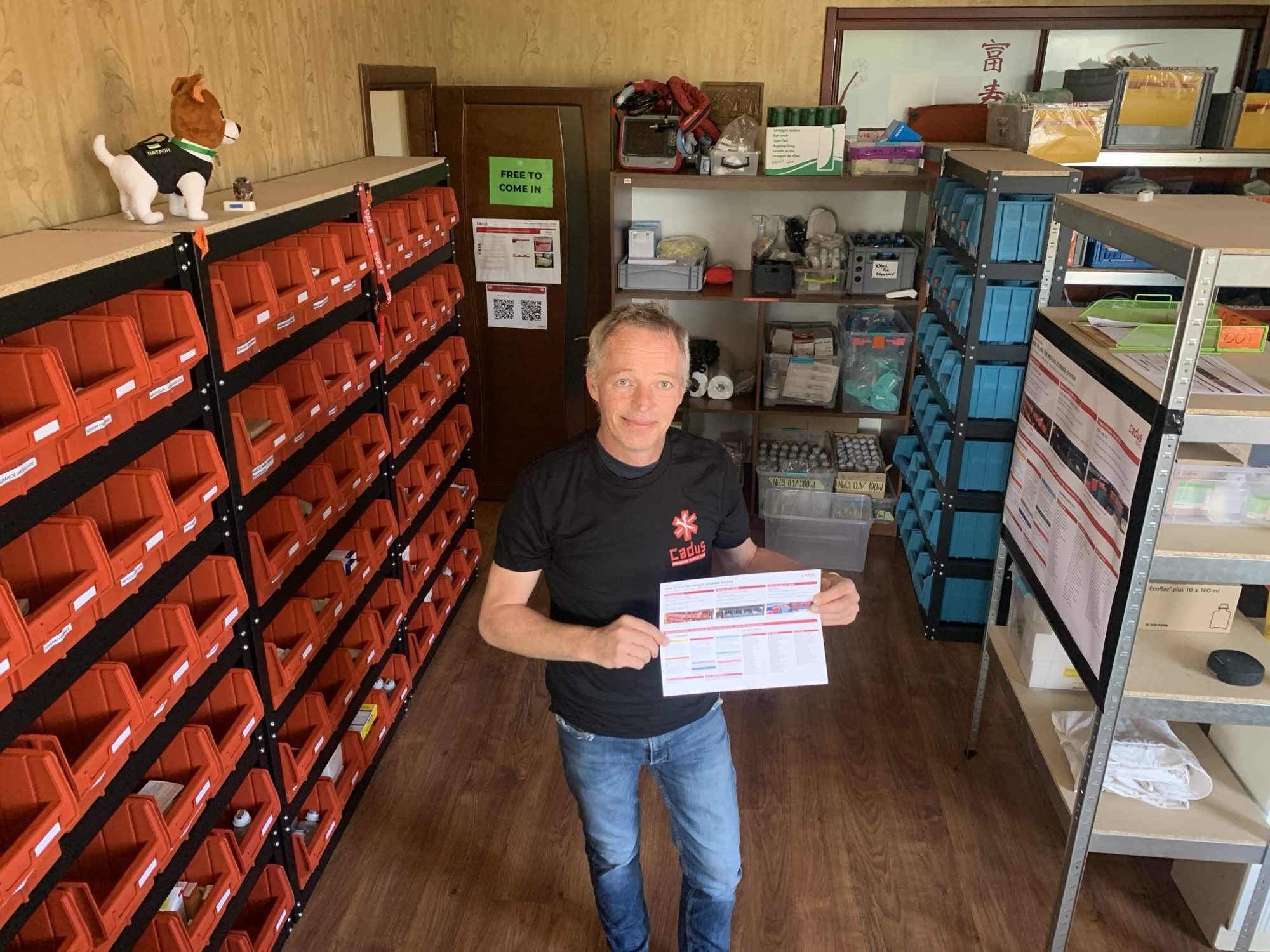
From shelf life to saving lives – medical logistics in Dnipro
"When shelves run dry, patients die." Anyone who wants to provide medical care to patients needs a lot of supplies. To ensure that our MedEvac teams in Ukraine always have exactly what they need, we’ve revamped our medical logistics operations in Dnipro. An interview about the close connection between logistics and medicine.

A threat returns to Dnipro
Although still roughly 120 km away from the active front line in Ukraine, the attacks on the city of Dnipro are becoming more frequent in the past weeks. The city serves our teams as the base for our MedEvac operations. Our Infield Operations Coordinator Moto Michikata reports how she experienced her first attack, triggered by a threat that has just become acute again.