From shelf life to saving lives – medical logistics in Dnipro
Published on 31. October 2026
from Infield Team
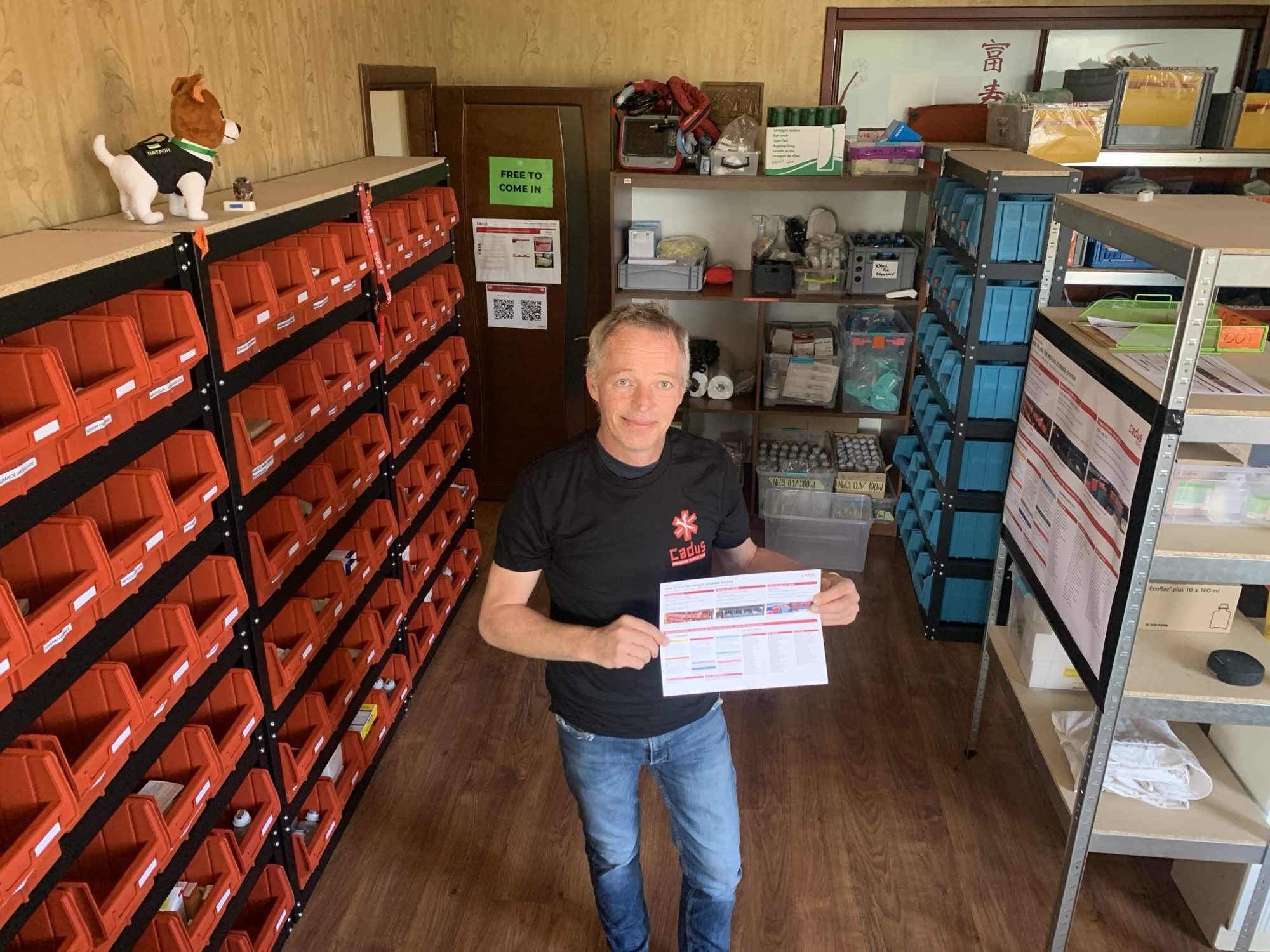
“When shelves run dry, patients die.” Anyone who wants to provide medical care to patients needs a lot of supplies. To ensure that our MedEvac teams in Ukraine always have exactly what they need, we’ve revamped our medical logistics operations in Dnipro. An interview about the close connection between logistics and medicine.
My name is Gauthier Pourcelle. I am currently assisting CADUS’s Ukraine project, based in Dnipro, including the rollout of a new medical logistics system.
Working alongside CADUS teams has allowed me to meet highly skilled professionals whose commitment and humanity guide their work for people in need of assistance.
This experience is also a strong reminder of the importance of medical logistics in humanitarian operations. For medical teams to provide safe and effective care, a dedicated MedLog function must help ensure that supplies are transported, stored and distributed properly, in the right place, at the right time and according to actual needs.
How would you explain your role to someone outside humanitarian work?
My role as a Project Assistant was to help colleagues do their work, through everyday administration and practical support. Alongside that, I worked on the medical logistics system.
For me, its first purpose is to help protect medical teams and patients. A medicine can be physically present but unusable because it has expired or been stored incorrectly. A device can be available without the consumable needed to connect it. Logistics has to anticipate these problems so colleagues can concentrate on care.
What makes medical logistics different from simply managing a storeroom?
It follows the whole journey: identifying needs with the medical team, planning procurement, arranging transport, checking deliveries, storing products, recording movements and preparing replenishment. Product quality and traceability have to be maintained throughout.
The seven rights are a useful reminder: the right product, in the right quantity and condition, in the right place, at the right time, for the right recipient, at the right cost. In a humanitarian setting, cost means responsible use of limited resources while preserving quality. A cheap purchase is no saving if it cannot safely be used.
Where did you start in Dnipro?
By listening, looking at the storage areas and counting. We needed a usable baseline: what we had, where it was, how much was available and when it expired. We tested the method on a few boxes before extending it across the stock.
The system was developed manually around the base’s needs and already existing CADUS SOPs (Standard Operation Procedures), using labelled boxes, paper records and linked spreadsheets. Medical consumables were actually grouped into eight familiar families: Airways, Breathing, Circulation, Diagnostic, Environment, Hygiene, Surgical and Wound. Pharmaceuticals received rack and bin locations. The physical layout and the records had to describe the same stock. The system can be evaluated to follow new CADUS standard or policy.
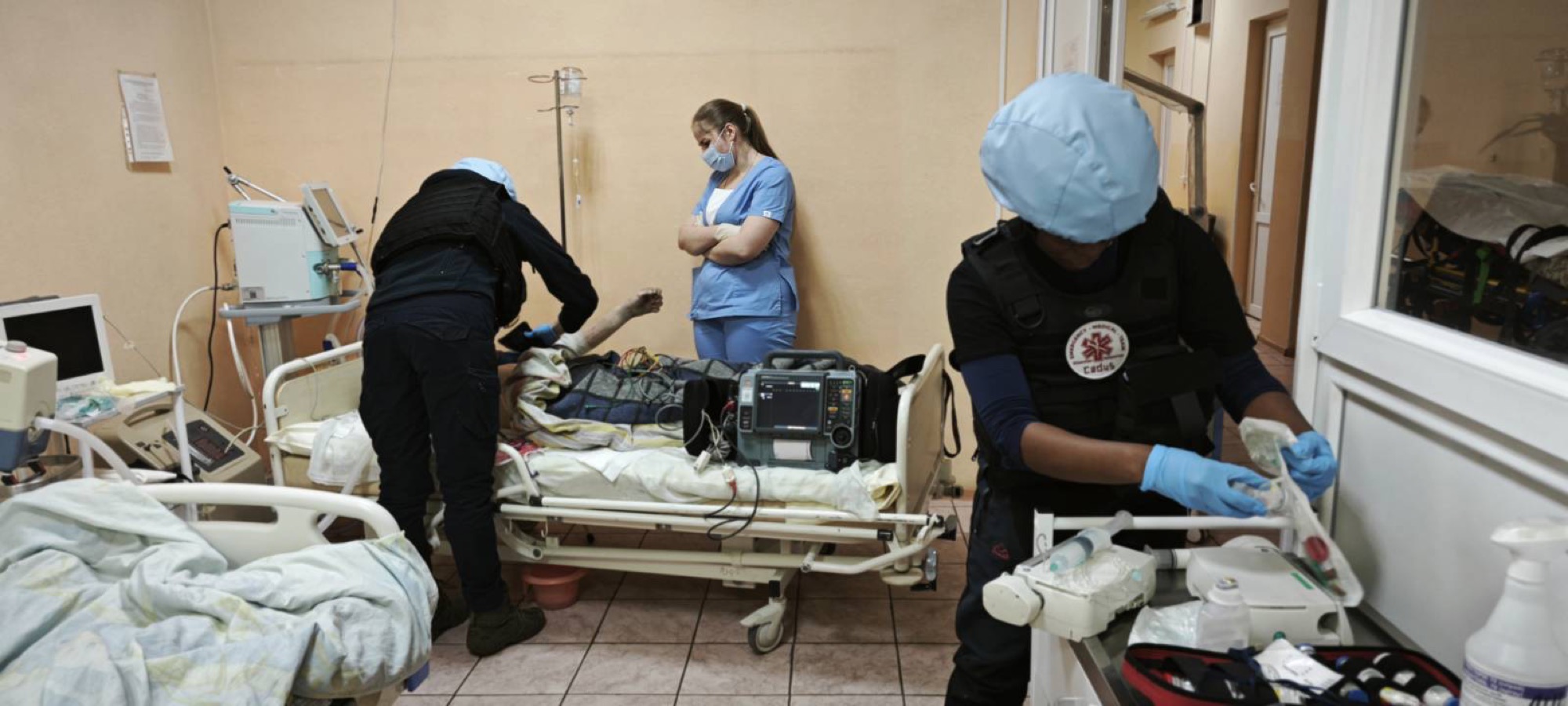 To prepare patients for medical evacuations (MedEvac), like here in a hospital in Dnipro, and taking care of them during transport requires a large amount of medical supplies. Constant replenishment of these materials is essential to the success of the operation. Photo: CADUS
How do you make a logistics system speak the medical team’s language?
You build it with the people who use the products. Medical colleagues explained what each item was for, which components connected to each other and what they needed during preparation. That helped us place related items close together and agree which consumables belonged in the Pick and Go rack.
A reference number matters for traceability, but someone looking for a breathing circuit needs a recognisable name and a clear location. Codes, colours and plain descriptions work together. The medical team provides clinical expertise; logistics translates those needs into storage, movement and supply arrangements.
What does using the system look like in practice?
There are three routes. For pharmaceuticals, the user makes one tally mark on the white tab for each unit taken. The PA, or Project Assistant, then updates the stock records.
The Pick and Go rack is for medical consumables only. Colleagues take what they need without completing an OUT form. The PA checks it weekly, replenishes missing items and reconciles the relevant stock movements. It is a practical compromise: quantities on the rack are checked periodically rather than tracked live after every withdrawal.
For items outside the racks, colleagues ask the PA, who retrieves the item, hands it over and completes the OUT registration. The poster makes these routes easy to understand.
How do international standards enter everyday decisions?
WHO good storage and distribution practices provide a technical reference for protecting product quality, keeping records, rotating stock and separating unusable products. Sphere’s health standards place access to essential medicines and medical devices within the wider responsibility to provide appropriate humanitarian care.
These references sit alongside applicable regulations, CADUS procedures and each manufacturer’s instructions. Temperature, humidity, light protection and cold-chain requirements depend on the product and must be respected during transport as well as storage. A spreadsheet cannot establish that a product is safe after a temperature excursion; that requires qualified assessment.
How does the inventory help you prepare the next delivery?
It makes short-dated stock visible so valid products with the earliest expiry can be placed first for issue. That is FEFO: First Expiry, First Out. Expired or uncertain stock must be kept apart from stock available for use.
The records also help us discuss minimum quantities with the medical team, compare consumption with delivery lead times and allow for delays. Replenishment should consider usable stock, orders still in transit, expected demand and an appropriate buffer. The aim is to avoid both shortages and excess stock that may expire. These decisions need regular review as activities and patient needs change.
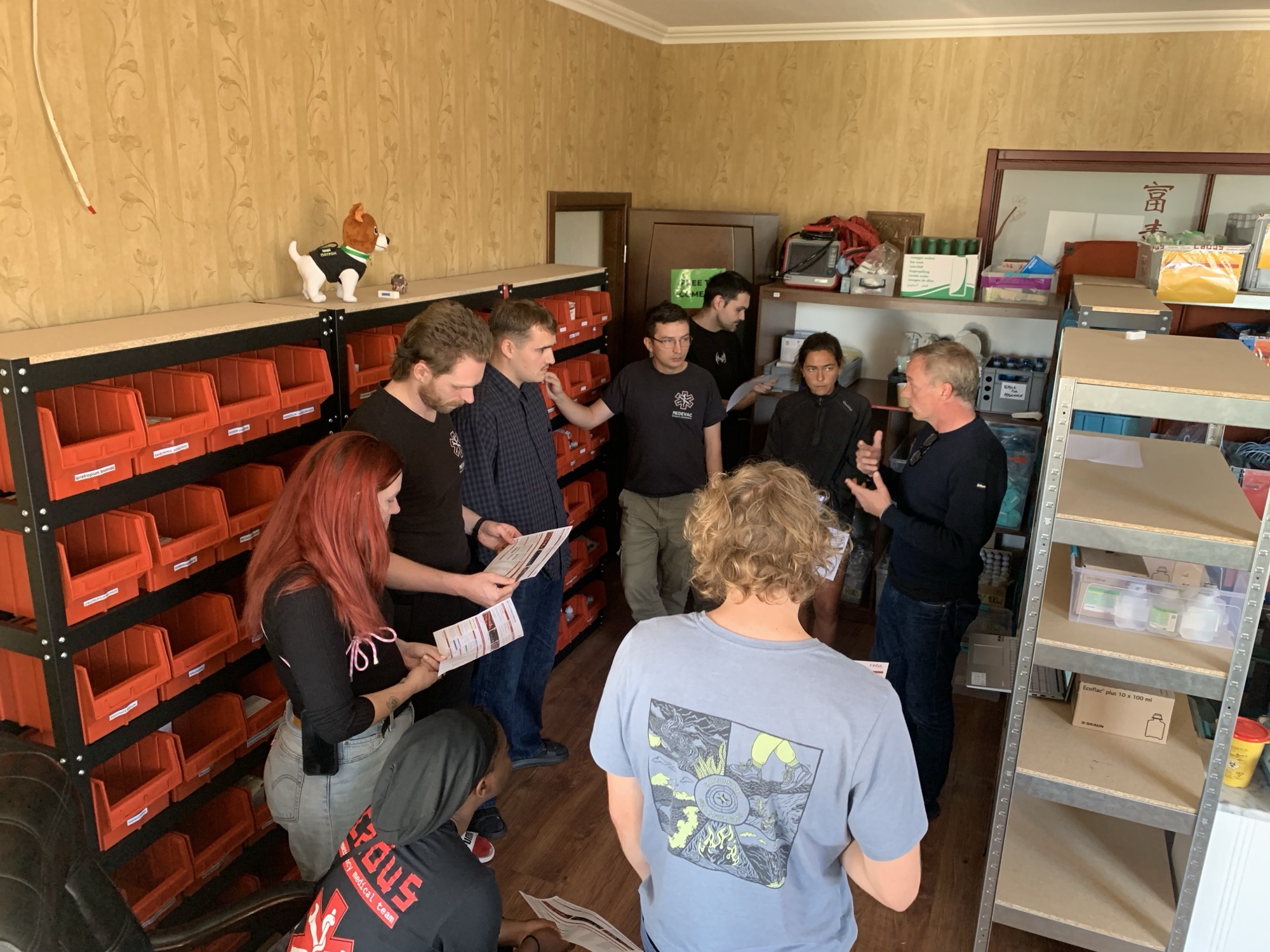 Gauthier explains the setup and processes behind the new established medical logistics system to the Dnipro team. Photo: CADUS
You often compare the system to a car. Why?
The controls should be understandable, the fuel gauge easy to read and refilling straightforward. The driver should not need to understand the engine electronics before making a journey. Medical logistics should feel similar.
Behind a simple withdrawal are calculations, stock reconciliation, expiry checks and procurement planning. Setting that up takes effort, but users should not carry all that complexity. The next logistician must also be able to learn how to operate and maintain the system. Its records need to be accessible to authorised colleagues in the field and at headquarters, with clear responsibilities for updates. Otherwise, the knowledge leaves with one person.
Who helped turn the idea into a working system?
This was a collective project between the headquarters Health and Logistics team, who contributed their expertise and support. Daily exchanges with field medical teams, IMC, doctors and medics brought the product knowledge, practical experience and understanding of patients’ needs that made the layout useful.
Field coordination and support colleagues also made the work possible, including budget validation and practical arrangements. We kept expenditure limited, using existing equipment where suitable and sourcing simple additions. The review of storage conditions and oxygen-cylinder safety brought further perspectives. I coordinated much of the implementation, but the result depended on that collaboration.
What comes next, and what has the experience meant to you?
The system is in its final full-scale testing phase. We need to see how well records match physical stock, whether weekly replenishment works and what colleagues find difficult. It should keep evolving with medical needs, delivery constraints, security conditions and regulatory requirements.
It remains an internally developed tool for internal use, not a finished solution to be copied unchanged.
Personally, it has been a source of fulfillment. I could see support work taking its proper place: useful to operations and important to their safety and performance. Helping colleagues find what they need, trust the stock and spend more time with patients gives that work a very concrete meaning.

A threat returns to Dnipro
Although still roughly 120 km away from the active front line in Ukraine, the attacks on the city of Dnipro are becoming more frequent in the past weeks. The city serves our teams as the base for our MedEvac operations. Our Infield Operations Coordinator Moto Michikata reports how she experienced her first attack, triggered by a threat that has just become acute again.
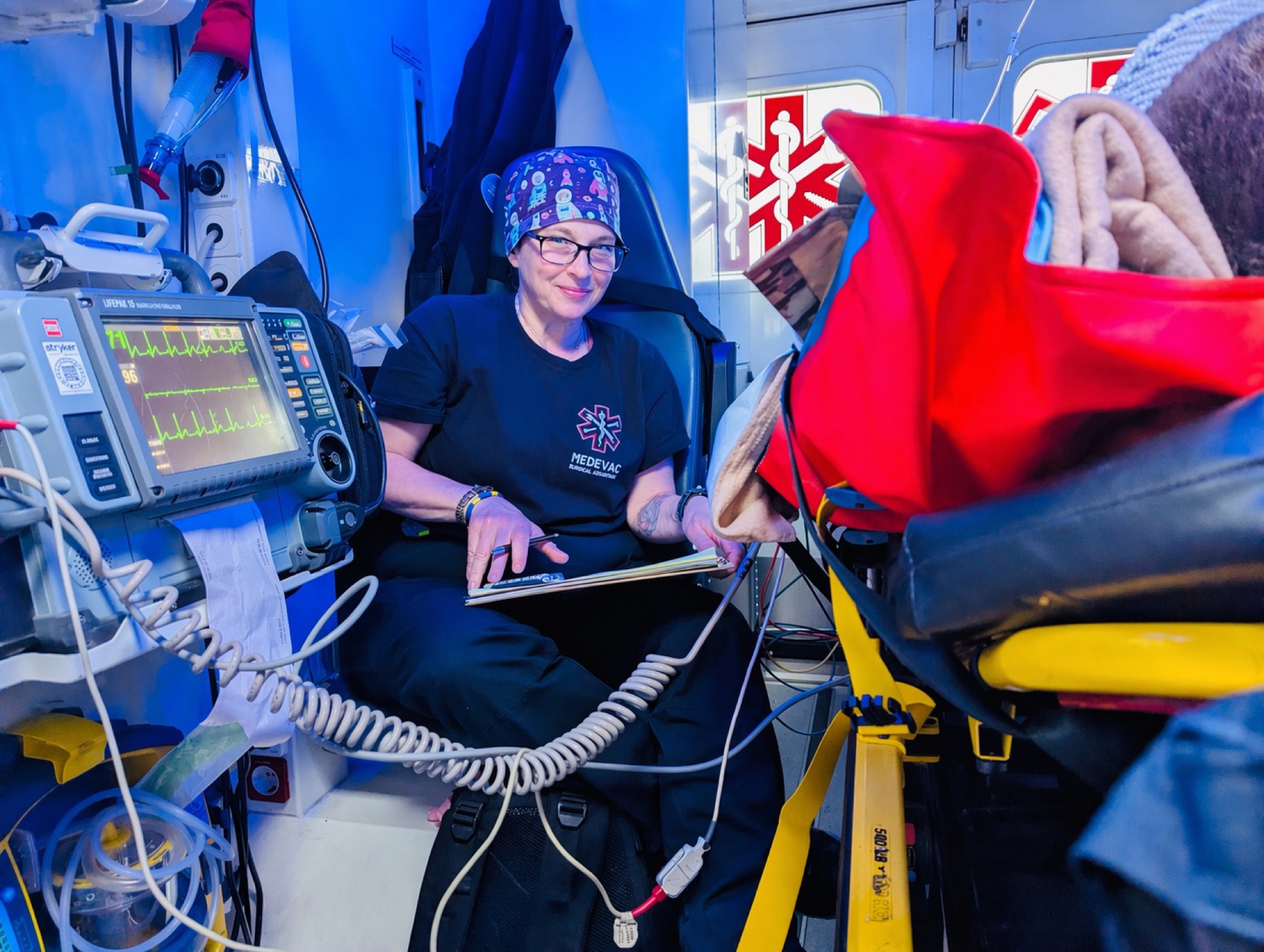
Meet our Team: Skye Steffens
In our series, we introduce the people behind our responses . Today, we are speaking with Skye Steffens, a colleague from our medical evacuation team in Ukraine. She works as an experienced intensive care nurse under extreme conditions near the frontline. In the interview, she talks about her journey into humanitarian response, the unbreakable bonds with her team, and why looking away is not an option for her.
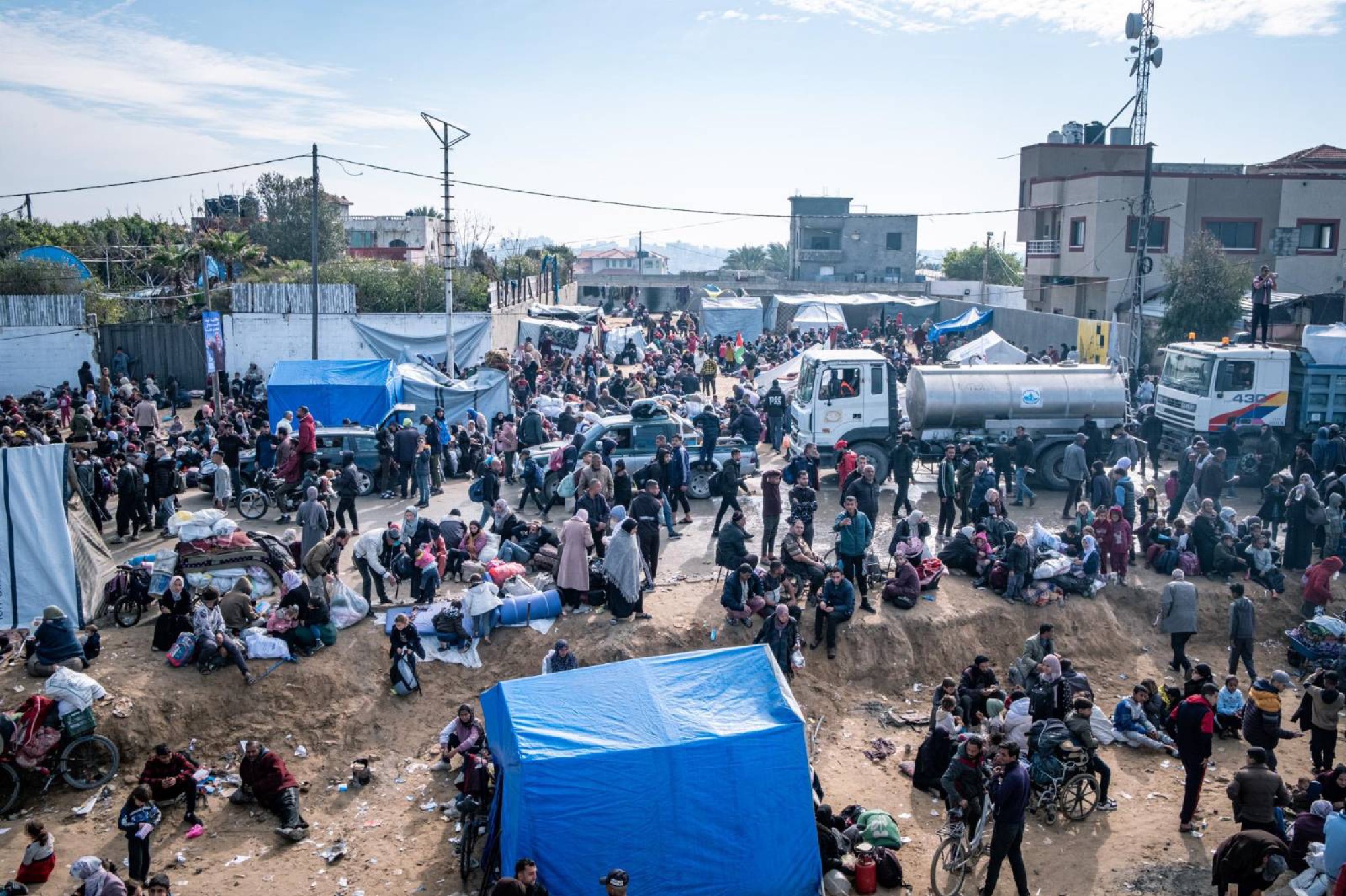
1 Year of Stagnation
On October 10, 2025, a ceasefire was agreed upon between the Israeli army and Hamas. One year later, Gaza is still being bombed, albeit less than before. The only real standstill lies in the living conditions and prospects for the people of Gaza.