Meet Our Team: Peter Dischler
Published on 6. November 2026
from Jonas Grünwald
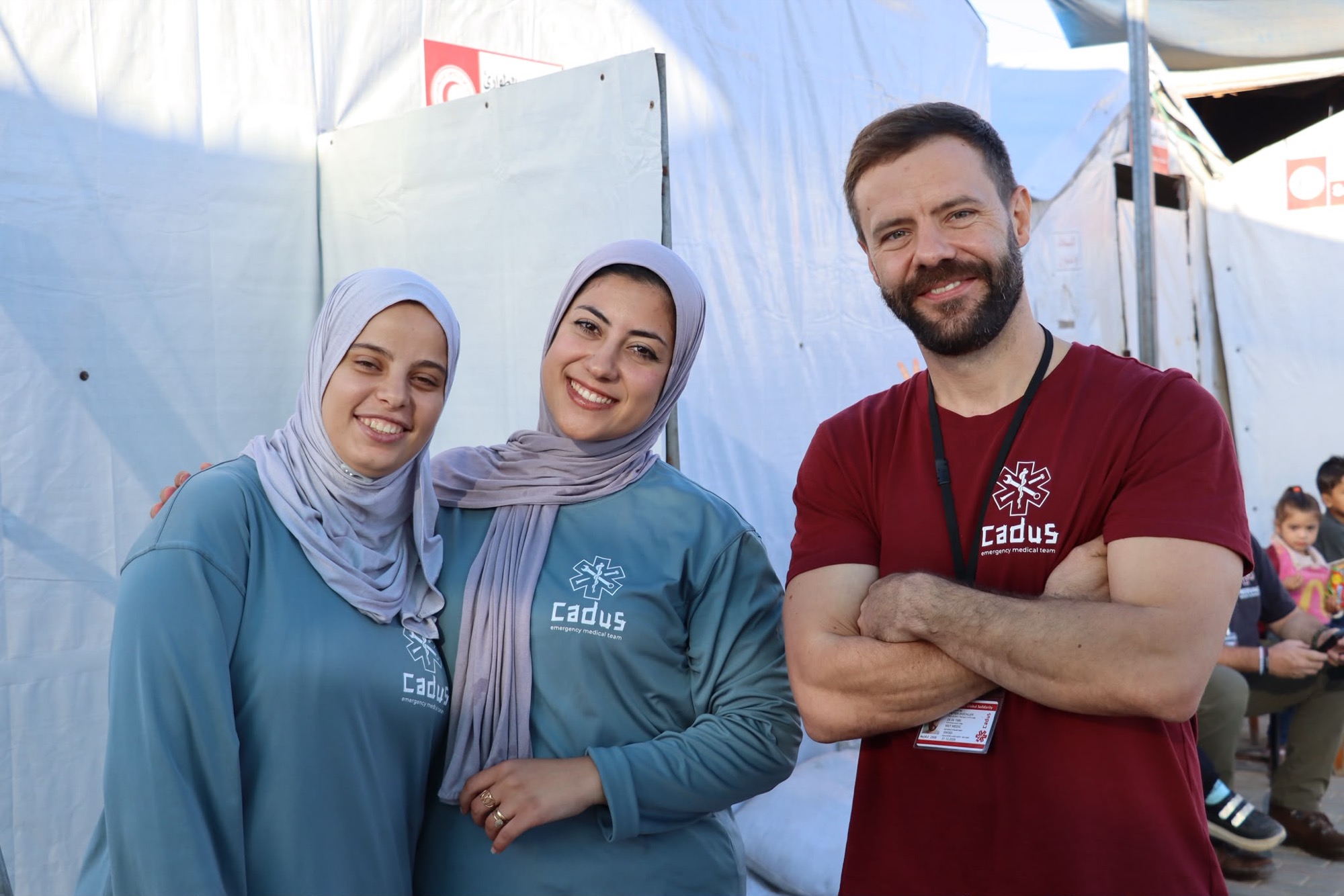
In this series, we introduce the people behind our responses. Today, we speak with our current Head of Mission in Gaza, Peter Dischler, about his experiences in humanitarian assistance and the balancing act between life on deployment and returning home.
How do you introduce yourself and your role to someone who isn’t familiar with your work?
I usually explain briefly that I work in humanitarian relief for medical organizations – previously as a paramedic, and now as an Head of Mission. I spend my days gathering information, making decisions together with the team, leading many meetings, and above all: solving problems. However, in the field, we’re heavily dependent on our partners and changing circumstances. A large part of our work involves figuring out how to get things done despite a lack of resources – even if that’s often just a temporary solution, because we run into obstacles everywhere. It involves a lot of on-the-spot thinking and improvisation.
What was your life like before you decided to work in humanitarian emergency response?
I originally trained as a healthcare and nursing professional, traveled a lot, and then completed my training as a paramedic fairly quickly. I used to really want to work in humanitarian relief. I come from a small valley, or rather, a village, and just wanted to get out. It all started with military deployments as an emergency medical technician in Kosovo with KFOR, then a month in Greece providing refugee aid, followed by ten months with Cap Anamur in Somaliland. During the COVID pandemic, I spent five months in Sierra Leone because I couldn’t go home. Later, I worked on missions in Ukraine and Iraq, and now I’m in Gaza with CADUS. In between, I keep working as a paramedic in Switzerland because I just enjoy this mix of emergency medical services and humanitarian work.
Could you describe a moment when you thought, “This is exactly why I do this”?
There isn’t just one single moment, but the work itself gives me a sense of purpose. You learn how to support people in different ways. Since every crisis can look different, the challenges are new every time, and I’ve gotten used to my heart racing in these dynamic situations. I then bring that ability back into my work.
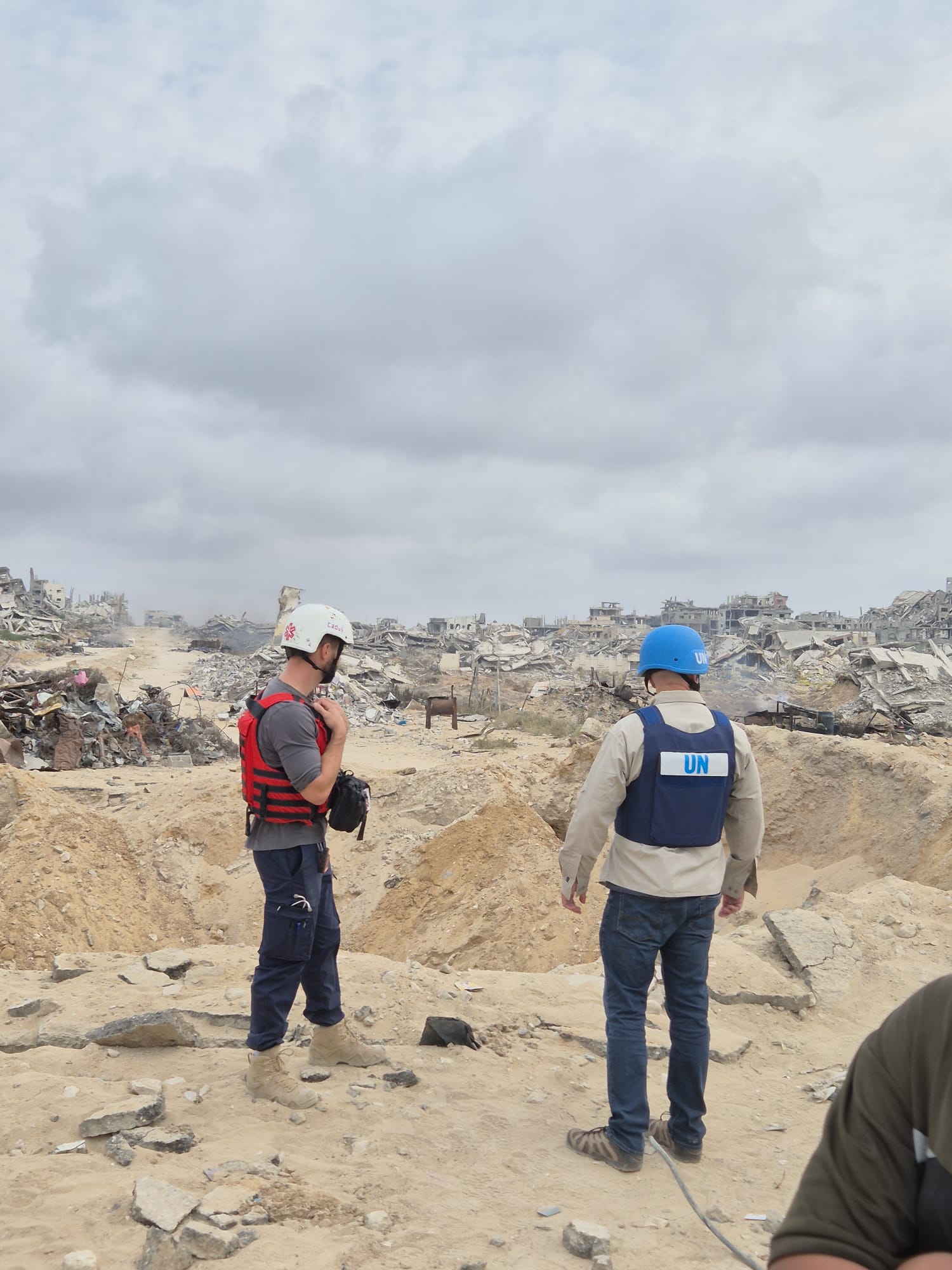 Right in the thick of it, yet no words to describe it: Peter amid the rubble in northern Gaza. Photo: CADUS
When you talk to your family or friends at home, what’s the most difficult aspect of your job to explain to them?
The hardest part isn’t even explaining the war or the destruction, because that’s almost impossible to put into words anyway – especially since you usually only experience a fraction of it yourself. What’s more difficult is coming home and realizing how hard it is for others to make sense of it all. Many people tend to focus mainly on what fits into their own worldview. Another aspect that’s hard for me to explain is the dissonance between everyday life at home and what I experienced during a deployment.
Have you learned anything about yourself through these activities that you didn’t know before?
To be honest, in such extreme situations, I don’t primarily learn anything about myself in the traditional sense, but you do learn to see things through. When you’re about to go on a mission to a war zone like Ukraine or Gaza, knowing that you’re crossing the border and won’t be able to get out anytime soon, you’re naturally plagued by nervousness and doubt in the nights leading up to it. Theoretically, you could back out at any time. But when you go through with it anyway and face the situation head-on, it builds mental strength. You take a few deep breaths, tell yourself you can do it, and just go for it.
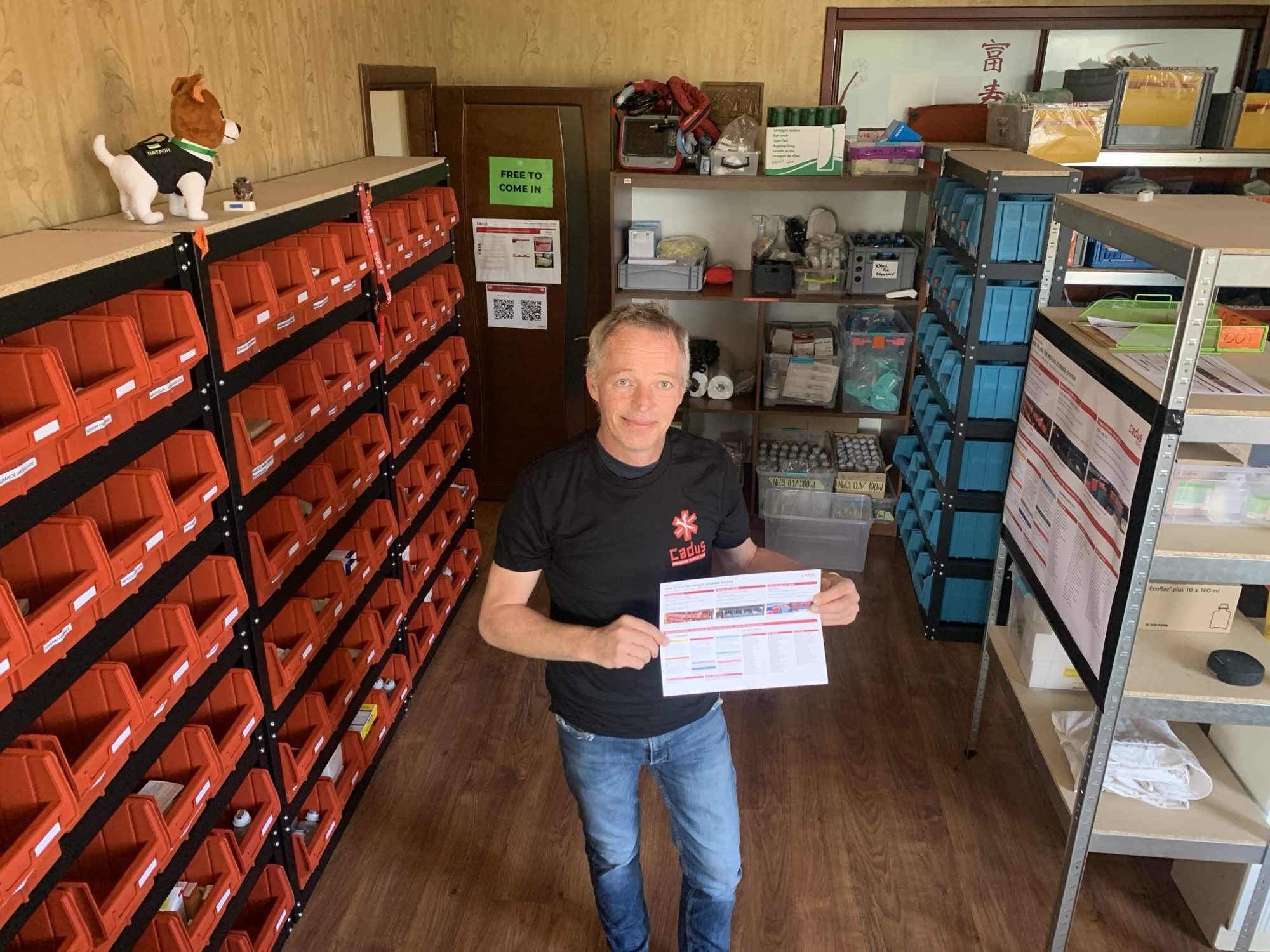
From shelf life to saving lives – medical logistics in Dnipro
"When shelves run dry, patients die." Anyone who wants to provide medical care to patients needs a lot of supplies. To ensure that our MedEvac teams in Ukraine always have exactly what they need, we’ve revamped our medical logistics operations in Dnipro. An interview about the close connection between logistics and medicine.

A threat returns to Dnipro
Although still roughly 120 km away from the active front line in Ukraine, the attacks on the city of Dnipro are becoming more frequent in the past weeks. The city serves our teams as the base for our MedEvac operations. Our Infield Operations Coordinator Moto Michikata reports how she experienced her first attack, triggered by a threat that has just become acute again.
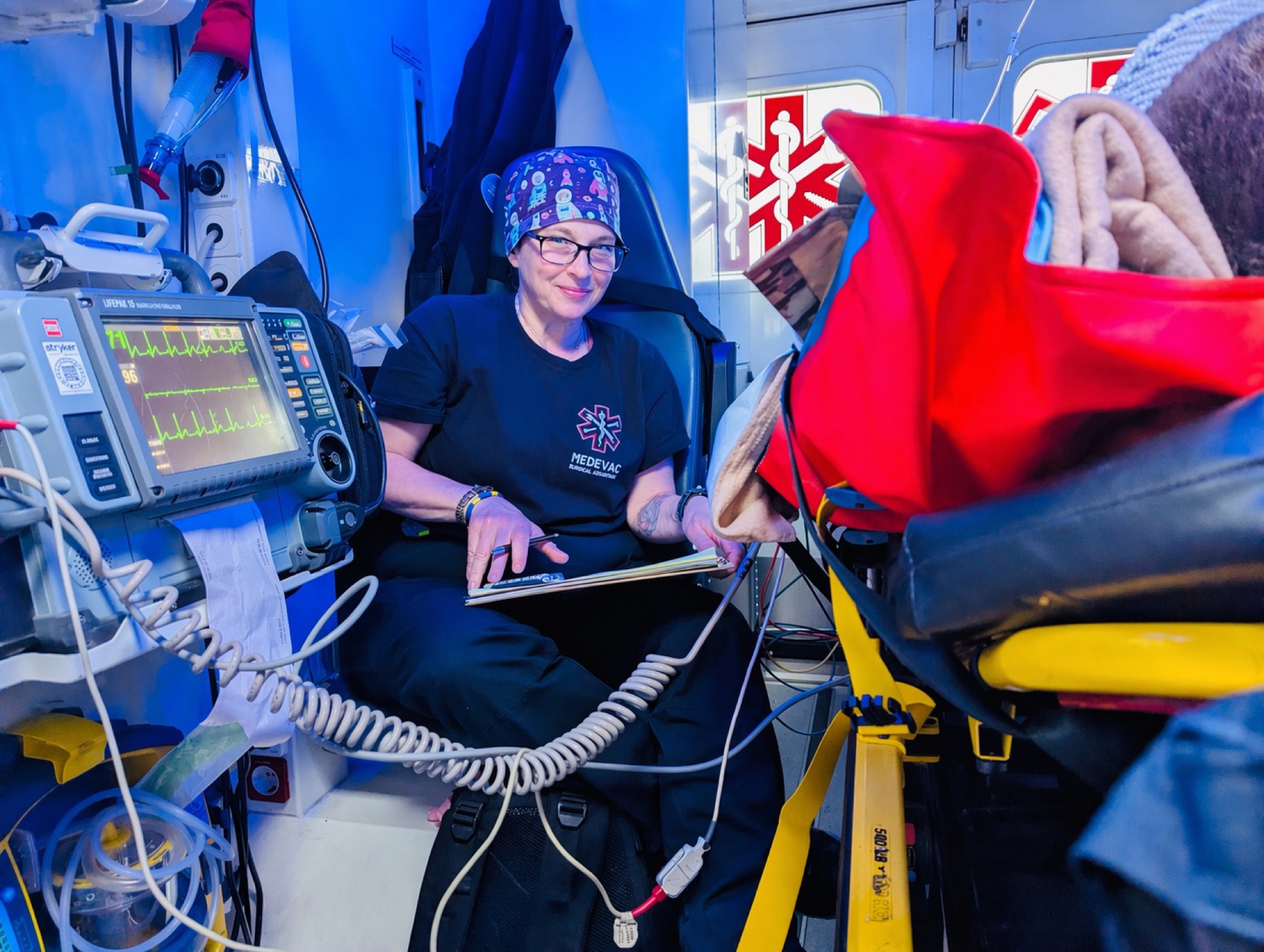
Meet our Team: Skye Steffens
In our series, we introduce the people behind our responses . Today, we are speaking with Skye Steffens, a colleague from our medical evacuation team in Ukraine. She works as an experienced intensive care nurse under extreme conditions near the frontline. In the interview, she talks about her journey into humanitarian response, the unbreakable bonds with her team, and why looking away is not an option for her.