COVID, the camp, and a little chaos: a progress report on our mission in Lesbos.
Published on 6. November 2020
from CADUS-PR
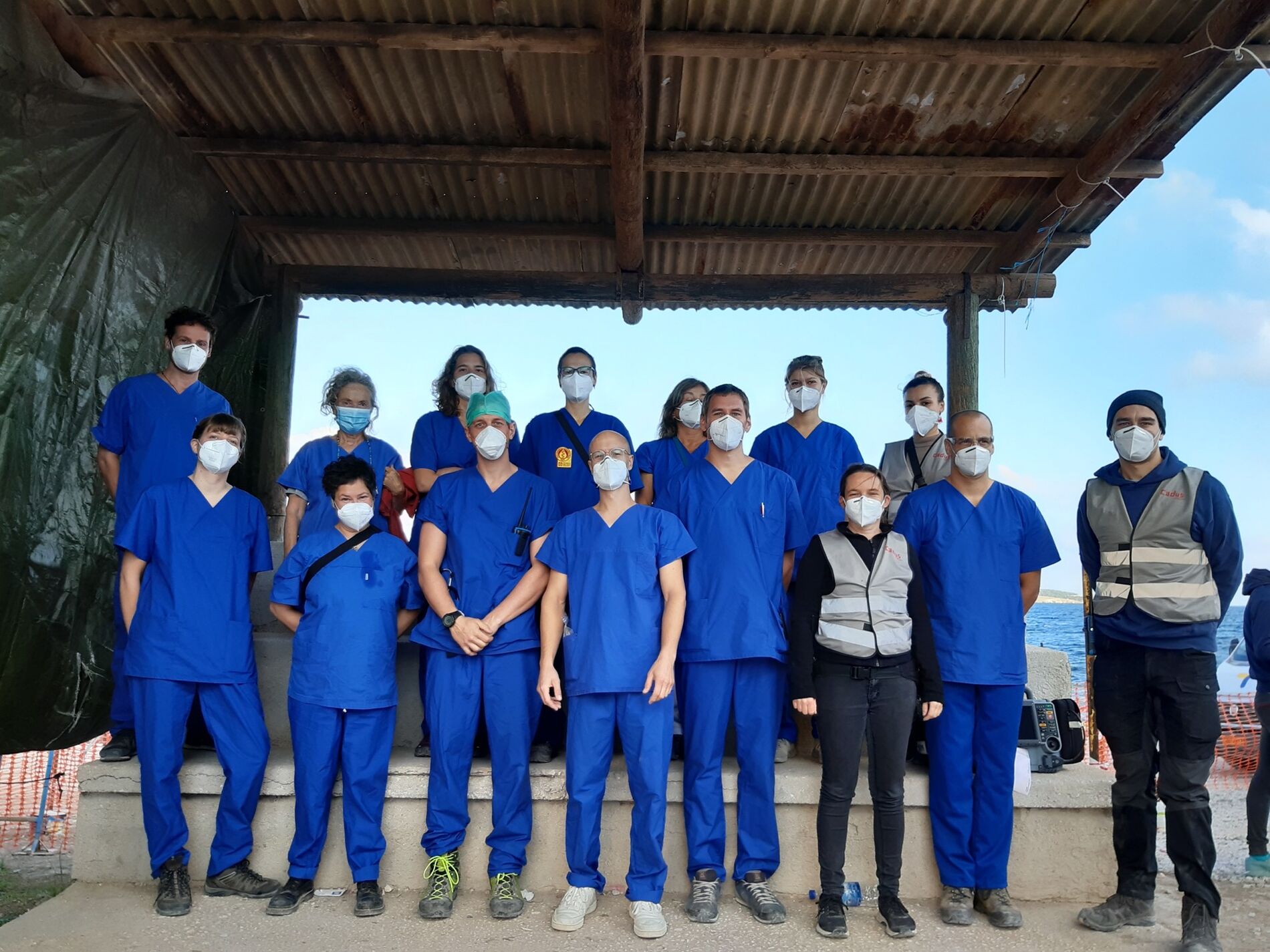
The ASB and CADUS team has their hands full at Camp Kara Tepe 2 on Lesbos. ©CADUS
We’ve now been at Camp Kara Tepe 2 on Lesbos, Greece, together with the ASB for two weeks. Our initial assessment of the mission is: it’s complicated. We don’t want people to have to live in camps. In reality, however, the current situation cannot be resolved in the short term as long as the EU shows no interest in doing so. So we have to work with what we have. Here’s a brief overview of what we’ve found on Lesbos.
The “Reception and Identification Center” (RIC) Kara Tepe (the successor camp to Moria) initially lacked even the bare minimum of infrastructure needed to support the more than 7,000 camp residents. In the meantime, many NGOs and institutions are working to expand various areas of support and address the lack of infrastructure. This is necessary above all in light of the coming winter, but it is also important for the camp’s long-term future: originally, it was intended to be only a temporary shelter until next spring. However, the planned replacement is taking a long time to materialize, if only because no one on Lesbos is willing to provide land for a new camp.
In addition to the general hardships of living in an under-resourced camp, COVID-19 measures are making life difficult for camp residents. Currently, only 750 people are allowed to leave the camp each day, and every day a long line forms at the main gate, which serves as both the entrance and exit. There is no communication plan in place for the introduction of new regulations. Refugees only learn about the exit restrictions when they find themselves standing in front of the closed gate, which thwarts their plans for the day.
Accessibility and the Fundamental Right to Medical Care
Our days are spent mainly at the clinic. It is located right outside the camp gate, on a narrow street with nothing but the sea on the other side.
All daily traffic entering or leaving the camp—whether on foot or by vehicle—must squeeze through this bottleneck. If the police temporarily close the gate, as is happening more and more often, it leads to a crowd gathering right in front of our entrance area, the triage. To keep the gate passable, the following routine has developed: the police push people back toward the camp and block the path with a bus parked across it and a police cordon. While this makes the gate easily passable again from the clinic’s side, our patients are stuck on the other side of the police cordon and can no longer reach us.
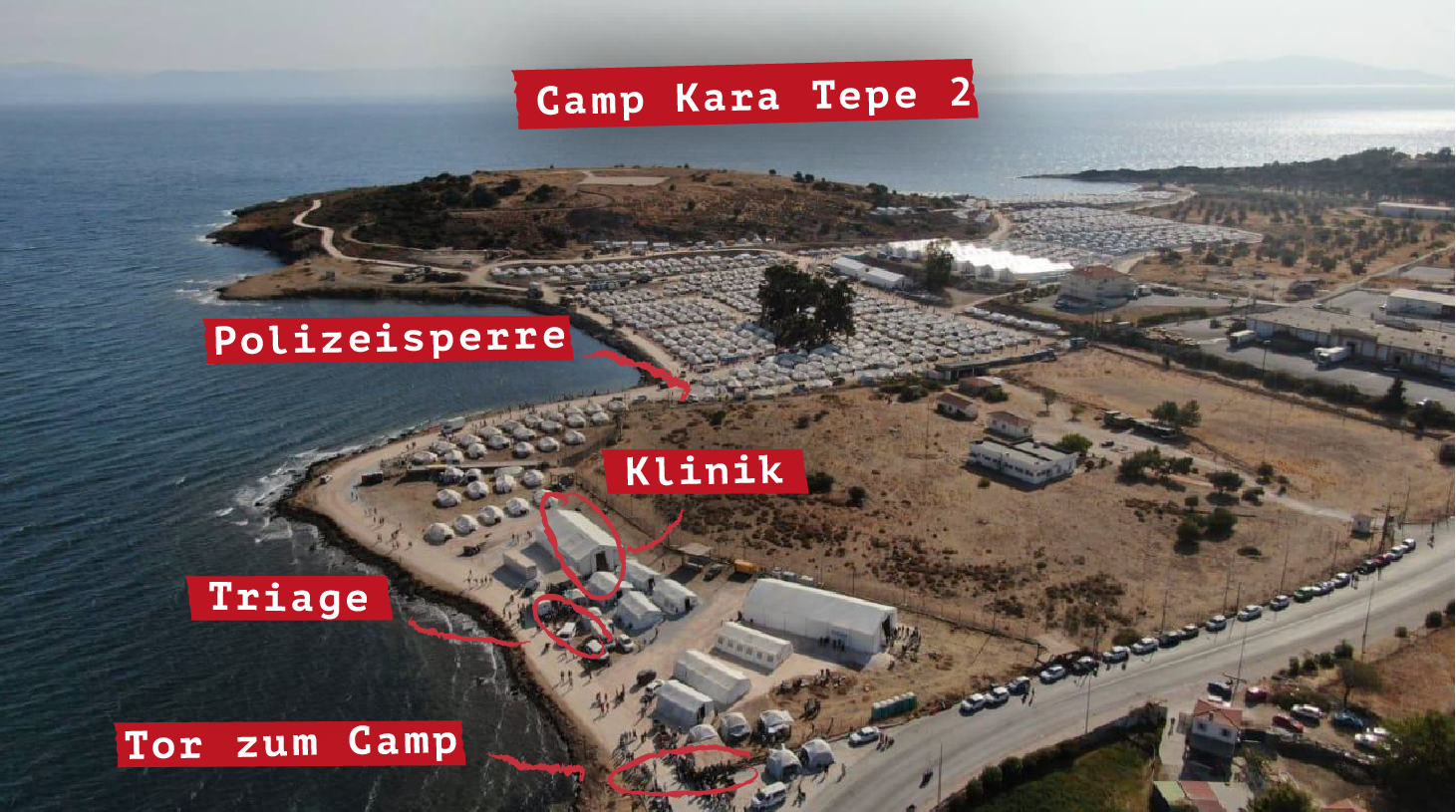 Camp Kara Tepe 2, as it looked about a month ago. ©WHO/Hellenic Forces
In humanitarian work, it is immensely important to ensure that aid reaches its intended recipients. “Accessibility” is the key word here. Together with many other groups in the camp, we repeatedly emphasize that access to medical care must be guaranteed. Although all parties recognize this need, so far there is only a stopgap solution: beyond the police cordon, we have set up an additional triage station where we assess the medical urgency of each case. This is done to enable our patients to pass through the blockade so they can receive medical treatment. We persuade the police to let people with acute symptoms or doctor’s appointments outside the camp pass through. Depending on which unit is on duty at the time, this works sometimes better and sometimes worse. In any case, this situation places considerable demands on our medics, and we hope that a fundamental solution to the problem will be found soon.
Negotiations and cooperation
Proposed solutions are generally well-received. But as in many areas, their implementation is a long and drawn-out process. Structural problems aren’t limited to the camp; Lesbos as a whole needs its infrastructure strengthened, including in the health sector. There is just as much goodwill as there is pressure from all sides, which repeatedly erupts into unpleasant scenes.
Right in the middle of all the hustle and bustle is the clinic area, which we share with other medical NGOs, the health authority EODY, a mobile lab, and the translators who are indispensable to our work. As the Emergency Medical Team, we are part of the WHO’s presence in the camp. It’s quite a diverse mix, but one that does fantastic work for our patients—both medically and on a human level.
Even though the conflict we were already facing before this mission began is far from resolved, the praise and positive feedback we’ve received from our patients so far encourage us to draw this interim conclusion: it’s good that we’re here.
Published:
Author: Corinna Schäfer
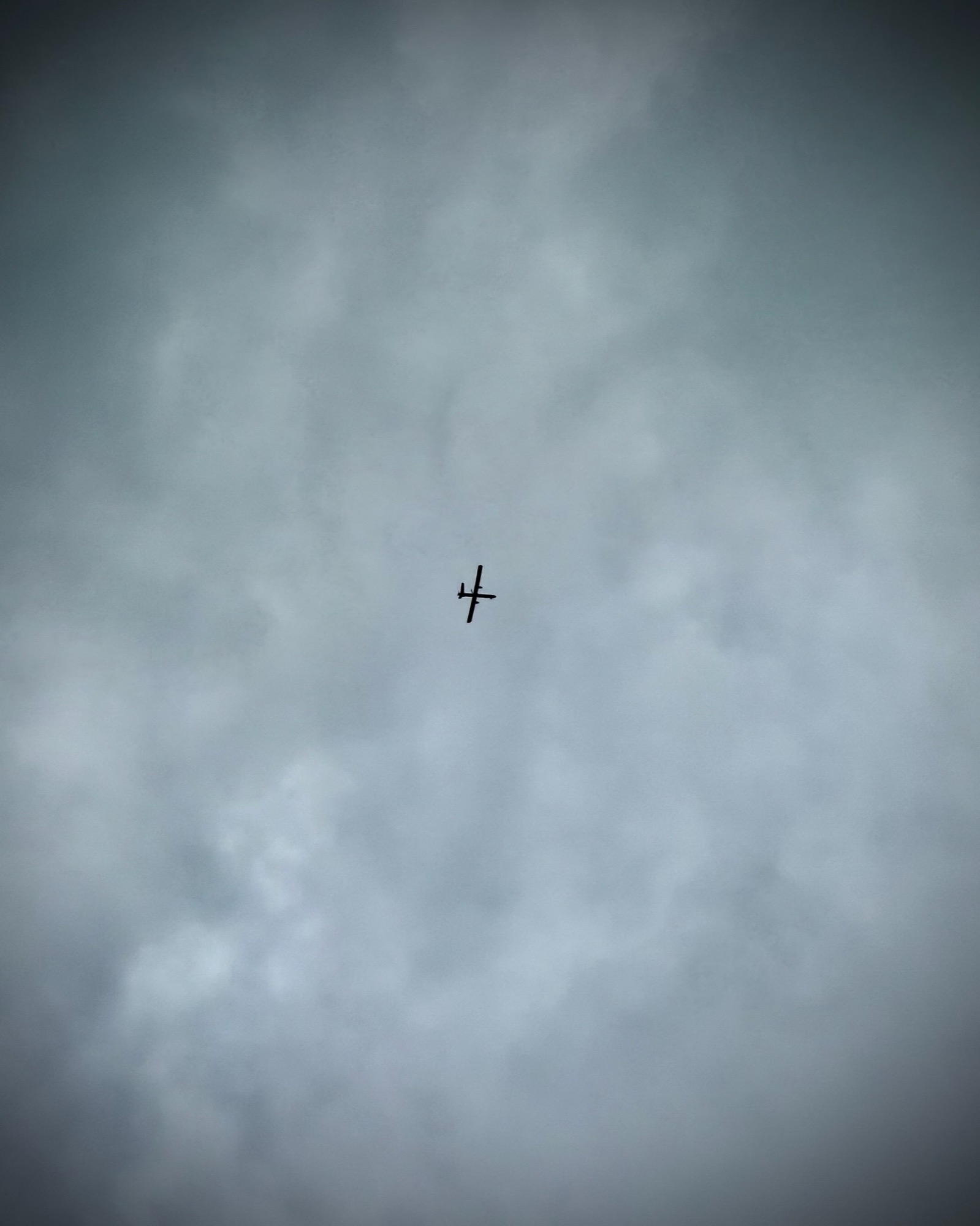
Monitoring the Patient While the Sky Monitors You.
Medical neutrality becoming psychologically uncertain. The Red Cross, ambulance, hospital, scrubs, or medical role ordinarily signify protection and neutrality. Under persistent surveillance, you may intellectually understand those protections while simultaneously feeling that being identifiable does not necessarily make you safe.
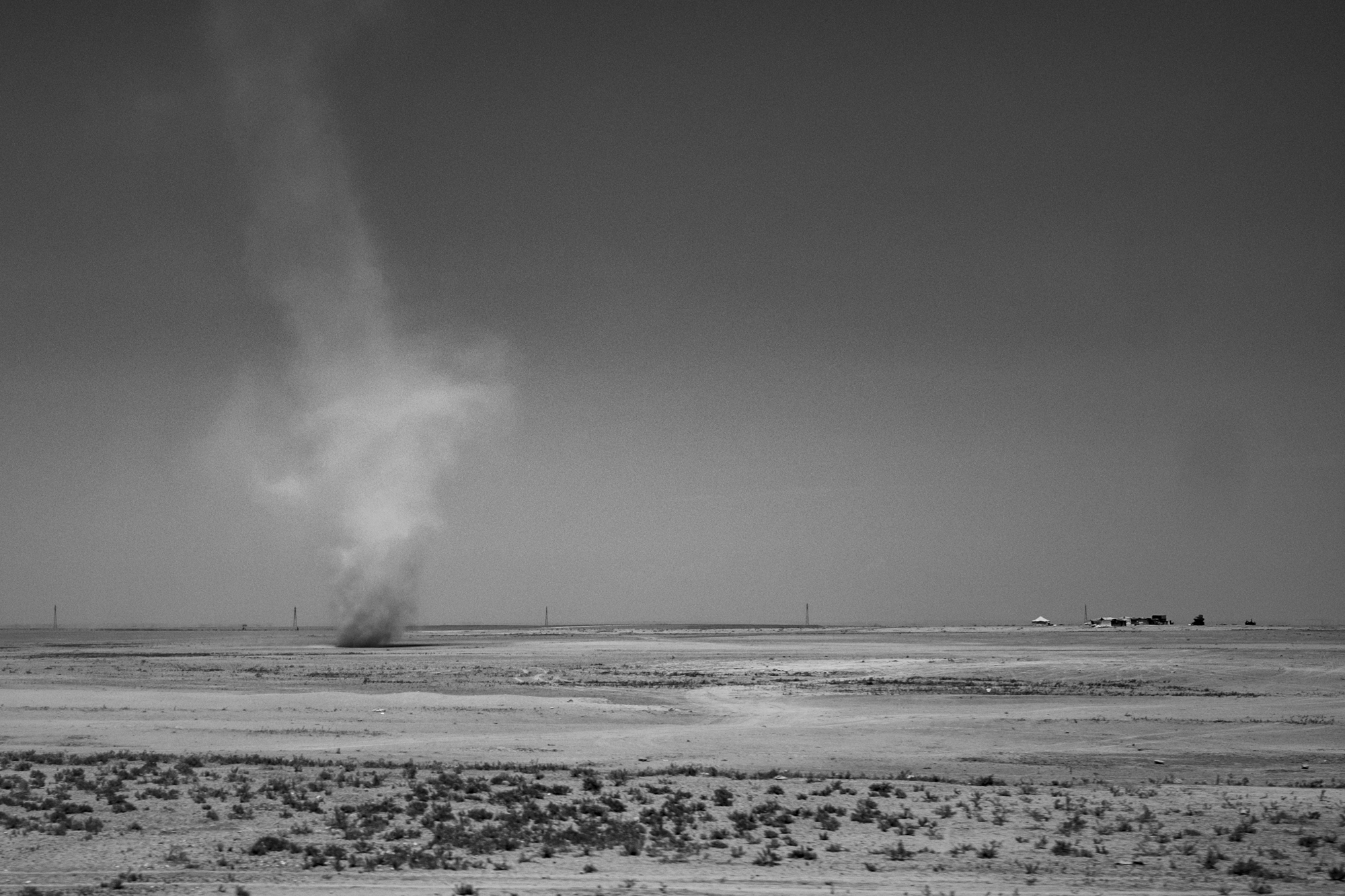
Heat – More than just hot
Climate change will lead to an increase in prolonged heat waves. Yet heat is much more than just a weather phenomenon. It affects our social life, health, the environment, politics, and, very specifically, our operations in crisis areas – and thus becomes a matter of global justice.
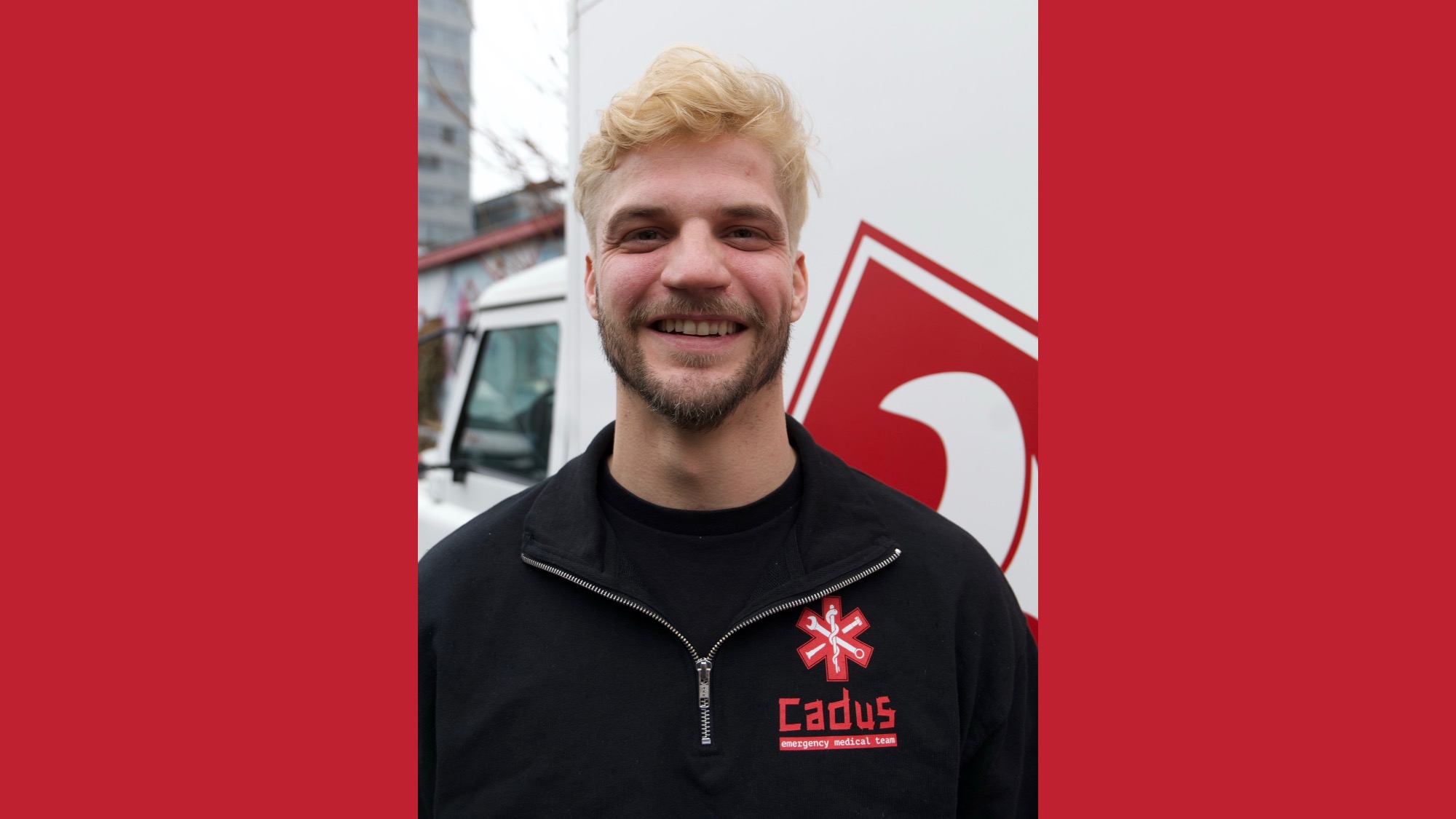
Meet Our Team: Felix, Head of Finance
Behind every humanitarian response in a crisis zone is a team based in Berlin that ensures everything runs smoothly. One of them is our colleague Felix. He has been with CADUS for two years, and for over a year he has been leading our financial management as Head of Finance. In this interview, he explains how he and his team bridge the gap between the German tax office and the reality on the ground in a war zone.