Meet Our Team: Felix, Head of Finance
Published on 11. August 2026
from Jonas Grünwald
2026-08-05_Wording Townhall
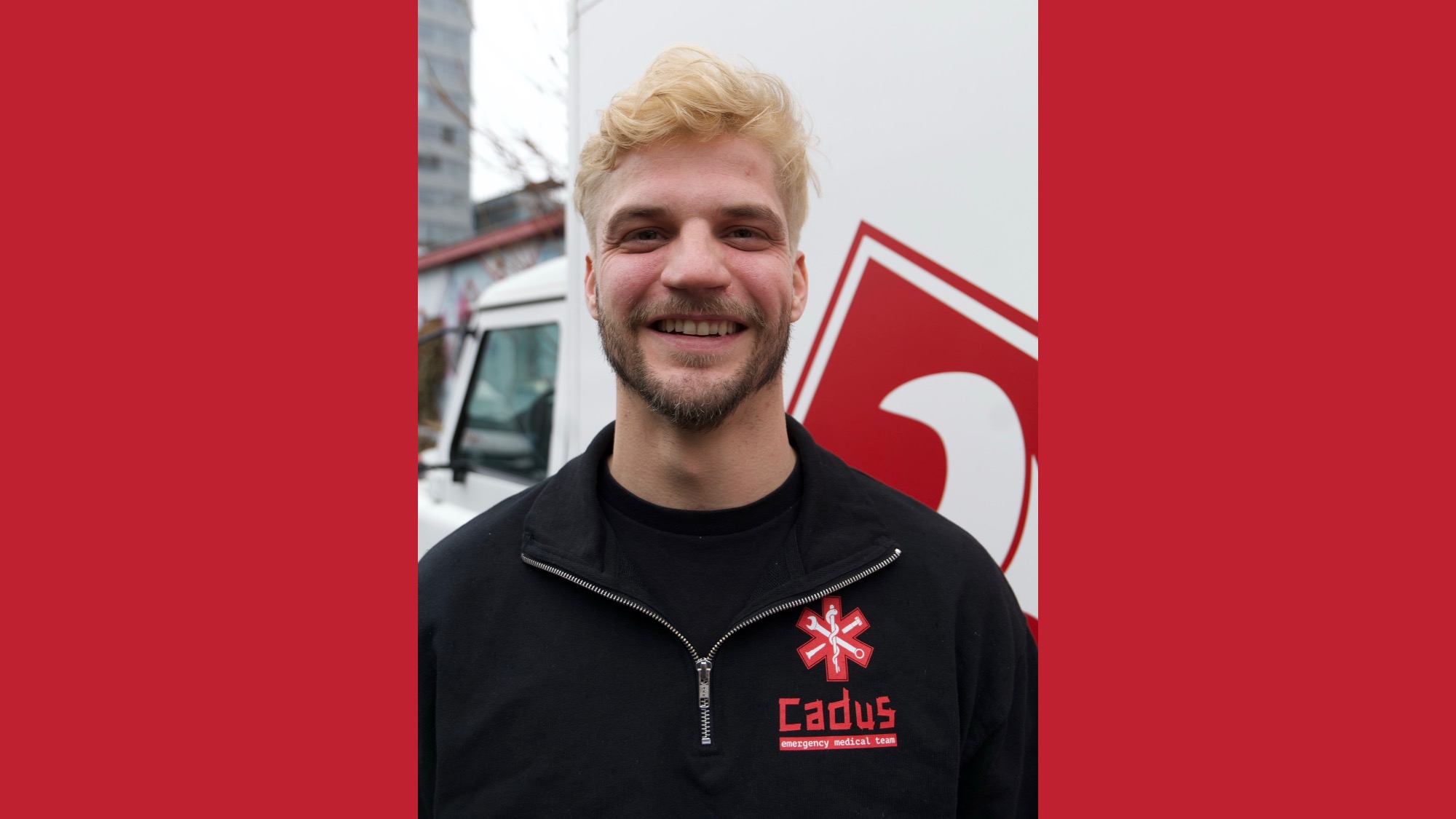
Behind every humanitarian response in a crisis zone is a team based in Berlin that ensures everything runs smoothly. One of them is our colleague Felix. He has been with CADUS for two years, and for over a year he has been leading our financial management as Head of Finance. In this interview, he explains how he and his team bridge the gap between the German tax office and the reality on the ground in a war zone.
How do you introduce yourself and your role to someone who isn’t familiar with your work?
Whenever I try to explain this, I like to say this nice little phrase: I’m right in the middle between the German tax office and a war and crisis zone. I try to explain to the German tax office that people during the response often have better things to do than issue invoices in strict accordance with German invoicing laws. And I try to teach the local people that, even in a crisis situation, you can’t just spend money without documentation—you need to keep records.
Since we’re dealing with budgets of varying sizes—whether from the Federal Foreign Office or from private donors who may have donated their last 10 euros—we work as a team to ensure that the funds are actually spent in a way that allows us to provide humanitarian aid.
What was your life like before CADUS, and how did you end up with us?
Before joining CADUS, I worked in financial management within the context of political education. My work there focused primarily on preventing antisemitism. After the war broke out following October 7, 2023, I started receiving inquiries from people who wanted to know how they could support people in the Palestinian territories without running the risk of their money being misused or falling into the wrong hands. A colleague of mine was familiar with CADUS, so I looked into it further on their website in my free time and initially just wanted to make a donation. While making the donation, I saw that CADUS was also looking for someone in accounting. So I didn’t just donate—I also applied for the position.
How would you describe your role at CADUS?
Day-to-day work at CADUS is very challenging. Conditions are constantly changing. It could happen at any time that you come into the office on Monday and find out that something happened over the weekend in Ukraine, Gaza, or Sudan that turns the entire situation upside down. Then you have to come up with a new approach. By nature, I’m the kind of person who prefers a bit more challenge and stress rather than just plodding along week after week. Every day remains very exciting, and I really like that.
You work here in the Berlin office. What does collaboration with your colleagues in the response areas actually look like?
There are actually many areas of overlap. Not only do we handle all the financial matters behind the scenes, but we also work together to solve specific problems, such as how to manage cash flows on the ground. In Gaza, for example, there’s the problem that electronic money transfers are largely blocked due to U.S. sanctions. At the same time, it’s extremely difficult to get cash into Gaza. The Israeli military has set a limit of $300 per person per entry. If you have to provide food for about 15 people there, $300 obviously doesn’t go very far.
What did this work teach you about yourself that you didn’t know before you joined CADUS?
I’ve become much more gentle and forgiving when it comes to many things. I’m usually very results-oriented, and when something doesn’t work out right away, I have a hard time accepting it. Since taking on this leadership role, I’ve found it easier to deal with that. I’ve learned that things don’t always go the way I want them to right away. And that’s okay.
With everything that’s happening in the world, is there anything that gives you hope?
Seeing my colleagues keep going despite the adversity—that really motivates me. My colleagues have a stressful job on the ground, working directly with patients in war-torn and crisis-stricken areas. Enabling them to do their jobs well is what drives me every day. The progress we’ve made as the financial administration over the past year motivates me. In addition, our donors show me every day that there are an incredible number of people who demonstrate compassion and solidarity—no matter where in the world help is needed.

Monitoring the Patient While the Sky Monitors You.
Medical neutrality becoming psychologically uncertain. The Red Cross, ambulance, hospital, scrubs, or medical role ordinarily signify protection and neutrality. Under persistent surveillance, you may intellectually understand those protections while simultaneously feeling that being identifiable does not necessarily make you safe.
Heat – More than just hot
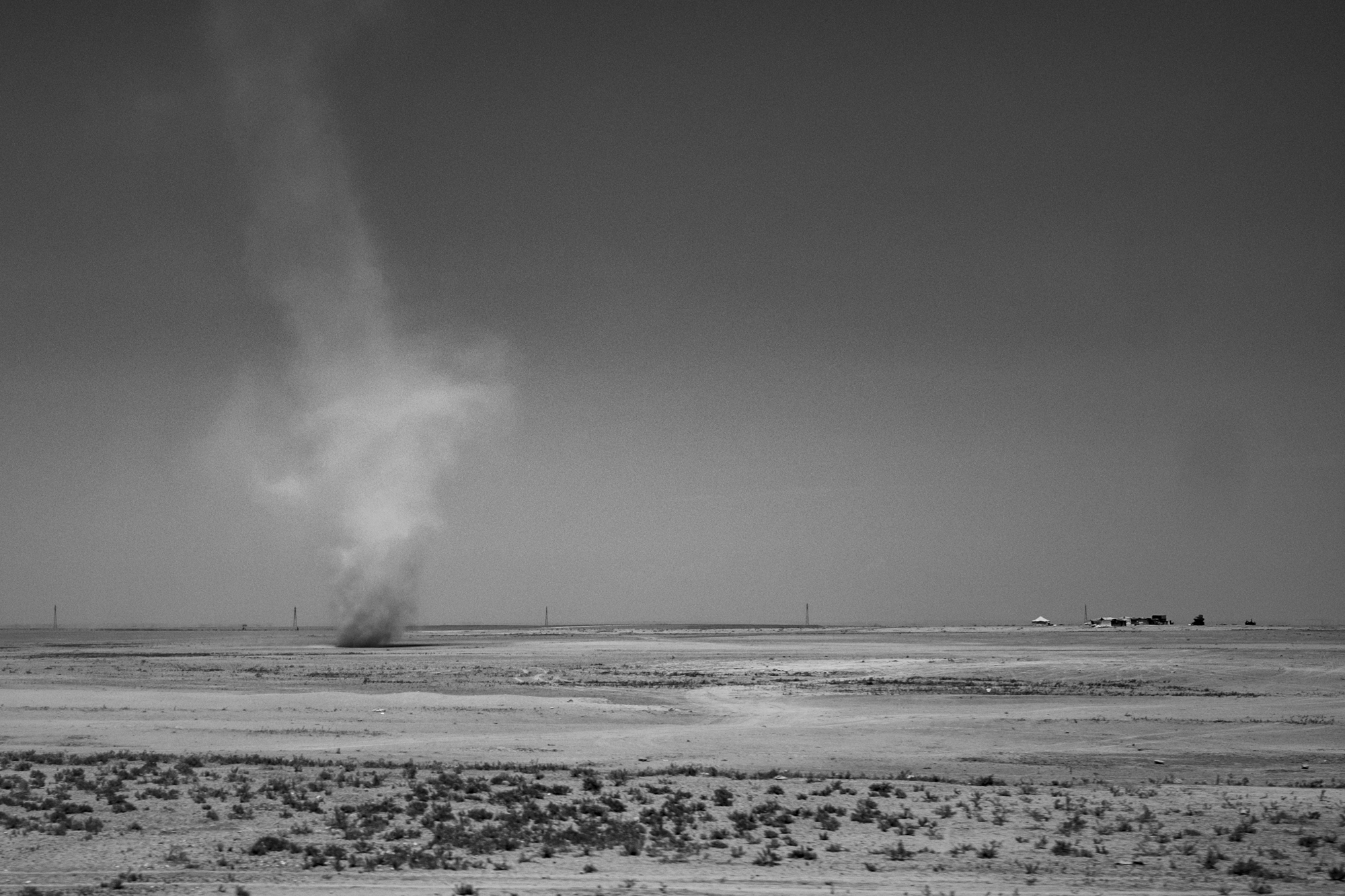
Climate change will lead to an increase in prolonged heat waves. Yet heat is much more than just a weather phenomenon. It affects our social life, health, the environment, politics, and, very specifically, our operations in crisis areas – and thus becomes a matter of global justice.
Meet Our Team: Felix, Head of Finance
Behind every humanitarian response in a crisis zone is a team based in Berlin that ensures everything runs smoothly. One of them is our colleague Felix. He has been with CADUS for two years, and for over a year he has been leading our financial management as Head of Finance. In this interview, he explains how he and his team bridge the gap between the German tax office and the reality on the ground in a war zone.