Border openings in Gaza: Turning words into action
Published on 5. April 2024
from Jonas Grünwald
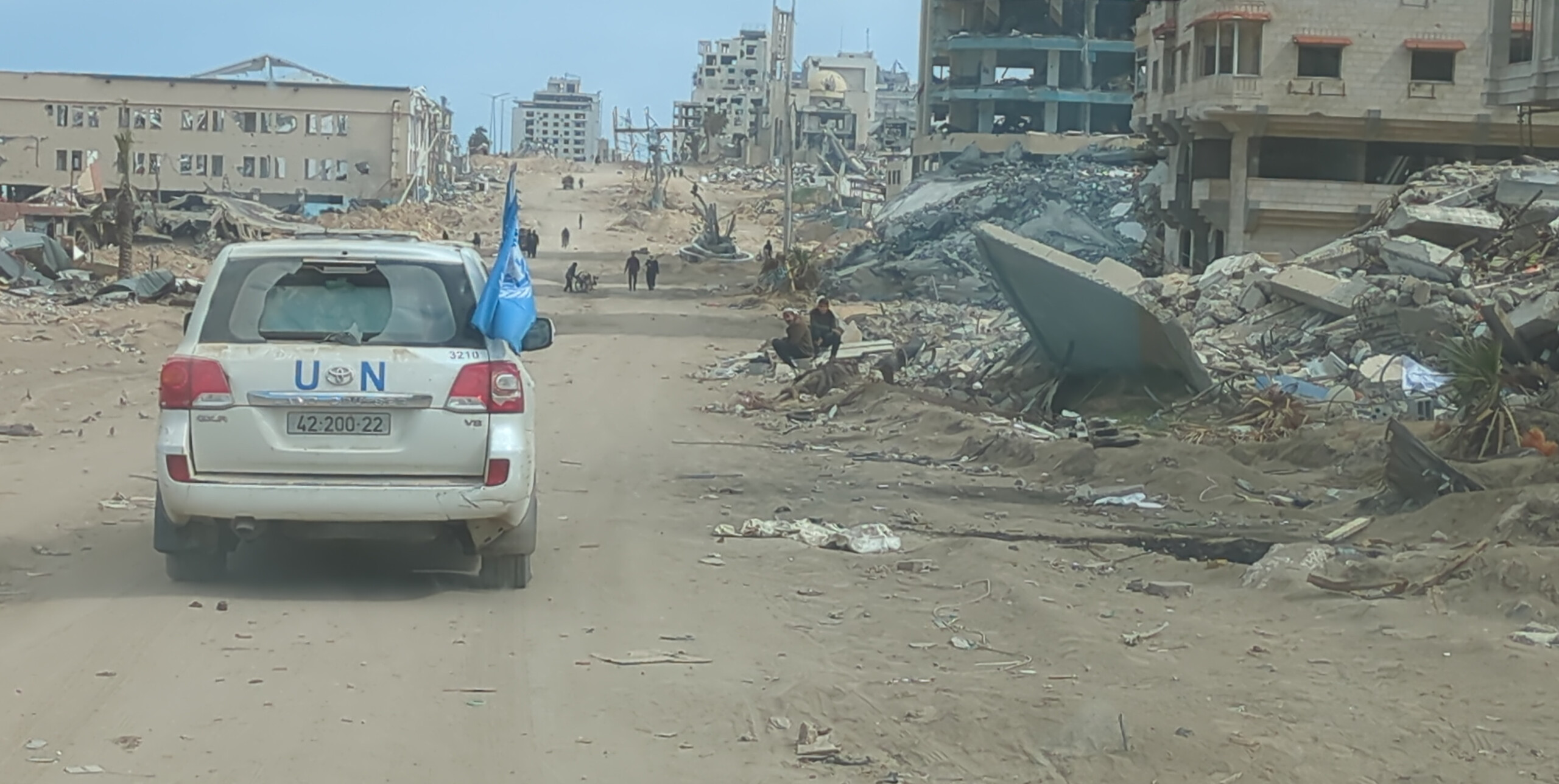
A drive through northern Gaza reveals the extent of the destruction. Opening the border for humanitarian goods could alleviate the hardship. Photo: CADUS
We are delighted by the news of a planned opening of the border in the north and south of Gaza and thus the prospect of more humanitarian aid deliveries. At the same time, it is clear that this step is long overdue and that Israel must now quickly follow up its announcement with action.
The opening of the borders gives hope for an easing of the situation and an improvement in the supply of food, medicine, fuel and other essential goods. This could also eliminate the need for expensive, ineffective and dangerous transportation by air. For us, the opening of the borders could also reduce the risk of our medical transports from the north. The people there understandably take every opportunity to get food and approach our convoys in the hope of a little nourishment.
Despite the risks and several aborted attempts, our team continues to carry out medical transports, so-called MedEvacs, from North Gaza. Video: CADUS
Expectations of the border openings are high, but many questions remain unanswered: to what extent will transports be permitted and how quickly can they pass through the checkpoints? Will the border also be open out of Gaza, especially to allow medical transports?
Not least because of the deadly attack on the aid workers from World Central Kitchen, the Israeli army has lost the trust of humanitarian organizations in joint agreements. Announcements to open the borders “temporarily” do not allow for reliable planning. Trust can only be rebuilt through clear announcements, agreements and processes in order to enable effective humanitarian work. Humanitarian aid workers must be able to carry out their tasks with the certainty that they will not be targeted by the Israeli army.
We therefore demand:
- the creation of permanent humanitarian corridors with clear and transparent arrangements between the Israeli army and humanitarian actors, and
- the opening of borders for medical transports to enable seriously ill and seriously injured people to receive appropriate medical care!
Humanitarian aid is not a generous act of a state, but a human right protected by international rules! It is time for Israel to act accordingly.
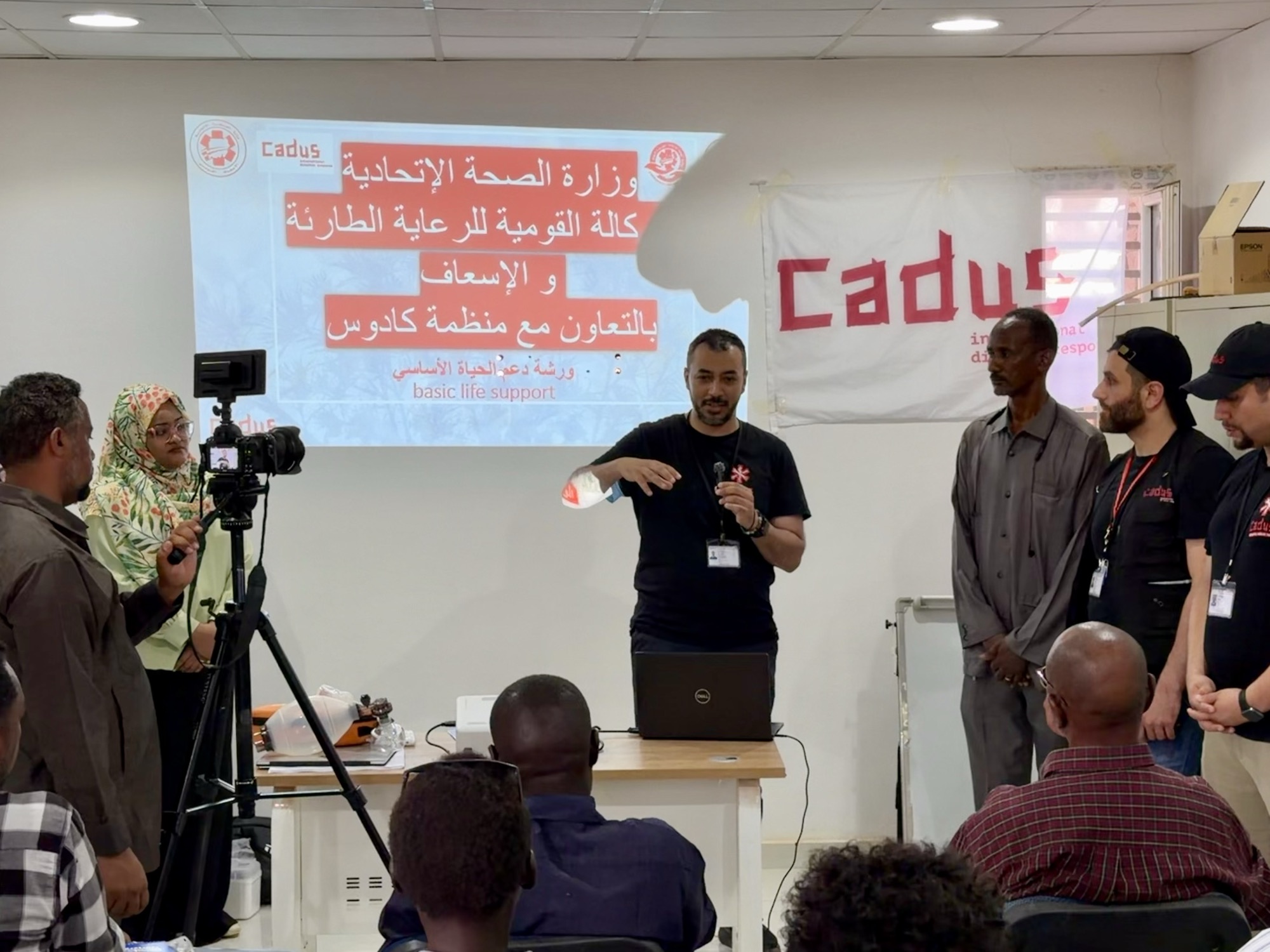
“Operating in Sudan requires constant flexibility and adaptation.”
Years of conflict have pushed Sudan’s healthcare system to the brink of collapse. In this interview, our colleague Dr. Hisham Abdulaziz discusses the challenges of working in an unstable environment and explains why the resilience of local health care workers is the foundation of all humanitarian aid.
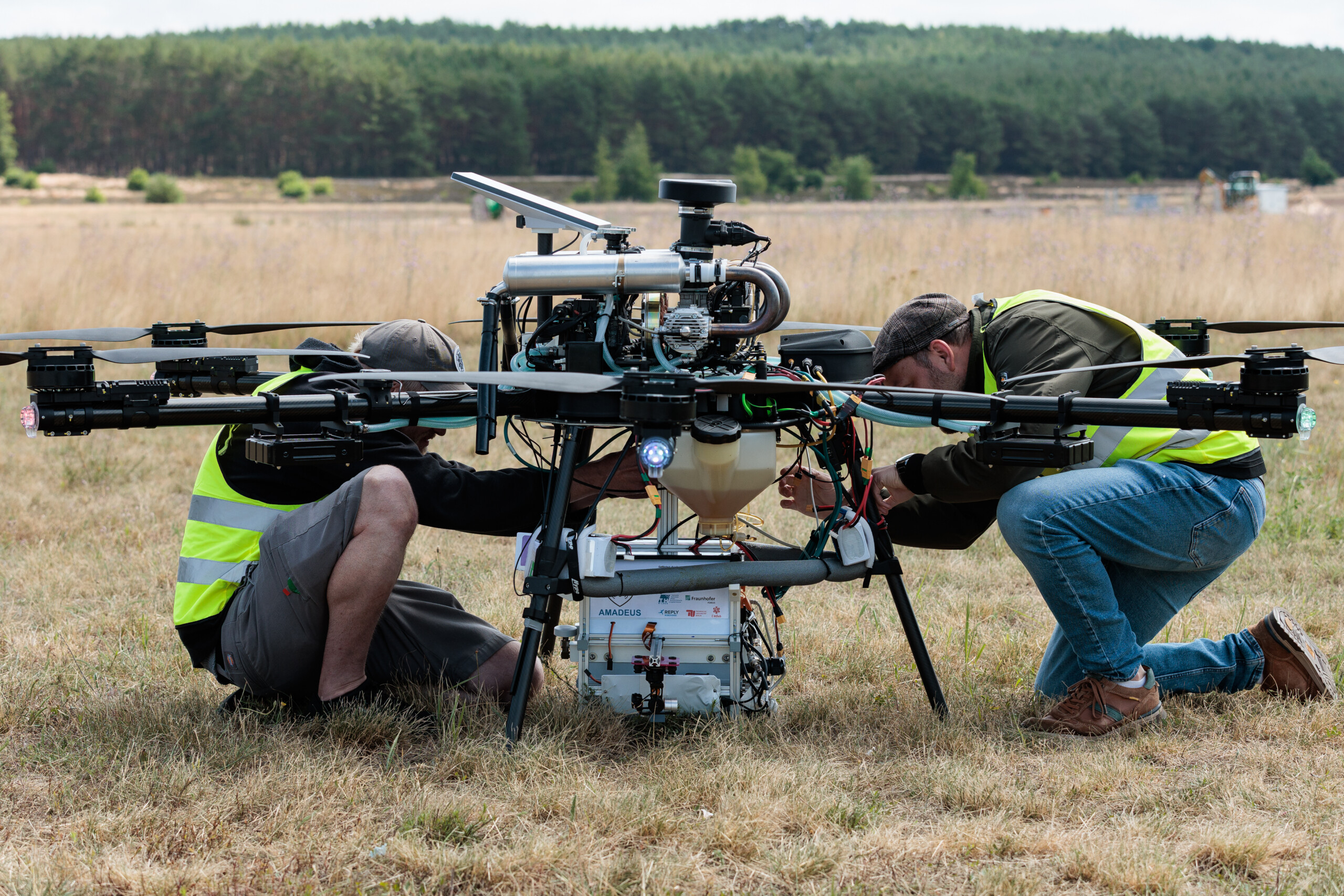
A Bridge Between Research and Practice
Successful Completion of the AMADEUS Research Project Amid fire and smoke, the live demonstration of the flying 5G mobile base station—complete with a communications platform designed to provide a detailed situational overview—kicked off on July 8, 2026. It
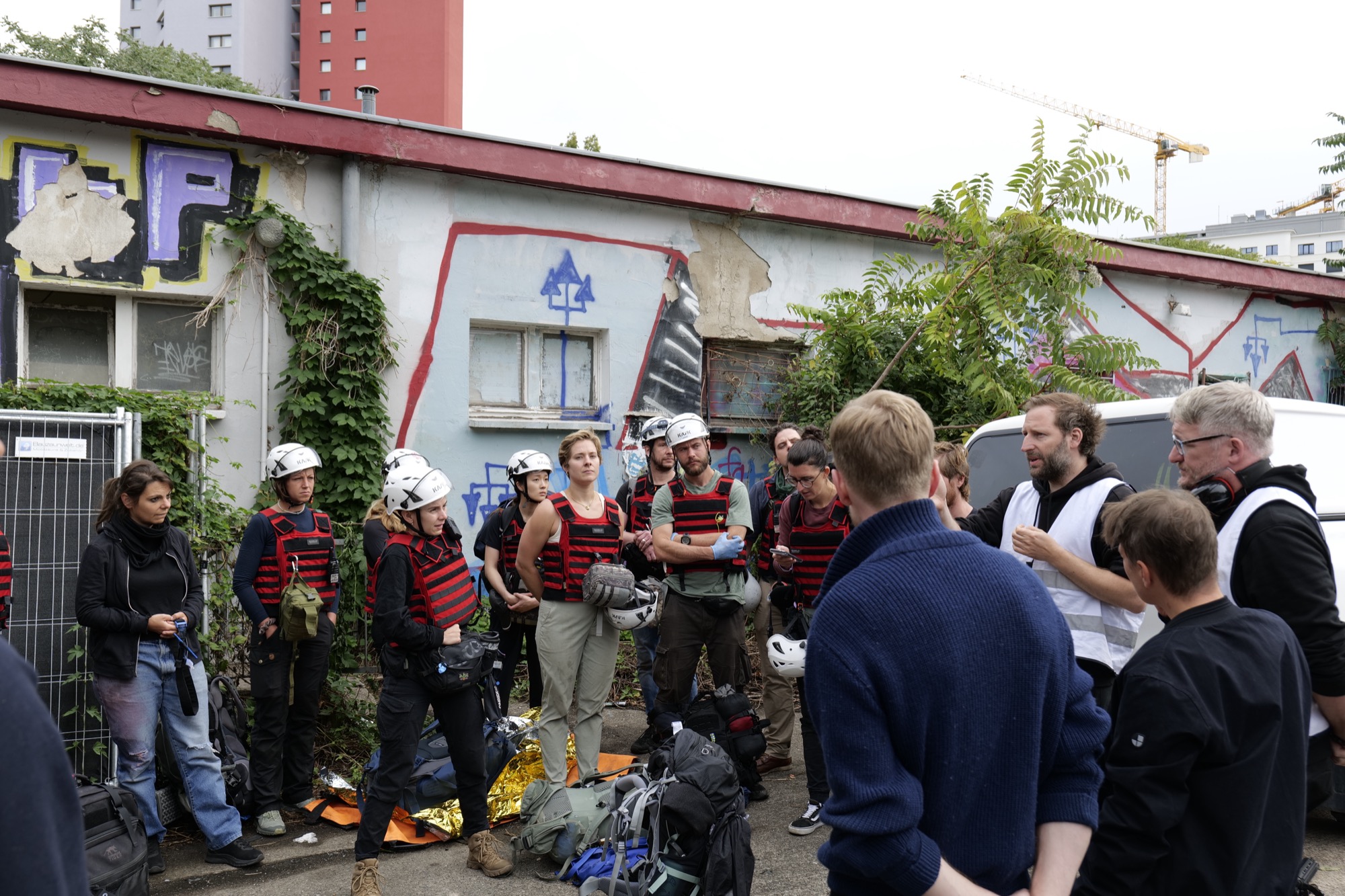
CADUS HEAT
For many organizations, Hostile Environment Awareness Training (HEAT) is part of the preparations for humanitarian missions in war and crisis zones. In this interview with our training team, you’ll learn how these trainings are conducted at CADUS, what participants learn, and what HEAT can actually achieve.