CADUS HEAT
Published on 17. July 2026
from Jonas Gruenwald
_1012982
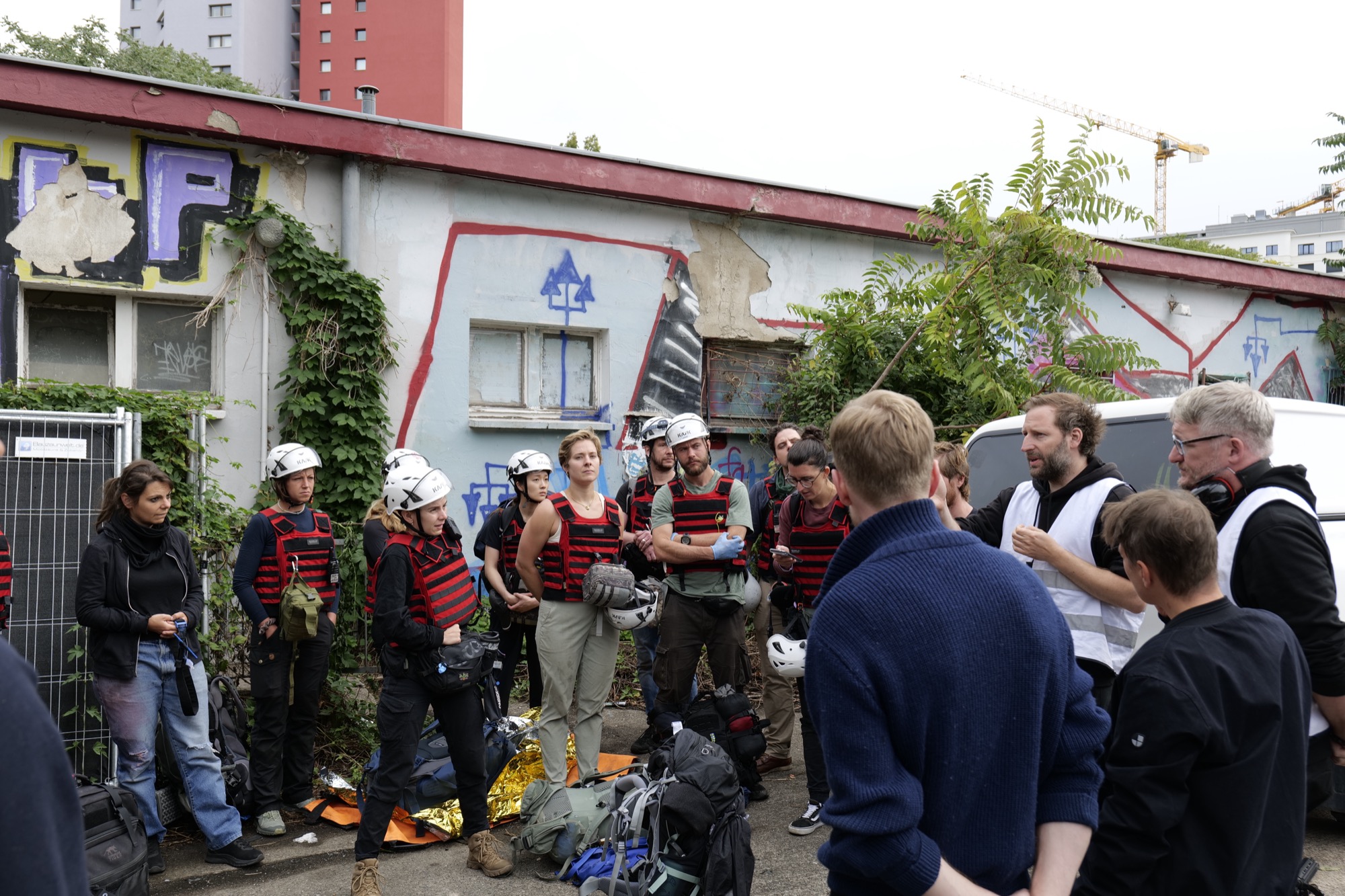
For many organizations, Hostile Environment Awareness Training (HEAT) is part of the preparations for humanitarian missions in war and crisis zones. In this interview with our training team, you’ll learn how these trainings are conducted at CADUS, what participants learn, and what HEAT can actually achieve.
In an interview:
Elene: Employee in the Training & Education Department
Ruben: Head of Safety & Security
Jannik: Staff member in the MEAL (Monitoring, Evaluation, Accountability, and Learning) department
First of all: What exactly is a HEAT?
Ruben: HEAT stands for Hostile Environment Awareness Training. So the goal is to prepare people as well as possible for deployment in war zones and crisis areas.
Jannik: Exactly, but we focus less on teaching specific skills and more on raising awareness of situations that can lead to problems. And, of course, how to avoid them and recover from them. Preparation and resilience play a major role.
Elene: To do this, we use a realistic scenario in which participants are confronted with situations that the group must then deal with. Depending on how the participants react, this leads to consequences that are sometimes safer or less safe. However, there isn’t necessarily a right or wrong way to respond. Accepting that is often something that has to be learned first.
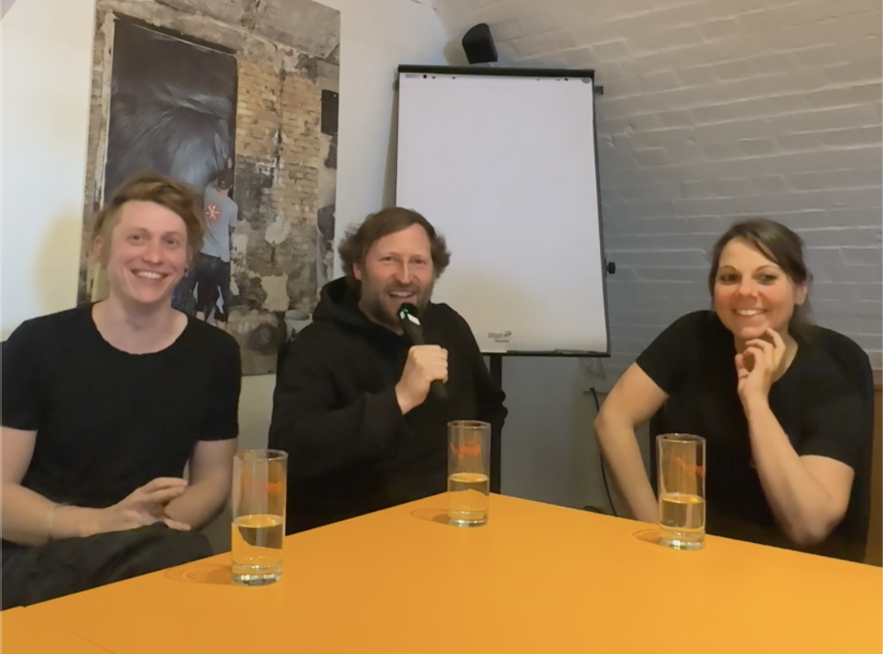
An interview with Jannik, Ruben, and Elene. Photo: CADUS
Speaking of participants—who is CADUS HEAT aimed at?
Jannik: Mainly people who want to join our missions or see if this is a good fit for them—such as doctors, paramedics, technicians, and logistics specialists. We often have journalists with us, too. So our training sessions are also open to people who aren’t directly affiliated with CADUS—to other organizations working in fields similar to ours. Take a look around the world—the need is great.
How often do we host HEATS, and how many have there been at CADUS so far?
Elene: We now hold four major training sessions and, in between, shorter versions—for example, for students at Charité. We started about two and a half to three years ago. So by now, we’ve definitely held close to 30 training sessions.
Ruben: Yes, about three years ago we started developing our own program for these workouts. At first, we offered short workouts, and for the past two years now, we’ve been running the five-day HEAT program.
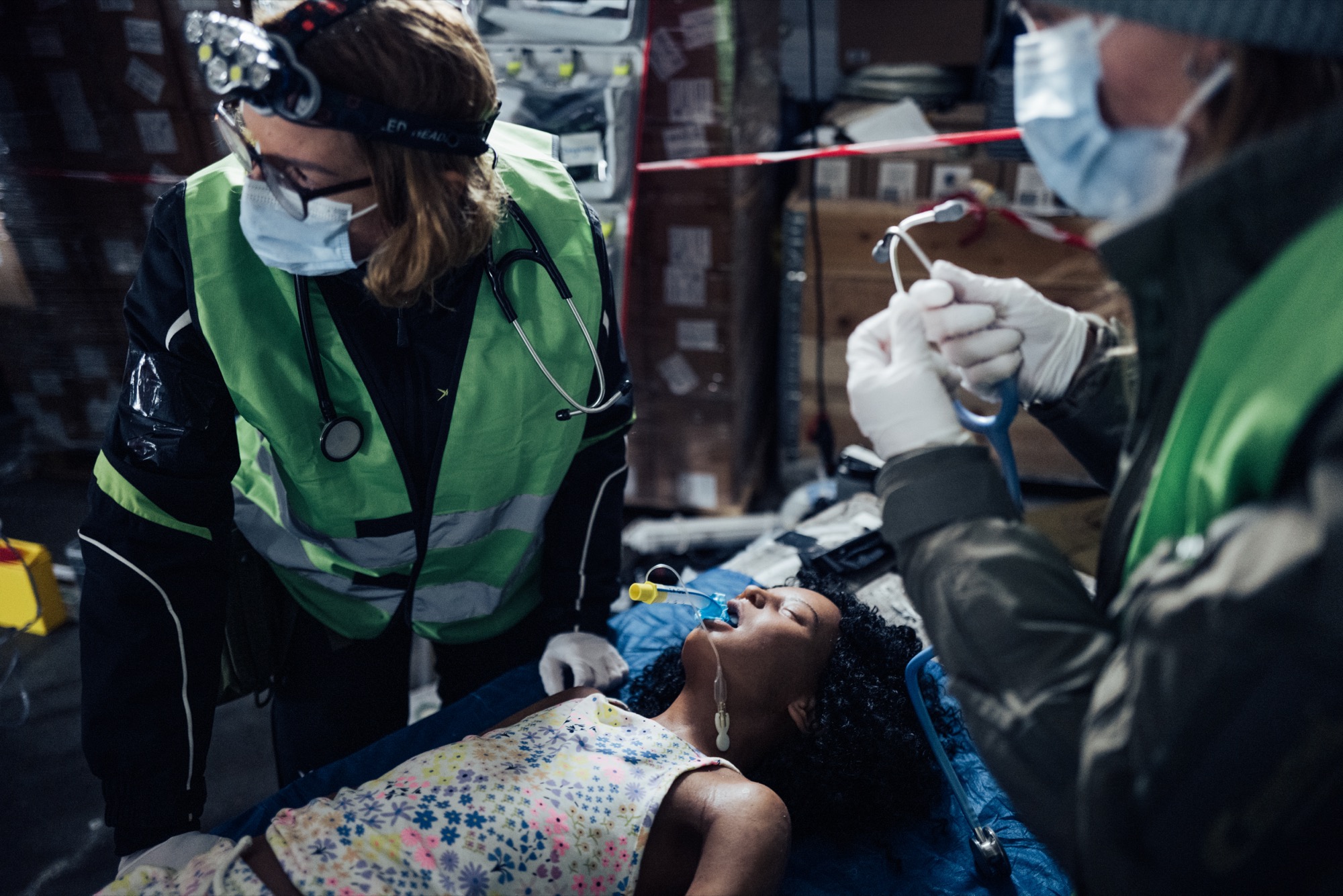 Training sessions are regularly held to practice providing care to patients in makeshift settings with limited resources. Photo: CADUS
You said that you developed a training program on your own. What does CADUS place particular emphasis on?
Ruben: Well, if you type “HEAT Training” into Google, you’ll mostly find a lot of pictures of people wearing stocking masks or smoke grenades flying around. We have those, too. But our main goal isn’t to make as much “bang, boom, pop” as possible.
In real-world situations, we’ve found that team dynamics play a huge role in identifying and preventing problems early on—or, if a problem does arise, responding to it as effectively as possible. It’s about learning a lot about yourself, learning about communication, helping people navigate moments of frustration, testing your own limits, and figuring out how to function efficiently as a team.
Jannik: We definitely want to avoid creating a false sense of security. When I talk about the danger of landmines, everyone keeps that in mind for the moment. But do I still think about it when I haven’t slept much, a drone is flying overhead, and I’m trying to rescue an injured person from a field?
In the areas where we work with CADUS, it’s not always clear what the main threat is at any given moment. A lot is happening all at once, and I have to process a lot of information simultaneously. It’s very complex. And that’s what we try to convey to the participants: don’t be too confident, no matter what you think you can do or know.
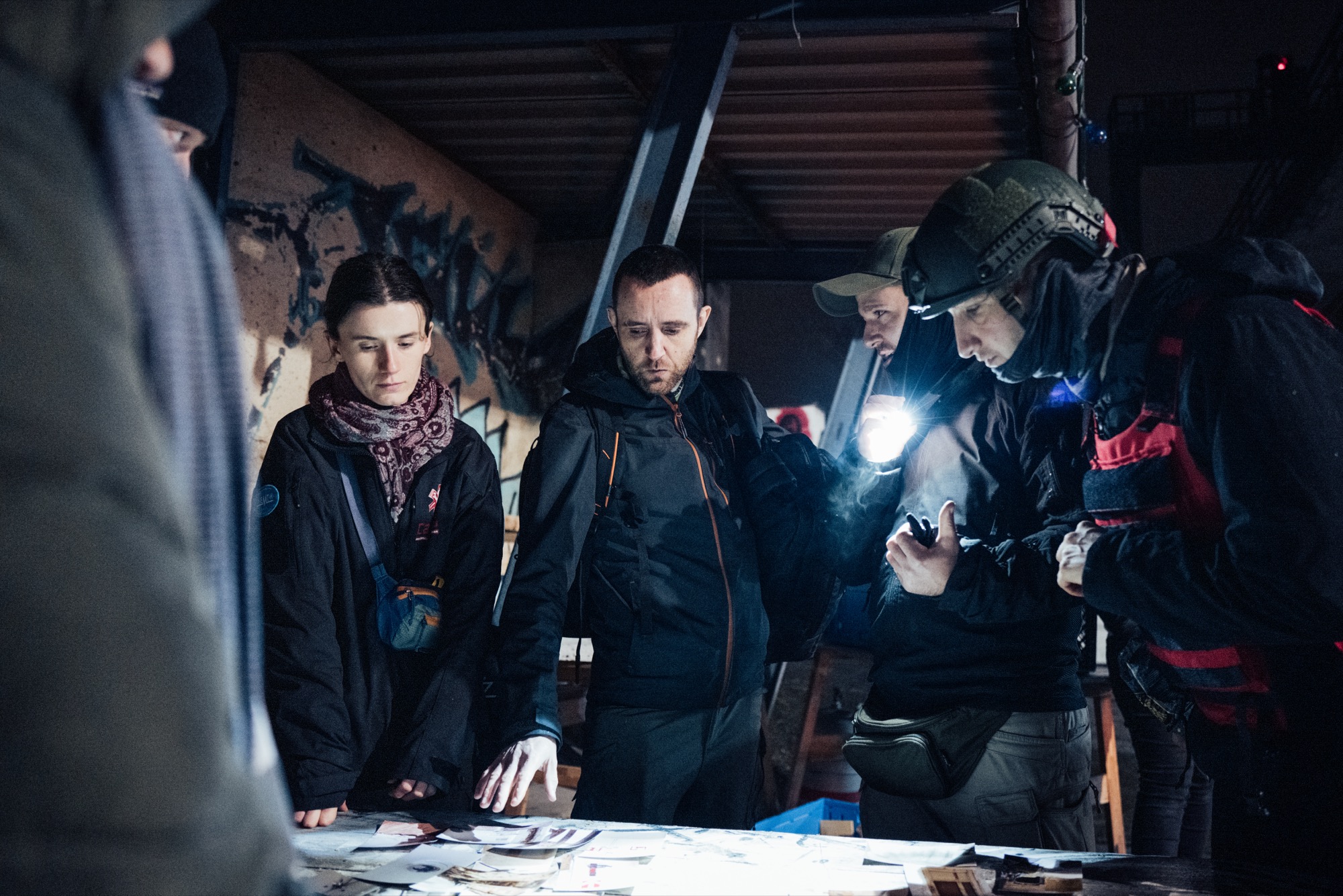 Careful planning and good communication are essential when working in hazardous locations. Photo: CADUS
Elene: Aside from the content itself, it’s also important to us not to reproduce any stereotypes in the scenarios. That means, for example, that cultural context is a major focus for us, and we also address gender dynamics and other forms of discrimination. This is absolutely crucial, especially for our field operations. It’s not always just about the “obvious” dangers. If you don’t integrate well into the local community, that can quickly become a security risk.
For example, the training also involves dealing with ethical dilemmas, or learning how to navigate cultural contexts that may not be my own.
So how does the HEAT program work at CADUS?
Ruben: For us, all the theoretical preparation basically takes place at home through an online course. During the training, however, participants are essentially thrown into the scenario 24/7. There are no breaks, no set meal times, and no set bedtimes.
Elene: We have a sort of script—a checklist of topics and situations that need to come up over the course of the five days. But depending on how the participants behave, the scenario unfolds a little differently each time—even for us.
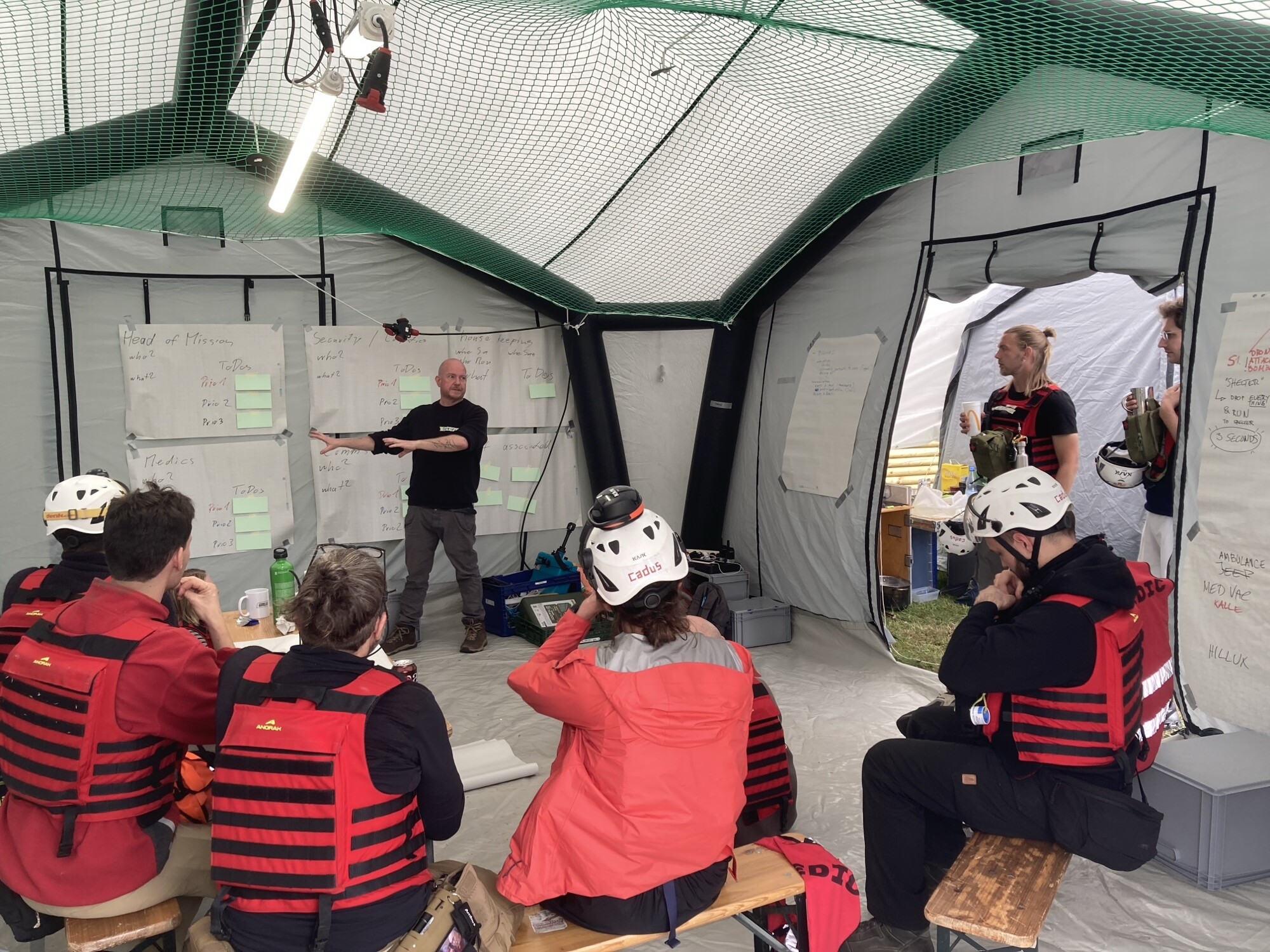 Team meeting: Roles and responsibilities must be defined so that everything runs smoothly when it counts. Photo: CADUS
Ruben: If the participants want to do something, they have to actually carry it out. Medical treatment, a vehicle inspection, setting up a camp bed—all of this requires a real investment of time, manpower, and materials.
Jannik: And the exact same thing applies to communication. There are a lot of chats and phone calls going on all at once. What happens there has a real impact on how the scenario unfolds. Did I inform someone who might be able to help me later? Have I revealed information that could be used against me later? This creates suspense every time and is also a lot of fun for us as trainers.
Elene: These are often moments when the participants don’t even realize that this is part of the scenario. When someone is lying in a corner bleeding, the need to act is obvious. Communication with various stakeholders, on the other hand, is often overlooked. That’s exactly where things often go wrong in real-life operations. Through this training, we try to trigger a process of reflection among the participants.
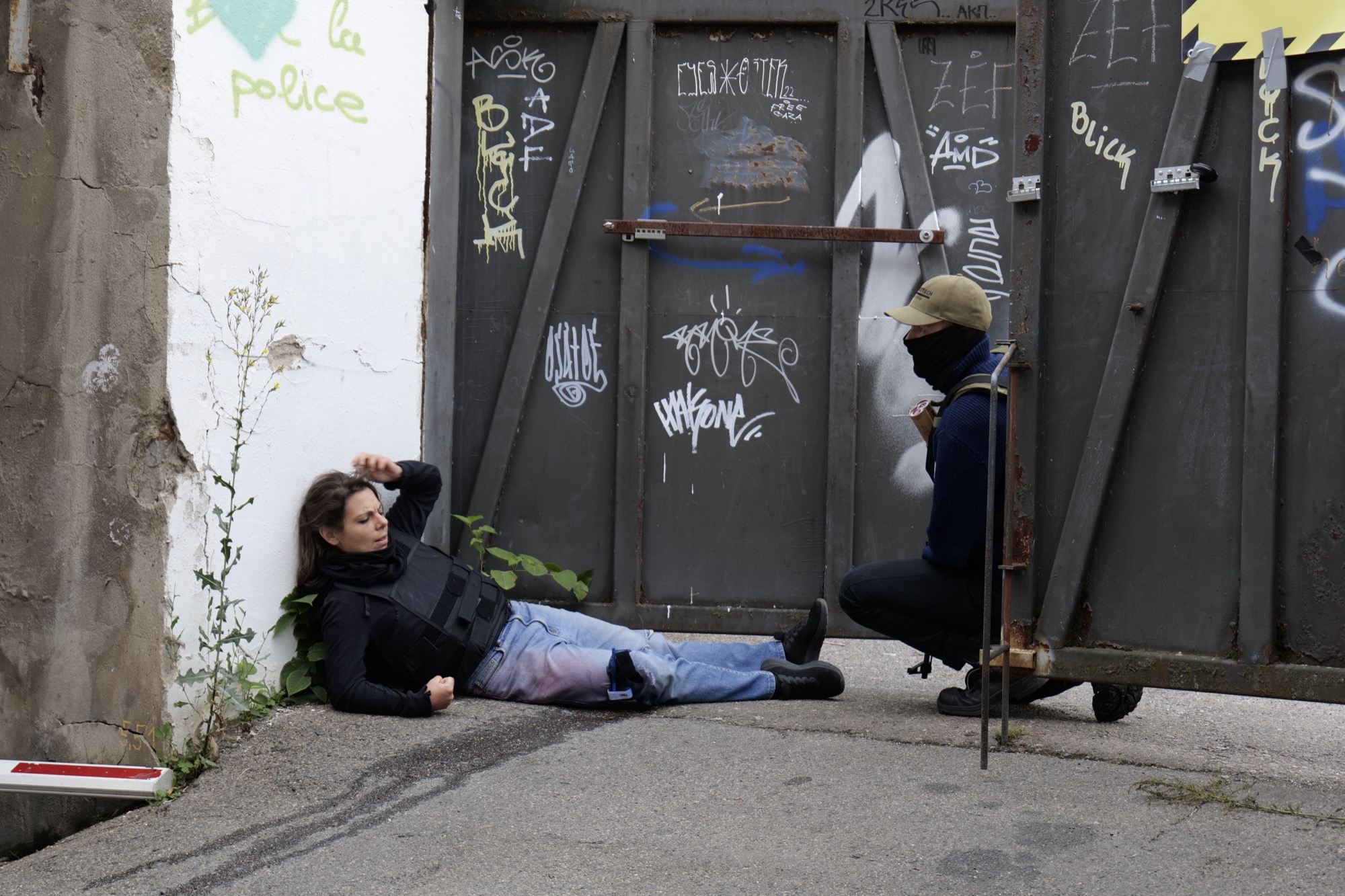 Elene in her role as a wounded fighter. How will the participants react? Photo: CADUS
So how do these scenarios and your concept come together, and how do you put them into practice?
Ruben: All the scenarios are based on real-life situations, and we’ve actually experienced many of them—either exactly as described or in a similar way—during our operations. As the saying goes, “You learn best from your mistakes.” These experiences are then incorporated directly into our training.
Jannik: With our HEAT program, you can’t “fail” or anything like that. But it’s designed in such a way that you’re bound to make mistakes. That’s why we—or rather, the participants—have to create an environment every time where people can address and reflect on their mistakes within the group. The goal is for them to apply this approach during their missions. If you don’t have an open culture of acknowledging mistakes, things can quickly become critical for everyone—even though it would be so easy to avoid.
Elene: Of course, our scenario can’t cover every conceivable situation you might encounter on the job. Instead, we try to instill a certain way of thinking that emphasizes proactive action and resilience. This is at least as important as the techniques you learn from us: how to conduct a risk analysis, how to structure a briefing and debriefing.
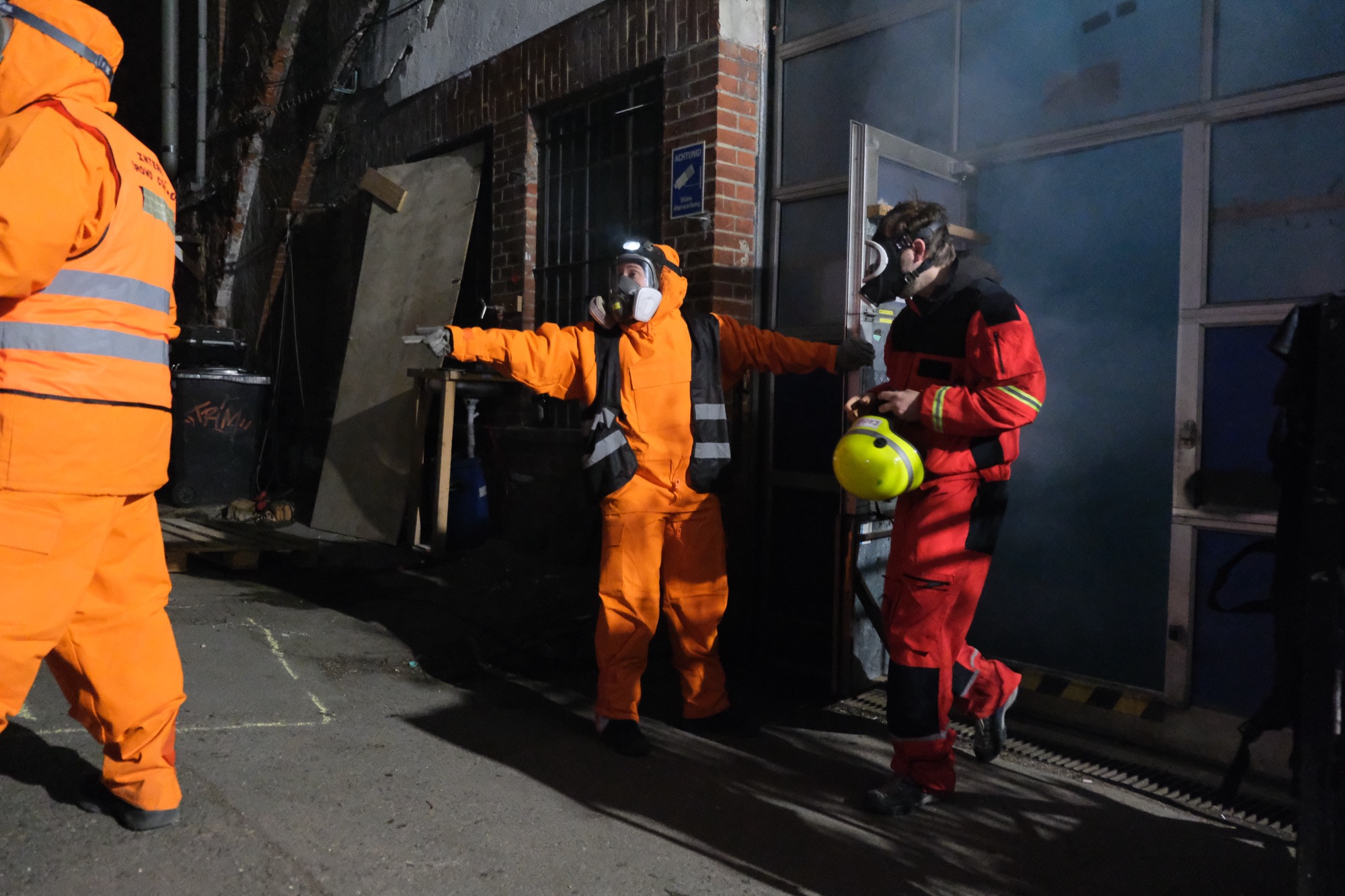 Even highly complex situations that require special measures can arise during CADUS HEAT. Photo: CADUS
You said that part of the concept is also to avoid perpetuating discrimination. How is that reflected in the training and the scenarios?
Ruben: We found many of the HEATs we attended to be relatively blatantly racist. After all, many of the conflicts of the past few decades have taken place primarily in the Middle East, Afghanistan, or on the African continent. But when, time and again, the person who’s supposed to pose some kind of threat is white but wears a keffiyeh and speaks fake Arabic, it leaves a bit of a bad taste in your mouth. Of course, there’s an element of artificiality in the exercises that sometimes leads to exaggeration, but there are other ways to handle it.
Elene: Our scenario does involve a religiously charged conflict, but specifically in the context of Christianity. So there are a few Bible passages that come up. And our scenario is in German. However, our response teams are very international, which means that most of our participants won’t understand us.
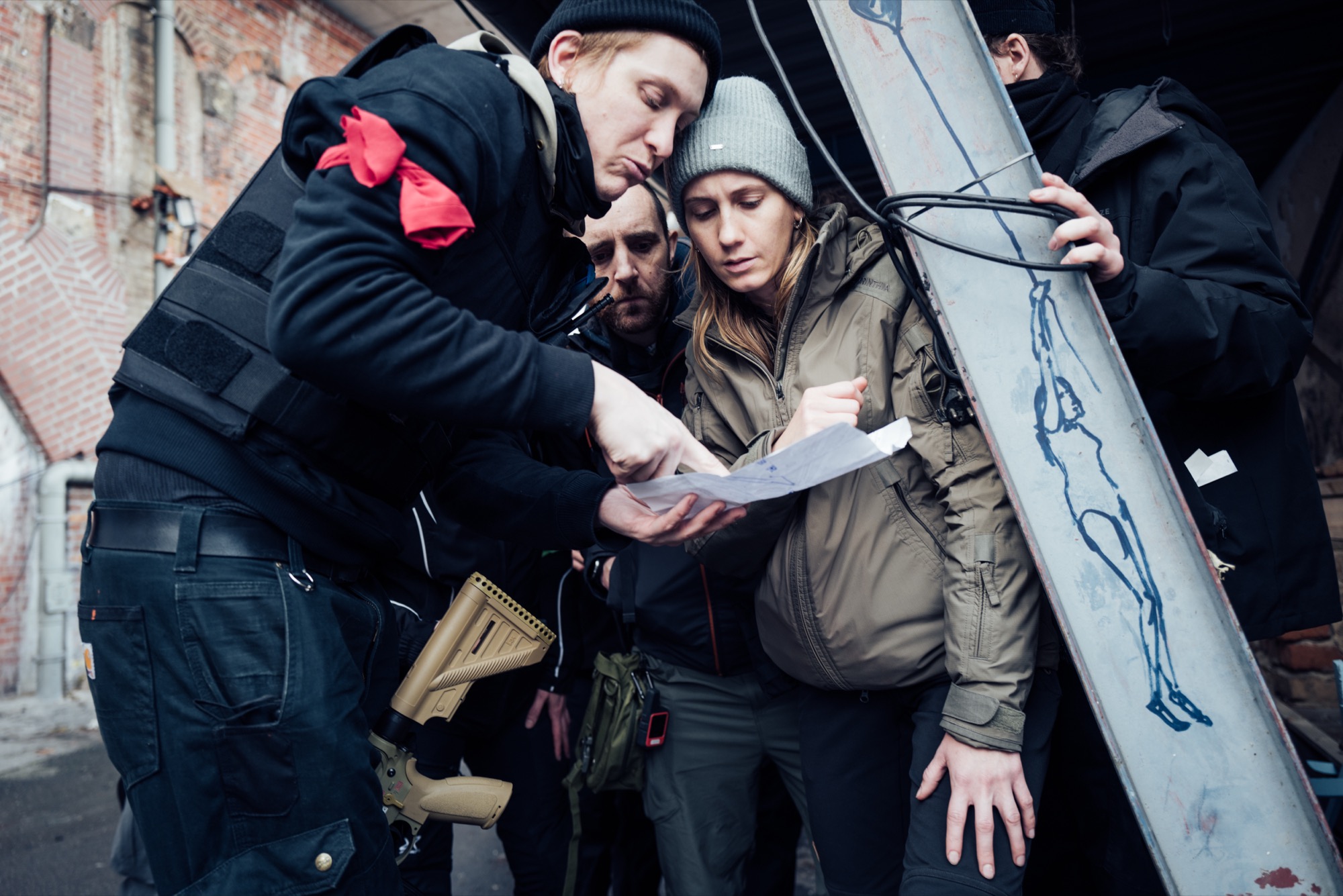 Jannik, pictured here as a militia fighter, shows the participants on a map where they can move around safely. Photo: CADUS
Jannik: Exactly. In the end, it doesn’t matter which language you don’t speak—the communication problems remain. For us trainers, it makes life a little easier, and the participants still get to experience what it’s like when everything has to be translated for you and you don’t understand a word of what the armed guard is saying to you at the checkpoint. Without much effort and without resorting to clichés, we’ve once again added another layer of complexity to the training.
Ruben: And ideally, the learning process doesn’t stop at the end of these five days. Our goal is to introduce topics that people will continue to explore and learn more about.
You really push the participants hard during the HEATs. What do you think are the biggest challenges?
Elene: I think it’s especially the stress we create by making the scenarios so complex that there are always multiple factors to consider all at once. Then, on top of the medical situation, an ethical dilemma suddenly arises because the local police are at the door and are threatening the safety of this very patient. At the same time, you can’t afford to get on their bad side, because otherwise you won’t be able to help anyone else. And you haven’t slept well and haven’t eaten anything yet. That’s really frustrating.
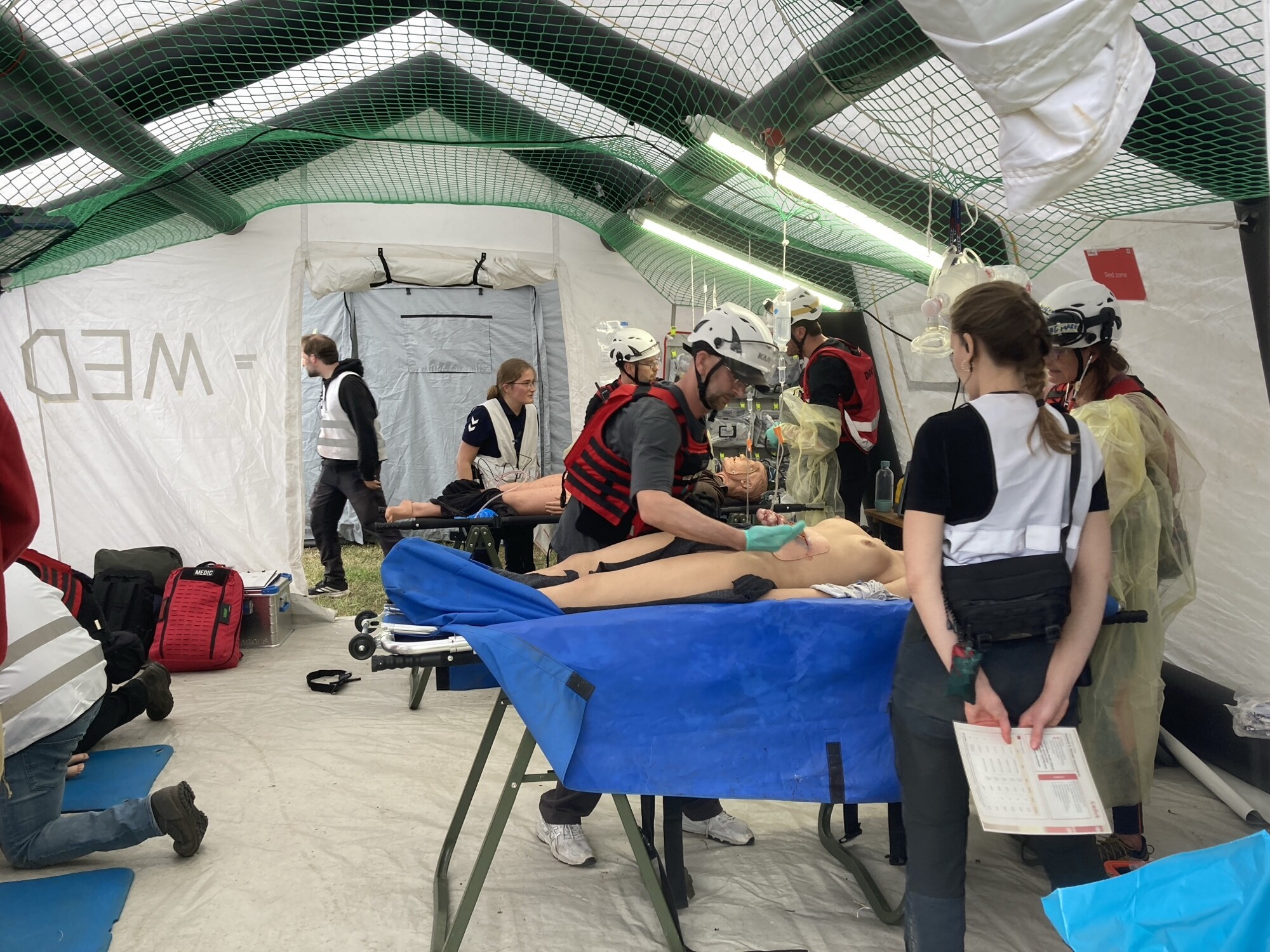 For this HEAT exercise, an entire camp first had to be set up so that participants wearing white vests could treat patients under the watchful eyes of the trainers. Photo: CADUS
Jannik: I find it interesting that what people often describe as particularly stressful or burdensome aren’t necessarily those “boom-bang” scenarios, but rather, for example, negative feedback or a group situation that didn’t go well. Or even an annoying noise—like the hum of a drone, for example—that you could hear the whole time. So, more like factors that aren’t quite as obvious.
Ruben: Amid all the stressful situations and the heavy topics surrounding crisis, war, violence, and trauma, we occasionally incorporate some humorous elements. As a counterbalance, so to speak—as “comic relief.” A positive atmosphere and good communication are also beneficial during operations, simply to provide mental relief. The participants always really enjoy that, too. And that’s definitely something they should take home with them as a lesson learned.
And what are the challenges you coaches face?
Jannik: As coaches, we’re actually always running our own HEAT program at the same time. With everything we have to coordinate, organize, and communicate, we learn something new about ourselves and our group dynamics every single time.
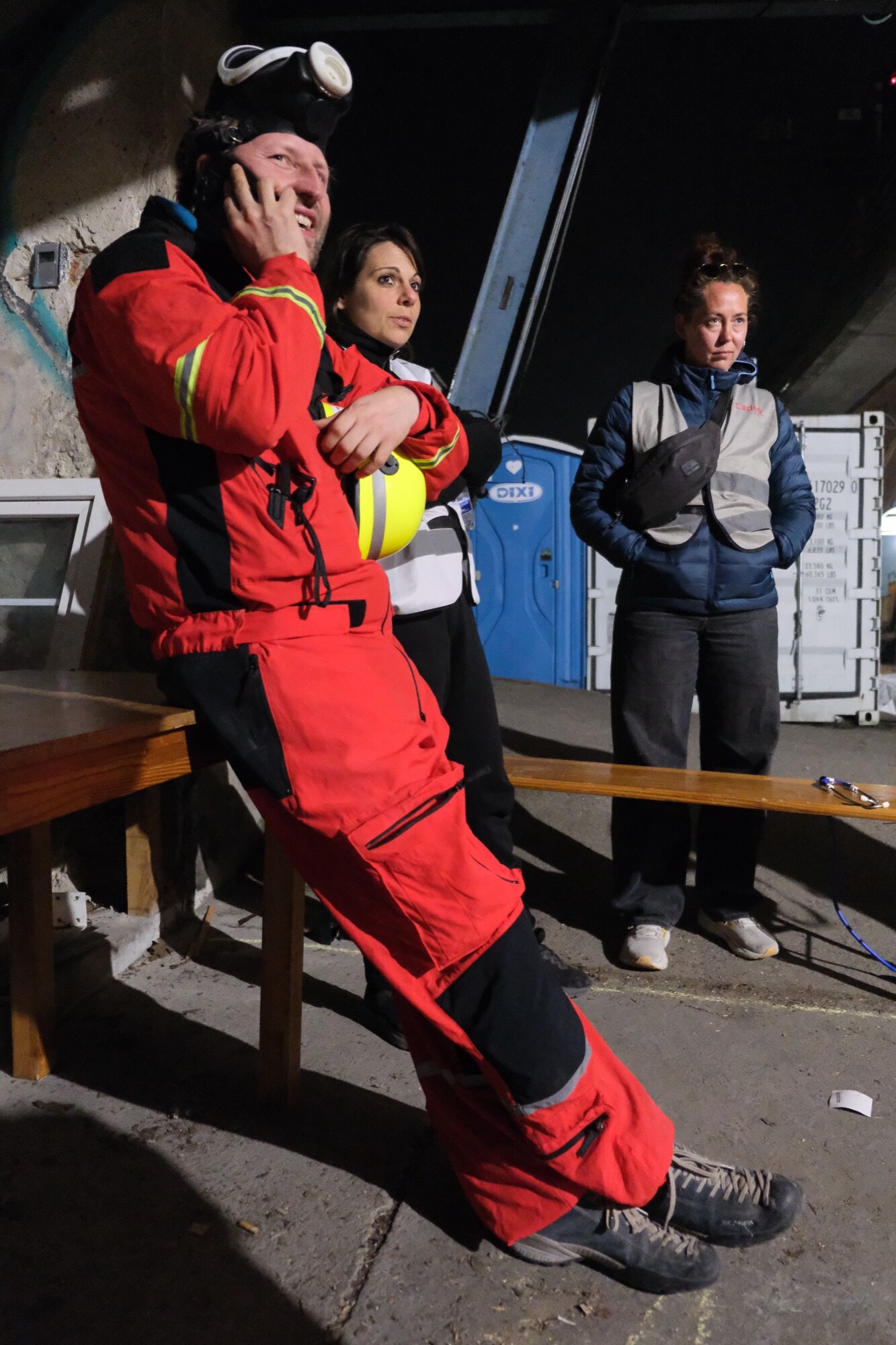 Ruben in his role as a firefighter. In addition to the work involved in organizing and instructing, the trainers always have a lot of fun keeping the participants on their toes with new challenges. Photo: CADUS
Ruben: Yes, for us it’s just as much a training exercise, because we have to react to unforeseen situations—that is, to developments in the scenarios and among the participants. The general plot is set, but there are so many different directions it can take. You never know exactly what’s going to happen next—just like in a crisis zone.
Jannik: You mean, for example, fire extinguishers as a form of communication?
Ruben: A fire extinguisher like that is definitely an interesting way to drive home a point. One participant actually tried to put out our fire barrel with it. Or at least tried to. Within the scenario, there was actually some resistance. That was the kind of situation we hadn’t anticipated at all. But it showed us that all of us—trainers and participants alike—were fully immersed in the scenario.
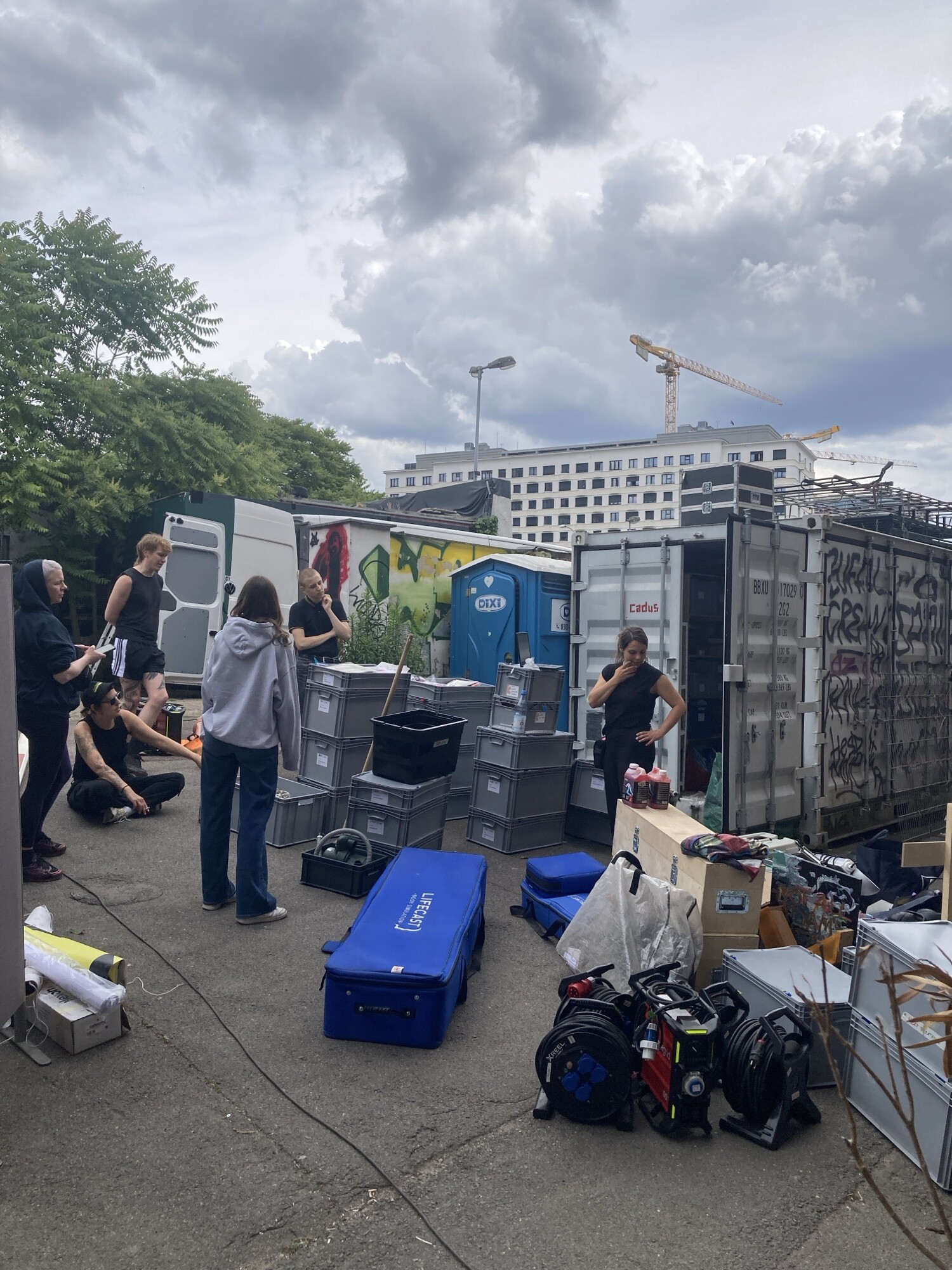 Preparing for and following up on the HEATs takes more time than the actual workout. Photo: CADUS
Elene: Yes, that’s one of the challenges—adapting the scenarios to the participants and tailoring them so they don’t get left behind. That way, the stress can really build up over the course of the days. Sometimes the participants even try to change the rules of the game to make things a little easier for themselves. That’s when we have to step in. So we invest a lot of energy and time into maintaining the illusion of our fictional city, “Berlinon.”
With all that effort—just how big is the CADUS HEAT team, anyway?
Jannik: We have a “core team” of trainers—about seven people. They handle a lot of the behind-the-scenes work: organizing the venue, providing materials, managing registrations, and so on. And, of course, they also guide the participants during the HEAT. In addition, there are about 10 more people who, for example, regularly provide professional support during medical scenarios.
Elene: And then there’s a pool of volunteers—about 10 to 15 people—who help us out over the course of the days. They handle everything from very small tasks to playing complex roles, sometimes even for days on end. We have some really great volunteers who help shape the training. We couldn’t do it without them.
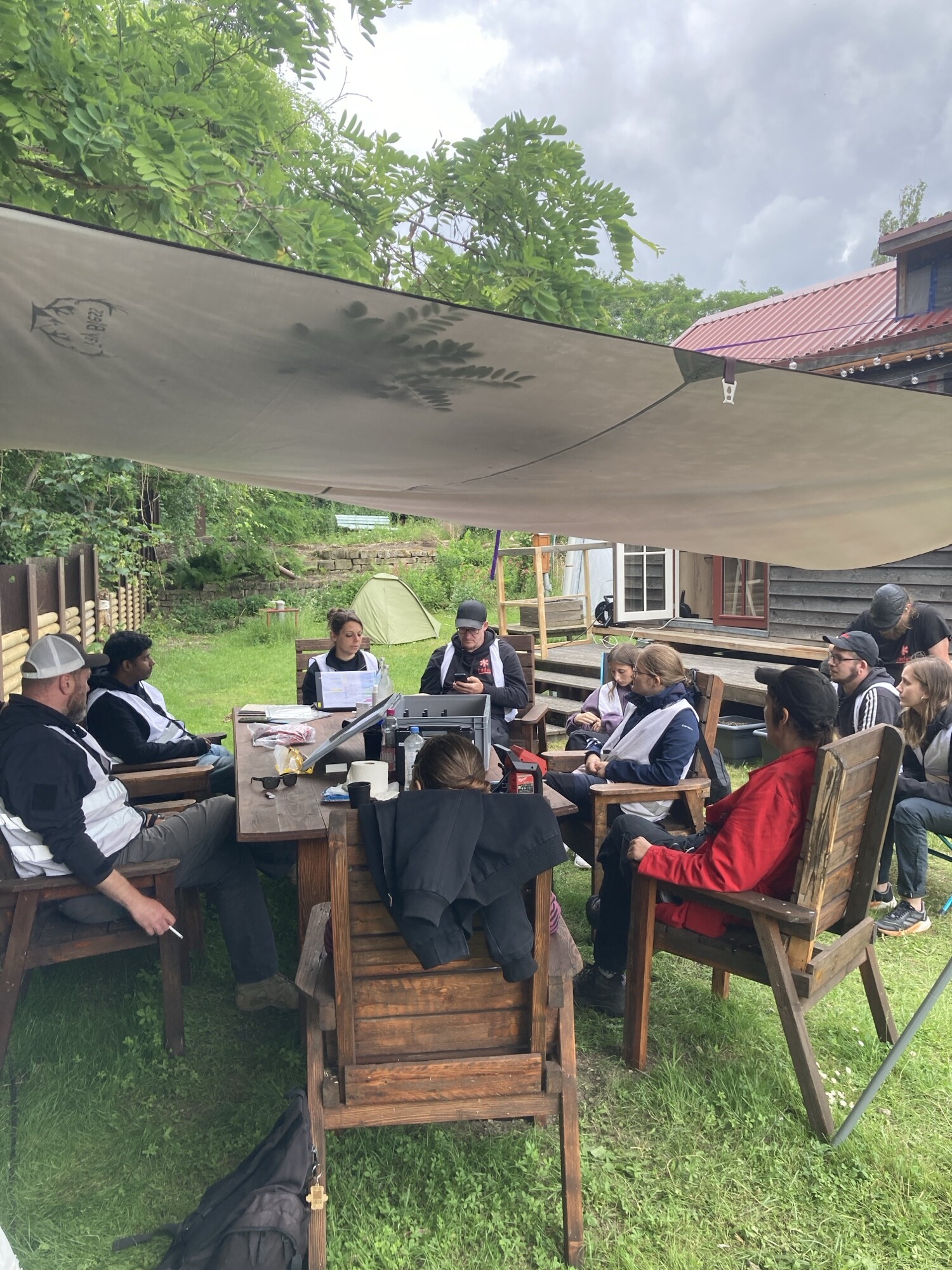 Break in the meeting. Many coaches and performers are involved in HEAT. Without the tremendous support of volunteers, the training wouldn’t be possible in this form. Photo: CADUS
What is the feedback from the participants?
Elene: The best feedback for me was when a participant told me how much the training had helped him on the job. A month after the HEAT, he found himself in an extremely precarious situation with his team and was able to put into practice what he’d learned from us. I found that really touching, and it also shows just how important what we’re doing really is.
Jannik: In my case, it was a participant who texted us after the workshop to say that, on her way home, she still felt like she was in “Berlinon” instead of Berlin. She looked out the window during the train ride and felt sad about how badly people are suffering in their homes right now, because this conflict is still smoldering. So for the participants, the experience is really very immersive—something we sometimes don’t even realize.
Except for that one time when I was playing the role of a patient and the doctor cut up my nice shorts during the treatment because it was part of the scenario. But I’d say it’s my own fault. That’s exactly what we want—to make it as realistic as possible.
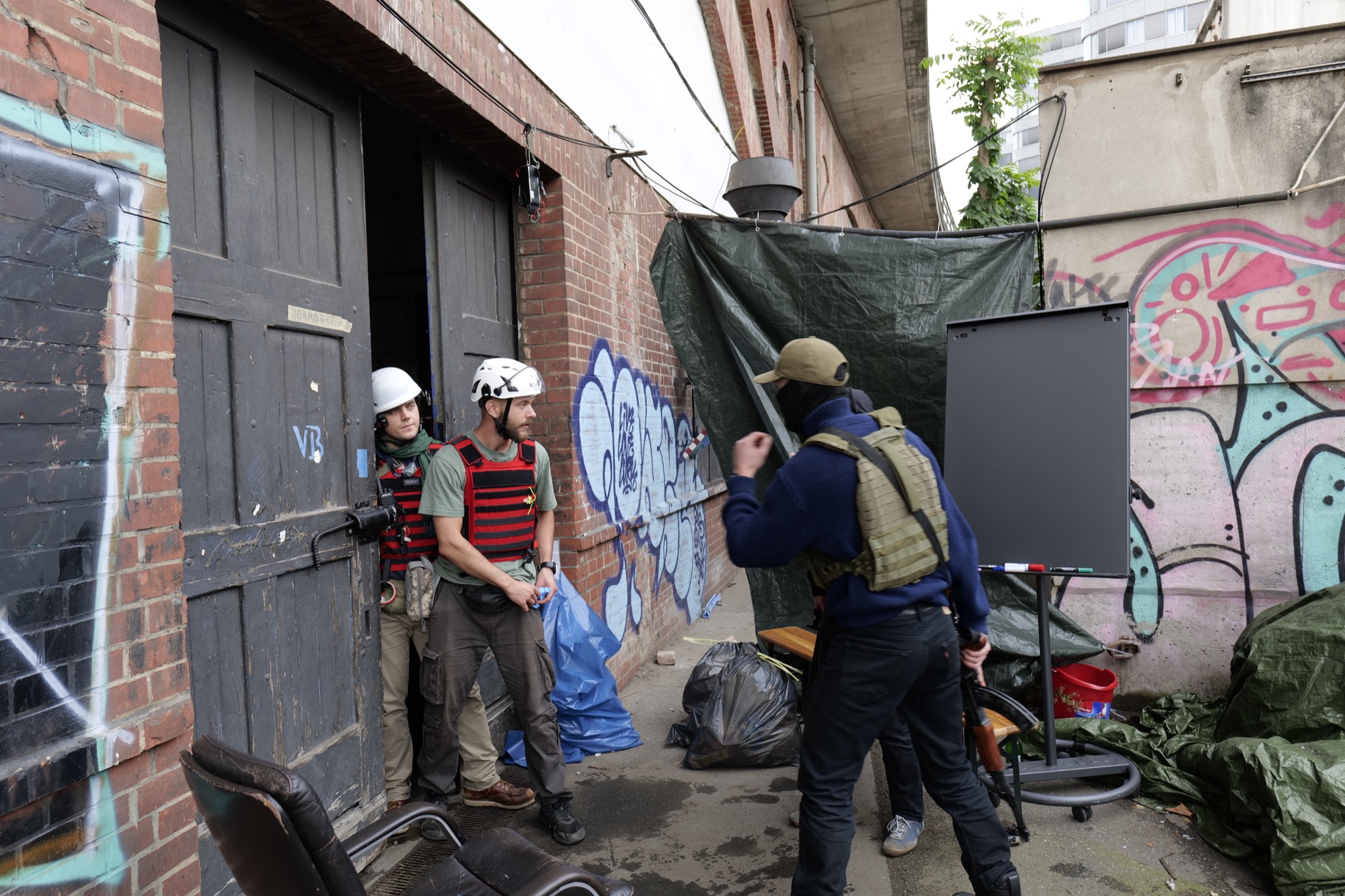 How do I deal with agitated armed individuals? Photo: CADUS
Elene: In general, feedback is extremely important to us. We conduct a structured evaluation after every HEAT because, of course, we also use the participants’ feedback to continue developing and improving.
Ruben: Participants often come up with interesting approaches and techniques during and after the training—for example, in the areas of communication and team dynamics. We learn from these time and again, and sometimes we just adopt them ourselves. That’s the beauty of HEAT: everyone involved can still learn something new.
How has your training changed as a result over the past few years?
Jannik: Back then, we started off relatively simply by holding a one-day HEAT session with very clear segments: theoretical input, scenario, theoretical input, scenario, and so on. The problem with that is that either you give everything away in advance—in which case the scenario becomes pretty predictable, and we constantly had to switch back and forth between being trainers and playing a role—or people fail first in the scenario, and then we tell them what they could have done better. But that didn’t seem particularly valuable from an educational standpoint either.
Elene: That’s why we’ve switched to playing a continuous scenario and have largely eliminated the distinction between theory and practice. We’re also incorporating many more people and elements from live-action role-playing (LARP). This opens up entirely new possibilities for us to make the scenarios more complex and realistic.
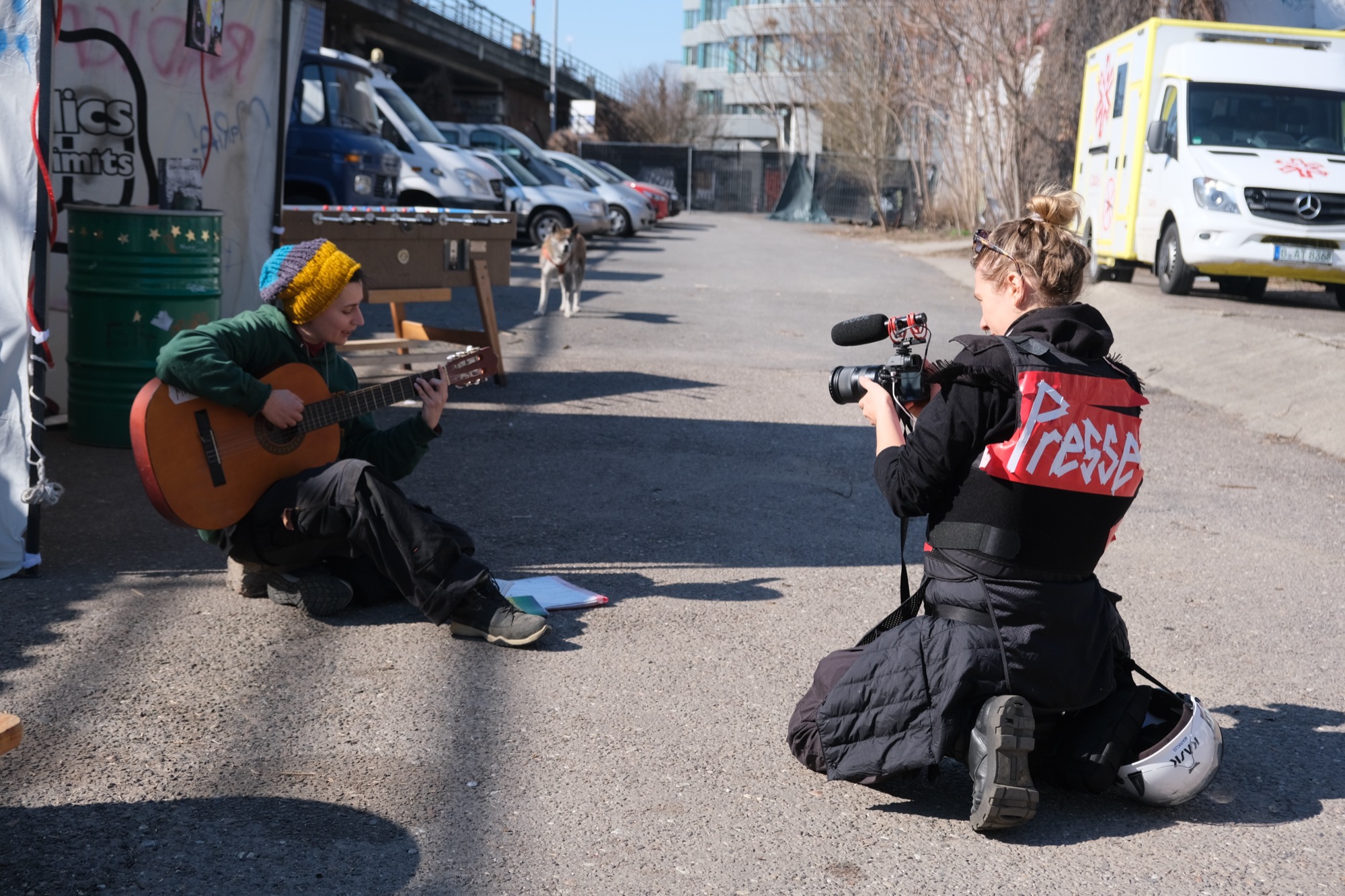 Journalists are also regular participants in HEAT. Here, one of them documents the lives of the residents of “Berlinon.” Photo: CADUS
Ruben: Over the past three years, we’ve built up a large toolbox that we can draw from. And we’re constantly adapting the scenarios. When we started conducting these training sessions in 2022—already in the context of Russia’s full-scale invasion of Ukraine—the nature of warfare was still completely different. Some of our scenarios from back then wouldn’t even be relevant today. Technological developments—such as drone warfare, for example—have advanced so dramatically that there are now aspects we have to address in HEAT training that simply weren’t technically possible back in 2022. So our HEAT training is always tied to what’s happening in the world.
Given the uncertain global situation, shifting conflicts, and mounting crises: What do you think a HEAT is actually capable of?
Ruben: It would be absolutely presumptuous to say that a HEAT course prepares you for anything—it simply takes much more than that. Every crisis is different; every conflict is different. A single training course can never comprehensively cover everything; there’s much more to it than that.
But what HEAT can do is help me become aware of all the things I need to think about before I go out on a mission—so I don’t just stumble into it. I think the training is really great for that.
Elene: Plus, the training is a time when you can really learn a lot about yourself. So even if I end up realizing that I might not necessarily want to go to a war zone after all, I can still take something away from it. It’s a lot about communication and resilience, which are also really helpful in everyday life. Yeah, and a little first aid never hurt anyone either!
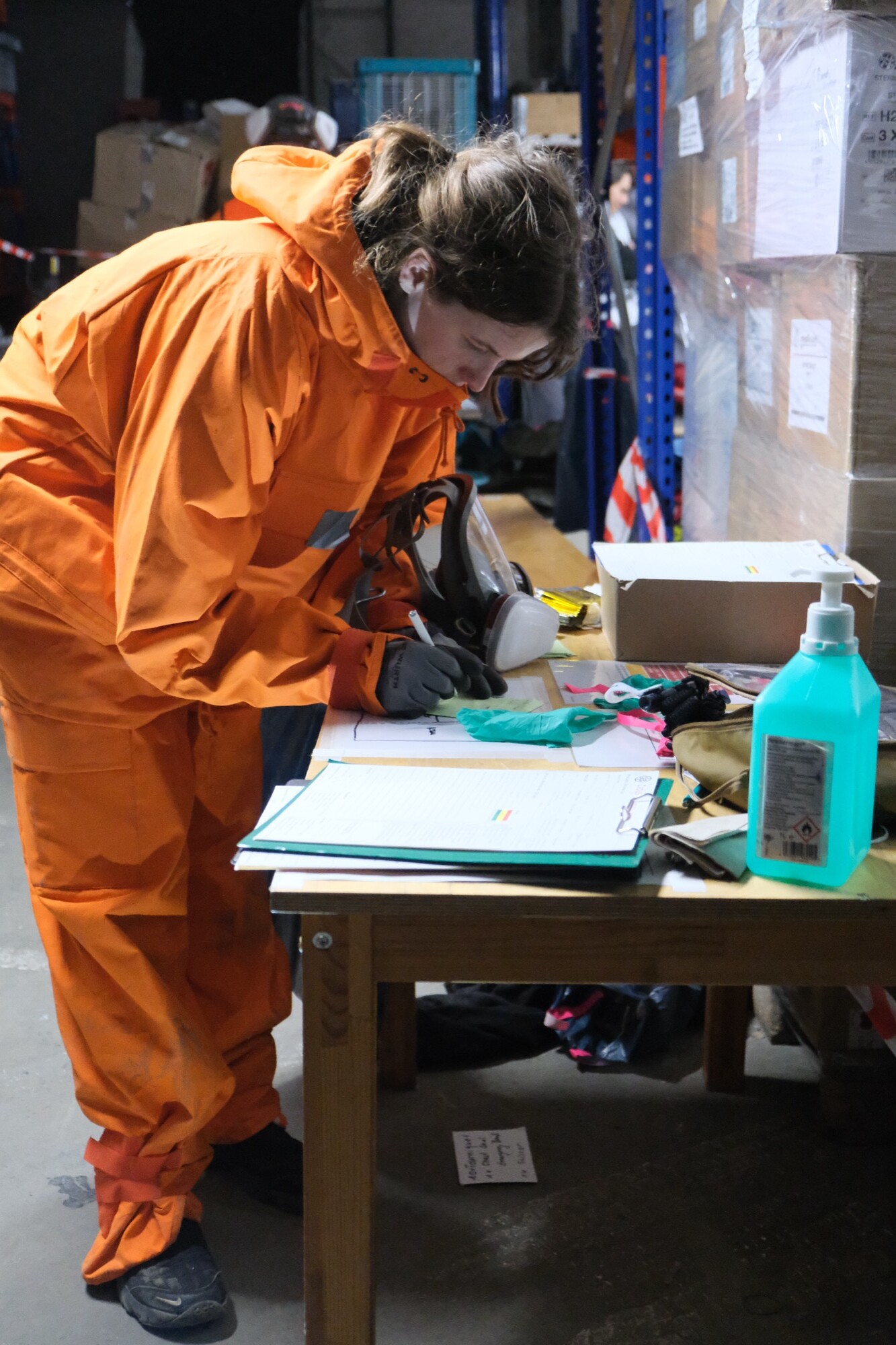 To ensure the experience is as realistic as possible, every action that participants intend to carry out during the training must actually be performed. This includes documenting the actions and communicating with headquarters. Photo: CADUS
So, should everyone have done a HEAT at least once?
Elene: Sure, HEAT should be taught in schools—of course.
Jannik: School Subject: HEAT!
Elene: But seriously: our HEAT is entirely geared toward CADUS operations. Some of the content is highly specialized and less relevant to the general public. Plus, it’s very complex and resource-intensive.
But a sort of “HEAT light” would be conceivable: How do I behave in stressful situations? Am I aware of what’s going on around me—what might be dangerous? How do I organize myself in groups, and how do I coordinate with others in stressful situations? These are, of course, topics that are useful for everyone in principle—especially when we look to the future and consider what might lie ahead.
Jannik: The question is, which elements and core practices can we draw from HEAT and effectively share with others? That’s why we’re currently working on compiling everything into a handbook based on open source principles, so that other groups might be able to develop their own HEAT. We’d be delighted if this allowed even more people to benefit from our experiences in the future.
Health and Democracy
The healthcare system in Germany is not in the best shape. But health isn't the only reason we should advocate for it.
Update on Venezuela
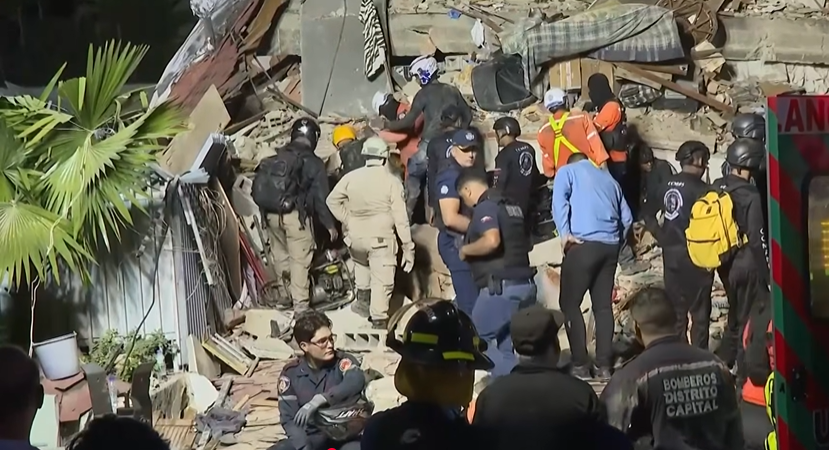
We are ready to launch our Venezuela response to support medical care in the wake of the devastating earthquake. Here is an update.
Swiftwater Training – Two Testimonials
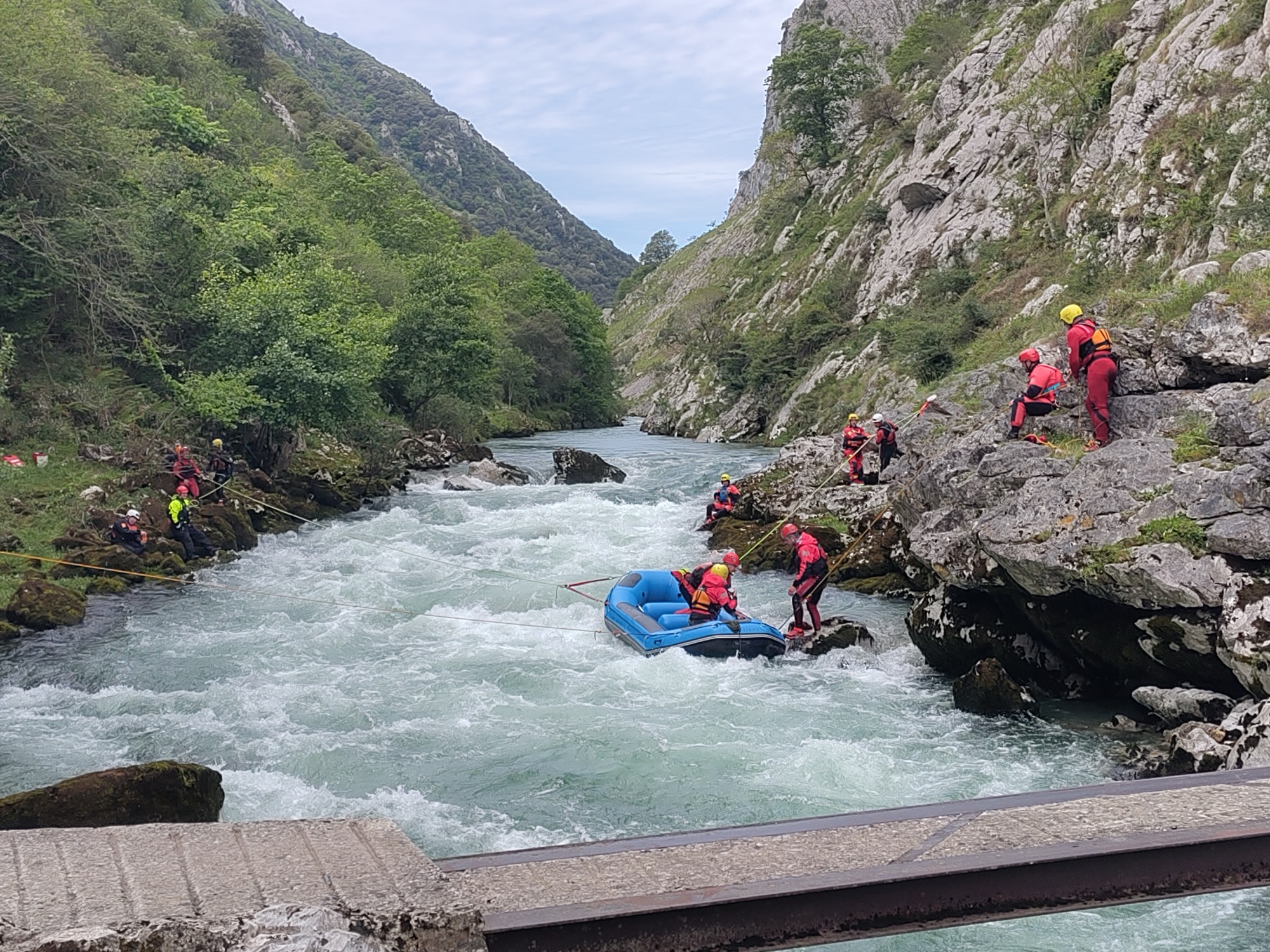
As a result of climate change, extreme weather events and flooding will increase worldwide. As part of our Climate Emergency Responder program, four CADUS volunteers therefore participated in a training course for instructors in current rescue. Sanne and Laura share their experiences with whitewater here.