“Operating in Sudan requires constant flexibility and adaptation.”
Published on 4. August 2026
from Parastu Sherafatian
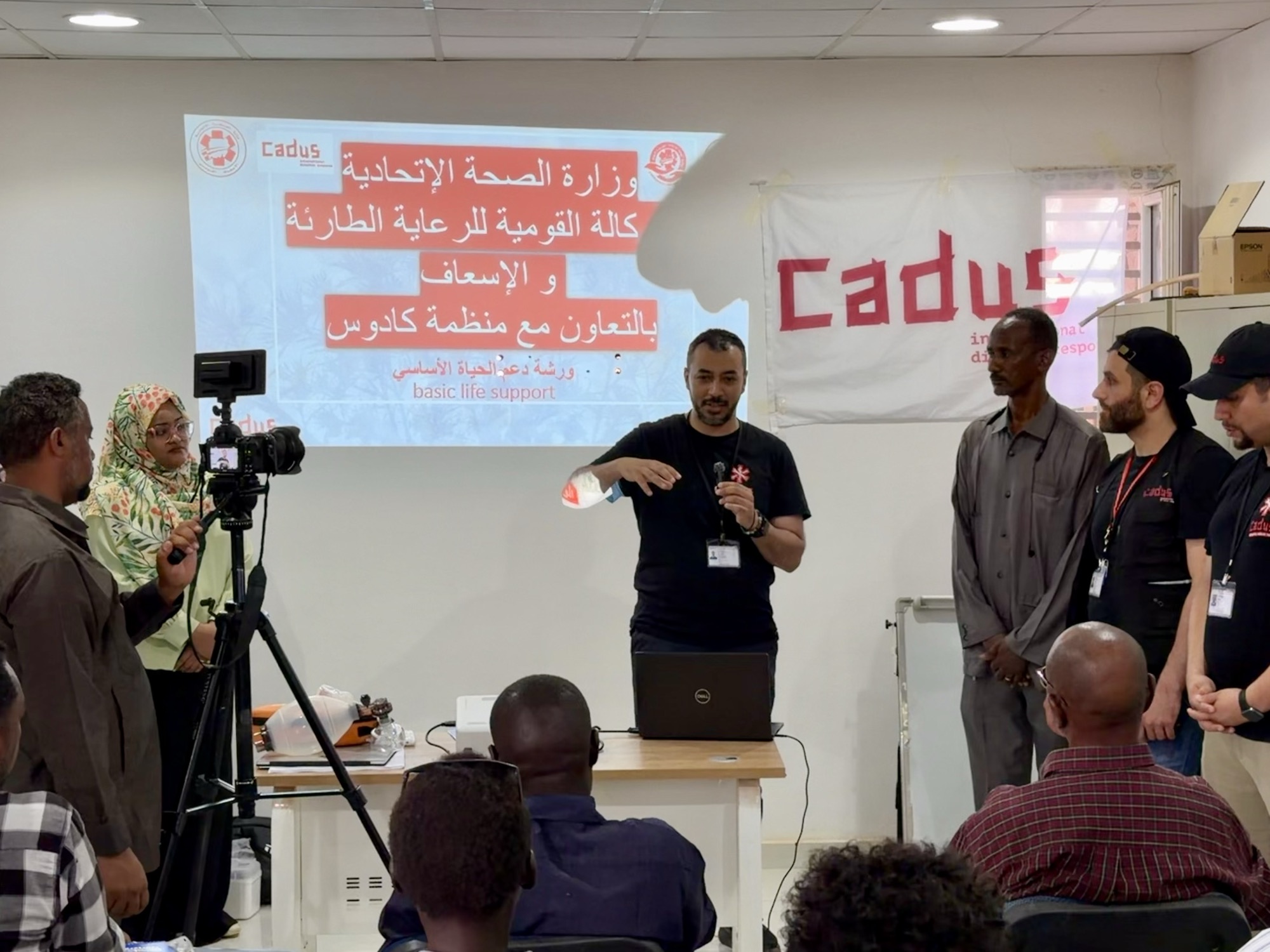
Hisham (center) during a training session at Al-Tamayouz Hospital in Khartoum. Photo: CADUS
Years of conflict have pushed Sudan’s healthcare system to the brink of collapse. In Khartoum, supply shortages, a lack of medical staff and damaged infrastructure define daily life. To help counteract this, CADUS has been working on the ground to support emergency healthcare. In his interview, our colleague Dr. Hisham Abdulaziz shares the challenges of operating in a volatile environment and why the resilience of local healthcare workers is the foundation of any humanitarian response.
Translated from English.
Could you give a brief overview of the current humanitarian and healthcare situation in Khartoum?
The humanitarian situation in Khartoum remains extremely challenging, much of the city’s healthcare infrastructure has either been damaged or completely destroyed. Only a limited number of hospitals are currently functioning, many of them with the support of international humanitarian organizations. As a result, these facilities are overwhelmed by the large number of patients seeking care.
Healthcare providers face constant operational difficulties, including frequent electricity outages and the high cost of fuel needed to operate backup generators. There is also a critical shortage of qualified medical personnel, as many doctors, nurses, and other healthcare professionals fled the country during the conflict. The remaining staff continue to work under immense pressure with limited resources.
The weakened health system is also highly vulnerable to disease outbreaks. Surveillance and reporting systems have been severely disrupted, making it difficult to detect and respond to epidemics or other public health emergencies such as Ebola or cholera in a timely manner.
What has CADUS been doing in Sudan so far?
CADUS has focused on restoring emergency healthcare capacity in Khartoum while strengthening the skills of local healthcare workers.
Our main intervention has been supporting the Emergency Department at Altamayouz Hospital. We rehabilitated the department, established a structured triage system, operationalized the resuscitation area, equipped crash carts and trauma trolleys, strengthened oxygen systems, and introduced standardized patient documentation and handover processes to improve the quality and continuity of emergency care.
Alongside our international doctors and nurses, we worked closely with Sudanese healthcare workers through bedside mentoring and continuous clinical training. We also provided essential medicines, medical consumables, emergency equipment, and installed a solar power system to ensure the Emergency Department could continue functioning despite frequent power outages. To sustain services, CADUS supported more than 100 Ministry of Health staff including doctors, nurses, pharmacists, laboratory staff, cleaners, and other essential personnel through incentive payments.
Since becoming operational, the Emergency Department has provided 5,750 emergency consultations, treating 3,069 women and 3,197 men in an extremely challenging environment.
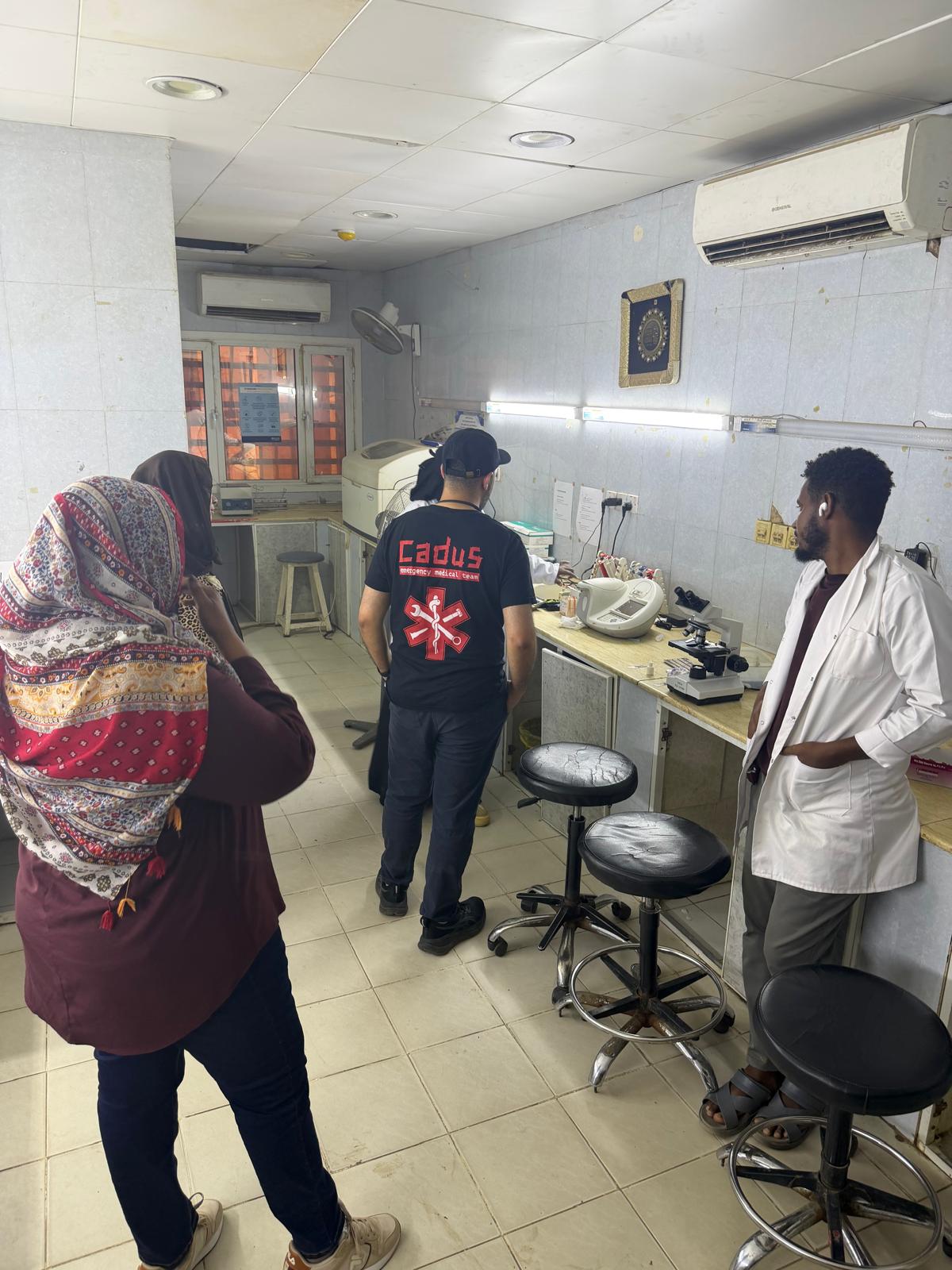 Hisham is getting an overview of the hospital’s laboratory capabilities. Photo: CADUS
Building local capacity has been another key priority. CADUS delivered 79 training sessions, reaching more than 600 participant attendances, covering emergency medicine, Basic Life Support, triage, infection prevention and control, documentation, ECG interpretation, WASH, and emergency simulations.
Beyond hospital support, CADUS donated 40 COM-W water purification units and trained recipients on their operation and maintenance. These systems are being distributed to NGO partners, MoH and healthcare facilities across Khartoum and the Red Sea State, helping provide safe drinking water for patients, healthcare workers, and surrounding communities. Access to clean water reduces the risk of waterborne diseases, strengthens infection prevention measures, and improves the resilience of health facilities operating under extremely difficult conditions.
Have there been any recent shifts in the conflict dynamics that directly affect humanitarian access?
The conflict continues to evolve, creating an unpredictable operating environment. While access has improved in some locations, other areas remain inaccessible because of ongoing fighting and insecurity.
Frontlines continue to shift, requiring humanitarian organizations to constantly reassess security risks and adapt their operations. This uncertainty makes long-term planning difficult and can lead to sudden interruptions of humanitarian activities or the relocation of teams.
Administrative procedures, movement restrictions, and bureaucratic delays also continue to affect the timely delivery of personnel, medicines, and humanitarian supplies into the country. These factors collectively reduce the speed and efficiency of humanitarian assistance despite the growing needs.
What are the biggest needs at the moment?
The needs remain enormous and extend across nearly every aspect of the health sector.
The highest priorities include restoring additional hospitals and primary healthcare facilities, ensuring a reliable supply of essential medicines and medical consumables, and recruiting and retaining qualified healthcare workers. Reliable electricity remains essential, making investments in sustainable power solutions such as solar energy increasingly important.
One of the most urgent yet often overlooked needs is strengthening Emergency Medical Services (EMS) and prehospital care. The referral system has been severely disrupted by the conflict. Ambulance services are extremely limited, many vehicles are no longer operational, and insecurity, damaged roads, and fuel shortages frequently delay or prevent patient transport. As a result, critically ill and injured patients often arrive at hospitals too late or without receiving any prehospital stabilization.
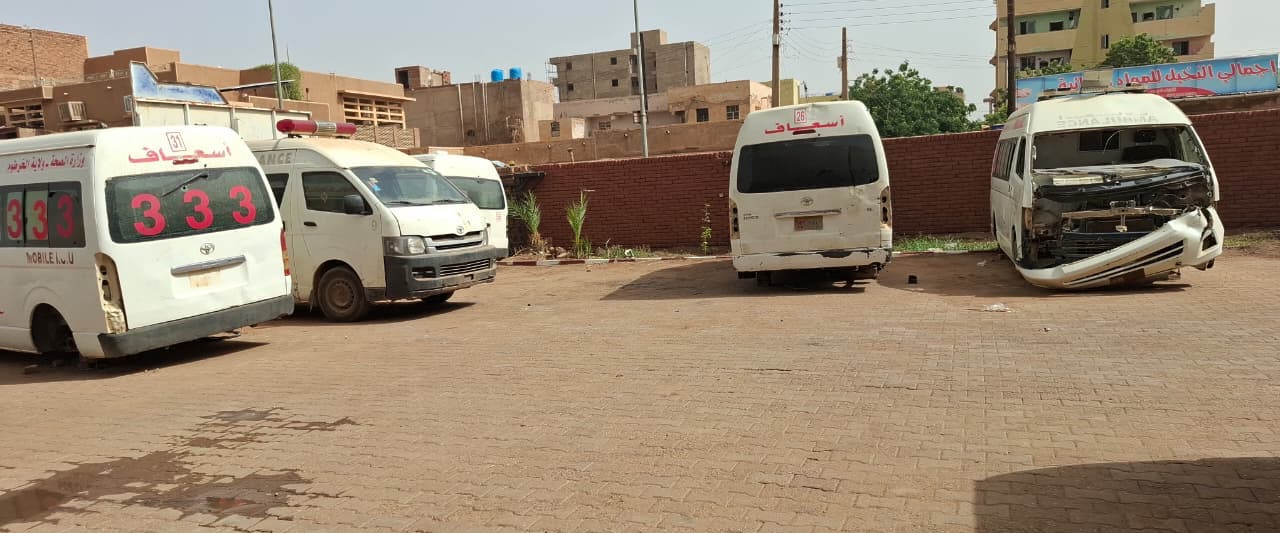 Ambulances are parked in the courtyard of Al-Tamayouz Hospital. They used to be used to help patients; today, they can’t even drive on their own anymore. Photo: CADUS
Developing a functional EMS system including trained emergency medical personnel, equipped ambulances, reliable dispatch and communication systems, and standardized referral pathways between healthcare facilities would significantly improve survival rates for trauma, obstetric emergencies, and other time-critical medical conditions. Strengthening prehospital care would also help reduce the burden on overcrowded emergency departments by ensuring patients receive timely and appropriate care before reaching hospital.
There is also a significant need to strengthen emergency preparedness, disease surveillance, infection prevention and control, and staff training to improve the country’s ability to detect and respond to outbreaks and other public health emergencies.
Equally important is continued support for safe water systems in healthcare facilities, mental health support for both patients and healthcare workers, and sustained investment in local capacity so that services can continue even under prolonged crisis conditions.
From your perspective, what are the biggest operational challenges CADUS has been facing there?
Operating in Sudan requires constant flexibility and adaptation.
Importing medicines, medical equipment, and humanitarian supplies can be slow because of administrative procedures and logistical constraints. Recruiting international personnel and ensuring safe access to project locations also requires significant coordination.
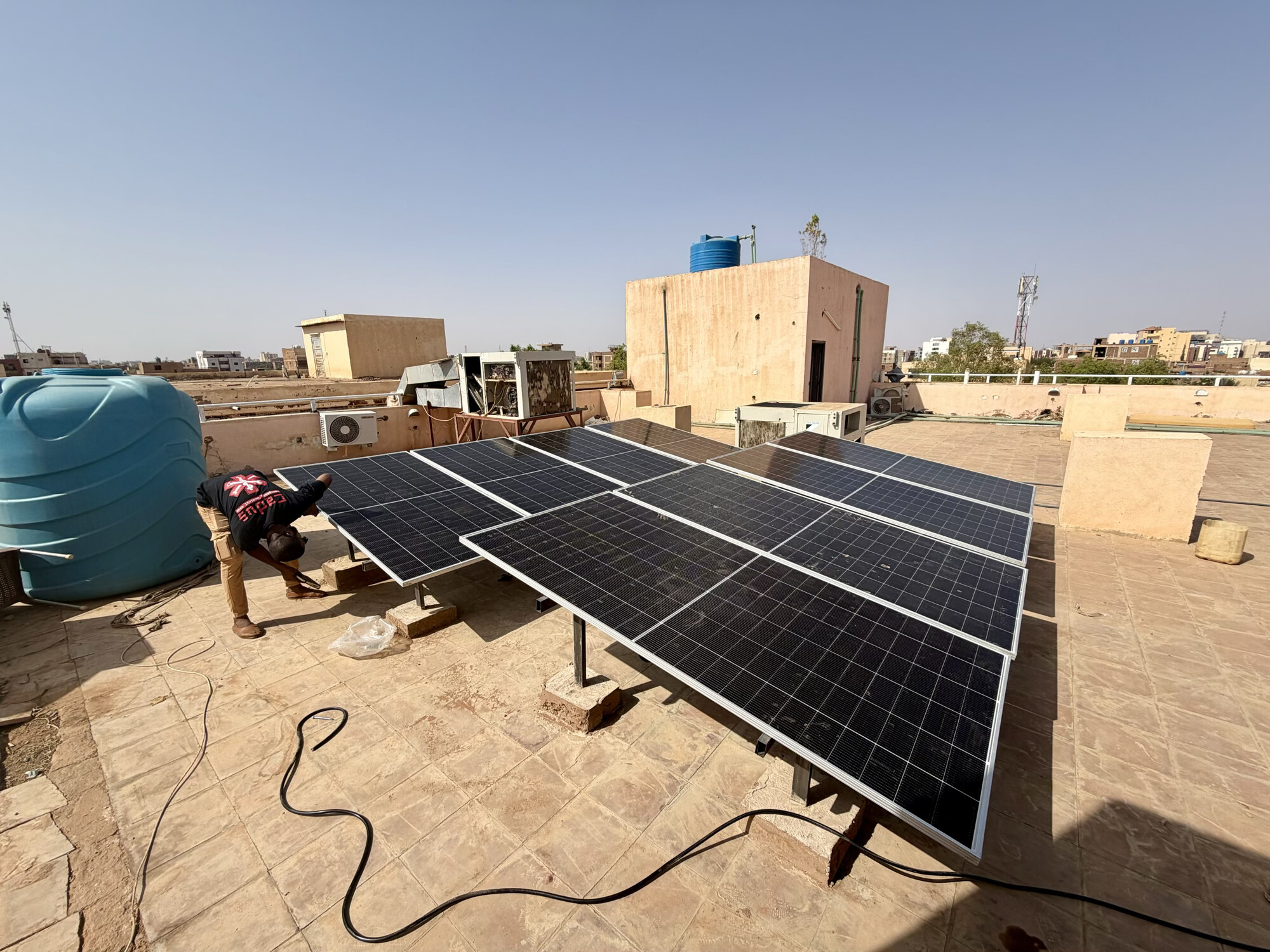 The emergency room’s independent energy supply is ensured by its own solar power system. Photo: CADUS
Another significant operational challenge is the lack of a coordinated prehospital referral system. Patients are frequently transported to the hospital by family members or private vehicles because ambulance services are either unavailable or unable to reach them safely. This not only delays lifesaving treatment but also complicates communication between healthcare facilities and limits continuity of care. Supporting EMS and strengthening referral mechanisms would address one of the most critical gaps in Sudan’s emergency healthcare system and complement the work already being done inside hospitals.
Another challenge is maintaining healthcare services within an already overstretched health system. Even after rehabilitating facilities, patient numbers continue to increase because so few hospitals remain functional. Supporting local healthcare workers through incentives, training, supervision, and essential supplies has therefore been critical to sustaining services.
Despite these challenges, the commitment of Sudanese healthcare workers and the collaboration with local authorities have made it possible to continue delivering lifesaving emergency care.
Was there a particular moment or situation that left a strong impression on you?
One moment that will stay with me was walking through the Emergency Department at Altamayouz Hospital after it had been fully rehabilitated and seeing it functioning again.
Only a short time earlier, the department had been unable to provide the level of care that patients desperately needed. After the rehabilitation, the department was full of activity: patients receiving treatment, staff confidently applying the triage system, doctors and nurses working together, and families once again finding a place where they could seek emergency care.
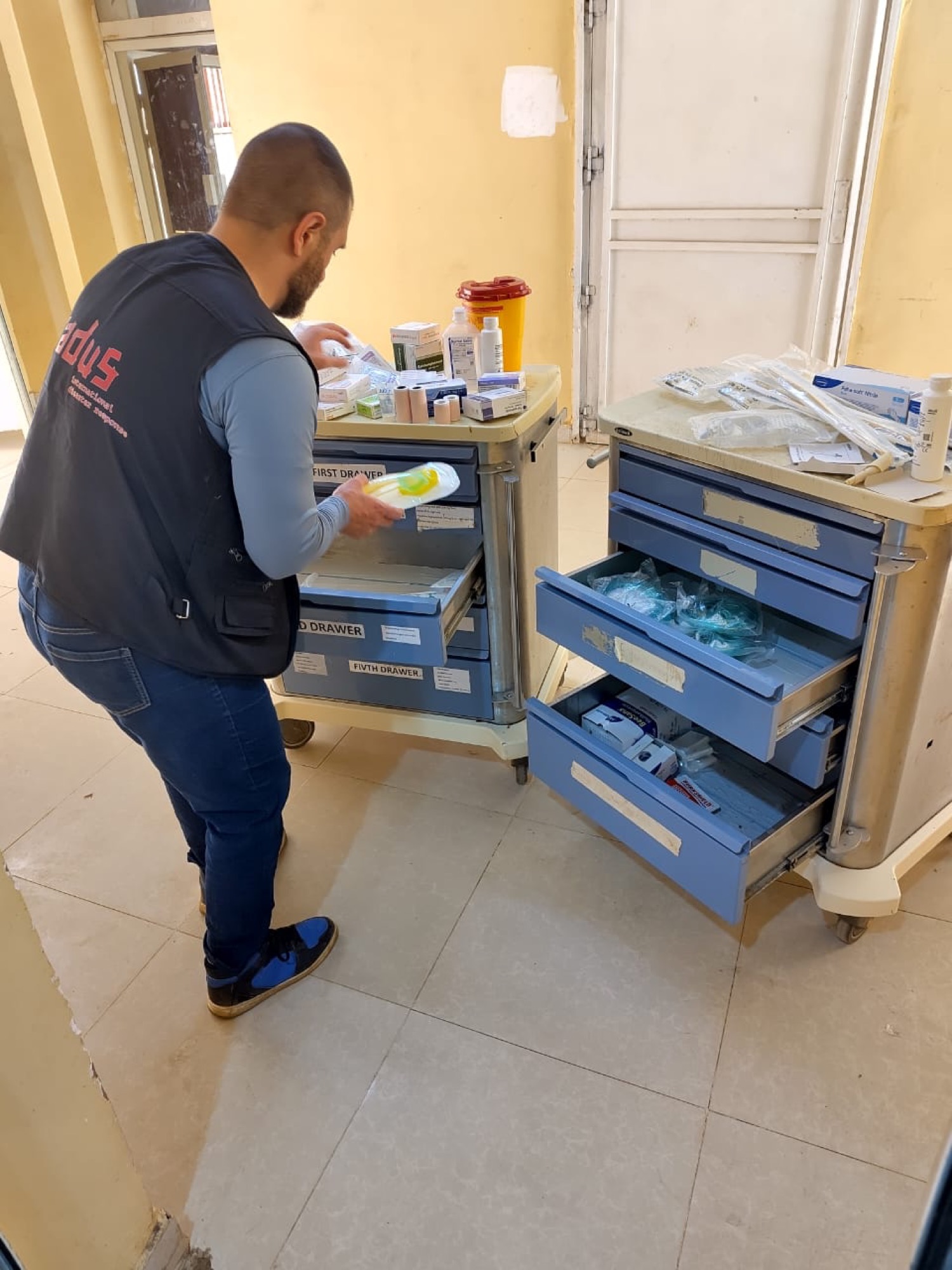 We were able to restock the cabinets and shelves in the emergency room with medical supplies. This means we can once again provide care to patients. Photo: CADUS
In the middle of a healthcare system that has largely collapsed, seeing a fully functioning Emergency Department providing lifesaving treatment was a powerful reminder of why humanitarian work matters. It showed that even in one of the world’s most difficult crises, targeted support can restore essential services, strengthen local capacity, and give communities hope.
Another equally inspiring experience was witnessing the dedication of Sudanese healthcare workers. Despite working under extraordinary pressure, often with limited resources and personal hardship, they continued to care for their patients with remarkable professionalism and resilience. Their commitment has been the foundation of everything we have been able to achieve together, and it leaves me optimistic that, with continued support, Sudan’s health system can gradually recover.
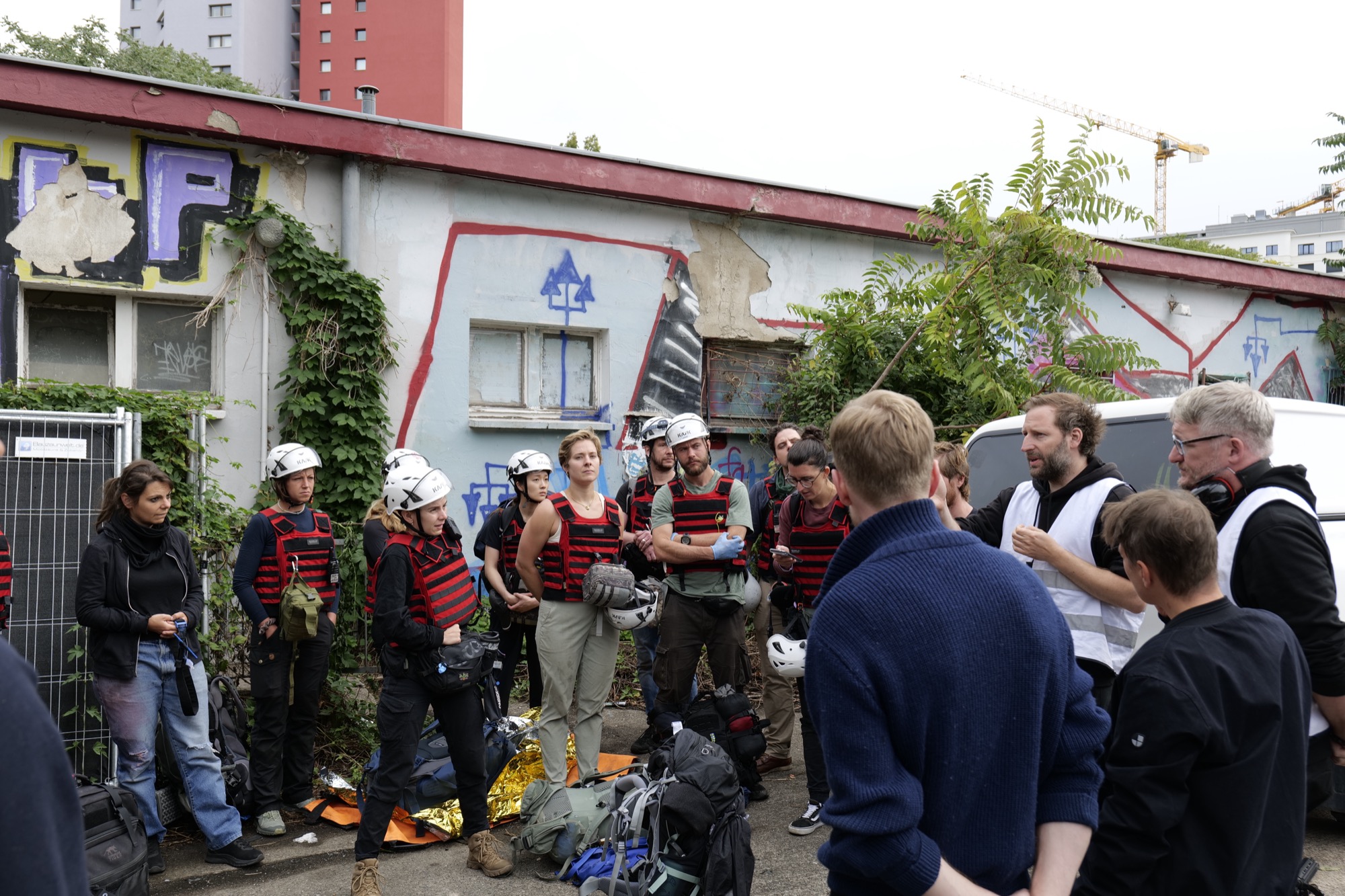
CADUS HEAT
For many organizations, Hostile Environment Awareness Training (HEAT) is part of the preparations for humanitarian missions in war and crisis zones. In this interview with our training team, you’ll learn how these trainings are conducted at CADUS, what participants learn, and what HEAT can actually achieve.
Meet our Team: Dr. Hareen De Silva
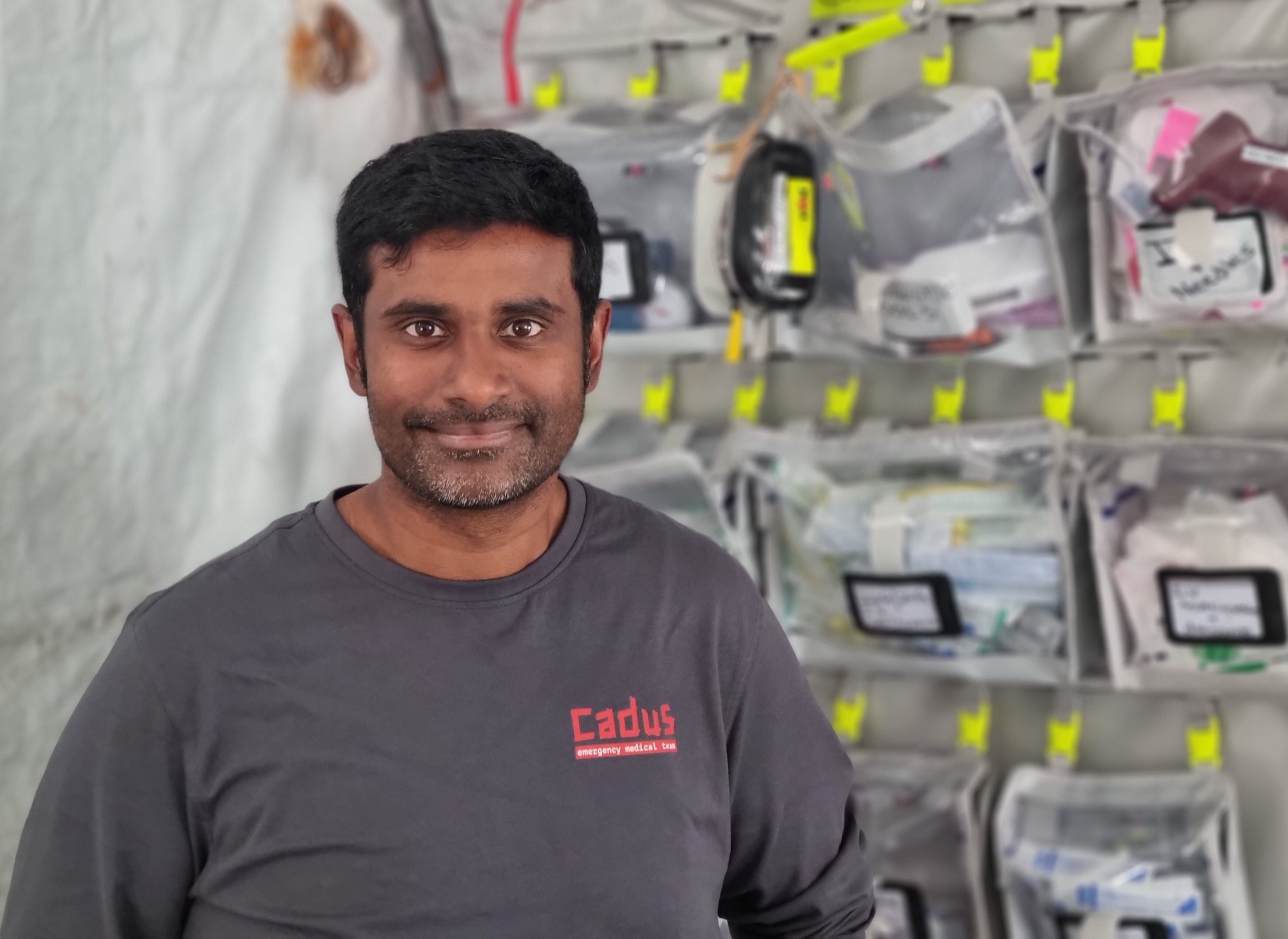
There’s almost no place nor community on earth too remote for our colleague and general practitioner Dr. Hareen De Silva BEM: From being the only doctor on a remote island, working on engaging and providing healthcare within marginalised communities to now leading the health department at CADUS. In this interview, Hareen shares what impassions him and which goals he has for humanitarian work.
Health and Democracy
The healthcare system in Germany is not in the best shape. But health isn't the only reason we should advocate for it.